Table of Contents >> Show >> Hide
- What Scientists Actually Analyzed
- Why Thorin Matters So Much
- What the Genome Revealed About Late Neanderthal Life
- How This Discovery Fits Into the Bigger Neanderthal Story
- Why the Discovery Resonates Beyond Archaeology
- Conclusion
- Experiences Related to the Topic: What This Discovery Feels Like in the Real World
Few scientific headlines make you stop mid-scroll like a good Neanderthal story. This one earns the pause. Scientists analyzed the DNA of a late Neanderthal nicknamed Thorin, and the results did not politely confirm the old script. Instead, they kicked over a few chairs in the room of human evolution and asked everyone to sit back down.
For years, many researchers pictured late Neanderthals in Europe as a fairly connected population moving through the final chapters of their existence before disappearing around 40,000 years ago. But Thorin’s genome suggests the situation was far messier, more local, and frankly more interesting. Here was a Neanderthal living late in the species’ history, yet carrying genetic signals that looked strikingly different from other late Neanderthals. In plain English: he belonged to a line that seems to have stayed isolated for an astonishingly long time.
That matters because ancient DNA is not just a fancy way to say “old bones, cool lab.” It is one of the strongest tools scientists have for reconstructing migrations, population crashes, interbreeding, and long stretches of isolation. A good genome can reveal whether a group mixed widely, got boxed into a small region, or kept to itself so thoroughly that its genetic story drifted away from its neighbors. Thorin appears to be one of those cases where the genome talks back.
And when it does, it tells us something bigger than the biography of a single Neanderthal. It tells us that the last Neanderthals in Europe were not necessarily one tidy, uniform population marching toward extinction in lockstep. They may have been fragmented, unevenly connected, and in some places surprisingly cut off from one another. In other words, late Neanderthal Europe may have looked less like one big family reunion and more like a set of distant cousins who stopped replying in the group chat about 50,000 years earlier.
What Scientists Actually Analyzed
Thorin’s remains were found at Grotte Mandrin in southern France, a site already famous in paleoanthropology for preserving evidence tied to both Neanderthals and early Homo sapiens. Researchers recovered enough ancient genetic material from one of Thorin’s molars to perform genome-wide comparisons with previously sequenced Neanderthals, ancient modern humans, and living people. That alone is impressive. Ancient DNA is fragile, degraded, and notoriously easy to contaminate. Getting a useful genome from Ice Age remains is a technical feat, not a casual Tuesday.
The first surprise came when Thorin’s genetics did not seem to match what archaeologists expected from the site and the sediment layer. Based on the context, Thorin appeared to be a late Neanderthal who lived roughly between 50,000 and 42,000 years ago. But his DNA looked far more similar to older Neanderthal lineages than to other late Neanderthals. That created a scientific standoff that you almost have to admire: were the archaeologists wrong, or were the genomicists wrong?
To sort that out, the team used additional evidence, including isotopic analysis of bones and teeth, to reconstruct the kind of climate Thorin lived in. Those results supported the view that he really was a late Neanderthal from a cold Ice Age environment. So the odd genome was not a dating mistake. It was a real signal. Thorin was late, but his lineage was old.
Why Thorin Matters So Much
Thorin is important because his genome appears to represent a previously undescribed or poorly understood Neanderthal lineage that diverged from other late Neanderthals around 105,000 years ago. Even more striking, researchers argue that this lineage then remained genetically isolated for roughly 50,000 years. That is an enormous amount of time in human evolutionary history. It means nearby Neanderthal groups may have lived in geographic proximity without meaningful gene exchange.
That finding challenges the idea that late Neanderthals in Europe formed one genetically smooth, well-mixed population. Instead, Thorin points to deep structure: multiple groups, different histories, uneven contact, and possibly different cultural or social boundaries. Scientists do not yet know exactly why Thorin’s population stayed so separate. It could reflect geography, social behavior, language-like differences, territorial boundaries, or some combination of all four. Ancient DNA can identify the isolation; it cannot fully explain the social drama behind it.
Thorin also showed high homozygosity, which is a technical way of saying the genome carries many stretches of very similar inherited variants. In population genetics, that pattern usually signals a small population with close relatedness and limited gene flow. Small groups can survive for surprisingly long periods, but they are also vulnerable. Less diversity can make a population less flexible when environments shift, diseases spread, or neighboring groups expand. Evolution is not sentimental. It does not give participation trophies for hanging on through hard winters.
What the Genome Revealed About Late Neanderthal Life
The Thorin genome adds weight to a growing picture of Neanderthals as skilled, adaptable humans who were nevertheless living in relatively small, often fragile populations. This matters because Neanderthal extinction probably did not have one tidy cause. Scientists have proposed climate instability, low population size, demographic fragmentation, competition with incoming Homo sapiens, and occasional interbreeding as part of the story. Thorin does not solve that entire puzzle, but he sharpens one important edge of it: isolation.
If Thorin’s lineage really went tens of thousands of years without exchanging genes with neighboring Neanderthal groups, that suggests Neanderthal social worlds may have been more compartmentalized than many researchers assumed. By contrast, evidence from early modern humans often points to broader social and mating networks. Larger networks matter. They move not just people, but information, tools, strategies, and resilience. A connected population has more ways to recover when local conditions go bad.
There is also no clear sign that Thorin’s lineage contributed to the Neanderthal ancestry found broadly in living people. That is fascinating because we know modern humans outside Africa generally carry a small percentage of Neanderthal DNA today, and newer genomic work has narrowed the major period of shared admixture to about 50,500 to 43,500 years ago, with an average around 47,000 years ago. Thorin seems to come from the same broad late period, yet his lineage appears to have remained apart from both nearby Neanderthals and Homo sapiens. In effect, he lived near one of the most important genetic crossroads in human history without clearly joining the traffic.
That image is both scientifically rich and oddly haunting. Here is a late Neanderthal from a world where populations were overlapping, moving, meeting, and in some cases mixing. Yet his own lineage may have stayed locked inside its own long-running genetic neighborhood. Human evolution often gets told as a grand sweeping march. Thorin reminds us it also contained dead ends, side roads, and communities that remained stubbornly separate until the map itself disappeared.
How This Discovery Fits Into the Bigger Neanderthal Story
Thorin’s genome landed in a field that is already being rewritten by ancient DNA. Earlier high-quality Neanderthal genomes showed that close-kin mating and low population sizes were not unusual in some Neanderthal groups. More recent work on early modern humans refined the timing of when Neanderthal DNA entered the ancestry of living non-African populations. And fresh mitochondrial DNA research on late Neanderthals suggests that many of Europe’s final Neanderthal populations descended from a single broader lineage that expanded after a major population turnover, likely tied to climate stress and refuge zones in southwestern France.
At first glance, that broader mtDNA story and Thorin’s strange genome might seem to pull in different directions. But together they actually make the late Neanderthal picture more nuanced. One line of evidence suggests a continent-wide demographic contraction and spread of a dominant lineage. Thorin suggests that even during this late phase, there were still pockets of distinct ancestry that did not fully melt into the wider pattern. That is not contradiction so much as complexity. Ancient populations rarely line up in neat textbook boxes. They shift, overlap, disappear, and leave uneven traces behind.
Scientists are especially interested in whether Thorin represents one surviving remnant of a broader Mediterranean-connected population. His genome showed similarities to a previously studied Neanderthal from Gibraltar, which raises the possibility that southwestern Europe preserved lineages that stayed genetically distinctive far longer than expected. That idea remains provisional, but it is exactly the kind of hypothesis ancient DNA can test as more genomes are sequenced.
And that is the key point: Thorin is not the final word. He is a very loud clue. One genome can overturn a simple model, but it takes more genomes from more sites to build a robust replacement. The field now needs additional late Neanderthal DNA from different regions and time periods. Every new sequence is like finding another page in a badly damaged family album. You do not get the whole story at once. You get fragments, then patterns, then the occasional moment where a single face changes how you understand the entire room.
Why the Discovery Resonates Beyond Archaeology
There is something deeply compelling about learning that one of the last Neanderthals was not just “a Neanderthal,” but part of a distinct, isolated lineage with its own long history. It pushes against the lazy cartoon version of prehistory. Neanderthals were not generic cave people wandering through an endless cold blur. They were populations with structure, ancestry, social worlds, and regional histories. They had long memories written not in books, but in genes.
That is why stories like this travel so well beyond scientific journals. They speak to a familiar human question: how much of survival depends on connection? Thorin’s genome does not offer a neat moral lesson, but it does underline a pattern biologists know well. Isolation can preserve identity, yet it can also narrow a population’s options. Connection can create noise, conflict, and mixing, but it can also spread useful traits and shared knowledge. Late Neanderthal history seems to have been shaped by the tension between those forces.
Conclusion
Scientists analyzed the genome of a late Neanderthal’s DNA and found much more than an ancient genetic snapshot. They uncovered evidence that Thorin, a late Neanderthal from southern France, belonged to a lineage that had likely been isolated for around 50,000 years and diverged from other late Neanderthals roughly 105,000 years ago. His genome suggests that Europe’s final Neanderthal populations were more fragmented and regionally structured than older models allowed.
That finding does not single-handedly explain why Neanderthals vanished, but it strengthens the case that demographic isolation and limited genetic exchange played a serious role in their vulnerability. It also makes the larger human story more interesting. The late Ice Age was not simply a stage where modern humans arrived and Neanderthals exited. It was a crowded, uneven, deeply local world filled with overlapping populations whose fates were shaped by climate, mobility, contact, and isolation.
And Thorin, with one stubbornly unusual genome, reminds us that extinction is rarely a straight line. Sometimes it is a patchwork of small populations, old lineages, and missed connections that only become visible tens of thousands of years later under the glow of a sequencing machine.
Experiences Related to the Topic: What This Discovery Feels Like in the Real World
One reason stories about Neanderthal DNA hit so hard is that they create an experience that feels strangely personal, even though the people involved lived tens of thousands of years ago. You can read about Thorin at a desk, in a coffee shop, or on a phone while waiting in traffic, and suddenly prehistory stops feeling prehistoric. It feels close. Not “your uncle from Ohio” close, obviously, but close enough that the distance between archaeology and identity gets much smaller.
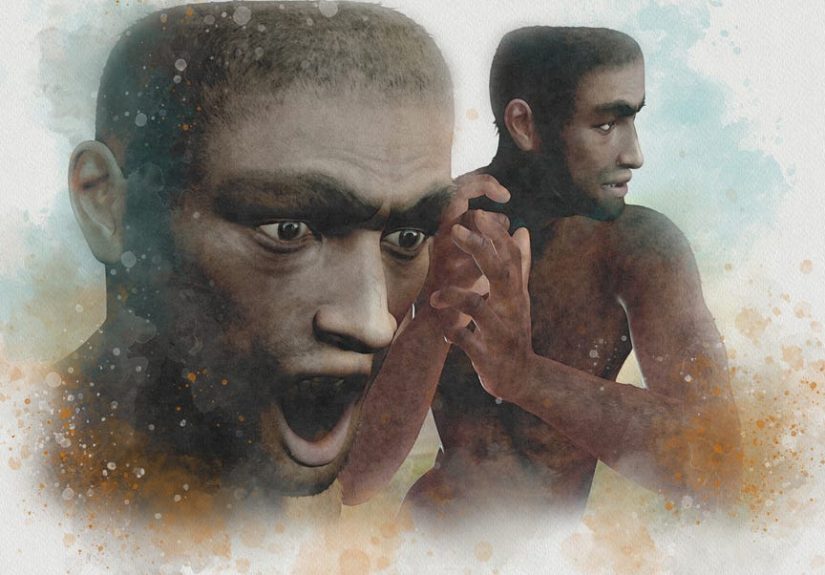
For museum visitors, discoveries like this change the experience of standing in front of a reconstructed Neanderthal face. Instead of seeing a generic Ice Age human, you start imagining a specific population history. This individual was not just part of a vanished species. He belonged to a distinct lineage, living in a real landscape, in a small group, under real environmental stress. That makes exhibits more powerful. The heavy brow and broad nose stop being visual trivia and start feeling like the surface of a much deeper story.
For students and science readers, the experience is often one of intellectual whiplash in the best possible way. Many of us grew up with a simple timeline: Neanderthals existed, modern humans arrived, some interbreeding happened, then Neanderthals disappeared. Ancient DNA has absolutely demolished that oversimplified version. The new experience of learning human evolution is more like opening a mystery novel where every chapter reveals a second mystery hidden underneath the first. Thorin is one of those chapter-ending revelations.
There is also the experience of realizing that DNA can preserve social history. That is maybe the wildest part. We usually think of genes as biology, not behavior. But population genetics can hint at things like isolation, mating networks, group size, and movement. It cannot tell us what Thorin said, believed, or feared. Still, it can show that his people seem to have stayed apart for a very long time. That gives readers an unusual feeling: you are watching social structure emerge from molecules. It is like hearing gossip translated into chemistry.
For people who have taken ancestry tests, the topic often feels even more immediate. Plenty of modern people already know they carry some Neanderthal ancestry. Reading about Thorin creates a layered experience: yes, Neanderthals contributed genes to later humans, but not every Neanderthal population necessarily participated in that story in the same way. Some groups mixed. Some may have remained separate. Some lineages spread widely. Others, like Thorin’s, may have been evolutionary holdouts. That makes the phrase “Neanderthal DNA” feel less like a novelty and more like a complicated family archive with missing folders and mislabeled boxes.
Even field archaeology takes on a different emotional texture after findings like this. A tooth is no longer just a tooth. A cave floor is no longer just sediment. Those objects become possible carriers of population history, climate history, and extinction history all at once. The experience of excavation, lab work, and sequencing is really an experience of patience. Years can pass between discovery and interpretation. Thorin’s case itself involved a long effort to reconcile archaeological dating with genetic evidence. Science here is not a lightning strike. It is a stubborn, careful argument with the past.
That may be why the story lingers. It offers wonder without fantasy. No hidden crystal skulls. No lost super-civilization. Just a cave, a molar, a genome, and a set of results strong enough to change how we think about the final Neanderthals of Europe. That is a pretty great experience for readers, because it shows that real science is fully capable of being dramatic without borrowing a single trick from science fiction.