Table of Contents >> Show >> Hide
- Why This Headline Went Nuclear
- Who Is Sophie Rain, Really?
- The $43 Million Claim: What It Might Mean (And What It Doesn’t)
- The Virgin Claim: Why the Internet Can’t Stop Arguing About It
- The Bop House Effect: When Adult Monetization Meets Influencer Culture
- Fame Has Side Effects: Safety, Stalking, and the Price of Going Viral
- From Viral Wealth to Public Debates: Charity and Politics Enter the Chat
- So… Is the Story True?
- What You Can Learn From This (Even If You Don’t Care About Influencers)
- Real-World Creator Experiences Related to This Story (A 500-Word Reality Check)
- Conclusion
If the internet had a favorite hobby, it would be taking one person’s life, turning it into a headline, and then arguing in the comments like it’s an Olympic event.
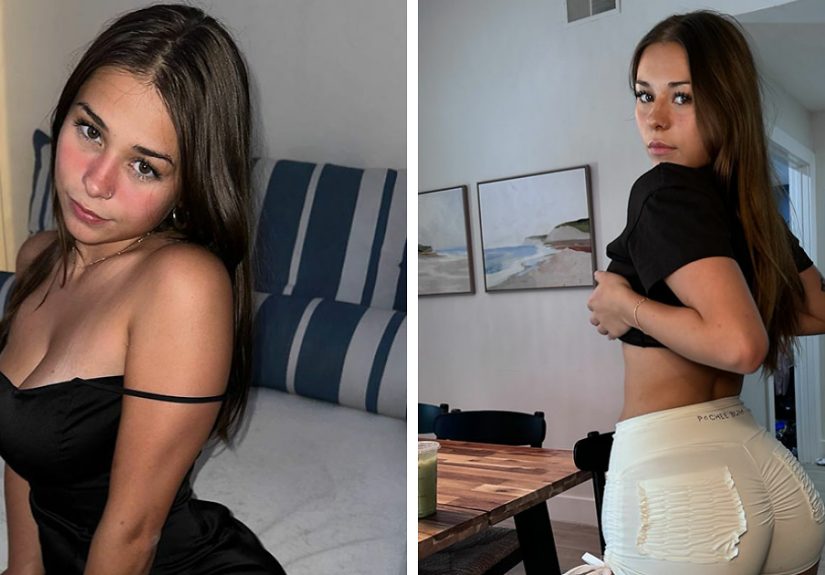
That’s basically what happened when Sophie Raina wildly popular OnlyFans creatorwent viral after sharing a screenshot that appeared to show roughly $43 million in earnings over a year, while also saying she’s a Christian and a virgin.
The story didn’t just spread because the number is huge (it is). It spread because it hits three hot buttons at once:
money, morality, and modern fame. Put those in a blender, hit “frappé,” and you get a cultural debate served with extra ice and zero chill.
Why This Headline Went Nuclear
Let’s be honest: “earned $43M” is clickbait catnip all by itself. Add “adult star” and people assume explicit content. Add “claims to be a virgin”
and suddenly everyone is auditioning for the role of Judge Judy of the Internet.
But the viral version of a story often leaves out the boring (and important) partslike what the number actually represents, how creator platforms pay,
and why someone’s personal boundaries don’t always match the public’s assumptions.
The short version
- Rain posted a screenshot showing a massive yearly total and it blew up across social media.
- In interviews, she has said she’s a virgin and that her faith is still central to her life.
- Some creators and commentators questioned the earnings claim, pointing out it’s hard to verify without documentation.
- Meanwhile, her fame kept expanding into influencer-culture territory (creator houses, brand moments, viral clips, andunfortunatelysecurity issues).
Who Is Sophie Rain, Really?
Sophie Rain is best described as a modern internet celebrity: part influencer, part subscription-content entrepreneur, part walking headline generator.
She became especially well-known after sharing earnings screenshots and discussing how she navigates her public image.
Multiple reports describe her as Florida-based, with a huge following across social platforms. She’s also been linked to creator-collaboration projects,
including the widely covered “Bop House” influencer-house concept (more on that soon).
Her brand is built on a contradictionon purpose
In the creator economy, attention is oxygen. A brand that feels “paradoxical” often travels farther: the sweet, wholesome persona next to a clearly
adult business model. The internet doesn’t know whether to clap, clutch pearls, or do both at onceso it shares.
The $43 Million Claim: What It Might Mean (And What It Doesn’t)
The claim that Rain earned around $43 million in a year appears to come from a screenshot of a creator dashboard that circulated widely online.
Major outlets covered her interviews about itand that’s the key word: covered. “Verified” is a different sport.
Gross vs. net: the least sexy part of viral money
When you see a big platform number, you should immediately ask:
Is this gross revenue? (before fees, taxes, and expenses) or net profit? (after costs)?
Some reporting about Rain’s later updates has used language like “gross” and “net,” which suggests the totals people debate may not be apples-to-apples.
And even if a dashboard is real, it still doesn’t answer:
How much went to taxes? What did she spend on management, editing, security, housing, travel, or assistants?
The internet loves revenue because it’s a big, shiny number. Accountants love net because it’s… real.
How can someone earn that much on a subscription platform?
Here’s the part that surprises a lot of people: the biggest earners on subscription platforms aren’t always relying on subscriptions alone.
The money often comes from a mix of:
- Monthly subscriptions (the “cover charge”)
- Tips (where “whales” can dramatically change totals)
- Paid messages and add-on content (often where the real revenue stacks up)
- Custom requests (within the creator’s boundaries)
- Traffic funnels from TikTok/Instagram/X to the paid platform
Several reports about Rain’s earnings have highlighted the idea of a high-spending fan (a so-called “whale”) contributing an enormous amount over time.
Whether you find that impressive, unsettling, or bothyes, that’s part of the model for top-tier creators across the space.
Not everyone buys the number
Public skepticism became part of the story too. Some adult-industry figures and commentators openly questioned whether the earnings screenshot was
representative, complete, or verifiable. That pushback helped the headline spread even furtherbecause nothing fuels virality like a loud “No way.”
The Virgin Claim: Why the Internet Can’t Stop Arguing About It
Rain has said in interviews that she’s a virgin and that she’s waiting until marriage. That statement collides with the assumptions many people carry
about adult platformsand that collision is exactly why it becomes a news hook.
“Adult content” is not one single thing
People tend to imagine the most extreme version of whatever they’re uncomfortable with. But adult subscription platforms include a wide range of content
styles and boundaries. Some creators do explicit work; others emphasize teasing, lingerie-level content, or solo-only material.
In other words: a person can run an adult business without living inside the public’s most graphic mental picture of it. That doesn’t mean the work is
“wholesome.” It means the category is broader than the stereotype.
Why her faith becomes part of the business conversation
Rain’s interviews have included discussion of her Christian faith and how she reconciles it with her career. For supporters, it reads like personal
autonomy: “My faith is mine, my choices are mine.” For critics, it reads like a contradiction they want to interrogate.
The deeper question isn’t really about Rain. It’s about how Americans treat money:
we admire it, resent it, moralize it, and then pretend we don’t care while refreshing the page.
The Bop House Effect: When Adult Monetization Meets Influencer Culture
One reason this story sticks around is that it’s not only about a creatorit’s about a system.
Rain’s name has been tied to “creator-house” style collaboration, especially the widely covered Bop House concept: multiple creators living/filming together,
producing viral short-form content that functions as marketing for their paid pages.
Why creator houses work (even when you roll your eyes)
Creator houses are basically content factories with better lighting. They compress:
collaboration, constant filming, cross-promotion, and audience growth into one place.
Traditional influencer houses did this for brand deals. Adult-leaning creator houses do it for subscriptions and upsells.
The controversy: platform reach vs. audience age
Critics argue that posting suggestive, algorithm-friendly content on mainstream platforms can act as a “pipeline” toward adult sitesespecially because
mainstream platforms have huge underage user bases.
Supporters counter that creators are adults, their paid pages are restricted, and the responsibility lies with platforms and parentsnot with a creator
making legal content. The truth is messy: the internet is a megaphone, and megaphones don’t come with perfect guardrails.
Fame Has Side Effects: Safety, Stalking, and the Price of Going Viral
Massive online attention is not just comments and followersit can become a real-world security issue.
Coverage around the Bop House scene has included incidents like unwanted visitors and even reported break-ins connected to where creators were believed
to be living.
This is the part of the creator economy nobody brags about in screenshots: the moment your address becomes “content-adjacent,” you have to start thinking
like a public figure. Security, privacy, and boundaries stop being optional.
From Viral Wealth to Public Debates: Charity and Politics Enter the Chat
As Rain’s profile grew, coverage expanded beyond adult-content discourse into philanthropy and politics.
Reports have highlighted high-profile donations (including a splashy contribution tied to a major creator-led charity initiative) and political commentary,
like her public response to proposals targeting OnlyFans creators with punitive taxes.
Why this matters
Once a creator becomes a symbol, everyone tries to use them to argue a bigger point:
“This proves the economy is broken.” “This proves we need new laws.” “This proves society is doomed.” “This proves I should start a TikTok, brb.”
Regardless of how you feel about her content, the conversation reveals something real:
online platforms have created a new class of micro-celebrities whose income can rival athletes and entertainerswithout the traditional gates of studios,
teams, or networks.
So… Is the Story True?
Here’s the responsible answer: parts of the story are clearly reported, parts are claimed, and some parts are
impossible to verify publicly without documentation.
- Reported: Major outlets covered Rain’s interviews, her viral earnings screenshot, and her public statements about faith and virginity.
- Claimed: The exact dollar amount and what it represents (gross, net, timeframe, and accounting details).
- Also true: The creator economy rewards attentionand this story is an attention supernova.
If you’re reading this for a simple verdict, you’ll be disappointed. If you’re reading it to understand why the internet is obsessed,
congratulationsyou’re already ahead of most comment sections.
What You Can Learn From This (Even If You Don’t Care About Influencers)
1) Virality is a business multiplier
A single viral moment can convert curiosity into followers, followers into subscribers, and subscribers into recurring revenue. The headline isn’t just
attentionit’s customer acquisition.
2) “Boundaries” are part of the product
In subscription media, exclusivity is everything. Sometimes that exclusivity is explicit content. Sometimes it’s access, personality, and perceived intimacy.
“I won’t do X” can be as brand-defining as “I do Y.”
3) Don’t confuse a screenshot with a spreadsheet
Online earnings posts are marketing, ego, or both. Without contextfees, taxes, costs, timeframeyour brain fills gaps with fantasy. And fantasy is great.
But it’s not bookkeeping.
4) Culture wars love a convenient protagonist
People aren’t only arguing about Rain. They’re arguing about sex work, religion, feminism, capitalism, platform responsibility, and the attention economy.
Rain is the thumbnail on the debate video.
Real-World Creator Experiences Related to This Story (A 500-Word Reality Check)
Even if you’ve never subscribed to a creator in your life, the experiences around stories like this have become oddly familiar across the internet.
Creators who work in adult-adjacent spaces often describe a strange “double life” that isn’t really doublebecause the internet merges everything into one
searchable identity.
One common experience is brand whiplash. A creator might post playful, PG-ish content on a mainstream platformdance clips, outfit videos,
behind-the-scenes momentsthen monetize separately on a paywalled page. The audience doesn’t always understand the separation. They treat the mainstream clip
as a “trailer” and feel entitled to the “movie,” even when the creator has set clear boundaries. That entitlement can show up as constant pushing:
“Do more.” “Go further.” “Prove it.” The result is pressure to escalate content just to keep attention from sliding away.
Another frequent experience is being reduced to a number. In most careers, you’re not asked to justify your paycheck to strangers all day.
In creator workespecially adult creator workpeople feel invited to debate your income like it’s a public referendum. “No way you made that.” “You don’t
deserve that.” “Teachers should make that.” All of those reactions might contain real societal frustrations, but creators often say it feels personal,
relentless, and dehumanizing.
There’s also the privacy tax. Going viral can mean being recognized in public, having old photos resurfaced, or dealing with obsessive fans.
Creators routinely talk about tightening routines: hiding addresses, using security, managing PO boxes, limiting location tags, and being careful with who gets
access to personal information. When influencer houses enter the picture, that risk can multiply because a physical location becomes part of the content lore.
A quieter experiencerarely headline-worthyis the emotional labor. Subscription platforms often reward responsiveness: chatting, messaging,
maintaining a “relationship vibe,” remembering details, staying upbeat. That can be exhausting in any customer-service role, but it becomes more intense when
the product is intimacy (even if it’s mostly performative). Creators commonly describe needing systems: scheduled breaks, assistants or moderators, and strict
rules about what they will and won’t do.
Finally, there’s the identity tug-of-war. If a creator is religious, private, or values-driven, the internet tends to demand consistency
based on stereotypes rather than real humans. People insist you must be one thing: pure or provocative, holy or “sinful,” victim or mastermind.
But real people contain contradictions. And in the creator economy, those contradictions can become both the main stressor and the main growth engine.