Table of Contents >> Show >> Hide
- What exactly counts as a “mid-century mini desk”?
- Why this desk style works so well in small spaces
- Signature design details to look for
- Size matters: a mini desk measuring cheat sheet
- Ergonomics: making a mini desk feel good, not just look good
- Materials and build quality: what to pay attention to
- Styling a mid-century mini desk so it looks intentional
- Buying checklist: how to pick the right mini desk
- Care and maintenance: keeping wood finishes looking great
- Vintage vs. new: which should you choose?
- Common mistakes people make with mini desks
- Real-life experiences with a Mid-Century Mini Desk
- Final thoughts
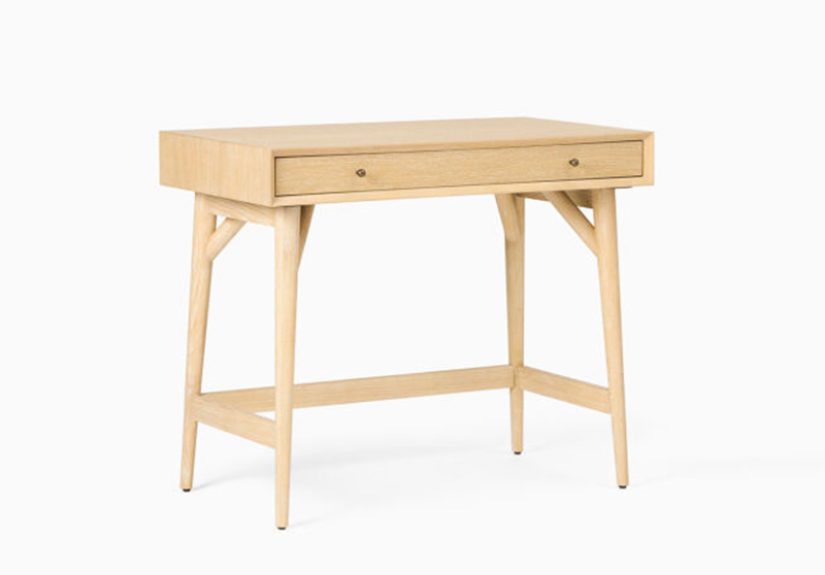
A mid-century mini desk is the furniture equivalent of a well-cut blazer: compact, confident,
and somehow it makes the whole room look like it has its life together. It’s small enough to fit into a tight
apartment corner, but “designed” enough to look intentionallike you planned your workspace instead of
assembling it out of random surfaces and hope.
In this guide, we’ll break down what makes a mini desk feel authentically mid-century, how to choose the right
size, how to style it so it doesn’t look like a lonely island in your room, and how to keep it looking good when
life happens (coffee rings, pen marks, and that one friend who uses your desk as a coaster-free zone).
What exactly counts as a “mid-century mini desk”?
“Mid-century modern” is a design movement that took off in the post–World War II era and is known for
clean lines, functional shapes, minimal ornamentation, and a love affair with warm woods and simple geometry.
A mini desk is the scaled-down versiontypically around 36 inches wide (give or take), with a slimmer
profile meant for small spaces.
Put them together and you get a desk that’s usually:
- Compact (often ~36″ wide), meant for apartments, bedrooms, and multipurpose rooms.
- Leggy (tapered legs are basically the skinny jeans of furnituretimeless, flattering, and everywhere).
- Simple (one drawer is common; too many drawers starts leaning “office admin,” not “mid-century cool”).
- Warm (walnut/teak tones, or finishes that mimic them).
- Functional (because mid-century design is big on “form follows function,” not “form follows vibes”).
Why this desk style works so well in small spaces
1) The “floating” look makes rooms feel bigger
Mid-century pieces often sit on slimmer legs, leaving visible floor space underneath. That airiness matters in
small rooms because your brain reads “more floor” as “more space.” Translation: your studio apartment gets a
subtle confidence boost.
2) It plays nice with mixed decor
A mid-century mini desk can blend with minimalist, Scandinavian, modern, eclectic, and even cozy “collected”
rooms. Its secret power is restraint: it’s stylish, but not bossy.
3) It’s multipurpose by nature
Depending on how you style it, a mini desk can be:
- a laptop workspace,
- a vanity (hello, mirror + stool combo),
- a foyer landing spot for keys and mail,
- or a “life admin station” where bills go to be ignored in a more organized way.
Signature design details to look for
If you’re shopping and want the desk to read “mid-century” (not “random small desk from the internet”), these
details help:
Tapered legs and angled supports
Tapered legs are a hallmark of the look, often paired with subtle angles or braces. They add that retro
silhouette without making the desk feel heavy.
Warm wood tones (real or well-done veneer)
Walnut is the poster child, with teak and similar tones close behind. Many desks use a mix of solid wood and
engineered wood with veneertotally normal at modern price points. The key is a finish that looks intentional
and consistent.
Minimal hardware (or none)
Mid-century pieces often use simple pulls, integrated cutouts, or undercut drawer lips. If the drawer knobs look
like they belong on a farmhouse dresser, the desk may be having an identity crisis.
Clean geometry
Look for rectangles, softened corners, and tidy proportions. Mid-century design loves simplicity, but it also
loves balancenothing should feel awkwardly chunky or overly fussy.
Size matters: a mini desk measuring cheat sheet
Mini desks come in a range, but a classic example is a 36″ wide by ~20″ deep desk at about 30″ tallbig enough
for a laptop setup, small enough to tuck into a corner.
Width
- 30–36″: true mini; great for laptops, journaling, light tasks.
- 40–48″: “still compact but serious”; better for dual-purpose work or a monitor + laptop.
Depth
- 15–20″: slim; works best with a laptop or a shallow monitor setup.
- 22–24″: more comfortable for monitors, keyboards, and actual elbows.
Height
Many desks land around 28–30 inches tall. If you’re shorter or taller than average, the “standard” height can
feel wrong fastespecially if your chair isn’t adjustable.
Ergonomics: making a mini desk feel good, not just look good
A mini desk can be ergonomicyou just need to set it up like you’re the main character in a wellness podcast
(minus the part where you wake up at 4:30 a.m. to drink celery juice).
Get the basics right
- Elbows near 90 degrees when typing; shoulders relaxed.
- Wrists neutral (not bent up like you’re dramatically waving from a parade float).
- Monitor distance roughly an arm’s length away for many people.
- Feet supporteduse a footrest if your chair height is raised to match the desk.
Mini desk challenge: monitor depth
If your desk is around 20″ deep, a large monitor stand can push the screen too close. Fixes include:
- a monitor arm clamp (if your desk design allows it),
- a slim monitor base,
- or using a laptop stand + external keyboard/mouse to reclaim distance.
Don’t kill your legroom
Avoid stuffing bins under the desk if you can. Under-desk clutter steals movement space, which matters for
comfortespecially on smaller desks where you need every inch of freedom.
Materials and build quality: what to pay attention to
Solid wood vs. veneer vs. engineered wood
A lot of modern mid-century desks use a smart mix:
- Solid wood in legs and structural parts for strength.
- Engineered wood for stability (less warping risk than some solid panels).
- Veneer for the beautiful wood look at a more accessible price.
Drawers: glide matters more than you think
A mini desk often has just one drawer, so that drawer becomes your whole “organizational personality.”
Smooth glides and a drawer that doesn’t wobble make the desk feel higher quality immediately.
Wobble test (the underrated dealbreaker)
Slim legs look great, but they also make stability important. If reviews mention wobble, believe themyour
coffee will notice, too.
Styling a mid-century mini desk so it looks intentional
Small-space home office corner
- Wall-mounted shelf above the desk to add storage without eating floor space.
- A compact task chair (bonus points for a wood + upholstered combo).
- A warm desk lamp with a simple silhouettearched, cone-shaped, or globe.
Bedroom work zone that doesn’t scream “spreadsheet”
- Keep desktop items minimal: tray, pen cup, one plant.
- Use a fabric cable sleeve so cords don’t become modern art.
- Add a small piece of art above it to make it feel like part of the room, not a temporary office invasion.
Vanity setup (the glow-up option)
- Add a mirror (round or softly rectangular fits the era).
- Use the drawer for makeup/skin care essentials.
- Choose a stool that can tuck in fully to keep the footprint clean.
Buying checklist: how to pick the right mini desk
Step 1: Measure your space like you actually want it to fit
- Measure the wall width and the depth you can spare without blocking walkways.
- Check chair clearance: can the chair slide in fully?
- Confirm drawer clearance if the desk sits near a bed or wall.
Step 2: Decide how you’ll use it (honestly)
If you’re mostly laptop + notebook, a 36″ desk is perfect. If you need dual monitors, a mini desk may feel like
trying to host Thanksgiving dinner on a bistro table.
Step 3: Pick your “must-haves”
- Storage: one drawer vs. open cubby vs. none.
- Finish: walnut tone, lighter oak tone, or painted mid-century color.
- Cable strategy: grommet hole, back gap, or clamp-friendly edge.
Care and maintenance: keeping wood finishes looking great
Wood desks are pretty low drama if you treat them like wood (not like a countertop in a chemistry lab).
A few habits go a long way:
- Dust regularly with a soft microfiber cloth.
- Use minimal moisture: damp, not wet. Dry afterward.
- Test cleaners in an inconspicuous spot first.
- Protect from heat and water: coasters and desk mats are your friends.
What about deeper cleaning?
For most finished wood, mild dish soap diluted in water can workjust don’t soak the surface, and don’t let
liquid sit. For stubborn residue or buildup, some guides suggest carefully using mineral spirits on appropriate
finishes (again: test first, go gentle, ventilate).
Scratches happenhere’s what to do
For tiny surface scratches, a touch-up marker or wax stick matched to the finish can help. For deeper damage,
you may need a more involved repair (or you can embrace it as “patina,” which is design-speak for “this desk
has been through things”).
Vintage vs. new: which should you choose?
Buying new
New desks give you predictable dimensions, easy returns, and finishes that fit modern living. Many also offer
sustainability certifications or responsible sourcing info. The trade-off is that some new pieces use engineered
wood and veneer rather than fully solid constructionoften perfectly fine for daily use, but worth understanding.
Buying vintage (or secondhand)
Vintage desks can have gorgeous wood grain and craftsmanshipplus you’re keeping furniture in circulation, which
is a sustainability win. But you’ll want to check stability, drawer function, and any finish issues. If a desk is
wobbly now, it won’t magically become stable after you bring it home and whisper encouraging words to it.
Common mistakes people make with mini desks
- Choosing style over comfort and ending up with a desk that looks great but hurts to use.
- Ignoring depth, then discovering the monitor is basically in their lap.
- Forgetting cable management, turning “mid-century modern” into “mid-century mess.”
- Overloading the desktop, which defeats the point of a light, airy silhouette.
Real-life experiences with a Mid-Century Mini Desk
People who live with a mid-century mini desk tend to describe the experience the same way they describe a good
coffee shop: it’s not huge, but it feels right. The desk doesn’t dominate the room, and that’s the point. In a
small space, furniture that stays in its lane is basically a roommate who always does their dishes.
The first “aha” moment usually happens during setup. A 36-inch-wide desk feels surprisingly capable for laptop
workespecially if you’re not trying to build a NASA control center. Many owners find they naturally become more
intentional about what stays on top: laptop, notebook, a lamp, maybe a small tray for daily essentials. The desk
quietly trains you to edit your clutter, which is either delightful or mildly threatening, depending on your
relationship with random piles of paper.
Another common experience: the desk becomes a design anchor. Mid-century pieces have a way of making even a
chaotic room feel pulled together. Add a simple chair, a warm bulb in a desk lamp, and one piece of art above it,
and suddenly the corner looks “curated.” Friends will assume you have a system. You don’t have to correct them.
Comfort-wise, mini desks often inspire a few ergonomic upgrades. Because the footprint is small, people tend to
invest in the small things that make a big difference: a laptop stand, an external keyboard, or a monitor arm.
Once you do that, the desk can feel surprisingly legit for daily work. Without those tweaks, the most frequent
complaint is monitor distanceespecially on slimmer depths. The fix is usually simple; the relief is immediate.
The drawer becomes its own storyline. With just one drawer, you learn what you truly need close by. Owners often
turn it into a “daily kit”: pens that work, a charger, sticky notes, a tiny notebook, maybe a tape measure for
reasons nobody can fully explain. The drawer is where the desk proves it’s functional, not just pretty. And
because it’s small, it’s harder for it to become a black hole of forgotten stuffunless you’re very talented at
chaos, in which case: respect.
Over time, the desk’s finish tells the truth about your habits. People who use coasters and desk mats keep it
looking showroom-fresh. Everyone else develops a tiny constellation of marksminor scratches, a faint ring, the
ghost of a pen line from that one rushed phone call. The good news is that these desks tend to wear gracefully.
Mid-century style is forgiving; a little patina often looks like character, not failure.
The most fun surprise is how often the desk changes roles. It starts as a workstation, becomes a vanity during a
room rearrange, then turns into a landing zone during busy weeks. Owners frequently say the mini desk earns its
keep because it’s adaptable. It’s not the biggest desk you’ll ever ownbut it might be the one you keep the
longest because it fits wherever life decides your “office” is this year.
Final thoughts
A mid-century mini desk is a smart choice when you want real function without sacrificing styleor floor space.
The best one for you is the desk that fits your room and your routine: wide enough for your daily tasks,
deep enough for your screen setup, stable enough to survive enthusiastic typing, and finished in a tone that
makes you happy every time you walk past it.
Pick the right proportions, set it up ergonomically, and treat the surface kindly. Do that, and your little desk
will deliver big “I’ve got my life together” energyeven if your browser tabs say otherwise.