Table of Contents >> Show >> Hide
- What Is AG1, Exactly?
- Ingredient Transparency: Big List, Broad Categories
- Supplement Facts: What You Get Per Serving (And Why It Matters)
- Quality and Testing: The Part I Actually Get Excited About
- Does AG1 Actually Do Anything? Evidence-Based Expectations
- Taste, Mixability, and “Will I Actually Drink This?”
- Price: The Real “Active Ingredient”
- Safety, Side Effects, and Interactions
- How I’d “Grade” AG1 as a Dietitian and Health Editor
- Smart Alternatives (If AG1 Isn’t for You)
- Conclusion
- Experience Notes: A Dietitian-and-Editor Style “Trial Diary” (About 2 Weeks)
Greens powders are the “one-and-done” fantasy of modern wellness: one scoop, one shake, and boomyour body is basically a well-watered houseplant with perfect micronutrients. AG1 (formerly known as Athletic Greens) is the most famous name in that category, with a premium price tag and a premium-level fan club. It’s marketed as a daily health drink that combines vitamins and minerals, probiotics, plant compounds, and “stress adaptogens” into a single routine.
This review is written with two hats on: (1) the dietitian hat that cares about ingredients, evidence, safety, and realistic expectations; and (2) the health editor hat that cares about transparency, testing, taste, cost, and whether the marketing claims hold up under bright office lighting. The goal: help you decide if AG1 is a smart shortcut, an expensive habit, or simply not for you.
Quick note before we get into it: dietary supplements aren’t vetted like prescription medications, and “natural” doesn’t automatically mean “risk-free.” If you’re under 18, pregnant, nursing, have a medical condition, or take medications, check with a clinician before starting any multi-ingredient supplementespecially one that includes herbs, adaptogens, and concentrated micronutrients.
What Is AG1, Exactly?
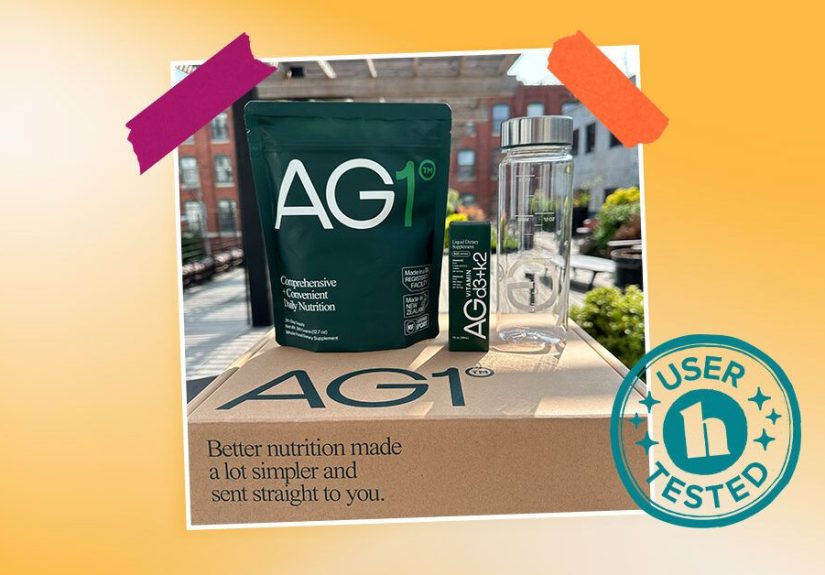
AG1 is an all-in-one greens powder you mix with water (or blend into a smoothie). The current “Next Gen” formula is positioned as an upgraded version and is sold in pouches or travel packs, typically as a monthly supply (30 servings). The scoop size also changed with the update (moving from 12g to 13g), which matters because it affects how much of everything you’re actually getting per serving.
At a high level, AG1 tries to cover multiple supplement categories at once:
- Vitamins and minerals (with several at high % Daily Value)
- Probiotics and prebiotics for gut support
- Plant “superfoods” (greens, fruit powders, botanicals)
- Adaptogens and functional mushrooms for stress/energy support
- Digestive enzymes (in some formulations/positioning)
In other words, it’s not just “dehydrated kale.” It’s designed to replace (or reduce) a pile of separate supplement bottlesat least in theory.
Ingredient Transparency: Big List, Broad Categories
How many ingredients are we talking?
AG1 has historically been described as having a long ingredient list, and the Next Gen update is described as bringing the total into the 80+ range depending on how it’s counted and presented. That’s not automatically good or badbut it does mean two things:
- It’s a “shotgun” approach. You get a wide range of compounds, often in blends, which can make it hard to know what dose of each ingredient you’re truly getting.
- More ingredients = more potential sensitivity. If you have IBS, food sensitivities, migraines triggered by certain botanicals, or you’re medication-sensitive, multi-ingredient products can be tricky.
What’s actually inside?
AG1 presents its formula in broad “support” groupingsmicronutrients, gut-support ingredients, antioxidants, superfoods, adaptogens, and so on. From a dietitian standpoint, the most meaningful parts to scrutinize are:
- The micronutrient profile: several B vitamins, vitamin C, and vitamin E can be quite high as a %DV in many greens formulas, including AG1. If you already take a multivitamin, you may be doubling up.
- The gut blend: AG1 highlights multiple clinically studied probiotic strains and also discusses storage needs (like refrigerating after opening) to help protect viability.
- The “stress/adaptogen” blend: adaptogens can be helpful for some people, but they can also interact with medications or feel stimulating/sedating depending on the person.
My editor brain adds: long lists look impressive on a label, but what matters is whether the product is well-made, appropriately dosed, and useful for your specific gaps.
Supplement Facts: What You Get Per Serving (And Why It Matters)
Here’s where AG1 tends to stand out: the vitamin and mineral panel can be robust. In publicly discussed Supplement Facts reporting for AG1, a single serving is often described as around 50 calories with small amounts of fiber and protein, plus a wide range of vitamins and mineralssome at very high %DV (notably vitamin C, vitamin E, and several B vitamins like B12 and biotin).
That can be a plus if you truly struggle with nutrient gaps (limited diet variety, frequent travel, appetite issues, inconsistent produce intake). But it can be a minus if you:
- already take a multivitamin
- use fortified foods aggressively (cereal, energy drinks, bars)
- take hair/skin/nails supplements (often high in biotin)
- have lab tests that can be affected by high-dose biotin
Dietitian reality check: “more” isn’t always “better,” especially for fat-soluble vitamins (which can accumulate) and for people stacking multiple supplements. The safest approach is to audit what you already take before adding an all-in-one product.
Quality and Testing: The Part I Actually Get Excited About
Supplements live in a weird world: you can buy them almost anywhere, yet quality can vary widely across brands. So when a supplement has credible third-party certification, it’s worth paying attention.
NSF Certified for Sport
AG1 highlights being NSF Certified for Sport, a program that includes testing and auditing designed to help verify label claims and screen for a large panel of substances banned by many major athletic organizations. For competitive athletes, that matters. For non-athletes, it still signals that a product is taking quality systems seriously.
Translation: this doesn’t guarantee the product will “work” like magicbut it can reduce the risk of contamination or label mismatch, which is one of the biggest practical issues in the supplement category.
Heavy metals and contaminants
Greens powders are made from plants, and plants come from soil. Soil can contain heavy metals. That’s why reputable brands test for contaminants and compare results to recognized guidelines. AG1 discusses testing for impurities and referencing third-party standards used in the industry.
Health editor note: if you’re shopping any greens powder (AG1 or not), look for transparent testing practices and credible third-party verification, not just “we test” marketing copy.
Does AG1 Actually Do Anything? Evidence-Based Expectations
Let’s separate what AG1 can realistically do from what people want it to do.
What AG1 may help with
- Filling small nutrient gaps if your diet is inconsistent (think: “I’m a meals-are-a-suggestion person”). A concentrated micronutrient blend can help support baseline intake.
- Routine building (yes, that counts). A consistent morning habit can be a gateway to better hydration, more mindful breakfast choices, and fewer skipped meals.
- Digestive support for some peopleespecially if a greens powder includes probiotics/prebiotics. That said, some people experience temporary gas or bloating when starting.
What AG1 probably won’t do (by itself)
- Replace fruits and vegetables. You don’t get the same chewing, volume, fiber diversity, or food-based satiety.
- Cause weight loss. Greens powders don’t override energy balance. They can support routines, but they aren’t fat-loss engines.
- Fix fatigue caused by sleep debt, iron deficiency, depression, or overtraining. If you’re exhausted, the best “supplement” might be a blood test and a bedtime.
A good way to think about AG1: it’s a convenience tool, not a nutritional get-out-of-jail-free card.
Taste, Mixability, and “Will I Actually Drink This?”
Many greens powders taste like someone waved a piece of spinach near a multivitamin and called it a beverage. AG1 has worked hard on flavor (including new flavor options discussed in recent coverage), and most reviewers describe it as more palatable than many competitorsstill “green,” but smoother and mildly sweet.
My practical tip: if you’re taste-sensitive, don’t start by chugging it in plain water at 6 a.m. Try:
- cold water + ice (seriously, temperature helps)
- blending into a smoothie with banana or pineapple
- using slightly less water if you prefer stronger flavor
If a supplement tastes bad, compliance drops to zeroand even the best formula can’t help you from the back of the pantry.
Price: The Real “Active Ingredient”
AG1 is expensive compared to many greens powders. Commonly advertised pricing in the U.S. market is roughly $79/month with a subscription and around $99 for a one-time purchase, with variations depending on format (pouch vs. travel packs) and promotions. Some listings on major retailers can be higher.
Dietitian math: if AG1 replaces multiple products you already buy (multivitamin + probiotic + “extras”), the cost can feel more reasonable. But if you’re currently spending $12 on a basic multivitamin and eating a decent diet, AG1 may be an upgrade you don’t actually need.
Who the cost makes sense for
- people who genuinely won’t take multiple supplements
- frequent travelers who struggle with consistent nutrition
- athletes who value third-party certification
- busy professionals who treat routine like a survival skill
Who should probably pass
- anyone on a tight budget
- people already taking a multivitamin + probiotic + specialty supplements
- those with very sensitive digestion (unless cleared by a clinician)
- teens/minors unless a clinician recommends it
Safety, Side Effects, and Interactions
Most healthy adults tolerate greens powders fine, but “fine” isn’t the same as “no notes.” Common early side effects people report with greens powders include gas, bloating, or changes in bowel habitsespecially during the first couple of weeks as the gut adapts.
The bigger safety concerns tend to be about stacking and interactions:
- Stacking micronutrients: If AG1 is combined with a multivitamin, fortified foods, and specialty supplements, you can push certain nutrients unnecessarily high.
- Medication interactions: Multi-ingredient blends that include botanicals/adaptogens can be a concern for people on thyroid meds, blood thinners, diabetes meds, SSRIs, or immunosuppressants. This isn’t “AG1 is dangerous”it’s “talk to your clinician when you add a complex supplement.”
- Lab-test interference: High-dose biotin is famous for interfering with certain lab assays. If you’re getting lab work, tell your clinician about any supplement that includes biotin.
Also: dietary supplements in the U.S. are regulated differently than medications, and certain claims require a DSHEA disclaimer (the well-known “not evaluated by the FDA” language). That doesn’t mean supplements are worthlessit means you should treat marketing claims as hypotheses, not guarantees.
How I’d “Grade” AG1 as a Dietitian and Health Editor
What AG1 does well
- Convenience: one scoop simplifies routines
- Broad nutritional coverage: robust micronutrient panel for many users
- Quality signaling: credible third-party certification matters
- Better-than-average palatability: compared with many greens powders
Where it falls short
- Price: it’s a premium product, period
- Blend opacity: lots of ingredients, not always clear dosing by component
- Not a food replacement: it can’t replicate a high-fiber, high-produce diet
Bottom line: AG1 is a high-quality, convenience-first greens powder that can make sense for certain lifestylesespecially when routine and quality testing are top priorities. But it’s not essential, and it’s not the only way to support gut health, micronutrient intake, or daily energy.
Smart Alternatives (If AG1 Isn’t for You)
If you’re tempted by AG1’s “all-in-one” idea but not the price, here are budget-friendlier strategies that often deliver similar outcomes:
- The “boring but effective” combo: a basic multivitamin + a targeted supplement only if you have a known deficiency (confirmed by labs).
- Food-first upgrade: add one produce habit daily (a bagged salad, frozen berries, or a smoothie you actually enjoy).
- Gut support without the confetti cannon: choose one clinically supported probiotic strain (or fermented foods) instead of a multi-blend.
If you still want a greens powder, prioritize third-party testing, clear labeling, and an ingredient profile your stomach agrees with. The best supplement is the one you tolerate and consistently usewithout ignoring the basics (sleep, protein, fiber, hydration).
Conclusion
AG1 is best viewed as a premium “daily nutrition insurance policy” for adults who value convenience and third-party certificationand who can justify the monthly cost. It may help fill nutrient gaps and support routine-building, and it’s positioned with strong quality signals compared to many competitors. But it won’t replace a balanced diet, and it’s not a magic fix for fatigue, weight loss, or chronic stress.
If you’re considering it, do a quick personal audit first: What supplements are you already taking? What foods are you missing? And what problem are you actually trying to solvenutrient gaps, gut comfort, energy, or consistency? The clearer your goal, the easier it is to decide whether AG1 is a helpful tool or an expensive vibe.
Experience Notes: A Dietitian-and-Editor Style “Trial Diary” (About 2 Weeks)
Since people love real-world experiences (and because no one wants to buy a pricey tub of green powder just to learn it tastes like lawn clippings), here’s a realistic, composite-style “trial diary” based on common patterns health editors hear from testers and dietitians hear from clients. Not medical advicejust what tends to happen when a person adds a concentrated greens + micronutrient supplement to a normal life.
Days 1–3: The honeymoon… and the stomach negotiations
Most first impressions come down to taste and texture. If you mix AG1 in cold water and actually shake it hard, it’s usually smooth enough. The “green” flavor is present, but many people find it tolerableespecially compared to bargain greens powders. The most common early side effect is mild bloating or extra gas, which makes sense when you introduce new probiotics/prebiotics or concentrated plant compounds. A practical move is to start with half a scoop for a few days, take it with food, and keep everything else stable (don’t also decide it’s the perfect week to become a raw-cruciferous-vegetable hero).
Days 4–7: Routine lock-in
This is where the “one scoop habit” shines. People who previously skipped breakfast or forgot supplements often find AG1 easiest to keep because it’s a single behavior. A surprising benefit some users notice isn’t “superhuman energy”it’s that drinking something first thing in the morning increases total hydration for the day. That alone can improve perceived energy, digestion regularity, and even headaches for some people. In other words: sometimes the improvement is the routine, not a mystical ingredient.
Week 2: Subtle shifts (or… nothing obvious)
By the second week, most stomach adjustment effects calm down for people who tolerate the formula. Some report less bloating overall, more predictable bowel movements, or fewer “I ate chaos” digestive consequences. Others notice nothing dramaticand that’s normal. If your diet is already nutrient-dense and you’re sleeping well, you may not feel a fireworks-level difference from a supplement. A health editor’s favorite question here is: “What would we measure if we had to prove it?” Energy is subjective; labs, iron status, vitamin D levels, and diet quality are more objective. Many people don’t do baseline labs before starting, so they’re left judging by vibesuseful, but limited.
The “this is why I stopped” scenario
The most common reason people quit AG1 isn’t side effectsit’s cost. A month feels doable; paying month after month can be harder to justify, especially if the perceived benefit is subtle. Some people also realize they were already taking a multivitamin, a probiotic, and a couple specialty supplements, making AG1 redundant (and possibly pushing certain nutrients higher than needed). In those cases, the better long-term plan is often simplifying to one targeted productor going food-first with a consistent smoothie, yogurt + fruit, or a daily salad kit.
Who tends to love it most
The “AG1 superfans” are usually people who value a single, reliable habit: travelers, busy professionals, athletes who care about third-party certification, and anyone who prefers drinking nutrients over remembering pills. They also tend to be people who accept that the supplement is there to support the basics, not replace them.
Final practical takeaway from this experience section: if you try AG1, give it at least two weeks, keep other variables steady, and decide based on your goal (routine, digestion comfort, diet gaps)not just the promise of feeling like a wellness influencer in a sunlit kitchen.