Table of Contents >> Show >> Hide
- From Online Store to Game Studio: Why Amazon Built Crucible
- What Is Crucible? A Quick Tour of Amazon’s Sci-Fi Shooter
- The Game Modes That Defined Crucible
- How Crucible Tried to Stand Out
- Launch Day: Hype Meets Reality
- Back to Closed Beta: A Rare, Public Reset
- The Shutdown: Why Crucible Didn’t Survive
- What Crucible Taught Amazon About Making Games
- Player and Industry Experiences with Crucible
- Conclusion
When you think of Amazon, you probably picture cardboard boxes, cloud servers, and maybe a smart speaker that
accidentally joins your conversations. In 2020, though, the company wanted you to think about something else:
a sci-fi shooter called Crucible. This free-to-play, team-based game was Amazon’s bold move
into the world of big-budget PC gaming, a statement that it didn’t just want to sell games it wanted to make
them.
Crucible didn’t have the fairy-tale ending Amazon hoped for, but the story behind it is still fascinating.
It’s a case study in how tough the modern gaming landscape can be, even for one of the biggest companies on
the planet. Let’s break down what Crucible was, why Amazon built it, how it played, why it struggled, and
what lessons it left behind.
From Online Store to Game Studio: Why Amazon Built Crucible
Amazon has been flirting with games for years. It owns Twitch, the massive livestreaming platform. It runs AWS,
the cloud backbone many online games rely on. It built its own game engine, Amazon Lumberyard. The one thing it
didn’t really have at scale was a hit game it made itself.
That’s where Amazon Game Studios (later branded simply as Amazon Games) came in. The company
gradually shifted from small tablet and mobile projects to more ambitious PC and console titles. Crucible was
positioned as the first big-budget, original PC game from this new push a way to show players and the industry
that Amazon could compete in the same arena as Blizzard, Riot, and Epic.
Developed by Relentless Studios, a Seattle-based team under the Amazon Games umbrella, Crucible
had been in the works for years before launch. The idea was straightforward on paper: combine the hero-based
shooting of games like Overwatch with the objective-focused, strategic depth of MOBAs and sprinkle in a sci-fi
setting full of strange creatures and dangerous environments. Easy, right? (Spoiler: not so easy.)
What Is Crucible? A Quick Tour of Amazon’s Sci-Fi Shooter
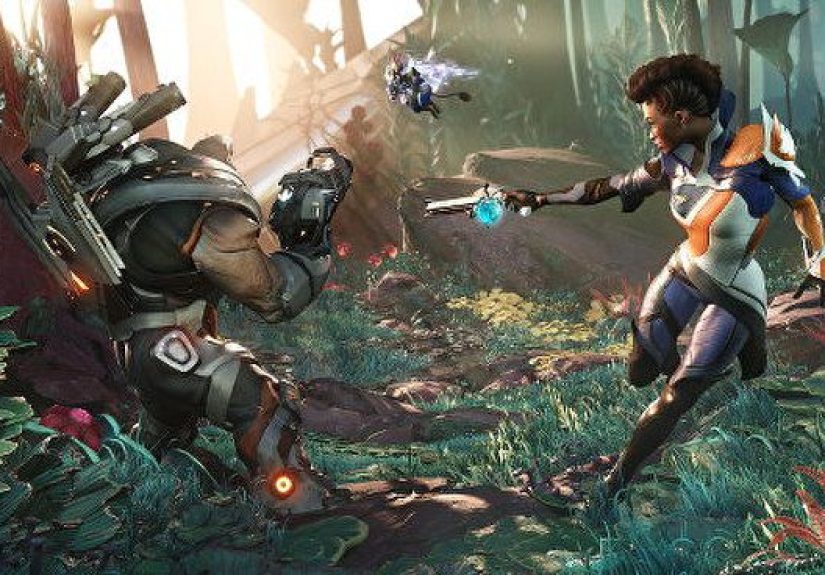
Crucible was a third-person, free-to-play sci-fi shooter built around team-based competitive
matches on a hostile alien planet. Instead of generic soldiers, you chose from a roster of unique characters
called hunters. Each hunter had its own personality, skill set, weapon, and ultimate ability.
One hunter might be a tanky robot with heavy firepower, another a sneaky ranged specialist, another a melee brawler
who loved getting in close. The cast mixed humans, robots, and aliens in a colorful, slightly chaotic style that
felt like a mashup of Saturday morning cartoons and high-stakes esports.
Instead of just shooting other players, matches combined PvP (player vs. player) and
PvE (player vs. environment). You weren’t just fighting rival teams you were also battling
giant insectoid creatures, capturing resource points, and leveling your character mid-match by collecting
Essence, the game’s upgrade currency. The more Essence you gathered, the stronger your hunter
became, similar to gaining levels in a MOBA.
The Game Modes That Defined Crucible
At launch, Crucible shipped with three main modes designed to offer different flavors of competition. Each leaned
on the same core ideas heroes, Essence, and the hostile alien world but asked players to approach the game in
different ways.
Heart of the Hives
Heart of the Hives was the mode most players associated with Crucible. Two teams of four dropped
onto the map and raced to defeat massive, AI-controlled “Hive” monsters that spawned periodically. Once a Hive
went down, it left behind a Heart, and teams had to fight for control of it. First team to secure three
Hearts won.
This mode emphasized positioning, team coordination, and timing. Do you commit to burning down the Hive as fast
as possible, or do you hide nearby and ambush the other team when they’re low on health? The constant push-pull
between PvE objectives and PvP combat gave Heart of the Hives a distinct identity and made it the flagship mode
for the game.
Harvester Command
Harvester Command was closer to a traditional objective shooter. Two teams of eight fought to
control Harvesters, devices scattered around the map that generated Essence over time. The more Harvesters
your team held, the faster your score climbed. First team to reach the point target won.
If you’ve played modes like Domination or Control in other shooters, the structure felt familiar. The twist here
was that controlling Harvesters didn’t just win you the game it also helped your team level up faster, unlocking
stronger abilities and power spikes over the course of a match.
Alpha Hunters
Alpha Hunters was Crucible’s take on the battle royale trend. Eight teams of two dropped into the
map and fought until only one duo remained. As matches went on, temporary alliances between solo players could
form, then inevitably break apart near the end. It was chaotic, unpredictable, and often the mode streamers gravitated
toward because it produced wild moments and dramatic finishes.
Over time, however, the developers pared back modes to focus on what they felt worked best especially Heart of
the Hives as they tried to sharpen the game’s identity.
How Crucible Tried to Stand Out
The hero shooter genre was crowded by 2020, so Crucible needed a hook. It tried to stand out in several key ways:
- PvPvE focus: Instead of pure player-vs-player arenas, the alien wildlife and Hives were central
to each match. Ignoring the environment was a fast way to lose. - On-the-fly progression: Collecting Essence to level mid-match added a sense of growth and
strategy. Knowing where to farm and when to fight mattered. - No strict class roles: Rather than traditional “tank/healer/DPS” roles, every hunter relied
on positioning, mobility, and map knowledge. Healing items and pickups in the world replaced dedicated support
classes. - Personality-driven hunters: The roster leaned on distinct silhouettes and abilities, trying to
make each character memorable for streamers and viewers.
Conceptually, Crucible sat somewhere between Overwatch, a MOBA like League of Legends, and a PvPvE game like
Hunt: Showdown. On paper, that blend sounded ambitious and modern. In practice, it turned out to be a tricky balance
to get right.
Launch Day: Hype Meets Reality
Crucible officially launched on May 20, 2020, for Windows PC via Steam. Amazon made a proper event
out of it, lining up popular Twitch streamers, trailers, and marketing beats to introduce its new sci-fi shooter
to the world.
For a brief moment, it worked. The game landed on the front page of Twitch, curious players downloaded it, and
early matches filled with people figuring out how to aim, where to find Essence, and when to push objectives. The
game’s presentation, colorful hunters, and polished animations showed that Amazon was willing to invest in production
values, not just tech.
But once the launch-week excitement faded, deeper issues surfaced:
- Some players found the pacing awkward not quite as snappy as a pure arena shooter, but not as strategically
rich as established MOBAs. - New players struggled with clarity: what to do, which objectives mattered most, and how each hunter’s role
fit into the bigger picture. - The game competed directly with juggernauts like Apex Legends, Overwatch, and Fortnite, all with entrenched
communities and years of refinements.
Reviews reflected this mixed picture. Critics often praised the ambition and core ideas but called out a lack of
focus and polish. Player retention numbers dropped quickly after launch, and Crucible struggled to maintain a
stable, healthy player base a death sentence for any online shooter.
Back to Closed Beta: A Rare, Public Reset
In a highly unusual move, Amazon decided that a standard patch cycle wasn’t enough. At the end of June 2020, just
weeks after launch, Crucible was pulled back into closed beta. The game was even delisted from
Steam for new players while the team reworked core systems.
During this phase, the developers:
- Retired two of the three launch modes to concentrate on Heart of the Hives.
- Adjusted maps, objectives, and UI to improve clarity.
- Ran community playtests and tried to gather detailed feedback from committed players.
The idea was sound: if the original release felt like an extended beta, why not treat it like one and iterate with
a smaller but more engaged audience? Unfortunately, this reset happened in full public view, and the broader gaming
audience largely moved on. In an era of endless live-service games, you rarely get a second chance at a first impression.
The Shutdown: Why Crucible Didn’t Survive
On October 9, 2020, Amazon announced that development on Crucible would end and that the game’s
servers would fully shut down in November. Players who spent money on in-game purchases were offered refunds, and
the team hosted a final goodbye event before turning off the lights.
Several factors contributed to this outcome:
- Player retention: Even with fixes, the game never attracted enough consistent players to sustain
matchmaking, updates, and competitive play. - Identity issues: Crucible’s hybrid design made it hard to explain in one sentence. Games that
explode in popularity usually have an instantly understandable hook. - Stiff competition: The hero shooter space was already dominated by games with massive communities
and esports ecosystems. - Live-service expectations: Successful online games need steady content drops, balancing, and
marketing. Getting that machine fully running is difficult even for seasoned publishers.
After Crucible’s cancellation, many developers shifted to other Amazon projects, including the MMO
New World and later Amazon-published titles. Crucible became one of the more high-profile examples
of how even a giant company can stumble in the games industry.
What Crucible Taught Amazon About Making Games
While Crucible didn’t last long, it wasn’t meaningless. For Amazon, the game was a crash course in what it really
takes to launch and maintain a successful online title.
A few key lessons stand out:
- “Big company” doesn’t equal “instant hit.” Gamers aren’t automatically impressed by a logo.
They care about fun, polish, and a strong identity above all else. - You need a sharp, simple pitch. “Hero shooter meets MOBA on an alien planet” is interesting,
but if players can’t quickly understand why your game is different, they’ll stick with what they know. - Live games need long-term commitment. Balancing, new content, community engagement, and
technical stability all have to come together. That takes years of iteration, not just a flashy launch. - Feedback loops matter. The move back to closed beta showed Amazon was willing to listen,
even if it was ultimately too late to save Crucible.
In the years since Crucible, Amazon has continued to evolve its strategy publishing MMOs like Lost Ark, launching
and expanding New World, and then more recently pivoting again toward smaller, more focused projects. Crucible is
now part of that learning curve: a reminder that building games is hard, no matter how big your cloud is.
Player and Industry Experiences with Crucible
To really understand Crucible, it’s helpful to look at how people experienced it from players jumping into their
first match to streamers trying to showcase it on Twitch, and even to game developers watching from the sidelines.
What It Felt Like to Play Crucible
For players who did click with Crucible, the game could be surprisingly fun. Dropping into the lush alien map,
hunting wildlife for Essence, and then suddenly clashing with another team over a Hive heart gave matches a
roller-coaster rhythm. Calm moments of farming could explode into chaotic brawls in a few seconds.
The hunters themselves were a highlight. Many players enjoyed experimenting with different characters and builds,
discovering which hunter matched their personality. Maybe you liked playing a mobile skirmisher who darted in and
out of fights, or maybe you preferred a sturdier character who could hold ground around an objective. Leveling up
mid-match added a satisfying feeling of growth by the end of a good game, your hunter felt noticeably stronger
than when you started.
At the same time, new players often felt overwhelmed. With so many overlapping systems Essence, PvE creatures,
shifting objectives, and hero abilities it wasn’t always obvious what your top priority should be. Some matches
felt like everyone was off doing their own thing instead of working together, simply because the game didn’t always
make team goals intuitive.
How Streamers and Viewers Saw the Game
From a streaming perspective, Crucible had both strengths and weaknesses. The wild creature designs, flashy abilities,
and last-second steals of Hive hearts could make for exciting clips. Twitch already belonged to Amazon, so it made
perfect sense to lean on streamers to build hype.
The challenge was that Crucible didn’t carve out a unique “spectator identity.” When viewers tuned in, they saw
something that looked a bit like Overwatch, a bit like a MOBA, and a bit like other sci-fi shooters they already
knew. Unless a streamer personally sold the experience, the game itself didn’t automatically hold attention in the
way a clear, instantly recognizable format like battle royale could.
Some creators gave it a fair shot, especially around launch, but as player numbers dipped, it became harder to keep
the game in rotation when other titles guaranteed bigger audiences and more reliable matchmaking.
What Developers and Analysts Took Away
For developers and industry watchers, Crucible quickly became a talking point about risk, timing, and identity
in live-service games. A few themes came up again and again in postmortems and analyses:
- Hybrid designs are powerful but risky. Mixing genres can produce something fresh, but it also
doubles the chance that players will compare you to existing giants and find you lacking. - Launch timing matters. Releasing into a crowded space without a strong differentiator is
always uphill work, even before you consider marketing noise and player fatigue. - Owning a platform isn’t enough. Twitch integration and marketing can create awareness, but
they can’t replace word-of-mouth from players who are genuinely hooked.
Many studios looked at Crucible as a reminder that your first major release doesn’t just need to be good; it needs
to be clear, compelling, and sustainable. For Amazon, that meant rethinking how it approached big in-house projects,
where to double down, and where to pivot toward publishing or partnering instead.
Lessons for Future “Big Tech” Games
Crucible also speaks to a bigger trend: tech giants trying to break into gaming. Whether it’s cloud platforms,
subscription services, or original games, there’s a recurring pattern: huge resources, high expectations, and a
steep learning curve.
The key takeaways from Crucible’s short life for any big tech company stepping into games are fairly universal:
- Start with a sharp concept, not just a big budget. Players rally around clear ideas, not
corporate strategies. - Respect the grind of live-service development. The real work begins after launch, not before
it, and that work must be supported for years to pay off. - Earn trust over time. Gamers are skeptical, especially when a newcomer arrives with flashy
marketing. Consistent communication, transparency, and meaningful updates matter more than one giant announcement.
Crucible may be gone, but its story still influences how Amazon and other tech giants think about making games.
In that sense, the sci-fi shooter that burned bright and faded fast still has something valuable to offer:
a clear reminder that in gaming, you can’t just buy passion. You have to build it, one good match at a time.
Conclusion
Amazon’s move into making games with the sci-fi shooter Crucible was ambitious, messy, and
ultimately short-lived. The game tried to fuse hero shooters, MOBAs, and PvPvE action into one package while
serving as Amazon’s big statement about its gaming future. Though Crucible didn’t last, it left behind useful
lessons about clarity, community, and the brutal difficulty of standing out in a crowded market.
For players, Crucible was a brief but memorable experiment on an alien world full of monsters, hunters, and
last-second objective steals. For Amazon, it was the first major step into game development and a stark reminder
that in this industry, even giants have to earn every player, every match, and every moment of fun.