Table of Contents >> Show >> Hide
- What Are Andrea Koeppel Ceramic Lamps, Exactly?
- The Craft Behind the Glow
- Signature Forms: Waves, Claws, Pillows, and “Wait… Is That a Lantern?”
- Design DNA: A Lineage of Minimal Shapes and Luxe Materials
- How to Style Andrea Koeppel Ceramic Lamps Without Overthinking It
- Buying & Collecting: What to Look For (and What to Avoid)
- Care & Maintenance: Keep the Glow, Skip the Drama
- FAQ: Quick Answers for Curious Collectors
- Experiences: What It’s Like to Live With a Gilded Ceramic Lamp (About )
- Conclusion: A Lamp That’s Also a Signature
Some lamps exist to be helpful. Others show up, flip on, and immediately start acting like the main character.
Andrea Koeppel’s ceramic lamps fall firmly into category twosculptural, luminous objects that somehow manage
to be both quiet and ridiculously luxurious at the same time.
If you’ve ever wanted lighting that feels like a piece of collectible design (but still does its job and
doesn’t demand daily affirmations), you’re in the right place. This deep-dive explores what makes Koeppel’s
ceramic lighting so distinctive, how it’s made, how to style it without turning your living room into a museum
gift shop, and what to consider if you’re buying or collecting.
What Are Andrea Koeppel Ceramic Lamps, Exactly?
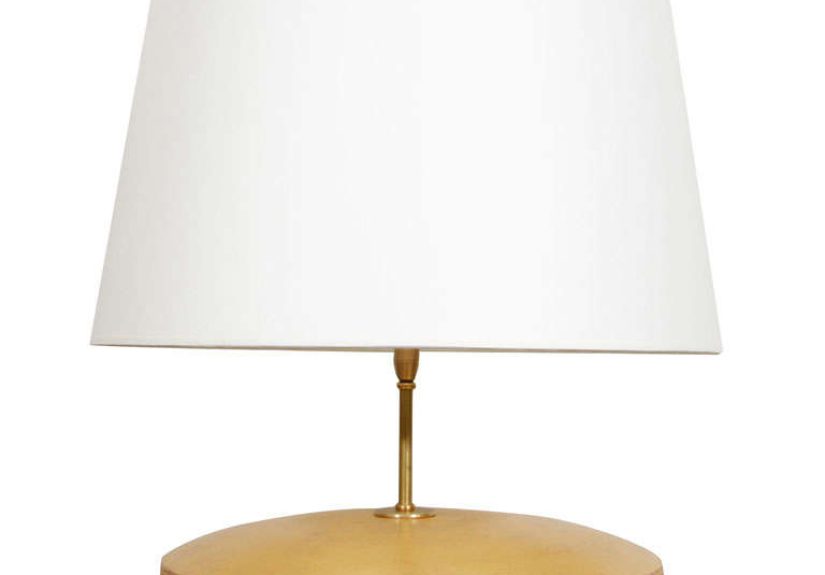
At a glance, Koeppel’s lamps read as minimal formsoften rounded, wave-like, clawed, pillow-soft, or
candlestick-tallfinished with a metallic glow that can look like warm gold, cool silver, or something
in-between depending on the room’s light. Up close, they reveal the telltale signs of being made by hand:
subtle asymmetry, a surface that reflects your space in a softly irregular way, and the kind of presence that
makes other “nice lamps” suddenly feel like they’re underdressed.
The core story is a blend of old-school ceramic technique and high-jewelry finishing: the forms are
hand-coiled (a traditional handbuilding method), fired with oxides, and then gilded in precious metals such as
23k gold, palladium, or 18k white gold. The result is lighting that feels sculptural and restrainedyet
undeniably rich.
The Craft Behind the Glow
1) Hand-Coiled Construction: Slow Design by Definition
“Hand-coiled” isn’t just a romantic phraseit’s a process. Coiling involves building a form by stacking and
blending rolled lengths of clay, gradually shaping the structure. It’s patient, physical, and famously
unforgiving: each coil has to join cleanly, the wall thickness must stay consistent, and the piece needs time
to rest as it’s built. In other words, it’s the opposite of “We’ll have 5,000 units by Friday.”
That method is part of why Koeppel’s lamps feel so alive. Coiled forms can be crisp or sensuous; they
can hold geometry or lean into organic curves. Either way, the maker’s hand is embedded in the silhouette.
2) Fired with Oxides: Where Depth Comes From
Oxides in ceramics are often used to influence color, depth, and surface character during firing. Think of
them as chemistry with personality: they can darken a recess, bring out subtle shifts, or create a tone that
feels more “aged metal” than “freshly unboxed.”
For lighting, this matters because lamps aren’t viewed once; they’re lived with. Oxide-fired surfaces can make
a piece look dimensional in the morning, warmer at dusk, and downright cinematic at night.
3) Gilding in Precious Metals: The “Quiet Luxury” Move
Koeppel’s work is often described through its gilded finishgold, palladium, or white-gold tones that feel
luxurious without going full Vegas. Metallic surfaces can be risky: too shiny and you get a disco-ball effect;
too flat and it reads like spray paint. The sweet spot is a nuanced sheen that catches light but still looks
intentional and refined.
In a well-lit room, the gilding behaves almost like a soft mirror, reflecting nearby colors and materials.
That’s why these lamps can harmonize with both neutral interiors and bolder, layered spaces.
4) Shades and Hardware: The Supporting Cast That Makes It Work
One reason collectible lighting can fail in real homes is that the “art” part is great, but the “lamp” part is
an afterthought. In Koeppel’s ecosystem, custom shades and thoughtfully chosen electrical components matter.
The shade shape controls glare, the material controls warmth, and the scale determines whether the lamp feels
balanced or top-heavy.
Translation: the lamp isn’t just pretty. It’s designed to be lived withread by, hosted under, and occasionally
admired from across the room like it’s a well-behaved houseguest who also happens to have incredible cheekbones.
Signature Forms: Waves, Claws, Pillows, and “Wait… Is That a Lantern?”
Koeppel’s lamp designs show a consistent point of viewrefined forms, sculptural silhouettes, and a finish that
reads as precious without screaming for attention. Across listings and collections, a few archetypes come up
again and again:
-
Wave Lamps: Curving, flowing forms that look like a frozen ripplepart sculpture, part
architectural gesture. -
Claw or Clawfoot Shapes: More angular or pointed contours that add drama without becoming
aggressive. -
Pillow Lamps: Rounded, softened volumes that feel surprisingly modernlike minimalism learned
how to relax. -
Candlestick / Wishbone Profiles: Taller silhouettes that bring a vertical, classical rhythm
to a room. -
Lantern Forms: Pieces that nod toward traditional lantern geometry but with a ceramic-and-metal
twist.
The larger point isn’t the nicknameit’s that these are sculptural families, not one-off random shapes. That
consistency is part of why designers reach for them: you can build a room’s lighting plan around the vocabulary.
Design DNA: A Lineage of Minimal Shapes and Luxe Materials
Koeppel’s lamps are frequently connected (directly or stylistically) to the tradition of refined modernist
interiors: clean outlines, careful proportions, and materials that do a lot of talking so the form doesn’t
have to shout.
One of the most useful ways to understand the aesthetic is to see it as restraint + richness.
The silhouette stays controlledoften smooth, deliberate, and simplifiedwhile the finish brings the luxury.
That combination is exactly why these lamps work so well in “quiet luxury” interiors, where the goal is to look
expensive without looking like you tried too hard.
There’s also an art-historical thread in the way sculptural lighting can reference decorative objects while still
functioning as everyday design. In other words: these lamps don’t pretend they’re just “decor.” They are small,
glowing sculptures that happen to be extremely useful.
How to Style Andrea Koeppel Ceramic Lamps Without Overthinking It
Because these lamps have a strong presence, styling is less about piling on “more” and more about choosing a few
smart companions.
Pairing Materials: Let the Lamp Be the Metallic Moment
Gilded ceramic plays especially well with matte or textured surfaces. Think:
- Wood: walnut, oak, or ebonized finishes that ground the shine
- Stone: travertine, limestone, soapstone, or marble for tonal harmony
- Linen and wool: soft textiles that keep the look warm and human
- Leather: especially saddle or caramel tones that echo the warmth of gold finishes
If you’re adding other metals, pick one supporting metal (like aged brass or blackened steel) and keep it
consistent. Multiple shiny metals can work, but it’s the interior equivalent of wearing three statement
necklaces at once. Possible? Yes. Peaceful? Rarely.
Where They Shine: Rooms and Placements That Make Sense
- Living room side tables: a wave or pillow form adds sculpture without stealing floor space
- Bedroom nightstands: soft gilding brings warmth; a custom shade helps keep bedtime lighting gentle
- Entry console: a single statement lamp instantly upgrades the “keys-and-mail” zone
- Study or library: sculptural lighting looks especially good next to books and art
Shade Talk: The Fastest Way to Change the Vibe
Shade choices can swing a lamp from “gallery calm” to “hotel lobby drama.” For a clean, timeless look, go for:
- Vellum or parchment-like shades: warm diffusion, classic tone
- Linen shades: soft texture, cozy glow
- Neutral silhouettes: drum or slightly tapered shapes that don’t compete with the base
Want it moodier? Choose a slightly deeper shade or a warmer bulb temperature. Want it crisp? Go lighter in shade
color and keep surrounding finishes simpler.
Buying & Collecting: What to Look For (and What to Avoid)
Koeppel’s lamps show up through galleries and dealers, as well as on high-end resale platforms and auction
records. If you’re collecting, your checklist should include the same things you’d watch for with any
ceramic-and-metal objectplus a few lighting-specific details.
Commission vs. Resale
Commissioned pieces often come with the advantage of customization: you may be able to choose
scale, finish tone, shade style, and hardware details. Resale pieces can offer faster access
and sometimes a different price pointthough condition and completeness (like missing shades) can vary.
Price Reality (With a Friendly Reminder)
Collectible lighting lives in a wide range. Retail listings have shown examples in the thousands to the
five-figure zone depending on the form, pairings, and commission details. Auctions can land lower (or higher),
depending on timing, condition, and whether shades are included.
The practical takeaway: don’t compare one listing to another without checking
size, whether it’s a pair, shade inclusion, and provenance.
Condition Checklist
- Surface: look for chips, cracks, repairs, or heavy wear on edges
- Gilding: check for rubbing or abrasion in touch-heavy spots
- Electrical: confirm wiring and sockets meet your local standards
- Shade: verify whether a shade is included and whether it’s original or custom-made later
- Stability: ensure the base sits flat and the weight distribution feels secure
Care & Maintenance: Keep the Glow, Skip the Drama
A ceramic lamp with a precious-metal finish is not fragile in a “don’t breathe near it” way, but it does
deserve smarter care than your average mass-market lamp.
- Dust gently: use a soft microfiber cloth; avoid abrasive pads that can dull metallic finishes
- Skip harsh cleaners: mild, barely damp cloths are safer than sprays and solvents
- Lift from the base: don’t grab shades or sockets like they’re carrying handles
- Use quality bulbs: LEDs reduce heat, which is kinder over the long haul
- Protect from repeated impact: ceramic is strong until it meets a corner at speed
The goal is simple: preserve the surface character and keep the lamp looking like it belongs in your homenot
a cautionary tale in a group chat.
FAQ: Quick Answers for Curious Collectors
Are Andrea Koeppel ceramic lamps functional for everyday use?
Yesthese are designed as working lamps, often paired with custom shades and thoughtfully selected components.
They’re meant to be used, not just admired from a safe distance.
Do gilded ceramic lamps feel too “formal” for casual interiors?
Not necessarily. In relaxed spaces, the trick is to balance the metallic finish with casual textureslinen,
oak, woven materials, or soft upholstery. The lamp becomes the “jewelry,” while everything else stays easy.
What’s the best room for a sculptural ceramic table lamp?
Living rooms and bedrooms are the easiest wins, followed by entry consoles and studies. Any spot where you want
a warm glow plus a visual anchor works.
How do I avoid glare with statement lighting?
Choose a shade that diffuses light (linen, vellum, parchment-like materials), and use warm LEDs. If the lamp is
on a side table, make sure the shade height blocks direct bulb view from a seated position.
Experiences: What It’s Like to Live With a Gilded Ceramic Lamp (About )
Here’s the part people don’t always tell you about collectible ceramic lighting: the “experience” isn’t just
visual. It’s behavioral. A lamp like this changes how you treat the corner of your home it lives insometimes
subtly, sometimes like a tiny interior designer moved in and started making notes.
Day one tends to feel like a small ceremony. You place it on a table, step back, and realize
the lamp is doing three jobs at once: lighting the room, acting as sculpture, and quietly judging your
extension-cord situation. The metallic surface catches ambient light even when the lamp is off, so the piece
doesn’t “disappear” in daylight the way many lamps do. Instead, it reads like an objectone that belongs there.
By week two, you notice how the finish behaves like a social chameleon. In morning light, it can
look soft and almost matte. In late afternoon, it warms up and starts reflecting nearby toneswood grain,
upholstery color, even the green from a plant you thought was purely decorative. At night, with the lamp on, the
shade and base work together: the shade throws functional light, while the gilded ceramic subtly amplifies the
glow, creating a halo effect that makes the whole area feel more intentional.
Then there’s the “touch factor.” People can’t help themselves. Visitors often reach for a
sculptural lamp base the way they reach for a piece of polished stone or a museum plinthcuriosity plus a little
disbelief. That’s where living with gilded ceramic becomes a lifestyle: you start positioning the lamp so it’s
admired but not constantly handled. A good rule is to give it a little breathing roomno tight clusters of
keys, coins, and mystery mail brushing against the finish every day.
Practical life shows up too. Ceramic lamps are often heavier than they look, which is a gift:
they’re stable, less likely to tip, and they feel grounded. But the same weight means you move them carefully.
You don’t slide them across a surface like a plastic lamp from a dorm room. You lift, you place, you adjust.
(And yes, you may find yourself saying the phrase “two hands” out loud like a polite but firm safety instructor.)
Over time, you stop thinking of it as “a lamp.” It becomes a familiar feature of the roomlike
a favorite chair or a well-hung piece of art. It influences choices around it: you might upgrade the side
table, simplify the clutter, or swap the bulb until the light is exactly the color you want. The lamp doesn’t
demand attention every momentbut it rewards attention whenever you give it some.
If you’re considering a Koeppel-style ceramic lamp, that’s the real experience: not just owning a beautiful
object, but watching a small part of your home become more composed, more luminous, andwithout trying too
hardmore you.