Table of Contents >> Show >> Hide
- What Makes a Great Apple Pie?
- Recipe 1: Classic All-American Double-Crust Apple Pie
- Recipe 2: Lattice-Top Apple Pie (Show-Off Pie That’s Actually Practical)
- Recipe 3: Dutch Apple Pie with Brown Sugar Streusel
- Recipe 4: Caramel Apple Pie (Deep Flavor, Big Crowd Energy)
- Recipe 5: Cheddar Crust Apple Pie (Sweet + Savory, Shockingly Addictive)
- Pro Tips for Foolproof Apple Pie
- Make-Ahead, Storage, and Reheating
- Common Apple Pie Problems (and How to Fix Them)
- Conclusion
- My Apple Pie Field Notes: 10 Lessons I Learned the Delicious Way
Apple pie is basically America’s edible group chat: everyone has an opinion, someone always brings up their grandma,
and the conversation gets weirdly intense around the holidays. But here’s the good news: you don’t need secret
pie-elf ancestry to bake a knockout homemade apple pie. You just need a few smart choicesapples that won’t melt
into applesauce, a flaky pie crust that behaves, and a filling that tastes like apples (not just cinnamon yelling).
This guide gives you several tried-and-true apple pie recipesfrom classic double-crust to Dutch apple pie and
caramel variationsplus the “why it works” behind each one. You’ll also get practical fixes for common disasters
(runny filling, soggy bottoms, shrunken crusts) so you can spend less time googling “why is my pie crying” and more
time eating.
What Makes a Great Apple Pie?
1) Pick apples that hold their shape
The best apples for pie are firm, flavorful, and not overly watery. If you only use very soft apples, your filling
can turn into sweet apple sludge. If you only use very tart apples, your pie can taste like it’s judging you.
A mix is often the move: something tart and structured (like Granny Smith) paired with something sweet and aromatic
(like Honeycrisp, Fuji, or Pink Lady). That blend gives you the classic “apple pie filling” texturetender slices
with a little biteand a flavor that’s bright, not flat.
2) Crust matters more than your confidence
A flaky pie crust comes from cold fat (butter, shortening, or both) and minimal handling. Warm fat = greasy,
tough crust. Overmixing = tough crust. The goal is visible bits of fat in the dough that melt in the oven and
create layers. Think: croissant vibes, but with fewer French words and more cinnamon.
3) Keep the filling juicy, not runny
Apples release liquid as they bake, especially when mixed with sugar. You need a thickener to keep the filling
sliceable: cornstarch for a glossy, clean set; flour for a more rustic texture; tapioca (instant) for a clear,
stable filling that holds up well. Your thickener choice affects the final bite almost as much as your apple choice.
4) Balance sweetness, spice, and acid
Cinnamon is iconic, but it’s not the whole personality. A little lemon juice keeps flavors bright. Brown sugar adds
caramel notes. A pinch of salt makes everything taste more like itself (yes, even dessertespecially dessert).
And if you’re feeling fancy, a tiny grate of nutmeg or a splash of vanilla can make your pie taste like it got a
promotion.
Recipe 1: Classic All-American Double-Crust Apple Pie
This is the “flag-waving, windowsill-cooling, someone’s-coming-over-so-we’re-being-serious” apple pie recipe.
It’s the baseline that every other apple pie recipe argues with.
Ingredients
- Pie crust: 2 homemade or store-bought 9-inch pie crusts (top + bottom)
- 7–8 cups peeled, cored, sliced apples (about 3–3.5 pounds)
- 3/4 cup granulated sugar (adjust to taste and apple tartness)
- 1/4 cup light brown sugar, packed
- 2 tablespoons lemon juice
- 1 teaspoon ground cinnamon
- 1/4 teaspoon nutmeg (optional but charming)
- 1/2 teaspoon fine salt
- 3 tablespoons cornstarch (or 1/4 cup all-purpose flour)
- 1 tablespoon vanilla extract (optional)
- 2 tablespoons unsalted butter, cut into small pieces
- 1 egg + 1 tablespoon water (egg wash)
- Optional: coarse sugar for sprinkling
Directions
-
Heat the oven: Preheat to 425°F. Place a baking sheet on the middle rack (this catches drips and
helps crisp the bottom crust). -
Mix the filling: In a large bowl, toss apples with sugars, lemon juice, cinnamon, nutmeg, salt,
cornstarch, and vanilla. Let sit 10–15 minutes. - Line the pie plate: Fit one crust into a 9-inch pie dish. Chill it while you prep the top crust.
- Fill: Spoon in apples, mounding slightly in the center. Dot with butter.
-
Top + seal: Add the second crust. Trim excess, tuck edges under, and crimp. Cut 4–6 vents in the
top crust (steam needs an exit plan). - Egg wash: Brush top with egg wash and sprinkle coarse sugar if using.
-
Bake hot, then steady: Bake at 425°F for 20 minutes, then reduce to 375°F and bake 35–45 minutes
more, until the crust is deep golden and the filling is bubbling in the center vent (not just around the edges). - Cool like you mean it: Cool at least 3 hours before slicing. Cutting early = filling flood.
Why it works
Starting hot sets the crust structure and boosts browning; lowering the temperature finishes the bake without
scorching. Cornstarch thickens the juices into that classic, glossy apple pie filling that holds a slice. The long
cool-down lets the thickener fully setyour patience becomes structural engineering.
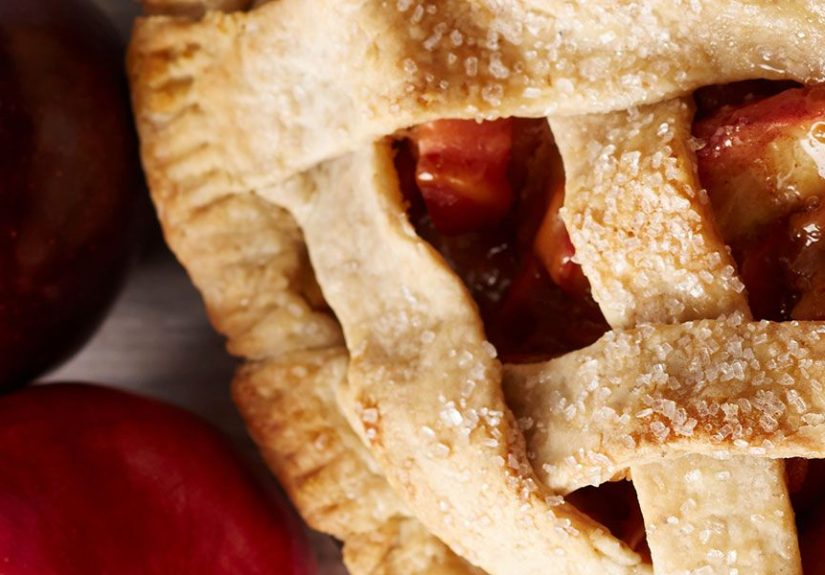
Recipe 2: Lattice-Top Apple Pie (Show-Off Pie That’s Actually Practical)
A lattice crust isn’t just prettyit also lets more moisture evaporate, which can help prevent a runny filling.
Plus, it screams “I have my life together,” even if your kitchen looks like a flour blizzard hit it.
Key differences from the classic
- Use the same filling as Recipe 1, but bump cornstarch to 3.5 tablespoons if your apples are very juicy.
- Roll the top crust and cut into 10–12 strips (about 1 inch wide).
- Weave strips over the filling, alternating over-under.
- Chill the pie 15 minutes before baking (helps lattice keep its shape).
Quick lattice tips
- Cold dough is calmer dough: If strips get floppy, chill them.
- Use a ruler (optional): Perfect strips are satisfying, but not required for deliciousness.
- Edge protection: If the rim browns too fast, use a pie shield or foil ring.
Recipe 3: Dutch Apple Pie with Brown Sugar Streusel
Dutch apple pie is what happens when apple pie meets crumb cake and decides to never look back. No top crust
wrestlingjust a buttery streusel that bakes into crisp, caramelized rubble (said with love).
Ingredients
- Crust: 1 bottom crust (homemade or store-bought)
- Filling: Use Recipe 1 filling, but add 1/2 teaspoon extra cinnamon and 1 tablespoon extra lemon juice
-
Streusel topping:
- 3/4 cup all-purpose flour
- 1/2 cup light brown sugar, packed
- 1/4 cup granulated sugar
- 1/2 teaspoon cinnamon
- 1/4 teaspoon salt
- 6 tablespoons unsalted butter, melted
- Optional: 1/3 cup chopped pecans or walnuts
Directions
- Preheat oven to 400°F. Place a baking sheet on the middle rack.
- Line pie plate with bottom crust. Chill.
- Mix filling, add to crust, and mound slightly.
- Make streusel: stir flour, sugars, cinnamon, salt (and nuts if using). Add melted butter and mix until clumpy.
- Sprinkle streusel evenly over apples (go to the edges).
- Bake 15 minutes at 400°F, then reduce to 375°F and bake 40–50 minutes more.
- Cool at least 2–3 hours before slicing.
Why it works
Streusel acts like a built-in moisture manager: it browns, crisps, and gives you texture contrast without requiring
a full top crust. If your goal is “maximum crunch per bite,” Dutch apple pie is your best friend.
Recipe 4: Caramel Apple Pie (Deep Flavor, Big Crowd Energy)
Caramel apple pie takes classic apple pie and adds a buttery, brown-sugar depth that feels like fall in a sweater.
The trick is to keep the caramel from turning the filling into a sticky puddleso we use a thicker set and add
caramel in a controlled way.
Ingredients (changes from Recipe 1)
- Replace 1/4 cup granulated sugar with 1/4 cup dark brown sugar
- Use 3.5–4 tablespoons cornstarch (caramel adds extra looseness)
- 1/2 cup thick caramel sauce (store-bought or homemade), divided
- Optional: 1–2 teaspoons apple cider vinegar for extra brightness
Directions
- Prepare filling like Recipe 1, but drizzle in 1/4 cup caramel and toss gently.
- Assemble pie with top crust or lattice.
- Bake as in Recipe 1. Cool fully.
- Before serving, warm remaining 1/4 cup caramel and drizzle over slices (not the whole pie unless you enjoy chaos).
Flavor upgrades
- Salted caramel: Add a pinch of flaky salt right before serving.
- Bourbon caramel: A teaspoon or two of bourbon in the caramel adds warmth without tasting boozy.
- Spice swap: Add a pinch of cardamom for a “wait, what is that?” moment (in a good way).
Recipe 5: Cheddar Crust Apple Pie (Sweet + Savory, Shockingly Addictive)
If you’ve never had cheddar cheese with apple pie, please welcome yourself into a new era. The salty, tangy cheddar
makes the apples taste even more apple-y. It’s not “cheese on dessert” weirdit’s “why didn’t I do this sooner”
weird.
Cheddar pie crust add-in
Use your favorite flaky pie crust recipe and add 3/4 to 1 cup finely shredded sharp cheddar to the dry ingredients
before cutting in the butter. Keep everything cold. If the cheese clumps, break it up with your fingers like you’re
politely disagreeing with it.
Best filling for cheddar crust
Keep the filling simple: use Recipe 1, but reduce cinnamon to 3/4 teaspoon and add 1 extra pinch of salt. The cheddar
wants to share the spotlight, not be drowned out by spice.
Pro Tips for Foolproof Apple Pie
Prevent a soggy bottom crust
- Use a hot baking sheet: Preheat it in the oven so the bottom crust hits heat immediately.
- Don’t over-liquidate: If your apples are dripping after macerating, drain a few tablespoons of juice.
- Docking is optional: For fruit pies, docking the bottom crust isn’t always necessary, but chilling is.
Keep the filling from turning watery
- Bubble check: The filling must bubble in the center of the pie, not just at the edges.
- Use enough thickener: Juicier apples need a bit more cornstarch or tapioca.
- Cool completely: This is where sliceability is born.
Get a deeply golden, not-burnt crust
- Egg wash: It’s the easiest upgrade for shine and color.
- Shield the edge: Foil or a pie shield after the first 30–40 minutes if browning too quickly.
- Rotate: If your oven browns unevenly, rotate the pie once during the lower-temperature phase.
Make it taste like apples, not just cinnamon
- Use lemon: Acid keeps apple flavor bright and prevents “flat sweet.”
- Try a blend of apples: One variety rarely gives the best texture and flavor combo.
- Salt matters: A pinch in the filling wakes everything up.
Make-Ahead, Storage, and Reheating
Make-ahead options
- Pie dough: Make 2–3 days ahead and keep refrigerated, or freeze up to 3 months.
- Assembled unbaked pie: Freeze solid, wrap well, and bake from frozen (add extra time).
- Baked pie: Bake the day before serving for best slicing (yes, really).
Storage
- Room temp: 1 day, loosely covered.
- Fridge: 3–4 days for best quality.
- Freezer: Wrap slices individually for grab-and-go pie moments.
Reheating
Warm slices in a 300–325°F oven until heated through. The microwave works in emergencies, but it can soften crust.
If you must microwave, finish with a few minutes in a toaster oven to bring back some crispness.
Common Apple Pie Problems (and How to Fix Them)
“My filling is soup.”
Usually: not enough thickener, pie wasn’t baked until the center bubbled, or it was sliced too hot. Next time,
bake longer at the lower temp, tent the top with foil if needed, and cool fully.
“My crust shrank.”
Usually: warm dough or over-stretched dough. Chill before baking, and when fitting the dough into the pan, lift
and settle it instead of pulling it tight like you’re tucking in a bedsheet.
“My top is browned but the apples are still firm.”
Tent with foil and keep baking. Firm apples can be greatraw-ish apples are not. Also consider slicing apples a bit
thinner next time.
Conclusion
The best apple pie recipe isn’t one “perfect” formulait’s a small set of smart decisions: choose apples that hold
up, thicken the juices, keep your crust cold, and bake until the center bubbles like it means it. Once you’ve got
that foundation, you can customize endlessly: lattice for style points, streusel for crunch, caramel for drama, or
cheddar crust for the sweet-salty crowd.
If you’re new to homemade apple pie, start with the Classic Double-Crust. If you’re short on time (or patience),
go Dutch with streusel. And if you want people to say “Waitwhat is in this?” in the best possible way, try the
Cheddar Crust variation. Whatever you choose, remember: pie is forgiving, and even “imperfect” apple pie tends to
disappear fast.
My Apple Pie Field Notes: 10 Lessons I Learned the Delicious Way
I used to think apple pie was a single recipe you either “had” or you didn’tlike a secret handshake. Then I made
enough pies to realize it’s more like driving: there are rules, but everyone has a style, and occasionally someone
panics and overcorrects. Here are the real-world, slightly sticky lessons that made my apple pie recipes better.
1) The apple mix is everything. The first time I used only one apple variety, the pie tasted fine,
but the texture was offeither too soft or too sharp. Mixing apples felt like a chef move until I realized it’s
basically a playlist: you need one solid “bassline” apple that holds shape and one “top note” apple that brings
fragrance and sweetness. Suddenly the filling tasted layered instead of one-note.
2) Cold dough is good dough. “Keep it cold” sounds annoying until you’ve watched a warm crust slump
like it’s giving up on life. Now I treat pie dough like a diva: it gets chill time, it gets space, and it does not
appreciate being over-handled. When I respect that, I get flaky layers instead of tough, cracker-ish sadness.
3) The oven is not a suggestion box. I used to pull pies when the crust looked golden, assuming the
filling was fine. Spoiler: it was not fine. The moment I started waiting for the filling to bubble in the center,
my “why is it runny?” era ended. Not immediately, but enough that I stopped pretending ice cream was a “thickener.”
4) Cooling is part of the recipe. I know. Cooling is emotional hardship. But slicing too early is
like trying to cut brownies straight from the oventechnically possible, spiritually regrettable. When I finally
cooled my pie fully, I got clean slices that looked like the photos. I also felt powerful, which is rare and nice.
5) A pinch of salt fixes more than you think. The difference between “sweet” and “wow” can be
literal grains. Salt makes apples taste brighter, cinnamon taste warmer, and butter taste more buttery. It’s
basically the backstage crew of flavor: invisible, essential, slightly underappreciated.
6) Streusel is a shortcut I fully support. When I’m tired, Dutch apple pie is my best friend. No
weaving. No perfect top crust. Just crumble topping that makes people happy. It also forgives minor filling errors
because the crunch distracts everyone. That’s not cheatingthat’s strategy.
7) Lattice is easier than it looksuntil it isn’t. The first lattice I made looked like a math
problem. The second looked like modern art. By the third, I realized the secret: chill the strips, work fast, and
remember that nobody complains about “uneven lattice” while eating warm pie.
8) Caramel is best used with boundaries. Pouring caramel into the filling sounds romantic until the
pie becomes a sweet lava zone. I learned to add a little inside and keep most for drizzling on slices. It tastes
more intentionaland your crust stays crisp instead of turning into caramelized mush.
9) Cheese with apple pie is real and glorious. I resisted cheddar crust because I thought it would
taste like a grilled cheese went rogue. It does not. It tastes like sweet apples got a salty, tangy hype squad.
Now I keep sharp cheddar on standby like a responsible adult with a very specific hobby.
10) The “best” apple pie recipe is the one you’ll make again. If elaborate crust work stresses you
out, choose streusel. If you love the look of a bakery pie, go lattice. If you’re feeding a crowd, deep-dish and
caramel are showstoppers. The point isn’t perfectionit’s learning your own pie rhythm, one buttery slice at a time.