Table of Contents >> Show >> Hide
- Who Were Delson or Sherman, and Why Did Brooklyn Notice?
- What an Architect Visit Reveals About Their Design Language
- Brownstones, Landmarks, and the Fine Art of Not Starting a Fight with History
- Local Artisans, Material Intelligence, and Why the Details Feel So Good
- Sustainability Before It Became Everybody’s Favorite Buzzword
- Why This Brooklyn Work Still Feels Fresh
- What Homeowners and Design Lovers Can Learn from Delson or Sherman
- Conclusion
- A Longer Brooklyn Notebook: of Experience Related to This Architect Visit
Note: Body-only HTML in English, with JSON SEO tags placed at the end as requested.
Brooklyn has a special talent for making architecture feel like gossip, history, and therapy all at once. A brownstone stoop is never just a stoop. A rear extension is never only a rear extension. A skylight is, in many homes, the household peace treaty. So when the subject is Delson or Sherman Architects in Brooklyn, the real story is bigger than one office or one project. It is about a design sensibility that learned how to work with New York’s old bones without turning them into museum pieces.
For years, Delson or Sherman was one of those quietly influential Brooklyn firms people in architecture circles spoke about with the kind of respect usually reserved for master carpenters and people who know exactly where the pipes are hidden. The practice built a reputation for clean detailing, careful space planning, strong construction involvement, and a refined balance between historic preservation and modern living. In plain English: they knew how to make an old townhouse behave like a better house without sanding off its soul.
That is the magic of an architect visit centered on this Brooklyn practice. You are not looking at flashy “before and after” theater. You are seeing something more difficult: restraint, judgment, and the confidence to let a room breathe. In a city where square footage gets treated like rare treasure, that is no small trick.
Who Were Delson or Sherman, and Why Did Brooklyn Notice?
Delson or Sherman Architects was founded in 1997 by Perla Delson and Jeff Sherman, classmates from the Yale School of Architecture. Their body of work became associated with a thoughtful Brooklyn style: understated but never boring, modern but not chilly, historically aware without becoming precious. The firm was also known for collaboration with builders, artists, and fabricators, which helps explain why their projects often feel complete rather than merely finished.
That collaborative DNA still matters. Today, the legacy reads almost like a split-screen sequel. Perla Delson now leads Studio Delson, a Brooklyn-based practice recognized for modern additions to historic buildings and adaptive reuse. Jeff Sherman leads Sherman Architects, another Brooklyn firm known for architecture, landscape design, and interiors under one roof. In other words, the original design conversation did not disappear; it evolved into two related design paths with a shared respect for craftsmanship, context, and livability.
That background matters because Brooklyn architecture is not just about style. It is about decisions. Do you restore the plaster medallion and widen the rear opening? Do you keep the stoop drama and calm down the kitchen? Do you make the top floor a private retreat, a children’s zone, or a roof-connected light box? Delson or Sherman’s work is compelling because it answers those questions case by case instead of copy-pasting the same “luxury townhouse” formula over every address.
What an Architect Visit Reveals About Their Design Language
If you walk through projects associated with Delson or Sherman, one pattern keeps returning: historic fronts, transformed interiors, and a surprisingly strong relationship to outdoor space. Their homes are rarely trying to scream. They prefer to unfold. The effect is less “ta-da!” and more “oh, this makes total sense.”
1. They respected the front of the house but modernized the life inside it
That balance shows up again and again in Brooklyn townhouse work. One Park Slope brownstone restoration focused heavily on re-creating vintage details, yet the architects also replaced half the rear wall with broad steel windows overlooking a landscaped garden and deck. The move is classic Delson or Sherman logic: preserve what gives the house its historical dignity, then strategically open what used to feel inward, dark, or overly segmented.
Another townhouse renovation in Prospect Heights followed a similar philosophy. Original details were preserved and refurbished, but the house also gained air conditioning, energy-efficient windows, updated bathrooms, a new kitchen, and a rethought backyard. Extra partitions were removed, woodwork was reused where possible, and the plan was opened up without flattening the home into one giant soulless room. This is an important distinction. Good residential architecture does not merely remove walls. It edits hierarchy.
2. They understood that Brooklyn families need flexibility, not just beauty
One of the most interesting examples tied to the firm is a row house in Prospect Heights reimagined for three cousins and their extended family arrangement. Before renovation, the building had gone through so many rough changes that it reportedly felt more like a tenement than a grand brownstone. That is a very Brooklyn sentence: beautiful shell, chaotic interior biography.
The redesign was not simply decorative. It solved a social problem. How do multiple households share a structure without turning daily life into a group text argument? That kind of commission says a lot about the firm’s strengths. Delson or Sherman did not just design houses for magazine pages; they designed systems for real livingcirculation, privacy, gathering, and the subtle negotiations that make a shared home either peaceful or a reality show waiting to happen.
3. They used modern interventions as tools, not trophies
Some firms add glass because glass looks expensive. Delson or Sherman tended to use it because it changed how the house worked. In one Manhattan brownstone, a dramatic rear extension anchored by a towering breakfast room, an oak-and-steel catwalk, and a wall system opening to the deck created a smoother inside-outside relationship. In another project, steel windows revived the industrial character of a Brooklyn Heights carriage house while bringing daylight deep into the plan.
This is where their work becomes especially Brooklyn: the modern moves are rarely random. They respond to narrow lots, dim middles, awkward attic volumes, old service zones, and the eternal city challenge of wanting just a little more sky. Skylights, retractable walls, outdoor stairs, roof decks, and large rear openings all show up not as decoration but as spatial strategy.
Brownstones, Landmarks, and the Fine Art of Not Starting a Fight with History
You cannot really discuss Brooklyn architects without discussing regulation, preservation, and the Landmarks Preservation Commission. Much of brownstone Brooklyn sits inside historic districts, which means exterior changes often require LPC review before they move into the broader permit process. That reality shapes architecture in a very practical way. It encourages firms to become part designer, part historian, part diplomat, and part paperwork athlete.
That is one reason Delson or Sherman’s reputation carried weight. This kind of work requires more than a good eye. It requires knowing when to restore, when to reinterpret, and how to build a persuasive case for new interventions in old contexts. Even broad conversations about brownstone renovation in New York keep returning to the same themes: landmark review, material selection, neighborhood character, and the need for experienced teams who can navigate both design ambition and municipal process.
In Brooklyn, the front facade often carries the burden of continuity. The rear facade, meanwhile, is where many architects negotiate with the present. Delson or Sherman seemed particularly fluent in that language. Their projects suggest that preservation is not about freezing a building in amber. It is about understanding what gives it identity, then letting current life happen with intelligence and grace.
Local Artisans, Material Intelligence, and Why the Details Feel So Good
One of the most memorable things about the original “Architect Visit” profile is the emphasis on artisans. Delson and Sherman highlighted stained glass, landscaping, custom drapery, woven textiles, and cabinetry made in collaboration with specialists from New York and Brooklyn. That tells you a lot. Some architecture firms design as if materials arrive by magic. Others understand that architecture gets sharper when the people making the pieces are treated like creative partners.
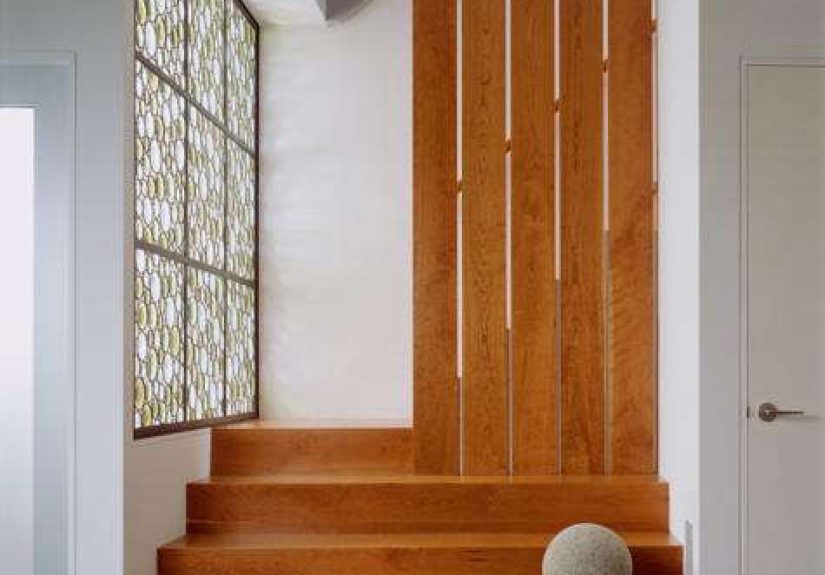
That attitude explains the tactile quality of many associated interiors. A stained-glass foyer screen that divides space while still allowing daylight through. A roof deck landscape that makes ipe planters and trellises feel alive rather than merely installed. Drapery that handles privacy and light diffusion without looking like an afterthought. Cabinetry detailed to read like furniture in an open kitchen. These are not giant gestures, but they are the kind clients remember years later.
Good residential design often hinges on exactly these “small” decisions. Anyone can admire a double-height room. The real test is whether the cabinet pull feels right in your hand, whether the stair turns naturally, whether the fabric softens sound, whether the daylight is filtered rather than weaponized. Delson or Sherman’s best projects seem alert to that human scale.
Sustainability Before It Became Everybody’s Favorite Buzzword
Another thread woven through the work is environmental awareness. In one East Harlem brownstone, green materials reportedly included dark-stained fiberboard floors and recycled blue-jeans insulation. In a Carroll Gardens renovation, FSC-certified walnut flooring, triple-glazed windows, and other high-performance choices helped define the project’s character. More recently, Sherman Architects has continued to frame sustainability around adaptive reuse, improved envelopes, better ventilation, and practical upgrades rather than green grandstanding.
That approach feels especially relevant in Brooklyn, where sustainable design often starts with the obvious but difficult truth: the greenest building strategy is frequently to work intelligently with what already exists. Reusing an old townhouse, preserving embodied character, improving energy performance, and reducing the need for more drastic reconstruction is not flashy. It is simply smart.
There is also a cultural side to this. Brooklyn residents tend to appreciate sustainability that is visible in daily life: better air, better light, better thermal comfort, less waste, more durable materials, and outdoor spaces that are actually usable. Delson or Sherman’s work fits that mindset. It treats sustainability less like a badge and more like good housekeeping for architecture.
Why This Brooklyn Work Still Feels Fresh
Trends age quickly. “Timeless” is an overused word in design writing, usually deployed seconds before describing a brass faucet that will look extremely 2020s in about eleven minutes. Yet the Delson or Sherman portfolio has aged better than many louder practices because it was rooted in proportion, planning, and context.
Their rooms often avoid the trap of trying too hard. Historic detail is allowed to remain historic. Modern insertions are crisp but not theatrical. Wood is used to warm up harder lines. Glass opens views without dissolving privacy altogether. Gardens and decks are treated as real extensions of domestic life instead of photo-shoot accessories. The result is architecture that feels edited, not overstyled.
And that, perhaps, is the biggest lesson from an architect visit here: the firm understood Brooklyn not as a brand, but as a condition. Narrow sites. Layered histories. Ambitious clients. Landmark rules. Big family life inside relatively vertical envelopes. A need for calm. A need for light. A desire to preserve dignity while improving daily function. These are not abstract design ideas. They are the actual ingredients of living in the borough.
What Homeowners and Design Lovers Can Learn from Delson or Sherman
Even if you are not planning a full townhouse renovation with a catwalk, a restored stoop, and windows the size of indie film budgets, there are useful lessons here.
Start with circulation, not decoration
Homes improve dramatically when movement improves. The best Delson or Sherman work suggests that sight lines, stairs, transitions, and floor relationships matter before you obsess over tile samples.
Let old elements earn their place
Preservation works best when it is selective and meaningful. Save what gives the house identity. Reinvent what keeps the house from working.
Use modern architecture to solve old-house problems
Rear openings, skylights, terraces, and carefully placed glazing are not trendy tricks. In Brooklyn townhouses, they can be the difference between gloomy and glorious.
Work with specialists
Architecture gets richer when landscape designers, glass artists, fabricators, millworkers, and builders are treated like collaborators instead of emergency contacts.
Design for the life you actually live
Not the life you think belongs in a magazine. Not the life performed for guests. The real one: kids, storage, cooking, laundry, noise, privacy, grandparents, visitors, homework, plants, and the occasional desperate need to sit on a roof and stare at the skyline for ten minutes.
Conclusion
Architect Visit: Delson or Sherman Architects in Brooklyn is ultimately a story about architecture that behaves well. That may sound modest, but it is high praise. The firm’s work showed how a historic Brooklyn home can remain legible as a brownstone, carriage house, or townhouse while becoming brighter, calmer, greener, and more useful. Their projects did not rely on spectacle to feel contemporary. They relied on judgment.
That is why the work still resonates. It proves that good residential architecture is not a battle between old and new. It is a negotiation carried out with patience, technical skill, and a willingness to notice how people actually live. In Brooklyn, where every wall has seen at least three eras and a plumbing surprise, that kind of intelligence is worth admiring.
And if there is a final takeaway from this architect visit, it is this: the best houses do not merely look designed. They feel understood.
A Longer Brooklyn Notebook: of Experience Related to This Architect Visit
To spend time with the work associated with Delson or Sherman in Brooklyn is to realize that the borough has its own architectural body language. You feel it before you describe it. There is the narrow procession from stoop to hall, the sudden expansion at the parlor floor, the suspense of a dark middle room, the reveal of a rear garden that somehow feels both tiny and life-changing. A thoughtful architect visit makes you notice all of that. It turns ordinary movement through a house into a lesson in proportion, patience, and urban survival.
One of the strongest experiences related to this kind of architecture is the sensation of compression and release. A visitor may enter through a relatively formal front, pass original moldings or restored millwork, and assume the house will remain polite and compartmentalized. Then the rear opens up. Light drops in from a skylight. A steel-framed window catches the garden. A stair suddenly feels sculptural rather than merely functional. Brooklyn houses are experts at keeping secrets, and good architects know when to keep the suspense and when to reveal the punchline.
There is also the tactile pleasure. These are not homes that depend on one giant visual stunt. They work through accumulated confidence: the right wood tone against white walls, the unexpected softness of a textile, the crisp line where old plaster meets a new intervention, the feeling that a cabinet was made for this exact corner and not borrowed from another idea. When a project is handled well, the house stops feeling like a collage of expensive decisions and starts feeling inevitable.
Another memorable aspect of an architect visit in Brooklyn is the relationship to the outdoors. On paper, a roof deck, a rear extension, or a garden opening might sound like familiar renovation language. In person, those choices feel much more emotional. A deck is not just a deck when it is where your family takes a breath after a long workday. A garden wall of glass is not just modern detailing when it transforms the back of the house from cave to companion. In a dense city, a little access to sky can feel outrageously luxurious.
What makes the Delson or Sherman approach especially satisfying is that the houses do not feel like they are trying to escape Brooklyn. They feel more Brooklyn after renovation, not less. The old bones remain visible. The proportions still belong to the street. The sense of history is not erased. But the life inside becomes more graceful. Better circulation. Better privacy. Better light. Better coexistence between generations, guests, children, work, and rest. It is domestic architecture with excellent manners.
And maybe that is the lasting experience: these projects make you feel that design is not about impressing strangers on the internet. It is about making daily routines less clumsy and more beautiful. Making breakfast in better light. Hearing less echo in the living room. Walking upstairs without cursing a bad layout. Looking out at a tree from a room that used to stare only at drywall. That is not flashy architecture. It is the kind that improves life quietly, and in Brooklyn, quiet improvement can be the most radical luxury of all.