Table of Contents >> Show >> Hide
- Not All Moldy Cheese Is Created Equal
- When You Can Cut Off the Mold and When You Must Toss It
- What Actually Happens If You Eat Moldy Cheese?
- How to Tell If Moldy Cheese Is Truly Bad
- How to Store Cheese So Mold Shows Up Less Often
- Practical FAQ About Moldy Cheese
- Real-Life Moldy Cheese Experiences (and What They Teach Us)
You open the fridge, spot your favorite block of cheddar, and there it is:
a fuzzy green or white patch staring back at you. Now you’re standing in the
kitchen holding the cheese like it’s a tiny, dairy-based moral dilemma:
“Can I still eat this, or am I about to ruin my weekend?”
The short answer: sometimes you can safely eat moldy cheese and
sometimes you absolutely shouldn’t. The long answer (the one that keeps you
out of the emergency room and saves you from throwing away perfectly good
cheese) depends on what kind of cheese you’re dealing with, how the mold
got there, and who’s going to eat it.
In this guide, we’ll walk through exactly when moldy cheese is safe, when
it’s risky, what to do if you’ve already eaten it, and how to store cheese
so you don’t have to play “mold roulette” quite so often.
Not All Moldy Cheese Is Created Equal
Before you panic, it helps to know that some cheeses are meant
to be moldy. Others… not so much. The key is understanding which mold is
intentional and which mold is a sign of spoilage.
Cheeses That Are Supposed to Be Moldy
Some of the world’s fanciest cheeses owe their flavor and texture to
carefully selected, food-safe mold cultures:
-
Blue cheeses like Roquefort, Gorgonzola, and Stilton are
made with strains of Penicillium (often Penicillium roqueforti
or Penicillium glaucum) that are considered nontoxic in the
amounts used for cheese making. -
Bloomy-rind cheeses such as Brie and Camembert are
ripened with white surface mold (often Penicillium candidum),
which creates that soft, edible rind and creamy interior. -
Some specialty aged cheeses (certain goat cheeses, clothbound cheddars,
and washed-rind cheeses) may develop natural rinds with surface molds that
are part of the controlled aging process.
If the mold is part of how the cheese was made and it came that way from
the store, it’s generally considered safe for most healthy people as long
as it smells and tastes like cheese, not like a damp basement.
Mold That Shows Up Later: The “Uh-Oh” Kind
The mold that worries food safety experts is the kind that
wasn’t invited to the party the fuzzy spots that appear after
the cheese has been sitting in your fridge for a while.
This accidental mold can:
- Spread invisible roots (called hyphae) deep inside the cheese
- Bring along harmful bacteria like Listeria, E. coli,
or Salmonella - Sometimes produce toxins (mycotoxins) under the right conditions
The big question then becomes: if uninvited mold shows up, can you just cut
it off and move on, or do you need to toss the whole thing?
When You Can Cut Off the Mold and When You Must Toss It
Food safety agencies and dairy experts use two main factors to decide what
to do with moldy cheese:
texture (hard vs. soft) and how far the
mold has spread.
Safe to Trim: Hard and Some Semi-Hard Cheeses
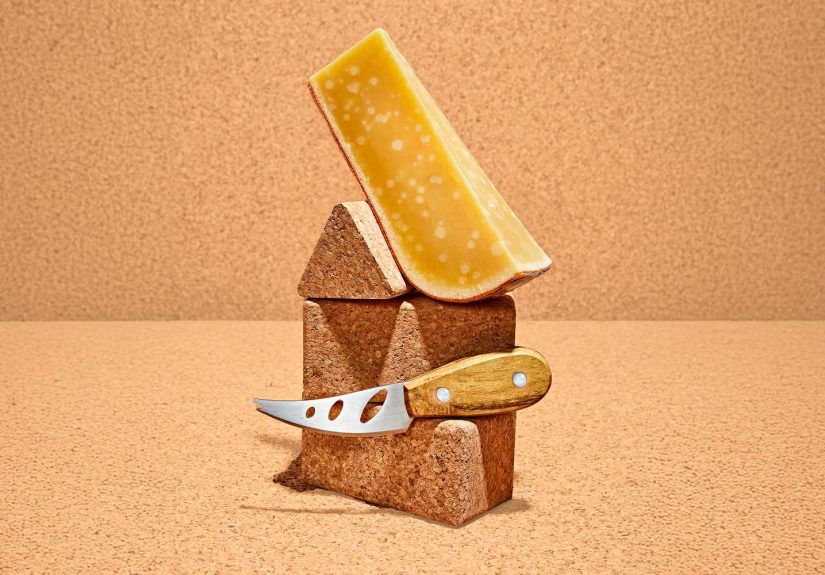
For many firm cheeses, mold doesn’t spread as quickly because there’s less
moisture and fewer open spaces inside. That means you can often salvage the
cheese by cutting away the moldy section.
Examples of cheeses where trimming is usually safe:
- Cheddar
- Swiss
- Parmesan and other hard grating cheeses
- Manchego, Gruyère, and similar firm aged cheeses
The standard expert guidance is:
cut at least 1 inch (about 2.5 cm) around and below the mold spot.
Make sure the knife doesn’t actually touch the mold so you don’t drag it
through the edible part. Once you’ve removed the moldy area, rewrap the
remaining cheese in fresh paper or wrap.
Must Toss: Soft, Fresh, Shredded, and Sliced Cheeses
Soft and fresh cheeses are a different story. They’re high in moisture and
have a looser structure, which allows mold and bacteria to spread quickly,
even where you can’t see it.
If there’s visible mold on any of these, the safest move is to throw them
away:
- Cream cheese, cottage cheese, and ricotta
- Fresh mozzarella, burrata, and feta in brine
- Queso fresco and other fresh Latino-style cheeses
- Shredded cheese blends (cheddar, Mexican blend, etc.)
- Pre-sliced or pre-crumbled cheese
With these products, trimming doesn’t work because mold can travel
throughout the container or package. You might only see one fuzzy spot, but
the rest of the cheese has likely been exposed.
What About Brie, Camembert, and Blue Cheese?
This is where people get confused. These cheeses are already mold-ripened,
so what happens when “extra” mold appears on top?
-
For soft mold-ripened cheeses like Brie and Camembert,
any mold that looks different from the usual rind think bright
green, black, pink, or fuzzy spots is a sign to toss the cheese. -
For blue cheeses, extra fuzzy or off-colored mold (not
the usual blue-green veins) is also a reason to throw it out, especially
if it smells sharply unpleasant or “off” rather than tangy and savory.
In other words, the mold that came with the cheese is fine; surprise mold
that shows up later is not your friend.
What Actually Happens If You Eat Moldy Cheese?
Let’s say you made a sandwich, ate half of it, and only then noticed the
moldy edge on the cheese. Are you doomed? Probably not but it depends on
a few factors.
For Most Healthy Adults
If you accidentally eat a small amount of moldy cheese and you’re otherwise
healthy, the most likely outcome is:
- Nothing happens at all, or
- You might have some mild stomach upset (nausea, cramping, maybe loose
stools)
Whether you feel anything often depends on the type of mold, the amount
eaten, and your personal sensitivity. Many people have accidentally eaten
moldy cheese without any serious health effects.
Potential Risks
The reason food safety experts still urge caution is that some molds and
the bacteria that hang out with them can cause problems:
-
Food poisoning: Unwanted mold can coexist with harmful
bacteria like Listeria, Salmonella, or E. coli,
which may trigger vomiting, diarrhea, stomach cramps, and fever. -
Allergic reactions: People with mold allergies or asthma
may react more strongly, with symptoms like sneezing, coughing, hives, or
trouble breathing. -
Mycotoxins: Under certain conditions, some molds can
produce toxins that may irritate the gut or, in extreme cases and with
long-term exposure, affect organs. While a single accidental bite is
unlikely to cause serious harm, repeated consumption of obviously moldy
food is not a good idea.
If you feel sick after eating moldy cheese especially if you have a high
fever, persistent vomiting, or diarrhea that doesn’t improve it’s time to
contact a healthcare provider.
Who Should Be Extra Careful
Some people are at higher risk of serious illness from contaminated foods.
These groups should avoid moldy cheese entirely (beyond the safe,
intentional molds in properly handled products like blue cheese or Brie):
- Pregnant people
- Adults over 65
- Infants and young children
- People with weakened immune systems
For these groups, it’s better to err on the side of throwing moldy cheese
away, rather than trying to rescue it.
How to Tell If Moldy Cheese Is Truly Bad
Visual mold is one warning sign, but it’s not the only one. To decide
whether cheese has gone from “a little old” to “absolutely not,” look at
the bigger picture:
-
Appearance: Unwanted mold often looks fuzzy, dusty, or
slimy and can be white, gray, green, blue, black, or even pink. Discoloration
that doesn’t match the cheese’s typical look is a bad sign. -
Smell: Cheese should smell cheesy sharp, nutty, tangy,
or buttery, depending on the type. If it smells like ammonia, dirty socks
left in the rain, or anything that makes you reflexively pull back, toss
it. -
Texture: Excessive sliminess, a sticky surface, or a
grainy, chalky feel in a cheese that’s supposed to be smooth often
signals spoilage. -
Time and storage: If the cheese is way past its “use by”
date or has been left out at room temperature for hours, mold is only one
of your concerns. Bacteria love warm, moist environments.
A useful rule of thumb: if you wouldn’t serve it to a guest you like, you
probably shouldn’t eat it yourself.
How to Store Cheese So Mold Shows Up Less Often
You can’t prevent mold forever (cheese is a living, aging food), but you
can slow it down and keep your cheese tasting better for longer.
Wrap It Right
-
For most hard and semi-hard cheeses, wrap them loosely
in parchment or wax paper first, then place them in a partially closed
plastic bag or reusable container. This lets the cheese “breathe” while
limiting excess moisture. -
For soft cheeses, keep them in their original container
or in a small airtight container. Make sure you always use clean utensils
when scooping.
Store in the Right Spot
-
Use the cheese drawer or a spot in the main body of the
fridge rather than the coldest back corner or the door shelves. -
Keep cheese away from strong-smelling foods (like onions) cheese
absorbs odors easily.
Handle with Clean Utensils
Always cut cheese with a clean knife. Double-dipping a knife that’s been in
contact with bread, meats, or your mouth can introduce extra microbes that
speed up mold growth.
Buy What You’ll Actually Use
It’s tempting to buy a giant block of cheddar because it’s on sale, but if
you only eat cheese occasionally, smaller pieces may actually be cheaper in
the long run. Less time in the fridge means fewer chances for unwanted mold
to move in.
Practical FAQ About Moldy Cheese
Does One Moldy Slice Ruin the Whole Pack?
With pre-sliced or shredded cheeses, the safest approach
is to assume that if one piece is visibly moldy, the whole package has been
exposed. Moisture and close contact between slices or shreds allow mold to
spread easily, so experts generally recommend discarding the entire package.
Can I Just Scrape Mold Off Soft Cheese?
Unfortunately, no. Scraping the surface of cream cheese or ricotta might
remove what you can see, but the mold (and any accompanying bacteria) can
be spread throughout the product. Don’t try to rescue it toss it.
Are “Natural Rinds” with Mold Safe?
Many aged cheeses develop natural rinds that include surface molds. If you
bought the cheese from a reputable source and the rind looks and smells
normal, it’s generally safe some people eat the rind, others cut it off
for taste preference. If the rind has bright or unusual colors, looks
unusually fuzzy, or smells harsh or chemical-like, it’s best to discard the
cheese.
Real-Life Moldy Cheese Experiences (and What They Teach Us)
Food safety guidelines are helpful, but nothing drives a lesson home quite
like real-life experience. Here are a few common “moldy cheese situations”
people run into and what you can learn from them.
The Student and the Mystery Cheddar
Picture a college student cleaning out a mini-fridge at the end of the
semester. Buried behind takeout containers is a block of cheddar with a
green spot on one corner. The cheese is firm, smells basically fine, and
the mold is localized.
In this case, following expert guidance, the student can safely cut at
least an inch around and below the moldy spot, making sure not to drag the
knife through the mold. The interior looks and smells normal, and the
cheddar lives to see a grilled-cheese sandwich. The lesson: with hard
cheese and minimal mold, trimming can be safe but you still need to
inspect closely and use your judgment.
The Party Platter Surprise
At a weekend get-together, a host sets out a cheese board with Brie, blue
cheese, cheddar, and fresh mozzarella balls. The cheese sits out for a few
hours while people graze. The next day, the host notices fuzzy white and
green spots on the leftover mozzarella and along the cut edge of the Brie.
Even though it’s painful to throw away cheese, this is one of those
situations where you have to put safety first. The fresh mozzarella and the
soft Brie both spent hours at room temperature and now show obvious mold.
Any extra mold on soft cheeses that weren’t intentionally ripened that way
is a sign to toss them especially after extended time out of the fridge.
The harder cheeses, like cheddar, might be salvageable if the mold is
localized, but only if they were promptly refrigerated after the party and
still look and smell normal.
The “I Ate It Before I Saw It” Moment
Another common scenario: you make a turkey-and-cheddar sandwich, eat most
of it, and finally notice a bluish patch on the slice of cheese still on
the cutting board. Cue instant worry.
For most healthy people, this usually ends with nothing worse than mild
anxiety and maybe a slightly unsettled stomach if anything at all. The
best move is to:
- Stop eating the cheese and discard the moldy portion
- Drink some water and monitor how you feel
-
Watch for symptoms like stomach cramps, vomiting, or diarrhea over the
next several hours
If you start feeling genuinely ill, especially with a fever or intense
symptoms, contacting a healthcare provider is wise. The lesson here: don’t
panic, but don’t shrug it off completely if your body starts sending clear
distress signals.
Living with Allergies or a Weakened Immune System
People with mold allergies often learn quickly which cheeses they tolerate.
For some, blue cheese is a hard no; for others, even a whiff of Brie’s
bloomy rind triggers congestion or itchy eyes. Someone going through
chemotherapy or living with an immune condition might be told by their
medical team to avoid any mold-ripened cheeses altogether, even though they
’re considered safe for the general population.
These experiences highlight a crucial point: “safe” is not one-size-fits-all.
Food safety guidelines are based on average risk. Your own tolerance,
medical history, and risk level matter just as much. When in doubt, your
doctor’s advice always outranks whatever the internet says yes, even this
very well-researched article.
The Takeaway from All These Stories
Across all of these real-world moments, a pattern emerges:
- Hard cheese with a small mold spot? Trim generously and inspect.
- Soft, fresh, shredded, or sliced cheese with mold? Toss it.
- Accidentally ate some moldy cheese? Most likely fine, but stay alert to
symptoms. - High-risk health conditions or mold allergies? Be stricter than the
average guideline.
At the end of the day, cheese should bring joy, not anxiety. Knowing when
you can safely cut off mold and when you should say goodbye lets you enjoy
your favorite dairy treats with confidence and just the right amount of
caution.