Table of Contents >> Show >> Hide
- The short answer (and why it’s complicated)
- Fixture vs. personal property: the “is it attached?” reality check
- What usually stays: appliances that act like part of the house
- What’s usually negotiable: the “it can roll away” crew
- When you should leave the appliances (even if you love them)
- 1) They’re built-in or removal would damage the home
- 2) The listing and showings created a clear expectation
- 3) The purchase agreement says they stay (this one is non-negotiable)
- 4) Your buyer’s financing and appraisal process may care about “what remains”
- 5) Replacing them at your new home might be cheaper than moving them
- When taking appliances makes sense
- How to make it drama-free: put appliances in writing (with specifics)
- Smart alternatives: sell, swap, or credit instead of yanking appliances out
- If you’re taking them: logistics and safety you’ll be glad you planned
- Quick decision guide: take it or leave it?
- Conclusion: the calm, contract-friendly way to handle appliances
- Experiences and real-world scenarios (composite but very, very common)
Moving is already a sport. There are boxes that multiply overnight, a mysterious drawer full of rubber bands,
and at least one friend who “can’t lift” the day you need them most. Now add a final boss:
your appliances. Can you take them? Should you? And why does your refrigerator suddenly feel like a family member?
Here’s the deal in the U.S.: whether appliances move with you or stay with the house depends on a mix of
real estate rules, local norms, and (most importantly) what your contract actually says.
Let’s make this simple, avoid closing-day chaos, and keep your stove from becoming evidence in a neighborhood dispute.
The short answer (and why it’s complicated)
Yes, you can take your appliances when you moveas long as you legally own them and
you’re not violating a lease or a purchase agreement.
- If you’re renting: In most cases, your appliances are yours (unless the landlord provided them). Check your lease.
- If you’re selling a home: Some appliances are treated like part of the property (fixtures), and others are personal property. The contract decides what stays.
- If you’re buying a home: Don’t assume “it was there at the showing” means “it’s there after closing.” Get it in writing.
The key concept is the difference between fixtures and personal property.
That’s real estate’s way of saying: “Is it basically glued to the house, or can it roll away without leaving a crater?”
Fixture vs. personal property: the “is it attached?” reality check
A fixture is generally something that used to be movable, but became part of the real property because it’s attached
in a way that suggests it belongs with the home (think: built-in, hardwired, plumbed in, screwed down).
Personal property is movable stuff you can take without changing the home.
Real life is messy, though. A built-in microwave is usually a fixture. A countertop microwave is personal property.
A slide-in range can feel “built-in,” but might still be treated as a negotiable appliance depending on the market and contract language.
When in doubt, assume it’s negotiablethen write it down.
Fast “fixture clues”
- Tools required? If you need tools (not just your hands) to remove it, it’s more likely a fixture.
- Connected to plumbing or gas? Dishwashers and built-in cooktops often count as fixtures.
- Custom fit? Built-in panels, trim kits, or cabinetry cutouts make an item feel “part of the house.”
- Marketed with the home? If a listing highlights “all appliances included,” buyers will expect… all appliances included.
What usually stays: appliances that act like part of the house
While practices vary by region and by contract, these are commonly treated as “stay with the home” items because they’re built-in,
integrated, or removal would look like you’re taking the kitchen with you:
- Dishwasher (typically plumbed-in and fitted under the counter)
- Wall oven and built-in cooktop
- Built-in microwave (especially with a trim kit or installed cabinet mount)
- Range hood / vent hood (hardwired and mounted)
- Garbage disposal (plumbed into the sink system)
- Built-in wine fridge or beverage cooler that’s integrated into cabinetry
- Built-in trash compactor (where you still see them)
Translation: if removing it leaves an awkward hole, exposed wiring, or a buyer staring at an empty cabinet space whispering,
“So… we cook over a campfire now?” you should plan on leaving itor negotiating clearly.
What’s usually negotiable: the “it can roll away” crew
Freestanding appliances often fall under personal property. They may be included, excluded, or negotiateddepending on the market and the deal.
- Refrigerator (especially freestanding models)
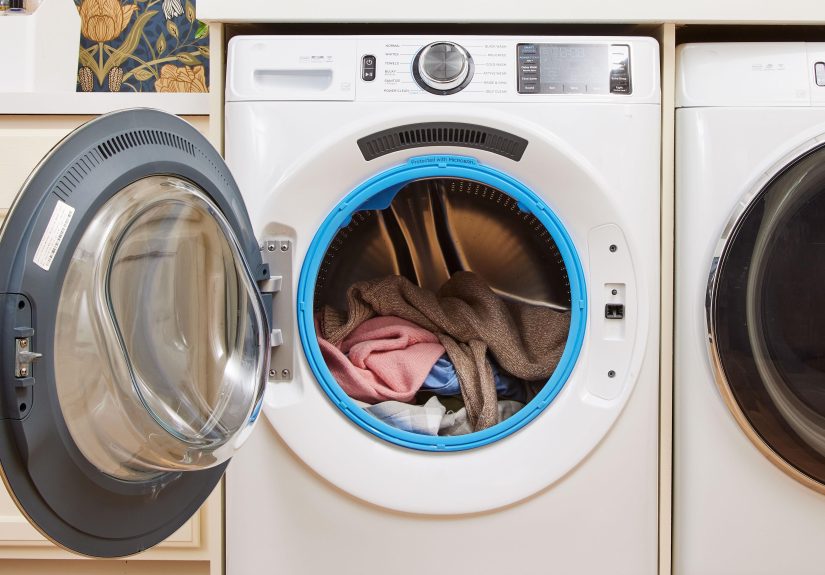
- Washer and dryer
- Countertop microwave
- Chest freezer or extra garage fridge
- Portable dishwasher
- Window A/C units (sometimes negotiable; sometimes treated like personal property)
- Dehumidifiers, air purifiers, and similar plug-in equipment
Some regions commonly leave the kitchen fridge; other regions treat it like a “take it unless the contract says otherwise” item.
The safe approach is always the same: write down exactly what’s included and excluded.
When you should leave the appliances (even if you love them)
1) They’re built-in or removal would damage the home
If taking an appliance means pulling trim, cutting water lines, leaving a gap in cabinetry, or creating a repair job,
you’re not just “taking your appliance.” You’re changing the property. That’s where disputes happen.
2) The listing and showings created a clear expectation
Buyers make mental (and financial) plans based on what they saw: “Greatthis place has a dishwasher and a nice range.”
If those disappear, you risk renegotiation, bad blood, or a contract problem.
3) The purchase agreement says they stay (this one is non-negotiable)
The MLS description and a friendly text message are not your legal shield.
If the agreement says the fridge stays, the fridge stays. Period.
4) Your buyer’s financing and appraisal process may care about “what remains”
Many lenders and appraisers treat freestanding appliances as personal property, while built-in appliances may be considered part of the real estate.
For certain loan types (like FHA), guidance focuses on whether appliances that are included and contribute to value are operational.
If you’re leaving appliances in the deal, assume they should work at closingor you may invite delays and negotiations.
5) Replacing them at your new home might be cheaper than moving them
Moving heavy appliances isn’t just “a couple of strong friends.” It can mean special dollies, straps, extra mover fees,
and professional hookups for gas, water, or electrical connections. Sometimes the cheapest move is the one you don’t make.
When taking appliances makes sense
There are plenty of times when it’s smart (and totally normal) to take appliances with youespecially if they’re clearly personal property.
- You recently bought them (newer, nicer, still under warranty, or part of a matching set you love).
- Your next place doesn’t include them (common in rentals, and sometimes in home purchases depending on the market).
- They’re specialty appliances (a high-end washer/dryer set, a garage freezer, a smart fridge you actually use).
- You’re not selling (moving out of a rental, relocating between owned properties without a sale, etc.).
- You negotiated it and the contract clearly says you’re taking them.
The trick isn’t “can I take it?” The trick is: will the other party expect it to stayand can I prove what we agreed to?
How to make it drama-free: put appliances in writing (with specifics)
If you want to avoid the “Where’s the refrigerator?” moment during final walkthrough, use this simple rule:
anything that matters gets spelled out in the contract.
Buyer tips
- List appliances individually: “Kitchen refrigerator,” “washer,” “dryer,” “garage freezer,” etc.
- Be precise: If there are multiple fridges, specify location (kitchen vs. garage) or even brand/model if needed.
- Confirm at final walkthrough: Verify the included items are still present and appear in similar condition.
Seller tips
- Exclude what you plan to take in the listing paperwork and the purchase agreement.
- Swap early: If you’re taking the fancy fridge, consider installing a replacement before photos and showings.
- Don’t surprise people: “We’re taking the washer/dryer” should not be revealed like a plot twist at closing.
Real estate pros often see conflicts over washer/dryer sets and refrigerators because they live in the gray zone:
they’re common, valuable, and easy to move. That’s exactly why clear inclusions/exclusions matter.
Smart alternatives: sell, swap, or credit instead of yanking appliances out
If you want the appliance, but you also want a smooth sale, you have options that don’t involve leaving the kitchen looking like a movie set:
- Offer a credit: “We’re taking the fridge, and we’ll credit $X so you can pick one you like.”
- Sell it separately: Use a simple bill of sale as part of the transaction if appropriate.
- Replace it: Put in a clean, basic replacement so the home still feels move-in ready.
Bonus: buyers often prefer choosing their own appliancesespecially if your beloved fridge makes a “help me” noise at 2 a.m.
If you’re taking them: logistics and safety you’ll be glad you planned
Moving appliances is part real estate, part engineering, and part “why is this washer heavier than a small planet?”
If you’re bringing appliances with you, plan for these realities:
Measure like a responsible adult (even if you don’t feel like one)
- Doorways, hallways, stair turns, elevator dimensions
- Appliance dimensions (including depth with doors and handles)
- Hookups in the new place (gas vs. electric, venting, water line locations)
Budget for installation and disconnects
Appliances with gas connections, hardwiring, or water lines may need a qualified professional to disconnect/reconnect.
Even when you’re legally allowed to do it yourself, it’s often not worth the risk of leaks, damage, or unsafe work.
Plan appliance prep time (especially for fridges and washers)
- Refrigerators: Empty, clean, and follow manufacturer guidance for transport and “upright resting” before restarting if it was moved on its side.
- Washers: Shut off water, drain hoses, and secure/organize lines and cords.
- Dishwashers: Turn off power and water supply before disconnecting; plan for a little water left in lines.
Practical advice: keep hardware, brackets, and manuals in a labeled bag taped to the appliance (or in your “moving command center” box).
Otherwise, you’ll be hunting for a tiny part while standing in a new kitchen eating takeout over the sink.
Quick decision guide: take it or leave it?
Use this checklist on each appliance:
- Is it built-in, plumbed in, or hardwired? If yes, plan to leave it unless your contract clearly says otherwise.
- Was it specifically mentioned in the listing or marketing? If yes, expect the buyer to want it.
- Is it common for your area to include it? Ask your agentnorms vary.
- Would removal require repair work? If yes, it’s usually not worth the hassle.
- Does your new place need it? If yes, negotiate early.
- Would moving cost more than replacement? If yes, consider leaving it or offering a credit instead.
- Is it in writing? If not, fix that now.
Conclusion: the calm, contract-friendly way to handle appliances
You can take appliances when you movebut in a home sale, the smartest move is not “grab it and go.”
The smartest move is: know what’s a fixture, know what’s negotiable, and put every important appliance in writing.
As a seller, you’ll protect your sale (and your sanity) by clearly listing what stays and what goes.
As a buyer, you’ll protect your budget by assuming nothing and negotiating what you want upfront.
And everyone wins when the final walkthrough doesn’t feel like a scavenger hunt.
Experiences and real-world scenarios (composite but very, very common)
The best appliance lessons usually show up in the form of “Wait… where did it go?” Here are realistic, composite scenarios that
mirror what buyers, sellers, agents, and movers run into every dayshared with love, humor, and the goal of keeping you out of trouble.
1) The Disappearing Refrigerator Incident
A couple buys their first home. They do the final walkthrough, admire the kitchen, and mentally plan their first grocery haul.
Closing day arrives. They show up with bags of celebratory snacks… and there’s a refrigerator-shaped emptiness.
The seller assumed the fridge was personal property and took it. The buyers assumed “it was there” meant “it’s included.”
Nobody was trying to be shadynobody was reading the fine print carefully enough.
The fix is simple, but it has to happen before closing: the contract should specify “kitchen refrigerator included”
(or “excluded,” if the seller is taking it). That one sentence can prevent a week of angry emails and a surprise appliance shopping spree.
2) Washer/Dryer: The Great Expectation Mismatch
In one neighborhood, sellers always take the washer and dryer. In the next neighborhood over, most leave them.
A buyer relocates from a “they always stay” region and assumes laundry appliances are part of the deal.
A seller relocates from a “they always go” region and assumes the opposite.
By the time the confusion surfaces, everyone’s already emotionally attachedbecause nothing says “home” like clean socks.
In practice, this usually ends one of three ways: (1) the seller leaves them to keep the deal smooth,
(2) the buyer asks for a credit, or (3) both sides agree to a separate sale. The common thread?
Once again: put it in writing early, not during a last-minute scramble.
3) The Fancy Range That “Technically” Could Move
A seller has a premium slide-in range they adore. It looks built-in, it’s showcased in listing photos,
and buyers are impressed. The seller figures, “I bought it, so it’s mine.” The buyer figures,
“It’s in the kitchen and looks installed, so it stays.”
If the seller really wants to take it, the best strategy is to swap it before listing photos and showings
(or clearly disclose the exclusion from the very beginning). Otherwise, you risk buyer disappointment,
renegotiation, or the dreaded “We’re walking away” speech. Sometimes the appliance you love can still be yours
you just have to prevent it from becoming part of the home’s perceived value.
4) Moving-Day Reality: Appliances Are Not Built for Staircases
People imagine moving a fridge like sliding a chair across a floor. Then they meet the staircase.
Suddenly you’re measuring turns, removing doors, protecting floors, and wondering if the fridge is quietly judging you.
Movers often charge extra for heavy items, and some appliances require waiting periods before restarting if they were tilted or transported on their side.
If you’re taking appliances, plan your timeline so you’re not forced to plug in a refrigerator immediately and hope for the best.
5) The “We Left It… But It Doesn’t Work” Surprise
Sometimes a seller leaves appliances, everyone is happy, and then the buyer discovers the dishwasher doesn’t drain or the oven won’t heat.
Maybe it was already temperamental. Maybe it got bumped during move-out. Either way, it becomes a negotiation point
because the buyer expected “included” to also mean “functional.”
The cleanest approach is honesty and documentation: sellers should disclose known issues and avoid promising what they can’t guarantee.
Buyers should inspect, test what they can during due diligence, and confirm what’s included at final walkthrough.
Most appliance headaches aren’t caused by villainsjust assumptions that weren’t written down.