Table of Contents >> Show >> Hide
- What Was the Damascus Incident?
- The Titan II: A Missile That Ran on Chemistry and Nerves
- How the Accident Unfolded: From Routine Task to Catastrophe
- Was This a “Nuclear Accident” If Nothing Went Nuclear?
- The Human Factors Lesson: Systems Don’t Fail Like Movies
- Emergency Response: Managing Danger, People, and Panic
- What Damascus Changed: Safety, Design, and the End of an Era
- Common Myths About the Damascus Incident (Let’s Unclench a Bit)
- Why the Damascus Incident Still Matters Today
- Conclusion: The Day a Tool Out-Argued a Missile Silo
- Experience Section: How to “Feel” the Damascus Story Without a Time Machine (Approx. )
If you ever needed proof that “small mistakes can have big consequences,” welcome to the Damascus IncidentAmerica’s
most infamous case of a dropped tool becoming a national-level “oh no.” In September 1980, near the quiet town of
Damascus, Arkansas, a routine maintenance task inside a Titan II missile silo spiraled into a violent explosion,
the ejection of a massive thermonuclear warhead, and a long-running public debate about what “nuclear accident”
really means.
This story matters for more than its headline shock value. The Damascus Incident is a masterclass in system risk:
hazardous materials, unforgiving engineering, human factors, communication under pressure, and safety design that
has to work perfectly when everything else is going wrong. And yesthere’s also a lesson here about why your
toolbox deserves as much respect as your launch codes.
What Was the Damascus Incident?
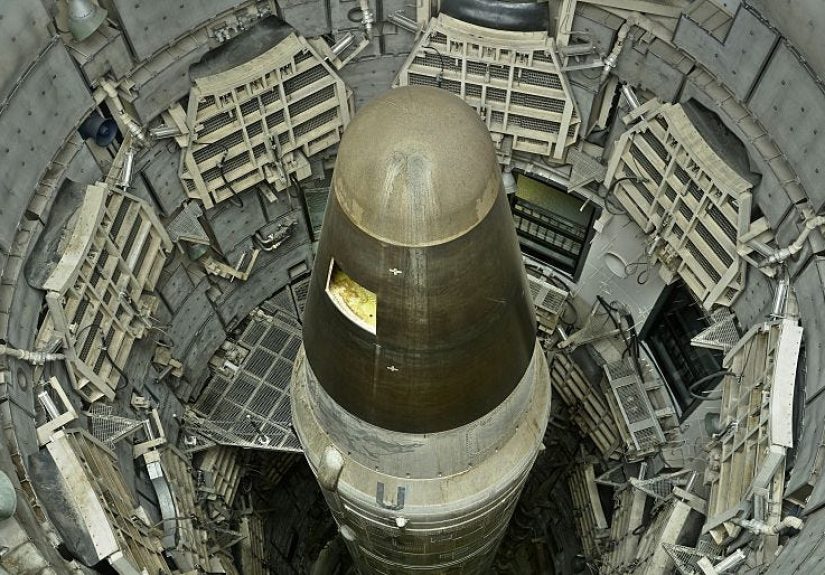
The “Damascus Incident” (often called the Damascus Titan II explosion) was a major U.S. military accident at
Missile Complex 374-7, part of the Titan II intercontinental ballistic missile (ICBM) network operated out of
Little Rock Air Force Base. The Titan II was a Cold War heavyweight: a massive missile designed for rapid launch,
loaded with hypergolic propellants and topped with an extremely powerful thermonuclear warhead.
The accident began as a maintenance problem and turned into a propellant leak. Hours later, the missile complex
suffered a catastrophic explosion that destroyed the facility, killed one airman, injured many others, and tossed
the warhead out of the silo areaintact, but alarmingly out in the open countryside.
Damascus, Arkansas: The Place You’d Never Guess Was a Nuclear Address
Damascus is the kind of town where “traffic” means two pickup trucks waving each other through a four-way stop.
Which is exactly why missile sites were placed nearby: rural, dispersed, hard to target, and (in theory) quiet.
The irony is that “quiet” is not what you want when things go sidewaysbecause big emergencies don’t care that
you’re in farm country.
The Titan II: A Missile That Ran on Chemistry and Nerves
To understand why the Damascus Incident escalated so fast, you have to understand what Titan II systems were:
powerful, effective, and absolutely not the kind of equipment you’d want to babysit on a sleepy shift.
Hypergolic Propellants: The “Instant Fire” Fuel Combo
Titan II missiles used hypergolic propellantsfuel and oxidizer that ignite upon contact. That’s great for
reliability in a launch scenario (no “will it light?” drama), but it’s terrifying during accidents because
leaks become ticking problems. A leak isn’t “oops, mop it up.” A leak is “everyone double-check their respirator
and start praying to the checklist.”
Missile Silos: Engineering Marvel, Emergency Maze
Missile complexes were built like underground fortresses, with heavy doors, hardened structures, and layers of
procedure. But underground also means confined space, limited access, and difficult rescue conditions. When
hazardous fumes spread, you don’t get the luxury of opening windows and “airing it out.”
How the Accident Unfolded: From Routine Task to Catastrophe
Damascus didn’t start with sabotage, enemy action, or cinematic villainy. It started with maintenance. The goal
was to check pressures and address issues in the silo. The problem was a tool decision and a moment of physics:
gravity always wins, and it never accepts excuses.
The Infamous Dropped Socket
During maintenance operations, a heavy socket fell down inside the complex, bounced, and punctured the missile,
leading to a propellant leak. That puncture turned the inside of the silo into an environment where time was no
longer your friend. As the leak progressed, decision-makers had to balance risk: who enters, who evacuates, what
to do, and what the consequences might be if the situation deteriorated.
A Timeline That Still Makes Safety Engineers Sweat
Over the course of the evening into the early morning, the incident escalated. The leak grew more dangerous,
response teams worked under extreme uncertainty, and the complex became a high-risk site where every action
carried real consequences. Around the early hours of Sept. 19, 1980, the missile complex exploded. The facility
was destroyed. Debris scattered. And the warhead ended up outside the silo area, intact but suddenly a public
fear magnet.
Was This a “Nuclear Accident” If Nothing Went Nuclear?
Here’s the key clarity that gets lost in retellings: Damascus was a nuclear weapons incident, but it was not a
nuclear detonation. The explosion came from the missile’s propellants and associated destructive forcesnot from
the warhead producing a nuclear blast.
Explosion vs. Nuclear Detonation: Two Very Different Nightmares
A chemical explosion can be massive, deadly, and destructiveDamascus proved that. But a nuclear detonation
requires an extremely specific sequence: precise arming conditions, correct timing, and designed triggering
mechanisms. Modern nuclear weapons are built with multiple safety features intended to prevent accidental
nuclear yield even in violent accidents.
Why the Warhead Didn’t Detonate
While the details of exact safety mechanisms are not something you want summarized by vibes, the core point is
that nuclear weapons incorporate layers of safetymechanical, electrical, and proceduralto prevent unintended
arming and detonation. Damascus showcased the difference between “terrifying” and “apocalyptic,” and why the
engineering distinction matters even if the headline reads like the end of the world.
The Human Factors Lesson: Systems Don’t Fail Like Movies
In movies, disasters happen because someone “turned the wrong key.” In real life, disasters happen because
systems are complex, hazards are latent, and humans are operating inside constraints: time, procedures, equipment,
and imperfect information. Damascus is a textbook case of a small initiating event interacting with a highly
hazardous environment.
Checklist Culture Isn’t BoringIt’s Survival
One of the most uncomfortable takeaways is how ordinary the beginning was. Nothing about “maintenance” sounds
dramatic until you realize the “machine” is a fueled ICBM. High-reliability organizations obsess over checklists,
tool control, training, and supervision because “almost right” is not a stable category.
Why “Just Keep Going” Can Be the Most Expensive Sentence in the World
When people talk about accidents, they often focus on the last visible mistake. But major incidents typically
have a chain: decisions, conditions, and normalization of risk. Damascus illustrates how quickly “close enough”
can collapse into “close the highway and call everyone you can.”
Emergency Response: Managing Danger, People, and Panic
Responding to a missile silo accident isn’t like responding to a warehouse fire. You have toxic chemicals,
explosive risk, and public fear around the word “nuclear.” You also have real people in harm’s wayservice members,
local residents, and responders who must make decisions with incomplete data.
Evacuations and Rumors: The Second Emergency
In many disasters, the physical event is only part of the crisis. The information environment becomes its own
hazard. Reports of “mushroom clouds,” confusion about radiation, and the sheer emotional weight of “there was a
warhead involved” can generate panic fast. Clear communication becomes a safety measure, not just PR.
Recovery and Accountability
After the explosion, teams worked to secure the site and recover the warhead and other sensitive components.
Investigations, policy updates, and operational changes followed. Damascus didn’t just destroy a complexit forced
renewed attention on how nuclear forces were maintained, how accidents were prevented, and how failures were
reported without being buried by institutional inertia.
What Damascus Changed: Safety, Design, and the End of an Era
Damascus didn’t singlehandedly end the Titan II program, but it became a symbol of why liquid-fueled ICBMs were
a long-term safety problem. Over time, the U.S. moved toward systems and procedures designed to reduce risk,
including broader adoption of solid-fueled missiles and enhanced warhead safety technologies.
From Liquid Fuel to Solid Fuel: Reducing One Category of Catastrophe
Solid fuel doesn’t remove danger, but it changes the risk profileespecially around leaks and toxic vapor
environments. Damascus is often cited as part of the broader historical push to take seriously the operational
hazards of maintaining large, fueled missiles on continuous alert in peacetime.
Warhead Safety Improvements: “Fail Safe” Has to Mean Something
Over decades, nuclear weapon safety engineering evolved: stronger interlocks, better permissive action systems,
improved resistance to fire and impact scenarios, and designs meant to prevent accidental detonation. The Damascus
narrative lives on because it demonstrates that “unlikely” events still happenso safety must assume humans will
drop things, misunderstand things, and occasionally have the worst day at work imaginable.
Common Myths About the Damascus Incident (Let’s Unclench a Bit)
Myth #1: “Arkansas Almost Got Nuked by Accident”
The accident was severe, deadly, and could have had horrifying consequences, but “nuclear detonation” is not the
same thing as “an explosion involving a nuclear weapon.” What happened was a catastrophic missile complex
explosion and warhead ejectionstill terrifying, but not a nuclear blast.
Myth #2: “The Warhead Was Just Lying There, Ready to Go Off”
Warheads are designed with safety features intended to prevent accidental detonation. The fact that the warhead
ended up outside the complex is alarming, but the mere presence of a warhead does not equal an imminent nuclear
yield event. Fear is understandable; physics is less dramatic than rumors.
Myth #3: “This Was a One-Off Freak Accident”
Damascus is memorable partly because it’s documented and cinematic, but it sits within a broader history of
Cold War nuclear incidents, near misses, and safety learning curves. The lesson isn’t “wow, weird.” The lesson is
“complex systems can fail in ordinary ways.”
Why the Damascus Incident Still Matters Today
You don’t need to be a missile technician to learn from Damascus. The underlying patterns show up everywhere:
aviation, healthcare, chemical plants, cybersecurity, even large-scale software operations. Whenever you have a
high-energy system plus human procedure, you’re living in a world where small errors can cascade.
Three Modern Takeaways (That Don’t Require a Blast Door)
- Tool control is risk control. If a dropped object can puncture a system, the system must assume objects will be dropped.
- Safety culture is operational capability. “Being careful” isn’t a personality traitit’s a managed process.
- Communication is part of containment. Panic spreads faster than propellant fumes, and both can hurt people.
The Damascus Incident also underscores a subtle point: nuclear safety isn’t one thing. It’s chemical safety,
mechanical safety, procedural safety, information safety, and organizational honestyall stacked together. If any
layer is treated as optional, the stack gets wobbly.
Conclusion: The Day a Tool Out-Argued a Missile Silo
The Damascus Incident remains one of the most sobering U.S. nuclear weapons accidents because it was so ordinary
at the startand so extraordinary at the end. A maintenance task led to a propellant leak. The situation escalated.
An explosion destroyed a missile complex. A thermonuclear warhead was thrown from its intended environment.
And the country was reminded that the most dangerous part of high-tech systems is often not the technologyit’s
the gap between procedure and reality.
If there’s a single message to take away, it’s this: safety isn’t what you believe. It’s what your systems can
survive on their worst day, with real humans, real stress, and real gravity.
Experience Section: How to “Feel” the Damascus Story Without a Time Machine (Approx. )
You don’t need to be in the Air Forceor even remotely near a missile siloto build an intuitive sense of why the
Damascus Incident still grabs people by the collar. Start with a simple mental exercise: imagine you’re driving a
two-lane road through rural Arkansas. The landscape is calm, the radio signal comes and goes, and the most urgent
thing on your mind is whether the next gas station has decent coffee. Then you learn that, not long ago, some of
those fields had hardened launch facilities nearbyquietly hosting machines designed to end cities.
That contrast is the first “experience.” Damascus is jarring because it happened in a place that feels normal.
It wasn’t a secret island base or a sci-fi command center. It was farmland, fences, and back roads. The second
“experience” is realizing how accidents actually happen: not by dramatic villainy, but by tiny deviations from
procedure. If you’ve ever tried to fix something at home and thought, “This tool is close enough,” you’ve already
touched the psychological edge of the story. The difference is that your mistake usually costs you a Saturdaynot
a missile complex.
A third way to absorb the Damascus lesson is to approach it like a systems detective. When you watch a documentary
or read an in-depth account, don’t just focus on the “dropped socket” moment. Pay attention to the environment:
the protective gear, the decision points, the shift changes, the communication delays, the ways that uncertainty
multiplies. The emotional punch comes from the fact that responders had to choose actions without knowing how the
system would react. That’s a universal experience for anyone who’s dealt with emergencies, outages, or high-stakes
operations.
If you’re the kind of person who likes a more hands-on learning vibe, visit a legitimate museum or historic site
connected to Cold War missile history (not the Damascus site itself, which is privately owned and not a tourist
attraction). Standing in a preserved control room or looking at a missile up close gives you a visceral sense of
scale: these aren’t “rockets” in the toy sense; they’re industrial skyscrapers turned sideways. Suddenly, the idea
of a heavy tool dropping dozens of feet doesn’t feel like a trivia factit feels inevitable unless the entire
process is engineered to prevent it.
Finally, the most practical “experience” is applying the Damascus lens to your own world. Ask yourself: where are
the hypergolic equivalents in your jobthings that are safe only as long as procedures are perfect? In IT, it’s
privileged access and production changes. In healthcare, it’s medication dosing and handoffs. In manufacturing,
it’s lockout/tagout and chemical handling. Damascus endures because it’s not only a Cold War story; it’s a human
story about how risk hides in routineand how safety is something you build, not something you assume.