Table of Contents >> Show >> Hide
- What “Decolonizing Alternative Medicine” Actually Means
- The Bahamian Story: Healing Under Pressure, Then Through Adaptation
- What Bush Medicine Looks Like in Practice
- Why This Matters Now: U.S. Integrative Health Is Growing, but Power Gaps Remain
- Safety, Evidence, and Respect Can Coexist
- Decolonizing in Practice: 7 Concrete Shifts
- A Practical Blueprint for Readers
- Where the Legacy Is Heading
- Experience Section: from the Bush Path
- 1) “My grandmother never measured with a spoonshe measured with memory.”
- 2) “I left for college and forgot the names of plants before I forgot my own phone number.”
- 3) “In clinic, trust changed everything.”
- 4) “The hardest part wasn’t collecting plants; it was keeping the story attached to them.”
- 5) “I used to think decolonizing medicine was a slogan. Now I think it’s a daily practice.”
- Conclusion
- SEO Tags
If you want to understand what “decolonizing alternative medicine” means, skip the wellness aisle for a minute and walk into a Bahamian backyard at dawn.
You’ll likely find someone steeping leaves into tea, naming plants by local memory, and explaining healing in a language that includes body, spirit, weather, ancestry, and place.
That is bush medicine: practical, relational, and deeply historical.
In modern health conversations, traditional medicine often gets squeezed into two boxes: either “ancient wisdom that cures everything” or “unscientific folklore.”
Both are lazy. The first ignores safety and evidence; the second ignores history, survival, and sophisticated ecological knowledge.
The Bahamian bush medicine legacy challenges both myths. It emerged from Indigenous lifeways, was reshaped under slavery and colonial rule, and adapted again through migration, churches, clinics, and modern pharmacies.
In short, it is not a museum pieceit is a living archive.
This article takes a decolonial lens: not to romanticize, not to dismiss, but to rebalance power. We’ll look at how Bahamian healing traditions were formed, what gets lost when local knowledge is extracted without context,
where modern evidence helps (and where it still lags), and how to protect cultural integrity without compromising safety.
We will also explore practical ways clinicians, researchers, educators, and families can honor this legacy in real life.
Think of this as a bridge between the lab coat and the backyard kettlewith both invited, neither in charge of everything.
What “Decolonizing Alternative Medicine” Actually Means
Decolonizing medicine is not code for “reject hospitals.” It means asking who gets to define valid knowledge, who profits, whose stories are credited, and whose healing systems are treated as disposable until they become commercially useful.
In many colonial and postcolonial settings, traditional practices were dismissed as primitiveuntil their active compounds looked marketable. Suddenly, the same plant knowledge became “discovery,” just with someone else’s name on the label.
A decolonial approach in health care usually includes four commitments:
1) Context before extraction
A remedy is not only an ingredient list. It includes local ecology, preparation methods, social meaning, and who teaches whom.
2) Community authority
People who hold the knowledge should shape how it is documented, taught, tested, and shared.
3) Evidence with humility
Clinical evidence matters. So does acknowledging where research has ignored Caribbean and Indigenous knowledge systems.
4) Benefit sharing
If traditional knowledge informs research or products, benefits should flow back to communitiesnot only to institutions and brands.
In other words, decolonizing alternative medicine is less about choosing “traditional vs. modern” and more about redesigning the rules of respect, evidence, and ownership.
The Bahamian Story: Healing Under Pressure, Then Through Adaptation
From Lucayan roots to colonial rupture
The Bahamas was home to Lucayan Taíno peoples long before European arrival. Archaeological and genetic research points to deep Caribbean Indigenous histories and links to Arawakan-speaking populations in northern South America.
By the early colonial period, Lucayan communities were devastated and displaced, and much cultural continuity was interrupted.
Any conversation about Bahamian medicine that starts in the 20th century misses the first chapter entirely.
African medicinal intelligence in a violent colonial economy
During slavery, the Bahamaslike the wider Atlantic worldwas shaped by forced migration, labor exploitation, and severe material deprivation.
Enslaved Africans and their descendants carried botanical knowledge, diagnostic traditions, and healing logics that were practical under scarcity.
In conditions where formal care was limited, plant medicine was not a lifestyle accessory; it was often the first line of care.
Bahamian bush medicine evolved through cultural mixing: African traditions, local plant ecologies, some European herbal influence, and local experimentation over generations.
This processsometimes called creolizationproduced a distinctly Bahamian system that is both adaptive and place-based.
A medicine system built around everyday survival
Historical and ethnographic sources describe bush medicine as practical, experience-driven, and community-transmitted.
It is oriented less toward abstract theory and more toward day-to-day concerns: coughs, skin issues, digestive complaints, fever, recovery, and resilience.
If this sounds like “primary care before primary care,” that’s because it often functioned exactly that way.
What Bush Medicine Looks Like in Practice
Preparation is part of the medicine
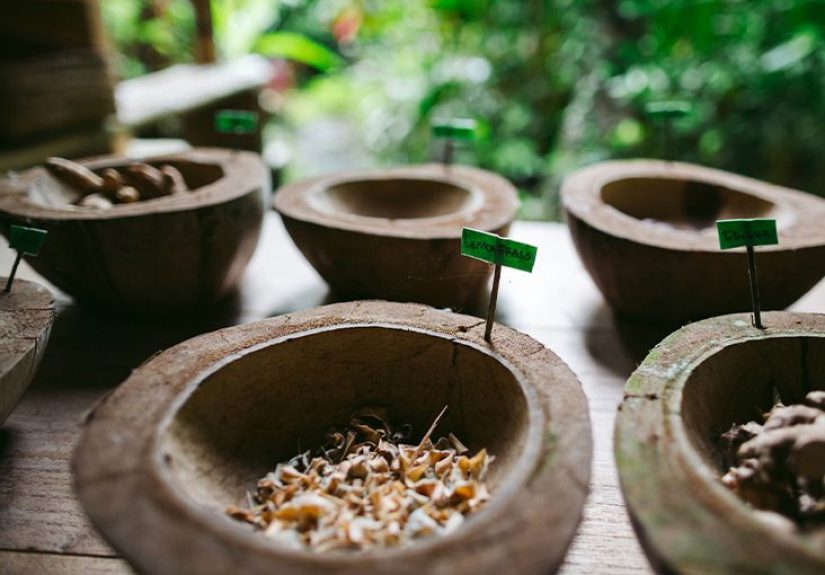
In many Bahamian contexts, internal remedies are commonly prepared as teas or decoctions (boiled extractions).
Preparation details matter: which part of the plant, how long it is steeped or boiled, whether plants are combined, and when the remedy is taken.
One recurring tradition is using odd-numbered plant combinations3, 5, 7, and so on.
To outside observers this may look symbolic, but in local practice symbolism and therapeutics are often intertwined rather than separated.
Knowledge is embodied, not just written
Elders and healers are often described as “living libraries.” They identify plants in specific habitats, track seasonal changes, and adjust preparations based on patient condition and tolerance.
When that intergenerational chain weakens, knowledge loss can happen quicklyeven when books existbecause books rarely capture full method, timing, or local ecological nuance.
Plants, values, and worldview
Sources on Bahamian bush medicine frequently highlight aloe as especially valued, along with many other local species used in combinations.
But the legacy is bigger than a plant list. It includes ideas about balance, strength, excess, heat/cold qualities, and the relationship between person and place.
A decolonial reading recognizes this as a coherent knowledge system, not random home remedies stitched together by guesswork.
Why This Matters Now: U.S. Integrative Health Is Growing, but Power Gaps Remain
In the U.S., the use of complementary approaches has increased over time for practices like meditation, yoga, massage, and chiropractic care.
So yes, “integrative health” is mainstreaming. But mainstreaming does not automatically mean fairness.
Traditional knowledge can still be cited without credit, commercialized without community benefit, or clinically discussed without cultural literacy.
If we celebrate integrative care while ignoring where knowledge came from and who has historically been excluded from decision-making, we create a polished version of the same old hierarchy.
It’s colonialism with better branding and cleaner packaging.
Safety, Evidence, and Respect Can Coexist
A decolonized approach is not anti-science. It is anti-erasure. That distinction matters.
Evidence: necessary, but uneven
Some traditional remedies have promising pharmacological signals; others have mixed or limited evidence in high-quality human trials.
That is normal in medicine generally, not a special flaw of bush medicine.
The responsible path is to test carefully, report honestly, and avoid both hype and contempt.
Safety: “natural” is not the same as harmless
U.S. regulators make clear that dietary supplements are not approved by FDA before marketing the way prescription drugs are.
FDA has also repeatedly warned about tainted products sold as supplements, including items containing hidden drug ingredients.
Add in potential herb-drug interactions, variable quality, and inconsistent dosing, and safety becomes a shared responsibility among patients, healers, pharmacists, and physicians.
Clinical communication: ask better questions
Many patients don’t disclose traditional remedy use unless asked respectfully.
A better intake question is not “You’re not taking weird herbs, right?” (please retire that forever), but:
“Are there teas, plants, or traditional remedies you use so we can make sure everything works safely together?”
That one sentence can prevent interactions, reduce stigma, and build trust.
Decolonizing in Practice: 7 Concrete Shifts
1) Credit lineage, not just ingredients
If a study or product references Bahamian plant knowledge, name the cultural and historical sourcesnot just the Latin binomial.
2) Use community-led documentation
Oral histories, local vocabularies, preparation methods, and ecological contexts should be recorded with community governance and consent.
3) Build ethical research agreements
Borrow from Indigenous data sovereignty frameworks: clarify who controls data, how results are shared, and what benefits return locally.
4) Design trials that reflect real use
If bush medicine is commonly used in combinations and specific preparations, don’t test only an isolated lab extract and call it definitive.
5) Train clinicians in cultural humility
Integrative care should include Caribbean healing literacy, not only East-West binary models.
6) Protect habitats, protect medicine
Bush medicine is place-based. Coastal change, development pressure, and biodiversity loss are health issues, not just environmental footnotes.
7) Share economic value
If traditional knowledge contributes to products, tourism narratives, or educational programs, communities should receive meaningful returns.
A Practical Blueprint for Readers
If you’re a clinician
- Ask about traditional remedies without judgment.
- Screen for interactions, especially in patients on anticoagulants, diabetes meds, and blood-pressure medications.
- Document traditional remedy use the same way you document supplements.
If you’re a researcher
- Co-design studies with Bahamian scholars and community knowledge-holders.
- Publish methods that include preparation and context, not just extract chemistry.
- Plan benefit sharing from day one, not as a postscript.
If you’re a teacher or writer
- Avoid the “miracle cure” headline trap.
- Teach colonial history alongside pharmacology.
- Use language that respects both rigor and cultural legitimacy.
If you’re a family preserving traditions
- Record names, preparations, and stories with elders (audio/video if possible).
- Cross-check safety with trusted clinicians, especially for children, pregnancy, and chronic disease.
- Keep the practice alive through shared learning, not just emergency use.
Where the Legacy Is Heading
The Bahamian bush medicine legacy is entering a new era. On one side: climate risk, knowledge loss, and commercialization pressure.
On the other: renewed interest, better research tools, and stronger frameworks for ethical collaboration.
The future does not need to be “tradition vs. modernity.” It can be tradition with agency, science with accountability, and care with memory.
Or said differently: the point is not to put bush medicine in a glass case. The point is to keep it alive, respected, and responsibly practicedwithout stripping it of the people and places that made it possible.
Experience Section: from the Bush Path
Note: The following vignettes are composite experiences inspired by recurring oral-history themes, community practices, and documented cultural patterns in Bahamian bush medicine.
1) “My grandmother never measured with a spoonshe measured with memory.”
I grew up thinking medicine came in two places: the clinic and my grandmother’s enamel kettle.
The clinic had forms, fluorescent lights, and waiting rooms. Grandma had a yard, a knife, and a timetable based on weather and moonlight.
If I had a cough, she didn’t just ask what hurt; she asked what I ate, where I swam, whether I got soaked in rain, and who else in the house was sneezing.
Her remedy always came with instructions: drink warm, rest wrapped, no fried food tonight, and stop if your stomach turns.
Years later, I realized she was doing triage, nutrition counseling, and adverse-event monitoring before I knew those terms existed.
2) “I left for college and forgot the names of plants before I forgot my own phone number.”
At school in the U.S., I learned how quickly knowledge can disappear when it isn’t practiced.
I could recite molecular pathways, but when my aunt asked me to identify a familiar roadside plant over video call, I froze.
I felt proud of my education and oddly embarrassed by that gap.
Coming home, I started recording plant walks with elders: local names, where plants grow after storms, which leaves are too old, which combinations are “too hot” for kids.
It changed my career goals. I stopped seeing traditional medicine as nostalgia and started seeing it as endangered intellectual infrastructure.
You don’t preserve that with one photo. You preserve it by learning the method, the language, and the ethics.
3) “In clinic, trust changed everything.”
One patient told me she almost didn’t mention her bush teas because previous providers rolled their eyes.
We talked without judgment, mapped everything she was taking, checked interaction risks, and adjusted timing around prescribed medications.
Her blood pressure remained controlled, her symptoms improved, andmost importantlyshe kept showing up.
That experience taught me that safety isn’t only about chemistry; it’s about communication.
If people feel shamed, they hide information. If they feel respected, they share details that make care safer for everyone.
Integrative medicine works best when we replace “prove your culture to me” with “help me understand your full care practice.”
4) “The hardest part wasn’t collecting plants; it was keeping the story attached to them.”
A community project invited young people to document remedies from elders.
At first, everyone wanted lists: plant name, symptom, dose. Efficient, searchable, neat.
Then one elder said, “If you take the plant without the story, you take only half the medicine.”
She meant context: when not to use it, who taught it, what season changes potency, when to seek hospital care immediately.
We redesigned the archive to include warning notes, local terms, and voice recordings.
It took longer. It was messier. It was far more accurate.
Data became relationship, not extraction. That was our small act of decolonizing method.
5) “I used to think decolonizing medicine was a slogan. Now I think it’s a daily practice.”
Decolonizing sounds big and abstract until you do it in small decisions: cite community experts, not just institutions; ask consent before recording; pay people for their time; return findings in plain language; include local schools; and avoid turning every cultural practice into a product pitch.
I have watched young Bahamians reclaim pride in bush knowledge without rejecting hospitals, and I have watched clinicians become better by listening instead of lecturing.
The best moments are ordinary: a grandmother teaching a teenager, a doctor asking one extra respectful question, a researcher rewriting a protocol so benefits flow home.
Legacy survives like thatconversation by conversation, cup by cup.
Conclusion
The Bahamian bush medicine legacy is not an alternative to science; it is a challenge to incomplete science and unequal systems.
Decolonizing alternative medicine means protecting cultural authority, improving evidence, strengthening safety, and ensuring benefits are shared fairly.
If we do this well, we don’t just preserve a traditionwe improve healthcare itself: more honest, more human, and more accountable to the people whose knowledge built it.