Table of Contents >> Show >> Hide
- Why the “Simple Details” Work (Even When You’re Not “A Design Person”)
- Favorite “Finish Line” Details That Make a Room Feel Complete
- Friday Favorite #1: The Ceiling Detail That Changes the Whole Room
- Friday Favorite #2: The Bathroom Detail That Prevents Petty Household Feuds
- Friday Favorite #3: The Kid Room Detail That’s Part Cozy, Part Genius
- Friday Favorite #4: Mixed Wood, Mixed Stain, Maximum Character
- Friday Favorite #5: The 30-Minute Weekly Clean That Doesn’t Steal Your Weekend
- Friday Favorite #6: Gratitude, But Make It Practical (Not Cheesy)
- Friday Favorite #7: The Surprisingly Satisfying Copper-Cleaning “Hack”
- How to Build Your Own Friday Favorites Routine
- Conclusion: The Big Secret Is That the Little Things Are the Big Things
- Experiences: A 7-Day “Simple Details” Experiment (About )
You know that oddly satisfying moment when you step back, look at a room (or your week), and think:
Ohhh… that’s it. That’s the thing that makes it feel finished. Not the giant sofa. Not the expensive paint.
The simple detailsthe tiny choices that quietly pull everything togetherare the real MVPs.
That’s the whole heart of Friday Favorites: a weekly pause to notice what worked, what made life easier,
and what tiny upgrade gave your home that “someone who has it together lives here” vibe (even if you ate cereal for dinner).
In design, details are the difference between “nice” and “wait, why does this feel so good?” In real life, they’re the difference
between “survived the week” and “I actually enjoyed parts of it.”
Today’s Friday Favorites is a love letter to small things: the diagonal ceiling that makes you stare upward like you’re in a museum,
the bathroom storage trick that saves relationships, the cleaning routine that doesn’t ruin your weekend, and the gratitude practice
that makes ordinary days feel a little less… ordinary. [1]
Why the “Simple Details” Work (Even When You’re Not “A Design Person”)
Big changes are loud. New floors announce themselves. A renovation arrives with a budget spreadsheet and a minor identity crisis.
But details? Details are stealthy. They’re the small, repeatable choices that add up:
- They create “visual closure.” Window treatments, lighting, and art finish a room the way punctuation finishes a sentence. [2][3]
- They reduce friction. A smart storage niche, a drop zone by the door, or a 30-minute cleaning plan makes life smoother. [1][5]
- They’re high impact, low drama. You can upgrade a space without living in a construction zone (or crying into takeout).
And because this is Friday Favorites, we’re going to keep it practical, specific, and a little playfullike a friend who shows up
with coffee and casually points out that your curtains are hung too low. (No judgment. Just… physics.)
Favorite “Finish Line” Details That Make a Room Feel Complete
Before we get into the fun, let’s talk about the classic finishing touches that designers and home editors bring up again and again.
If you ever feel stuck at “almost done,” run this checklist:
1) Window treatments: the frame that makes everything look intentional
Curtains, shades, or blinds don’t just add privacythey create balance, soften hard lines, and control light so your space feels calmer
(and your plants stop doing that dramatic fainting routine). [3]
A pro trick: hang drapes high and widecloser to the ceiling and wider than the windowso the room feels taller and more polished. [2]
2) Lighting: the mood manager you underestimate until you fix it
Lighting is one of those details that affects how a space feels in your body. Swap a too-bright bulb for warmer light, add a lamp to a dark corner,
or upgrade a builder-grade fixture, and suddenly the room stops feeling like a waiting room. [3]
3) Layers: rugs, art, and personal objects that make it feel lived-in
Rugs add warmth and sound softness. Art adds story. Personal itemsphotos, thrifted finds, souvenirsadd authenticity.
These details are what take a room from “showroom” to “home.” [3]
Friday Favorite #1: The Ceiling Detail That Changes the Whole Room
Let’s start with a detail that’s literally above our heads and somehow still gets overlooked: the ceiling.
One of my all-time favorite “simple detail, big payoff” moves is a planked or shiplap ceilingbut with a twist:
run the boards diagonally instead of straight. It’s still classic, but it adds instant movement and personality. [1]
Why it works: diagonal planks create a sense of direction and energylike the room is quietly saying,
“Yes, I have a personality. No, I will not apologize for it.”
If you’re considering a shiplap/planked ceiling, keep these details in mind
- Layout matters. Marking guide lines and planning your pattern keeps things looking crisp and symmetrical. [4]
- Consistent spacing is the secret sauce. Using spacers creates that clean, intentional shiplap look. [4]
- Finish with purpose. Painted planks feel airy and tailored; stained wood feels warm and architectural. [4]
This is the kind of upgrade that doesn’t need a room full of new furniture. The ceiling becomes the statementand everything else gets to relax.
Friday Favorite #2: The Bathroom Detail That Prevents Petty Household Feuds
It’s time to talk about the most underrated luxury in the entire home:
an easy-to-reach spare roll of toilet paper.
A recessed toilet paper holder with extra roll storage is one of those “why didn’t builders do this from the beginning?” details.
It saves space, looks custom, and prevents the universal experience of realizingtoo latethat the roll is empty. [1]
Why this tiny detail feels so big
- It removes friction. Small annoyances add up; removing them is basically free therapy.
- It keeps surfaces cleaner. Less clutter on tank tops, shelves, and random ledges.
- It looks intentional. Built-ins read as “custom,” even if your budget says “respectfully… no.”
This is a classic simple-detail win: small footprint, big daily payoff. [1]
Friday Favorite #3: The Kid Room Detail That’s Part Cozy, Part Genius
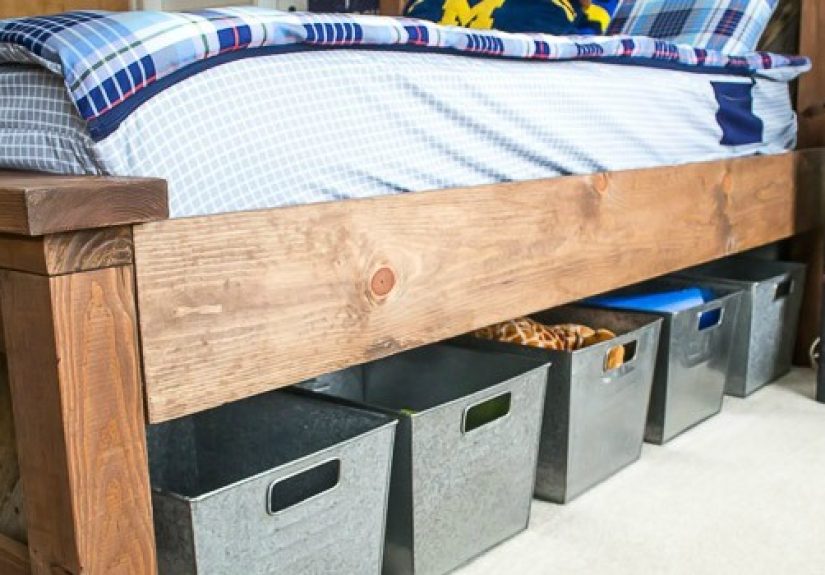
A full bed with a twin trundle sounds simple. But it’s secretly a superhero:
sleepovers, siblings, storage, and “where do we put the extra bedding?” problems all get easier. [1]
What makes this detail shine isn’t just the extra bedit’s the thoughtfulness.
The best family spaces aren’t the ones that look untouched; they’re the ones that anticipate real life and still look good doing it.
Simple detail checklist for kid spaces
- Choose furniture that solves more than one problem (sleep + storage is a classic combo).
- Use wall space for personality (art, silhouettes, or playful shapes) without adding clutter. [1]
- Design for “now” and “next,” so the room grows up gracefully.
Friday Favorite #4: Mixed Wood, Mixed Stain, Maximum Character
If your room feels flat, it might be missing texture. One budget-friendly way to add it is a mixed wood wall
using different stain tones. It brings depth, warmth, and that collected-over-time lookwithout needing a single expensive “statement piece.” [1]
The detail that makes this work is restraint: keep the tones in a cohesive family (warm with warm, cool with cool),
and repeat one or two colors elsewhere so it feels integrated, not random.
Friday Favorite #5: The 30-Minute Weekly Clean That Doesn’t Steal Your Weekend
Deep cleaning sounds like something you do once a year, under duress, while questioning your life choices.
But there’s a smarter approach: break deep cleaning into about 30 minutes per week so your home stays in good shape
without the “all-day Saturday scrub-fest.” [5]
How to make this detail actually stick
- Pick one deep-clean task per week. Small, specific, measurable. [5]
- Set a timer. When the timer ends, you stop. (This is how we keep it from becoming a spiral.)
- Adjust for your home. Skip tasks that don’t apply; use that week to get ahead or do a neglected corner. [5]
Pair that with tiny morning resetslike making the bed, clearing surfaces, and starting the day with a clear sinkand your house starts to feel
consistently calmer, not just “clean when company’s coming.” [6]
Friday Favorite #6: Gratitude, But Make It Practical (Not Cheesy)
“Simple details” aren’t only design choices. They’re also the tiny emotional habits that change how a week feels.
Gratitude is a perfect example: it’s small, it’s repeatable, and it can shift your mood in a measurable way. [7][8][9]
Research and expert guidance often link gratitude practices to better well-beinglike improved mood and sleepand even associations with better health outcomes.
It’s not magic. It’s attention: training your brain to notice what’s going right, even when life is messy. [8][9]
Simple gratitude ideas that work for real families
- Do Good Day / Service Day. Choose a day (monthly works great) where kids earn or plan something to givedonations, baked goods, suppliesand then talk about how it felt. [7]
- Gratitude jar. Drop quick notes or drawings into a jar and read them later (holidays are perfect for this). [7]
- Three Good Things. Write down three things that went well todayand why. Keep it small. “I got out of bed” counts. [10]
The detail that matters most is consistency, not perfection. You’re not trying to become a permanently cheerful cartoon character.
You’re just giving your brain a gentle reminder: the week contained good things, too. [8][10]
Friday Favorite #7: The Surprisingly Satisfying Copper-Cleaning “Hack”
Sometimes the best simple details are the ones that make you feel like a wizard.
If you’ve ever seen copper go from dull to glowing, you know the thrill.
Several home and food publications describe cleaning copper with pantry stapleslike lemon and salt, vinegar, or even ketchup
because mild acids can help break down tarnish (and the gentle abrasion helps lift it). [11]
A sensible, non-chaotic way to do it
- Rinse and wipe off dust or grease first.
- Use lemon + salt for a quick scrub, or apply a thin layer of ketchup for a short sit, then gently rub. [11]
- Rinse well, wash with mild soap, and dry immediately to reduce water spots.
Is this necessary for life? No. Is it deeply satisfying on a Friday afternoon when you want a quick win? Absolutely.
How to Build Your Own Friday Favorites Routine
The point of Friday Favorites isn’t to add tasks to your life. It’s to notice what already worksand to choose one or two tiny upgrades that make next week easier.
Here’s a simple structure:
Step 1: Pick one “home” detail
Examples: hang curtains higher, add a lamp to a dark corner, swap cabinet hardware, install a small shelf where clutter gathers, or plan a ceiling pattern.
Keep it small enough that you can finish or meaningfully start it in one session. [2][3][4]
Step 2: Pick one “life” detail
Examples: a 30-minute deep-clean task, a gratitude jar note, or a short reflection like Three Good Things.
The best habit is the one you’ll still do when you’re tired. [5][10]
Step 3: Celebrate the win (yes, seriously)
Put the “after” photo in your camera roll. Light a candle. Make the fancy iced coffee. Tell your brain, “Nice job.”
Small celebrations make small habits stick.
Conclusion: The Big Secret Is That the Little Things Are the Big Things
The simple details aren’t fluff. They’re signals. They tell your home, “You’re cared for.”
They tell your brain, “We’re not just rushing through life; we’re living in it.”
So here’s your Friday Favorites challenge: pick one detailoneand do it with intention.
Hang the curtains right. Start the 30-minute cleaning schedule. Write three good things.
Polish that copper just because it makes you smile. The details will add upand one day you’ll look around and realize:
the week didn’t just happen to you. You shaped it.
Experiences: A 7-Day “Simple Details” Experiment (About )
Imagine you decideon a random Fridaythat you’re going to test the whole “simple details” theory for one week. Nothing dramatic.
No renovations. No “new year, new me” speeches. Just small, realistic upgrades that fit into regular life.
Friday: You start with the easiest win: you hang your curtain rod higher. Not “perfectly measured by a contractor,”
just higher than it was. When you step back, the ceiling suddenly feels taller. The window looks dressed, like it put on a blazer.
You didn’t change the furniture. You didn’t buy a new rug. Yet the room looks oddly… finished. You take a photo because you want proof
this is real and not a design hallucination.
Saturday: You try the 30-minute cleaning idea. Timer on. One task only. You pick something annoying but containedlike wiping baseboards
in one hallway or deep-cleaning the fridge shelf that always becomes a sticky museum exhibit. The timer ends and you stop.
The shock isn’t that the house is spotless; it’s that your brain doesn’t feel hijacked by cleaning. You still have a weekend.
Sunday: You notice your biggest daily friction point is the bathroomspecifically, the “where is the spare roll?” situation.
You don’t build a recessed holder today, but you create a temporary version: a neat basket in a discreet spot.
Suddenly the bathroom feels calmer, like it’s quietly prepared for reality. You make a mental note:
small storage changes are basically mood changes.
Monday: You try a tiny morning reset: make the bed, clear the sink, wipe the counter. It takes minutes.
The day still throws chaos at you, but when you walk back into the bedroom, it doesn’t look like a tornado filed for residency.
That “small order” feeling is surprisingly powerful.
Tuesday: You do “Three Good Things” at night. At first it feels corny, so you keep it brutally honest:
“1) My coffee tasted good. 2) I remembered my password on the first try. 3) Someone texted back with actual punctuation.”
But then you realize something: the exercise isn’t about pretending life is perfect. It’s about noticing it’s not all bad.
Wednesday: You pick a “home personality” detailmaybe a thrifted frame, a small art print, or a lamp you move from the guest room.
The space starts to feel like you live there on purpose, not just because your stuff arrived before you did.
Thursday: You do one ridiculous-but-satisfying task: you polish a copper piece (or any metal item) and watch it shine.
It’s not life-changing, but it gives you a clean “before/after” win, and you end the day feeling like you accomplished something tangible.
By the next Friday, the house isn’t transformed into a magazine spreadand that’s the point. It’s better than that: it’s more livable.
The week feels lighter because you removed small points of friction and added small moments of meaning.
That’s what simple details do. They don’t demand a new life. They quietly improve the one you already have.