Table of Contents >> Show >> Hide
- What Cultural Appropriation Actually Means (And Why People Care)
- Why the Accusation Backfires: The Three Classic Mistakes
- Real-World Examples That Show How Context Changes Everything
- A Quick “Is This Appropriation?” Checklist (No PhD Required)
- How to Handle It Better Than the “Storm-Out” Girl
- The Bigger Lesson: Activism Without Curiosity Becomes Performance
- Conclusion: Keep the Respect, Drop the Assumptions
- Experiences People Commonly Have Around “Appropriation Accusations” (And What They Teach)
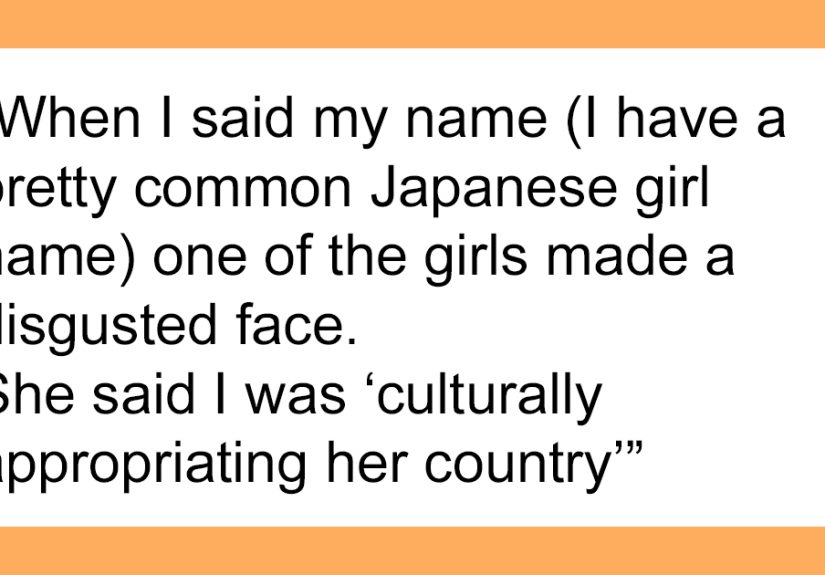
Picture this: a girl spots someone wearing a “cultural” outfit at a party (or in a cafeteria line, or on a TikTok livestreamchoose your arena). She
squares her shoulders, channels the spirit of a thousand comment sections, and announces: “That’s cultural appropriation!”
The room goes quiet. Someone coughs. Someone else suddenly becomes very interested in their phone. And then the twist: the person she’s accusing is
actually from that culture… or the outfit is from an Indigenous designer… or the “appropriated” item is literally a family heirloom. Our heroine’s
certainty collapses faster than a cheap folding chair. Cue the embarrassed storm-out.
This kind of backfire moment goes viral because it’s part comedy, part cautionary taleand part genuinely important conversation about respect, power,
identity, and how quickly “doing the right thing” can go wrong when it’s fueled by assumptions instead of understanding.
What Cultural Appropriation Actually Means (And Why People Care)
Cultural appropriation isn’t just “using something from another culture.” Culture mixes all the timefood, music, language, fashion, slang, art. That
blending can be beautiful. The real controversy usually shows up when a more dominant group adopts elements of a marginalized group in a way that’s
exploitative, stereotypical, disrespectful, or disconnected from meaningespecially when there’s a power imbalance.
In plain terms: if a group has historically been mocked, punished, excluded, or erased for a cultural practice, it hits differently when outsiders later
profit from it, get praised for it, or wear it like a costume with no context.
Appropriation vs. Appreciation: The Line People Trip Over
A helpful way to think about it: appreciation involves learning, context, credit, and respect. Appropriation is more like
“taking the aesthetic, leaving the people,” especially when money, clout, or stereotypes are involved.
The reason this gets complicated is because culture isn’t a museum exhibit behind glass. It’s lived. It’s shared. It’s evolving. And it’s also tied to real
historiescolonization, racism, immigration, and who gets treated as “cool” versus who gets treated as “other.”
Why the Accusation Backfires: The Three Classic Mistakes
1) Assuming You Can Identify Someone’s Culture by Looking
The biggest setup for a public embarrassment is thinking identity is always visible. People are multiracial, adopted, diaspora, mixed-faith, or simply not
what strangers expect. Some people don’t “look like” the culture they belong to, and that doesn’t make them less real.
When someone accuses a person of appropriation without knowing their background, the accusation can turn into a different kind of harm: identity policing.
Suddenly the target has to “prove” themselves just to exist in public wearing what’s meaningful to them.
2) Confusing “This Is Popular” With “This Is Stolen”
Cultural exchange can happen through proximity, friendship, marriage, migration, shared communities, collaboration, and genuine admiration. Not every cross-cultural
moment is a crime scene.
But the way something spreads matters. Who benefits? Who gets credit? Who gets paid? Who gets mocked? If the answers lean toward “outsiders get the rewards while
insiders get the consequences,” that’s where people start calling it appropriation.
3) Turning Education Into Public Punishment
Calling out a stranger loudly in public is basically the social justice version of trying to land a plane using only vibes. Even if your concern is valid,
the delivery can make it about embarrassment, not understanding.
People don’t learn well when they feel corneredand bystanders usually don’t either. They just learn one lesson: “Don’t talk. Don’t ask. Don’t engage.”
That’s how important conversations get replaced with silence and resentment.
Real-World Examples That Show How Context Changes Everything
Native American Headdresses: Not “Festival Fashion”
A classic example often discussed in U.S. contexts is wearing a Plains-style war bonnet as a costume or music festival accessory. Many Native communities
emphasize that certain ceremonial items carry earned status, spiritual meaning, and specific protocols. When worn as a vibe, it can flatten living traditions
into a stereotypeand reinforce harmful imagery that has been used to mock and marginalize Indigenous people.
If you’ve ever heard someone say, “But it’s honoring them!”this is where the difference between intent and impact matters. Honor usually involves listening to
what the community asks for, not deciding for them.
“Race Costumes” and Stereotypes: When “Dressing Up” Becomes Dehumanizing
Some things aren’t gray at all. Blackface, caricature costumes, and costumes built on racial stereotypes don’t “borrow culture”; they borrow oppression.
Even when someone claims it’s “just a joke,” the history behind those images is heavyand the stereotypes have real consequences.
Sports Mascots and Branding: “It Honors You”… Except It Doesn’t
Another recurring U.S. debate is Indigenous names, mascots, and imagery in sports. Critics argue these images reduce complex nations and histories into
cartoon symbolsoften inspiring fans to mimic sacred items or perform fake “tribal” behaviors. It’s a reminder that appropriation isn’t only about one person’s
outfit; it’s also about systems that normalize stereotypes at scale.
Matcha, Kimono, and “Global Culture”: When Appreciation Can Be Real
Not every cultural crossover is disrespectful. Take matcha: it’s become trendy, but it also has deep roots in Japanese tea practice, ceremony, and craft.
If someone engages with that tradition thoughtfullylearning history, buying from makers, giving credit, and not claiming it as their inventionmany people
would consider that appreciation rather than appropriation.
The same can be true for clothing, music, and art: collaboration, acknowledgment, and care can change the moral math.
A Quick “Is This Appropriation?” Checklist (No PhD Required)
Before anyone launches a public accusationor before you wear something you found online at 2 a.m.try these questions:
- Is it sacred, ceremonial, or earned? If yes, don’t treat it like a costume.
- Who is benefiting? Are outsiders making money/clout while the culture’s people get ignored or mocked?
- Is the meaning being erased? Are you using it purely as an “aesthetic” with no context?
- Is it stereotyped or sexualized? Reducing a culture to a caricature is a loud red flag.
- Are people from that culture saying it’s harmful? Believe them, even if your intent was “nice.”
- Did you buy it from creators within the culture? Supporting makers is usually a good sign.
- Are you open to being corrected? If “no,” pause. You’re not ready for the conversation.
How to Handle It Better Than the “Storm-Out” Girl
If You Think You’re Seeing Appropriation
Start with curiosity, not prosecution. You can ask a question privately and respectfully:
“Heycan I ask about that? I’m trying to understand if it has cultural significance.”
If you’re wrong, the goal is to learn quickly and exit gracefully. A simple “Thanks for explainingI didn’t know” is powerful. Humility is not defeat; it’s
social intelligence.
If you’re right and it’s harmful, focus on impact, not character assassination. “That item is sacred/earned, and a lot of people find it disrespectful as a costume.”
You don’t have to sprinkle in insults like confetti.
If You’re the One Being Accused
First: breathe. People can be clumsy even when they mean well. If it’s part of your culture, you can say sowithout putting yourself on trial:
“I’m actually [X], and this is meaningful to me.” You do not owe strangers a full genealogy report.
If you did make a mistake, an apology is not supposed to be a dramatic monologue. Keep it simple:
“You’re rightI didn’t understand the context. I’m sorry. I won’t do that again.”
Then do the part people skip: change the behavior. That’s the only apology with legs.
The Bigger Lesson: Activism Without Curiosity Becomes Performance
The internet has trained a lot of us to treat complex social issues like quick quizzes: identify the villain, select the correct moral label, collect points.
But culture is messy. People are complicated. And public shaming doesn’t automatically equal justice.
The most meaningful anti-racism and cultural respect work often looks… less cinematic. It looks like listening to communities. It looks like supporting
creators. It looks like asking better questions. It looks like making room for correction without turning everything into a courtroom scene.
So yes, sometimes the girl storms out embarrassed. But the real win isn’t watching someone get humbled. It’s learning how to protect marginalized cultures
without turning empathy into a performance that harms the very people it claims to defend.
Conclusion: Keep the Respect, Drop the Assumptions
Cultural appropriation conversations matter because culture isn’t just “style.” It’s identity, history, survival, and community. At the same time, the way we
talk about appropriation matters too. A bad accusation can become its own form of disrespectespecially when it’s built on stereotypes and certainty instead
of context and care.
If you want a simple takeaway: be curious before you’re confident. Learn before you label. Ask before you accuse. And if you mess up, don’t
storm outgrow up (emotionally), own it, and do better next time.
Experiences People Commonly Have Around “Appropriation Accusations” (And What They Teach)
Since these blowups often happen in everyday lifenot just in viral clipshere are experiences many people describe having, plus the practical lessons they
tend to learn afterward. Think of these as “based on real social patterns,” not as one specific incident with one specific girl.
1) The Halloween Group Chat Meltdown
A friend suggests a costume like “geisha,” “Native princess,” or “Mexican sombrero guy,” and someone in the group chat calls it out as appropriation.
Immediately, the costume defender says, “It’s a compliment!” The call-out person says, “It’s harmful!” Three other friends silently leave the chat and
pretend their Wi-Fi died.
What people learn: A good rule is to avoid costumes that turn an ethnicity, religion, or culture into a character. Costumes should be about
fictional characters or personal creativitynot turning real groups into props. If you’re unsure, choose something else. Halloween has infinite options; you
don’t need the one that makes someone feel reduced to a stereotype.
2) The School or Office “Food Day” That Gets Weird Fast
Someone brings “authentic” food to a potluck and labels it with a joke name, exaggerated accent spelling, or a stereotyped description. Another person points
out that the labeling feels disrespectful. Then someone says, “But I love this cuisine!” while still refusing to stop making the joke.
What people learn: Enjoying food from another culture is normal. Making the people from that culture the punchline is not. A small shift helps:
focus on the dish, ingredients, and history instead of stereotypes. Credit a recipe source, name the region correctly, and don’t “cartoon” a language for laughs.
3) The “You Can’t Wear That Hairstyle” Argument
Hairstyles can become flashpoints because hair has been policed historically and still affects how people are treated at school and work. One person argues
that a style is “just hair,” while another points out that Black and Indigenous people have faced discrimination for the same styles outsiders adopt for
fashion. Meanwhile, someone else in the room is mixed-race and gets told they “don’t count” because they don’t look how others expect.
What people learn: The most productive conversations separate two things: the style itself and the unequal consequences around it. You can
acknowledge the beauty of cultural styles while also supporting policies that stop discrimination against the people who originated them. Also: don’t appoint
yourself the identity referee for someone else’s background.
4) The “Brand Campaign” That Accidentally Turns Culture Into Aesthetic Wallpaper
A small business or school club uses Indigenous patterns, Asian calligraphy, or religious symbols in a logo because it “looks cool.” Someone points out it’s
sacred or misused. The organizers panic and either double down (“people are too sensitive”) or delete everything and pretend it never happened.
What people learn: If your project uses cultural symbols, collaborate early with people from that cultureespecially artists and community
members. Ask permission where needed, pay creators, and keep meanings intact. If you mess up, a transparent correction is better than a vanishing act.
5) The “Call-Out That Should’ve Been a Conversation”
Sometimes the real issue isn’t the concernit’s the stage. A person calls someone out loudly in public, and it turns into a spectacle. The accused person feels
attacked, gets defensive, and the whole room picks sides like it’s a championship match nobody trained for.
What people learn: Public shaming often creates more heat than light. If the goal is education and respect, private “call-in” conversations
are usually more effective. Save public call-outs for situations where someone has real power, real reach, and is causing real harm at scalenot for messy,
human misunderstandings that could be solved with one respectful question.
Put together, these everyday experiences point to the same truth: cultural respect is not a game of “gotcha.” It’s a practice. When people treat it like a
performance, the conversation turns brittle and humiliating. When people treat it like learningcurious, contextual, and community-centeredit’s far more
likely to protect what matters without producing a new kind of harm.