Table of Contents >> Show >> Hide
- What Is the HideAHorse Folding Sawhorse, Exactly?
- Key Features That Matter (Not the Fluffy Marketing Kind)
- HideAHorse Specs at a Glance
- How It’s Built: Why It Feels “Rigid” Instead of “Rattly”
- Setup: From Trunk to Work Surface in Minutes
- Best Use Cases: Where HideAHorse Earns Its Keep
- HideAHorse vs. Common Alternatives
- Buying Tips: Getting the Right Setup the First Time
- Safety & Longevity: Make It Last, Keep It Safe
- FAQ
- Conclusion
- Real-World Experiences (500+ Words): What It’s Like Living with HideAHorse
If you’ve ever tried to balance a 10-foot board on two wobbly “sawhorses” that look like they were engineered by a raccoon with a staple gun… welcome. You’re among friends.
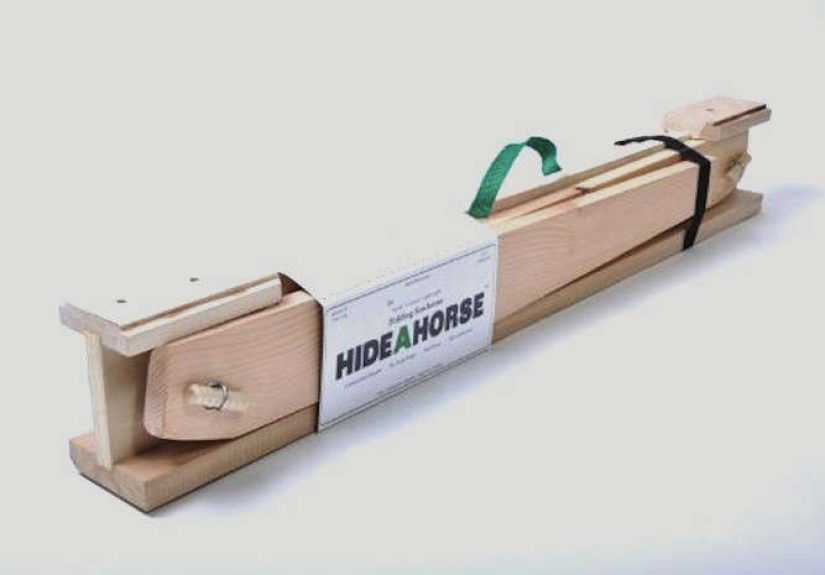
The HideAHorse Folding Sawhorse is built for the exact moment you need a real work surface right now, but you also need it to disappear five minutes laterlike a magician, except instead of rabbits it pulls out serious stability. It’s a lightweight, fold-flat, wood-forward work support that’s designed to set up fast, store small, and keep your materials from doing the “slow-motion fall of shame.”
In this guide, we’ll break down what it is, how it’s built, where it shines, and how it stacks up against popular metal and multi-function work supports. Expect specs, real-world use cases, and a few hard-earned tipsserved with just enough humor to keep your coffee from going cold.
What Is the HideAHorse Folding Sawhorse, Exactly?
At its core, HideAHorse is a portable folding sawhorse made primarily from wood-based materials and designed to be compact when folded and rigid when deployed. Unlike many plastic or thin-tube metal horses, the HideAHorse leans into a “work like a traditional sawhorse, store like a folding chair” philosophyexcept you probably shouldn’t sit on it (no matter how tempted you are).
The brand positions it as a jobsite-ready tool: lightweight, easy to carry (even as a pair), clamp-friendly, and made in the USA with an emphasis on renewable timber-based materials and recyclable components where applicable.
Key Features That Matter (Not the Fluffy Marketing Kind)
1) Fold-flat storage that actually saves space
Folded sawhorses should be easy to stash in a trunk, slide behind a cabinet, or hang along a shop wall. HideAHorse publishes folded dimensions in a slim, plank-like profile, which is exactly what you want when your workspace is doing double duty as a garage, laundry room, or “temporary everything room.”
2) Lightweight enough to carry without feeling like leg day
One of HideAHorse’s biggest calling cards is portability. The standard model is listed at 7.5 lb, and the taller model is listed at 8.5 lb. That’s light enough that carrying a pair doesn’t feel like you’re auditioning for a strongman competition.
3) Clamp-friendly top surface
A “sawhorse” that fights your clamps is like a screwdriver that hates screws. HideAHorse highlights a clampable surface so you can secure stop blocks, jigs, or workpieces without inventing new swear words.
4) Wood-first build + floor-friendly feet
If you work in a finished spaceinside a home, on a client’s floor, or on a surface you’d like to remain unscratchedwooden feet can be gentler than sharp-edged metal. A curated product listing also notes the absence of sharp edges and “metal pinch hazards,” which matters if you’ve ever lost a tiny chunk of skin to a folding hinge.
5) Patented folding concept
HideAHorse references a U.S. patent number in its product marketing, which is a nice signal that this isn’t just “two legs and a dream.” Patents don’t guarantee perfection, but they do suggest the mechanism is more thought-out than a bargain-bin copycat.
HideAHorse Specs at a Glance
Specs vary by model and listing, but HideAHorse publishes a clear comparison between its standard and tall versions. Here’s the easy-to-scan version (because nobody wants to squint at tiny spec sheets mid-project).
| Specification | Standard Model | Tall Model |
|---|---|---|
| Working height | 28.75 in | 34.5 in |
| Beam length | 35 in | 40.12 in |
| Beam width | 3.25 in | 3.25 in |
| Folded dimensions | 3.75 × 5 × 35 in | 3.75 × 5 × 40.12 in |
| Footprint | 17 × 43 in | 19 × 49 in |
| Weight | 7.5 lb | 8.5 lb |
| Load capacity (listed) | 1,200 lb | 900 lb |
Important: load ratings can be presented differently across brands and retailers (per-horse vs. per-pair, distributed vs. concentrated load, static vs. dynamic use). When in doubt, follow the rating and safety guidance provided with your specific unit, and keep loads centered and stable.
How It’s Built: Why It Feels “Rigid” Instead of “Rattly”
Folding sawhorses live or die by their joints. Many lightweight options rely heavily on thin hinges, plastic latches, or flexy tubing that slowly develops the personality trait known as “wobble.”
HideAHorse emphasizes a sturdy deployed feel, and related folding-wood sawhorse patent descriptions in the same general category highlight how rigidity can come from interlocking joinery plus fasteners/adhesive instead of purely hinge-driven geometry. That’s the woodworking equivalent of “don’t just hold it togethermake the parts lock together.”
Another detail called out in product write-ups: a dual-angle leg setup that locks into place, designed to keep the horse stable under load while remaining compact when folded. Translation: it’s trying to behave like a traditional sawhorse when you’re working, and like a slim board when you’re storing.
Setup: From Trunk to Work Surface in Minutes
The whole point of a folding sawhorse is speed. Brand messaging suggests rapid deployment (often described as “sets up in seconds”), and the carry-and-go design is meant for anyone who bounces between spaces: contractors, remodelers, mobile makers, and DIYers who refuse to build a permanent workbench because (a) space, and (b) reality.
A practical setup routine
- Pick your ground: clean, flat, and as level as possible (this is not the time for gravel drama).
- Deploy both horses: a pair is where the magic happensespecially for sheet goods and long stock.
- Add a sacrificial top (optional but smart): a strip of lumber protects the beam and gives you a cut-safe zone.
- Clamp/jig as needed: stop blocks, guides, and temporary fences become easy when the top is clamp-friendly.
- Test stability before committing: a quick push test beats discovering wobble mid-cut.
Best Use Cases: Where HideAHorse Earns Its Keep
Breaking down sheet goods in a small space
Two sawhorses plus a sacrificial surface and a sheet of plywood can become a surprisingly effective “temporary workbench.” If your shop is also your parking spot, this is the kind of flexibility that feels like cheating (the good kind).
Chop saw / miter saw support
HideAHorse imagery and descriptions often show it used as quick work support for saw setups. Even if you’re using a dedicated saw stand, extra horses are gold for supporting long trim or staging material.
Door, trim, and cabinet painting
A stable, floor-friendly support is perfect for elevating doors and panels for sanding, priming, and painting. Bonus: when you’re done, everything folds away and you can pretend your garage was never a paint booth.
Oddball projects (the fun ones)
HideAHorse also leans into “limitless uses”: portable desks, saddle racks, kayak repair standsbasically anything that benefits from a stable elevated support without a permanent footprint. If your projects have a habit of escaping the workshop, portability matters.
HideAHorse vs. Common Alternatives
There’s no single “best folding sawhorse,” because the best choice depends on how you work. Here’s a realistic way to compare.
HideAHorse vs. budget metal folding sawhorses
A budget steel folding sawhorse (like a common 29-inch metal option) can offer strong value, often with features like brackets that hold 2×4s to form a jobsite table. These are great when you want metal durability at a low price. The tradeoff is usually a more industrial feel, potential pinch points, and less “wood-friendly” contact surfaces.
HideAHorse’s angle is different: lighter wood-forward build, compact folded profile, and clamp-friendly top behavior. If you frequently work in finished spaces or you value light carry weight, that difference can matter more than raw “all-steel everything.”
HideAHorse vs. premium multi-function work supports (track + clamps)
Premium work supports (think systems with integrated tracks, bench clamps, and adjustable leg heights) can be wildly capable. Some are rated around 2,200 lb per pair and include built-in clamping modes, sacrificial surfaces, and expandability into larger work platforms.
The tradeoff is weight and complexity: a premium unit can weigh far more per horse and cost more per setup. If you want “grab-and-go simplicity,” HideAHorse stays more in the lightweight, fast-deploy lane.
HideAHorse vs. traditional fixed wooden sawhorses
Traditional wooden sawhorses are wonderfully simple and can be very sturdybut they don’t fold, which makes storage and transport the constant tax you pay forever. A classic non-collapsible wood sawhorse can weigh noticeably more per unit, and it will always take up the same space even when it’s doing nothing.
HideAHorse vs. plastic folding sawhorses
Plastic folding sawhorses range from flimsy to surprisingly decent. Some U.S.-made plastic designs advertise features like anti-slide pads, tool shelves, and 2×4 slots that let you create a cut-safe bench surface. They can be a good option for light duty and quick setups.
If your work leans heavierdoor slabs, hardwood stock, aggressive planing, or repeated jobsite haulingthe stiffer feel of a well-designed wood/structural system can be more confidence-inspiring than plastic that flexes.
Buying Tips: Getting the Right Setup the First Time
Choose your height based on what you actually do
- Standard height is a comfortable “general purpose” range for cutting, sanding, and assembly.
- Tall height can save your back for certain tasks, especially if you’re standing at a bench-like posture more often.
Buy a pair (seriously)
One sawhorse is a lonely creature. Two sawhorses let you support sheet goods, long boards, doors, and temporary tabletops. If you’re building a portable workstation, a pair is the baseline.
Turn two sawhorses into a real “workbench”
A classic small-shop move: two sawhorses + a sheet of plywood = instant assembly table. Many woodworking guides recommend this approach for space-saving workshops and temporary work surfaces. Add a sacrificial layer if you’re cutting, and clamp stops as needed for repeatable cuts.
Think about clamps and sacrificial tops upfront
A couple of solid clamps and a sacrificial top board can transform any sawhorse setup from “good enough” into “why didn’t I do this sooner?” This is especially true if you use circular saws, routers, or need repeatable positioning.
Safety & Longevity: Make It Last, Keep It Safe
Sawhorses are simple, but they’re still load-bearing equipment. General safety guidance across sawhorse manuals and workplace resources boils down to the same essentials:
- Use a flat, level surface and make sure all legs are firmly seated.
- Don’t exceed the rated load, and avoid dynamic “drop” loads.
- Distribute weight evenly and keep heavy loads centered.
- Inspect before use (cracks, loose joints, damaged straps/locks, worn contact points).
- Wear appropriate PPE for cutting/sanding operationsespecially eye and hearing protection.
For wood-forward horses, also think about moisture. A curated listing notes that the bottom portion of the legs may be treated (for example, a linseed oil/turpentine dip) to help with moisture resistance, but it’s still smart not to store any wooden sawhorse soaking wet in the back of a truck for weeks. Dry it out, keep it clean, and it’ll treat you better than that “mystery folding horse” you bought in 2014.
FAQ
Is the HideAHorse Folding Sawhorse good for jobsite work?
It’s marketed as a portable, jobsite-ready support: lightweight, quick to deploy, and strong enough (by listed ratings) for serious tasks. If your jobsite involves constant setup/teardown and limited storage space, that’s exactly where folding designs shine.
Why do load ratings vary across listings?
Some listings present capacity per horse, others per pair; some are conservative “working load,” others may reflect higher static testing. Treat the manufacturer’s stated rating for your specific model as the rule, and keep loads stable and centered.
Can I use it as a temporary work table?
Absolutelyespecially as a pair. Add a plywood top for assembly, or add sacrificial strips if you’re cutting sheet goods. The more you clamp and stabilize the top surface, the more it behaves like a compact bench.
Conclusion
The HideAHorse Folding Sawhorse is for people who want real stability without committing permanent square footage to it. Its biggest wins are simple: it folds flat, carries easily, clamps nicely, and is designed to feel rigid when you’re pushing material around.
If you’re the kind of builder who works in multiple locations (jobsite, garage, driveway, friend’s house, the mythical “space where the light is good”), HideAHorse is the kind of tool that quietly becomes part of your default setup. And that’s the highest compliment a sawhorse can getright after “didn’t pinch me today.”
Real-World Experiences (500+ Words): What It’s Like Living with HideAHorse
Let’s talk about the part that never shows up in spec tables: how a folding sawhorse fits into your daily workflow when you’re tired, rushed, and balancing three different “quick” projects that somehow became a full weekend.
The most common “aha” moment people describe with compact folding horses is how often they actually use them once storage friction disappears. When a tool is annoying to grab, it stays parked. When it’s easy to grab, it becomes the answer to problems you didn’t even label as “sawhorse problems.” Need a quick platform to sand a cabinet door? Fold, click, done. Need a staging area so your boards aren’t lying in a tragic pile on the floor? Two horses and a sheet of plywood, and suddenly you have a workstation that looks like you planned ahead.
Portability changes the rhythm of a job. If you’ve ever hauled big, non-collapsible sawhorses, you know the dance: awkward angle, doorframe collision, the “sorry about your drywall” pivot, and then the inevitable argument with the trunk that refuses to close. HideAHorse’s lightweight design (and the idea of carrying a pair without needing a second trip) makes the tool feel more like a fast accessory than a bulky piece of furniture. The result is subtle but real: you set up a proper work surface more often, instead of improvising on the ground.
Clamp friendliness is another day-to-day perk. A lot of quick setups fail because nothing stays putyour stop block skates, your workpiece creeps, your “temporary fence” becomes a suggestion. When the top plays nicely with clamps, suddenly you can do repeatable cuts, hold awkward shapes, or keep trim from shifting mid-measure. That’s the kind of small improvement that saves time in ten-second chunks all day long… and then you realize you gained an extra hour.
Then there’s the “finished-space factor.” Many people do repairs and builds inside homes, on finished floors, or in garages where the floor is part workshop and part “please don’t scratch this.” A wood-forward sawhorse with gentle feet and fewer sharp edges is simply less stressful. You still put down a drop cloth when you’re painting, but you stop worrying that a metal corner will gouge the floor because you set it down too enthusiastically.
One of the best ways to use any sawhorseHideAHorse includedis the portable bench setup: two horses plus a top. For assembly, you can drop on plywood and get a wide surface. For cutting, you can add sacrificial strips so the saw blade has somewhere safe to exit. For finishing, you can raise the work to a comfortable height so you’re not hunched over like a question mark for two hours. It’s not a permanent bench, and it doesn’t have to be. The whole charm is that your “bench” can vanish when you need the space back.
The final reality check: no sawhorse replaces good habits. Even the strongest-rated setup needs a level surface, centered loads, and a quick stability check before you commit. But when a tool is designed to be quick, compact, and rigid, it encourages you to do the right thingset up a stable platformrather than cutting corners (sometimes literally).