Table of Contents >> Show >> Hide
- Why We Love Real-Life South Park Doppelgangers
- From Cartman to Kenny: The Most Uncanny Look-Alikes
- How the Internet Turned Look-Alikes into a Meme
- What Makes Someone Look Like a South Park Character?
- Is It Okay to Laugh? The Etiquette of Look-Alike Photos
- Turning Yourself into a South Park Character (On Purpose)
- Real-Life Experiences with South Park Look-Alikes
- Conclusion: Laugh, Recognize, and Be Kind
Every once in a while, you scroll past a photo and think, “Wait… is that Cartman at the grocery store?” The internet is obsessed with hilarious pictures of people who look like South Park characters, and honestly, it’s easy to see why. From perfectly round winter hats to big, expressive eyes and “did-they-just-say-that-out-loud?” personalities, some real-life folks feel like they accidentally walked out of an episode of South Park.
Even though South Park’s animation is famously simple, its characters are instantly recognizable: tiny bodies, big heads, bold colors, and exaggerated expressions. That combination creates the perfect recipe for real-world doppelgangers. Around the web, fan communities collect photos of people whose haircuts, clothes, and expressions line up almost too well with Stan, Kyle, Cartman, Kenny, Butters, and the rest of the gang.
In this deep dive, we’ll explore why we love these South Park look-alikes so much, what makes someone resemble a South Park character, how memes and AI tools keep the trend alive, and how to enjoy these hilarious pictures while still staying kind and respectful. We’ll also share some real-world experiences and story-style examples that bring the whole phenomenon to life.
Why We Love Real-Life South Park Doppelgangers
The fascination with people who look like South Park characters taps into something very human: we love spotting patterns. Psychologists point out that our brains are wired for facial recognition, and we constantly compare new faces to ones we already know. When a stranger’s hairstyle, expression, or outfit matches an iconic animated character, our brains light up with instant recognition and humor.
South Park characters make this even easier. Their designs use strong, simple shapes and distinctive color palettes. Kyle’s bright green ushanka, Stan’s blue-and-red beanie, Cartman’s round body and yellow hat trim, Kenny’s orange parka with the hood pulled tightthese visual cues are so strong that anyone wearing a similar outfit can trigger that “they look just like…” moment.
There’s also a nostalgia factor. Many fans grew up watching South Park, sneaking late-night episodes or quoting jokes at school. Seeing a real person who looks like a character isn’t just funny; it’s a small hit of childhood memory mixed with the absurdity of real life. It feels like your favorite cartoon just invaded your neighborhood.
From Cartman to Kenny: The Most Uncanny Look-Alikes
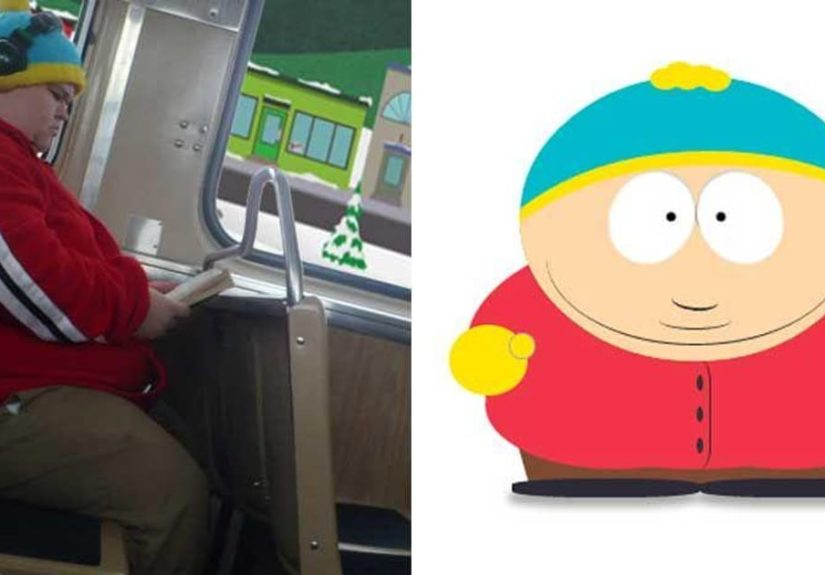
The Classic “Cartman at the Supermarket” Moment
One of the most common types of South Park look-alike photos shows up in everyday places: a grocery store, a bus stop, or a fast-food line. Imagine turning the corner and spotting:
- A stocky guy in a teal hat with yellow edging, red jacket, and slightly grumpy expression.
- He’s pushing a cart overflowing with snacks and frozen pizzas.
- He’s mid-complaint about prices or lines, gesturing with real Cartman energy.
You don’t even need a perfect matchjust the silhouette and attitude are enough. A quick phone snap later, and the internet has “Cartman in real life” to chuckle over.
Stan and Kyle: Winter Wear Doppelgangers
Because South Park’s kids are almost always bundled up for Colorado weather, winter photos produce some of the best parallels. Think:
- A kid in a navy-blue beanie with a red band, brown jacket, and a slightly bewildered look: instant Stan.
- Another in a green ear-flap hat, bright orange jacket, and a serious face like they’re about to confront some moral injustice: hello, Kyle.
These photos are funny because they’re so mundane. It’s not a cosplay convention or costume party; it’s just someone existing in winter clothing who happens to align perfectly with a familiar character design.
The Kenny Effect: Hood Up, World Out
Kenny look-alikes are everywhere because his signature move is simple: hood up, face mostly hidden. Any person wrapped up in an oversized orange (or similarly colored) hoodie with just their eyes peeking out becomes an accidental Kenny homage.
In viral photos, you’ll often see:
- A commuter huddled in a hoodie on a cold platform, barely visible inside the fabric.
- A kid on a playground whose parents bundled them so tightly that they look like they’re wearing a cartoon parka.
The result is pure comedy. Even without hearing “(muffled) Mmmph mmmph,” your brain fills in the rest.
Supporting Cast Look-Alikes
It’s not just the main four kids. Fans love spotting:
- A sweet-faced, slightly anxious teen who channels Butters with his blonde hair and shy smile.
- A stern adult in glasses and a tie who gives off serious Mr. Mackey “Mmmkay” energy.
- A school administrator or teacher with the same hairstyle and vibe as Principal Victoria.
These comparisons blur the line between parody and reality in a way that feels very “on brand” for a show that constantly comments on real life.
How the Internet Turned Look-Alikes into a Meme
Listicles, Galleries, and “Vote for the Best Twin”
Look-alike culture doesn’t just live in a few random postsit’s become a staple of internet entertainment. Across listicle-style sites and fan communities, you’ll find galleries of real people who resemble not just South Park characters but cartoons of all kinds. These collections invite users to scroll, laugh, and sometimes upvote the most uncanny matches.
The format is simple but effective:
- Side-by-side images or descriptions comparing a real person to a cartoon character.
- Short, punchy captions highlighting the resemblance or joking about what the character might say in this situation.
- Interactive elements like “vote up your favorite” or “submit your own look-alike.”
South Park look-alikes slot naturally into this trend because the show’s characters are already exaggerated caricatures. When a real person matches that style, the effect is both surprising and satisfying.
Fan Communities and Story-Based Posts
It’s not only about photos. In fan forums and social media threads, people share stories of the time they met someone who looked and acted exactly like a South Park character:
- A teacher whose temper and sarcasm reminded students of Mr. Garrison.
- A neighbor who has the same laid-back chaos as Randy Marsh.
- A childhood friend who was the walking embodiment of Butters: endlessly polite, easily flustered, and somehow always in trouble.
These anecdotes highlight another layer: it’s not just about looks. The combination of appearance, voice, and behavior is what really sells the “that’s totally a South Park character” feeling.
AI Joins the Look-Alike Game
As AI image tools have become more common, artists and fans have used them to imagine what South Park characters might look like as real humans, or to transform real people into cartoon-style portraits. While these AI creations can sometimes be eerie, they also contribute to the ongoing fascination with translating animated characters into realistic faces.
In some projects, artists feed classic cartoon characters into AI tools and then refine the results to create striking “real-life” portraits. The results often sit in that uncanny valley between totally believable and obviously stylized, which only makes the comparison more interesting. For South Park, translating such simple character shapes into detailed faces can be especially surprising: suddenly, you see what a “real” Cartman or Kyle might look like.
What Makes Someone Look Like a South Park Character?
The Visual Recipe: Silhouette, Colors, and Exaggerated Features
A perfect South Park look-alike usually checks a few boxes:
- Silhouette: Round head, small body, and bulky jacket or coat create an instantly cartoonish outline.
- Color palette: Bright, solid colorslike Cartman’s red and teal, Kyle’s green and orange, or Kenny’s orange and brownform instant character associations.
- Facial expression: A scowl, side-eye, huge grin, or deadpan stare can mimic a specific character’s typical on-screen expression.
- Hair and accessories: Distinctive hats, hoodies, glasses, or facial hair can “lock in” the resemblance.
None of these elements have to be perfect. The magic lives in the overall impression. When enough details line up, your brain stops seeing “stranger in a store” and starts seeing “live-action South Park extra.”
Personality Parallels
Sometimes the look-alike effect is less about visual resemblance and more about behavior. People love to say:
- “My friend is such a Cartman” when someone is loud, demanding, and hilariously unapologetic.
- “She’s the Kyle of our group” for the person who always tries to do the right thing and calls everyone out.
- “He’s basically Butters” for the sweet, slightly naïve friend who somehow turns every simple task into an adventure.
These personality parallels are part of what makes real-life comparisons so fun. Even if the physical resemblance is mild, the combination of mannerisms and attitude can make the comparison feel spot-on.
Is It Okay to Laugh? The Etiquette of Look-Alike Photos
Laughing at a funny resemblance is harmless in most casesbut there’s a line between playful humor and mean-spirited mockery. Because many look-alike photos involve everyday people, it’s important to think about consent and respect.
Celebrate, Don’t Mock
A healthy approach to South Park look-alikes is to treat them as delightful coincidences, not as invitations to insult someone’s body or appearance. If the tone of your caption is:
- “This is amazing, they look exactly like Stan!”
- “Real-life Butters, 100% wholesome energy.”
…you’re celebrating the resemblance. On the other hand, captions that focus on mocking someone’s weight, age, or features cross into hurtful territory. South Park, for all its rough edges, often uses absurdity and exaggeration to highlight hypocrisy. Fans can honor that spirit by laughing with people, not at them.
Tips for Sharing Responsibly
If you’re planning to share hilarious pictures of people who look like South Park characters, keep a few guidelines in mind:
- Get permission when you can. If the person is a friend, family member, or someone you know, ask if they’re okay with the post.
- Avoid targeting strangers in vulnerable situations. Photos taken without context or at someone’s worst moment can feel exploitative.
- Skip bullying language. You don’t need insults to make the joke work“real-life Cartman” is funny on its own.
- Respect kids and privacy. Be extra careful about posting pictures of minors or identifiable strangers.
- Be ready to delete. If someone is uncomfortable with a post, it’s better to take it down than to argue.
Humor and empathy can live in the same place. You can enjoy the uncanny resemblance while still treating real people like real people, not just content.
Turning Yourself into a South Park Character (On Purpose)
Not all South Park look-alikes are accidental. Some people lean fully into the fun and intentionally become their favorite characters for a nightespecially around Halloween, conventions, or themed parties.
Popular options include:
- Simple cosplay: A beanie, jacket, and color-accurate outfit are enough to transform into one of the four boys.
- Makeup and accessories: Glasses, wigs, or fake mustaches help recreate adult characters like Randy, Mr. Mackey, or Mr. Garrison.
- Photo filters and cartoon apps: Some apps and online tools can stylize your selfie to look like you belong in the South Park universe.
The difference here is control and consent. When you decide to become a South Park look-alike for fun, you’re in charge of how you’re presented. It becomes a playful way to connect with other fans and celebrate a show that has shaped pop culture for decades.
Real-Life Experiences with South Park Look-Alikes
Beyond the curated galleries and internet threads, there are countless little moments in everyday life when someone accidentally channels South Park energy. These story-style experiences bring the phenomenon down to earth and make it feel more personal.
The Airport Cartman
Picture this: you’re waiting at the gate before a long flight. It’s early, the coffee hasn’t kicked in yet, and everyone is half-asleep. Suddenly, a voice cuts through the murmur of announcementsloud, frustrated, and very dramatic about baggage fees. You look up and see a man in a teal beanie, red jacket, and unmistakably Cartman-style body language.
He’s pacing, complaining about “respect” and “principles,” gesturing wildly with a bag of snacks. A couple of nearby passengers silently exchange a look, that universal nonverbal meme that says, “Are you seeing this?” No one takes a photo, but the story travels. Later, one of them tells friends, “I swear to you, I met Cartman at the airport.”
The Classroom Butters
In many schools, there’s at least one student who unintentionally becomes “the Butters” of the group. Maybe he has light hair, a soft voice, and a slightly bewildered expression whenever the teacher introduces a surprise quiz. He tries hard to do the right thing, gives everyone the benefit of the doubt, and somehow still winds up in the middle of chaos.
Classmates might joke affectionately, “Don’t worry, Butters, you got this,” and he laughs along. When handled kindly, this kind of comparison can actually make someone feel includedlike a lovable, central character in their friend group’s story. Over time, the nickname becomes less about the cartoon and more about shared memories.
The Neighborhood Randy
Every neighborhood has a Randy Marsh type: the overly enthusiastic dad who gets way too invested in minor events. He organizes the block barbecue, argues dramatically about parking rules, and turns an ordinary backyard project into a full-blown saga.
Maybe he even looks the parta certain hairstyle, a familiar mustache, that slightly wild-eyed expression when he’s mid-rant. Neighbors share his funniest moments in group chats, joking that “Randy is at it again.” The South Park comparison gives everyone a shared language for describing a very real personality.
Seeing Yourself in the Characters
The most interesting experience, though, might be when people see themselves as South Park characters. After stumbling across a gallery of look-alikes, someone might spot a face or expression that feels uncomfortably familiar. The angle, the posture, the outfitit all lines up a little too well.
Instead of feeling insulted, some people embrace it. They might recreate the pose on purpose, dress intentionally like the character, or share side-by-side photos as a joke. In doing so, they take ownership of the comparison and turn it into a playful, self-aware bit of personal branding.
Why These Experiences Stick with Us
These encounterswhether they involve strangers, friends, or ourselvestend to stick in our memories. They blend pop culture and daily life in a way that feels uniquely modern. You’re not just watching South Park anymore; you’re spotting echoes of it in real people, in real places, at real moments.
That’s the secret behind the enduring appeal of hilarious pictures of people who look like South Park characters. They’re not just jokes; they’re snapshots of how deeply woven this animated world has become in our collective imagination.
Conclusion: Laugh, Recognize, and Be Kind
Hilarious South Park look-alike pictures work on multiple levels. They tap into our pattern-seeking brains, our nostalgia for a show that’s been part of pop culture for decades, and our love of sharing quick, visual jokes online. From accidental winter outfits that scream “Stan and Kyle” to full-on intentional cosplay, the resemblance between real people and South Park characters keeps fans entertained.
At the same time, there’s real value in remembering that behind every viral photo is a real person with feelings, a life, and no background laugh track. The best way to enjoy this trend is to treat it as a celebration of the weird, wonderful ways life imitates artwithout slipping into cruelty or mockery.
Spotting a real-life Cartman or Butters in the wild will probably always make people laugh. And as long as we pair that laughter with respect, empathy, and a bit of self-awareness, these uncanny resemblances can stay what they’re meant to be: funny, relatable moments where our favorite cartoon universe briefly overlaps with our own.