Table of Contents >> Show >> Hide
- The moment that turned into instant “rewind it” television
- Why it looked so effortless (even though it definitely wasn’t)
- The pro host playbook for handling on-camera mishaps
- Not his first “oops” on the Wheel set
- What the fall says about Seacrest’s era of Wheel
- Why it went viral: fans love competence with a side of chaos
- Why contestants get that excited in the first place
- Conclusion: getting knocked down is optionalhow you get back up is the job
- of Relatable “Fall Like a Pro” Experiences (Because Life Has No Commercial Breaks)
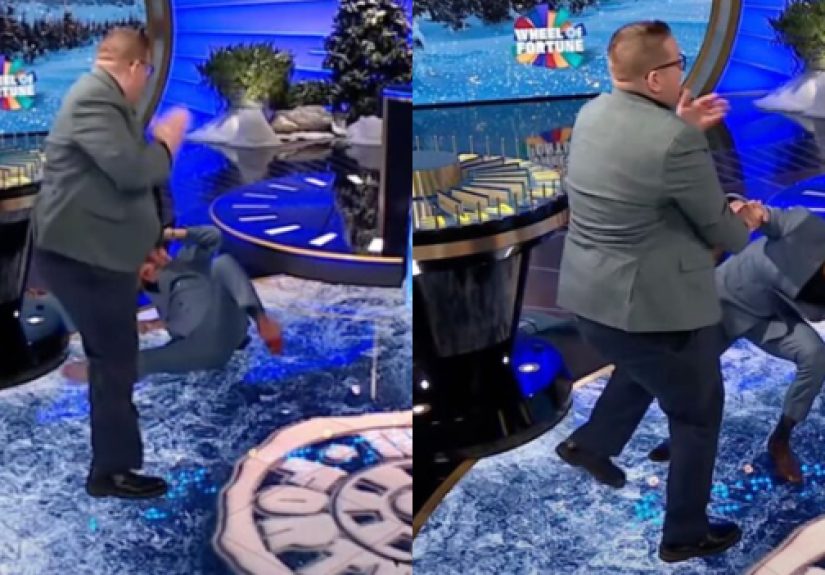
There are two kinds of TV moments: the ones the producers meticulously plan… and the ones that happen when a jubilant contestant accidentally turns the host into a human punctuation mark. On a January 2025 episode of Wheel of Fortune, Ryan Seacrest got knocked to the floor during a post-win celebrationand somehow made the whole thing feel less like an “oops” and more like a highlight reel.
It wasn’t just funny (though it absolutely was). It was a masterclass in how a seasoned on-camera pro manages a surprise physical mishap without killing the momentum, embarrassing anyone, or making viewers worry they just watched an injury in real time. Let’s break down what happened, why it worked, and what it reveals about Seacrest’s growing comfort behind the wheel.
The moment that turned into instant “rewind it” television
It started with a wild Bonus Round solve
The setup was classic Wheel: high stakes, a ticking clock, and a puzzle that looks like it was designed by someone who enjoys watching humans sweat. Contestant Daniel Thomas (who had already built a strong game) went into the Bonus Round in the “Living Things” category and, with only a handful of letters on the board, landed on the answer: “Guppies.”
That last-second solve did what it always does on Wheel: it detonated pure adrenaline. If you’ve ever watched someone win big on this show, you know it’s not a polite golf clap moment. It’s a “My body is now a celebratory firework” moment.
Then came the hug… and the physics lesson
Thomas rushed in to celebrate. Seacrest leaned in like a supportive host does. And then, in that blink-of-an-eye zone where joy meets gravity, Seacrest lost his balance and went down near the wheel. The audience got a surprise “plot twist,” Thomas realized what happened, and Seacreststill on the floordid the most important thing a host can do in that moment:
He reassured everyone immediately. “I’m good,” he said, popping the tension bubble before it could inflate. Then he did something even more useful: he turned the fall into a shared laugh instead of a scary interruption, joking that Vanna White might have to take over, and keeping the vibe light as Thomas collected his winnings.
Why it looked so effortless (even though it definitely wasn’t)
When a host takes a tumble on a major show, the audience’s brain runs two tracks at once:
- Track A: “Oh noare they hurt?”
- Track B: “Okay, but… that was kind of hilarious.”
The job is to resolve Track A fastwithout stepping on Track B. Seacrest did it in three moves that look simple, but require serious experience.
1) He did a quick safety check without making it dramatic
Notice what he didn’t do: he didn’t lie there and milk it. He didn’t wave his arms like a cartoon character. He didn’t turn it into a medical episode. Instead, he signaled controlgot up, stayed engaged, and let the audience know he was okay.
That’s not just good hosting. It’s good risk management. The moment you appear unsure, the audience starts imagining worst-case scenarios. Seacrest chose certainty.
2) He protected the contestant’s moment
This is the underrated part. A contestant’s big win is a once-in-a-lifetime moment for many people. If the host reacts with irritation, embarrassment, or even visible discomfort, it can sour the entire memory. Seacrest didn’t do that. He kept Thomas from feeling like he “ruined the show,” joked about it, and immediately refocused on the victorybecause the segment is ultimately about the player, not the host’s pride.
In other words: he didn’t make the contestant carry the emotional weight of the accident. That’s professional generosity.
3) He used humor as a reset button
Seacrest’s humor wasn’t random. It was targeted:
- It reassured viewers (“I’m good.”)
- It reassured the contestant (playful joking instead of blame).
- It reassured the show (momentum continues, no awkward pause).
Comedy in live or live-to-tape TV is often less about punchlines and more about permission. When the host laughs, the audience feels allowed to laugh, toowithout feeling guilty.
The pro host playbook for handling on-camera mishaps
If you want to understand why Seacrest’s reaction played so well, it helps to know what great hosts are trained to do when things go sideways. The “playbook” isn’t written down on a cue card, but you can spot it in the way veterans move.
Keep the show movingmomentum is safety
Momentum isn’t just entertainment; it’s a form of control. If the show keeps moving, the audience stays emotionally on the intended track. Seacrest got up, stayed conversational, and returned to the structure of the game. Viewers never felt stranded in an awkward “now what?” silence.
Use your co-host as the safety net (and the audience’s anchor)
On Wheel, Vanna White is more than co-host. She’s part of the show’s comfort-food DNA. When Seacrest joked that she might have to take over, he was also signaling: “We’re still in familiar hands. Everything’s okay.” It’s a subtle but powerful movebringing the audience back to the trusted rhythm of the format.
Talk to the camera to re-center the room
Wheel of Fortune isn’t just a game show; it’s a relationship with viewers at home. Seacrest knows how to “include” the audience quickly. A quick aside, a joke, a wink at the absurditythese are ways of pulling the home viewer back into the moment so it feels communal instead of chaotic.
Make it a shared moment, not a personal embarrassment
When something embarrassing happens on TV, the instinct is to either deny it or over-explain it. Seacrest did neither. He acknowledged it lightly, reassured everyone, and moved forward. That prevents the moment from turning into secondhand cringe. Instead, it becomes a little burst of authenticityone of those “this is why we watch” beats.
Not his first “oops” on the Wheel set
Part of why this fall hit the internet so fast is that it fits into a pattern viewers started noticing: Seacrest is willing to be the butt of the joke, physically and socially, if it makes the show more fun.
The cheese-chasing wipeout
In another memorable segment, Seacrest dove into a playful bit inspired by England’s Gloucestershire Cheese Rolling Festivalexplaining the tradition and then trying a mini “chase the wheel” version on the Wheel stage. He took off, went for the rolling prop, and ended up wiping out. Vanna’s reaction (“Are you gonna be okay?”) did what it always does: made the moment feel even more realand therefore funnier.
Whether the bit was partially planned or simply “planned chaos,” the key detail is the same: Seacrest popped back up and sold it as entertainment, not injury.
The friendly headlock that proved he’s game
Then there was the episode where a former pro wrestler contestant put him in a (playful) headlock during introductions. Seacrest tapped out immediatelybecause yes, that is the correct response when a person with wrestling experience decides to demonstrate anything on your neckand he handled it with the kind of humor that makes a show feel spontaneous instead of stiff.
These moments add up. They tell viewers: “This host can laugh at himself, and the show is comfortable enough to get a little weird.” That’s good for a long-running format. It keeps the vibe fresh without changing what people love.
What the fall says about Seacrest’s era of Wheel
Seacrest stepped into a high-pressure role when he took over hosting duties after Pat Sajak’s decades-long run. That kind of transition can make any show feel tense: fans are protective, the co-host dynamic is under scrutiny, and the new host has to honor the legacy while still being himself.
And that’s exactly why the “fall moment” mattered. It wasn’t just slapstick. It was proof that he can absorb an unexpected situation and still preserve the show’s warmth. That’s the difference between someone who is “reading lines on a game show” and someone who is actually hosting itsteering emotions, pacing, and tone.
Even better: the moment made viewers feel like they were watching something unrepeatable. In a world of endless content, authenticity is currency. A genuine surprisehandled wellbuys a lot of goodwill.
Why it went viral: fans love competence with a side of chaos
Online reactions to the fall all circled the same idea: Seacrest handled it “like a champ.” People weren’t just laughing at the tumblethey were reacting to the recovery. That’s a key distinction.
Internet humor often rewards two things:
- A clean, simple visual (host goes down, host gets up).
- A satisfying emotional payoff (no one is hurt, and everyone stays happy).
Seacrest delivered both. The fall was a quick clip. The response was instantly quotable. And the contestant still got the spotlight and the prize moneymeaning viewers could laugh without feeling like they were laughing at someone’s pain.
Why contestants get that excited in the first place
It’s easy to joke about the “tackle,” but the emotional surge makes sense. Wheel of Fortune isn’t a show where contestants slowly build to a life-changing moment. It can happen in a few seconds. One correct guess can swing a game, unlock a big bonus, or add a massive cash amount right at the end. That sudden shift triggers a very human response: relief plus shock plus joy… all at once.
Add bright lights, an audience, cameras, a ticking clock, and the fact that you’re standing next to a famous TV host, and you have the perfect recipe for “I have no idea what my arms are doing right now.”
The best hosts anticipate that. They create room for excitement while gently steering it away from chaos. In this case, the chaos won a roundthen Seacrest won the recovery.
Conclusion: getting knocked down is optionalhow you get back up is the job
Ryan Seacrest’s fall on Wheel of Fortune could’ve been a cringe moment, a scary moment, or a moment the show tried to pretend didn’t happen. Instead, it became the kind of clip people share because it captures what viewers want from comfort-TV: real joy, low stakes (for us at home), and a host who knows exactly how to keep everyone smiling.
He didn’t just “handle it like a pro.” He reminded everyone what professional hosting actually looks like: protect the contestant, reassure the audience, keep the pace, andif you canmake the whole thing funnier than it had any right to be.
of Relatable “Fall Like a Pro” Experiences (Because Life Has No Commercial Breaks)
You don’t have to be on a game show stage to know the feeling of an unexpected “fall.” Maybe yours wasn’t a literal tumblethough if you’ve ever tripped on a curb while waving confidently at someone you thought you knew, welcome to the club. The real lesson in Seacrest’s moment isn’t that gravity exists (rude, but true). It’s how to recover with your dignity mostly intact and your sense of humor fully operational.
Experience #1: The “I’m Fine” Moment at Work. You’re presenting in a meeting, you go to click “Next,” and somehow your laptop decides to projectile-launch a notification to the big screensomething like “Reminder: Buy hemorrhoid cream.” The room goes silent. This is where Seacrest energy helps: don’t panic, don’t over-explain, and don’t act like everyone didn’t just see it. A simple, calm line“Well, that’s not relevant to Q1 revenue”and then move on. People don’t remember the mishap as much as they remember how you handled it.
Experience #2: The Social “Oops” That Feels Loud. You call someone the wrong name. Worse: you call someone’s partner the wrong name. Your brain instantly stages a full musical called Regret: The Encore. The Seacrest approach is to keep it human. Apologize briefly, correct yourself, and immediately re-engage with warmth. Long apologies keep the awkwardness alive. Short apologies let it die peacefully, like it deserves.
Experience #3: The Physical Trip in Public. You miss a step, stumble, and do that little dance where your arms try to become helicopters. Here’s the crucial choice: do you freeze in embarrassment, or do you reset the room? A tiny laugh, a quick “Nailed it,” and continuing to walk like you planned it can be surprisingly effective. Not because you’re fooling anyonebut because you’re giving everyone permission to move on without making it a big deal.
Experience #4: The Parenting / Family Moment. You’re trying to be the calm adult, but the situation is chaos: spilled juice, someone crying, someone laughing, someone asking “Why is the dog wet?” (Do not ask. You don’t want to know.) The “pro” move is the same one Seacrest pulled off: pick the priority (safety first), say something reassuring, and keep the emotional temperature low enough that everyone can settle. Humor helps, but only after you’ve made sure nobody is actually hurt.
Seacrest’s on-stage fall works as a metaphor because it’s so ordinary at its core: something unexpected happens, and you have a split second to choose your response. You can make it heavier, or you can make it lighter. You can make it about shame, or you can make it about connection. “Falling like a pro,” in real life, usually means one thing: you recover in a way that helps everyone feel okaynot just you.