Table of Contents >> Show >> Hide
- Start With the Right Toolbox, Not Just the Right Tools
- The Core Hand Tools Every Great Toolbox Needs
- The Small Extras That Make a Big Difference
- Should You Add Power Tools?
- Safety Gear Is Part of the Toolbox, Too
- How To Organize Your Toolbox So It Stays Useful
- How To Build the Perfect Toolbox on a Budget
- A Sample Perfect Toolbox Setup
- Common Toolbox Mistakes To Avoid
- Real-Life Experience: What a Perfect Toolbox Actually Changes
- Conclusion
There are two kinds of people in this world: the ones who can fix a loose cabinet handle in three minutes, and the ones who stare at it for six months while saying, “I should really do something about that.” The difference is not raw talent, a magical DIY gene, or a garage that looks like a hardware store exploded in it. It is usually one thing: a well-built toolbox.
The perfect toolbox is not the biggest one, the fanciest one, or the one stuffed with twenty-seven suspicious mystery keys from furniture you no longer own. The perfect toolbox is practical. It helps you handle everyday repairs, basic maintenance, simple upgrades, and those tiny household emergencies that always happen at the worst possible time. Think midnight wobbling chair leg. Think crooked curtain rod. Think the drawer pull that quits right before guests arrive.
If you want to assemble a toolbox that actually earns its keep, this guide will help you build it the smart way. We will cover the core hand tools, the most useful add-ons, a few beginner-friendly power tools, safety gear, organization tips, and the real-world lessons that turn a random box of metal objects into a reliable home-repair sidekick.
Start With the Right Toolbox, Not Just the Right Tools
Before you buy a single screwdriver, decide where your toolbox will live and how you will use it. A homeowner who needs quick access for small repairs has different needs than a weekend DIYer who tackles shelves, trim, and furniture assembly every month.
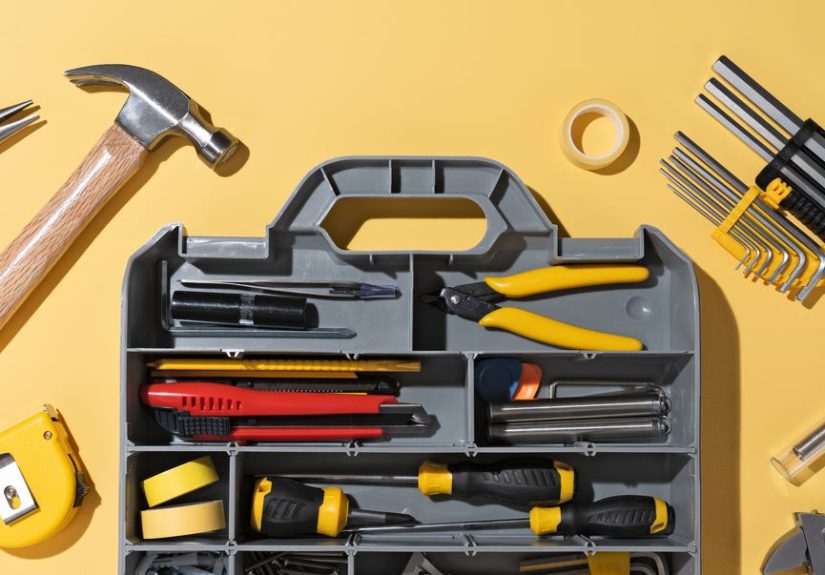
For most people, the best choice is a sturdy portable toolbox or tool bag with a few separate compartments. You want something easy to carry, easy to open, and hard enough to survive being shoved into a closet without developing emotional damage. A compact box works well for basic hand tools. A soft-sided tool bag is great if you want exterior pockets and lighter weight. A rolling box makes sense only if your tool collection is already growing legs.
The point is simple: your storage should match your life. If your toolbox is too heavy, too cluttered, or buried behind holiday decorations, you will never use it. And a perfect toolbox that requires an archaeological dig is not perfect. It is décor.
The Core Hand Tools Every Great Toolbox Needs
If you only build one section of your toolbox today, make it this one. These are the real MVPs of home repair.
1. A Multi-Bit Screwdriver or a Quality Screwdriver Set
Screws are everywhere: outlet covers, cabinet hardware, toys, furniture, appliance panels, door hinges, light fixtures, and random things that become loose just to test your patience. A multi-bit screwdriver saves space and handles most jobs, while a traditional set gives you better comfort and reach. Ideally, include Phillips and flathead sizes at minimum. If you assemble furniture often, keep hex bits or Allen keys too.
2. Claw Hammer
A basic claw hammer handles everything from hanging pictures to gently persuading stubborn trim. Choose one that feels balanced in your hand, not one that seems designed for lumberjacks in training. Around 16 ounces is a sweet spot for most homeowners.
3. Tape Measure
Nothing says “I make bold life choices” like buying shelves without measuring first. A 16- to 25-foot tape measure covers most home tasks. Use it for furniture placement, wall art spacing, curtain rods, and repair planning. Get one with clear markings and a solid lock.
4. Pliers
Pliers are your grip experts. Needle-nose pliers help with tight spaces, bending wire, and delicate holds. Slip-joint or tongue-and-groove pliers are great for plumbing fittings, turning stubborn parts, and gripping rounded surfaces. If your toolbox can hold only one pair, choose a versatile adjustable pair. If you can fit two, your future self will be delighted.
5. Adjustable Wrench
Bolts and nuts have a way of showing up when you are least emotionally prepared. An adjustable wrench gives you flexibility without needing a giant wrench collection. It is especially useful for furniture, small plumbing fixes, and tightening hardware around the house.
6. Utility Knife
This tool earns its place fast. It opens boxes, trims drywall tape, scores materials, cuts caulk, slices carpet edges, and handles a hundred small jobs that scissors should never have been asked to do. Keep extra blades in the box, because a dull blade is both annoying and less safe.
7. Level
A torpedo level or small level is enough for most people. This is the tool that keeps pictures straight, shelves level, and your confidence intact after hanging something on the first try. It is also surprisingly good at settling arguments about whether that mirror is “basically straight.”
8. Hex Keys (Allen Wrenches)
If you own flat-pack furniture, exercise equipment, or certain door hardware, hex keys are essential. Get a folding set or a labeled kit so you do not end up keeping loose L-shaped pieces in a sandwich bag like a medieval puzzle.
9. Putty Knife
One flexible putty knife helps with patching holes, scraping old caulk, lifting paint drips, and small repair prep. It is inexpensive, compact, and quietly useful in ways many first-time toolbox builders underestimate.
10. Flashlight or Headlamp
Repairs rarely happen only in bright, flattering daylight. A small flashlight belongs in every toolbox. A headlamp is even better when both hands need to work and your mouth is tired of holding the light like a stressed-out pirate.
The Small Extras That Make a Big Difference
The perfect toolbox is not just about the headline tools. It is also about the little helpers that save trips, time, and bad language.
- Assorted fasteners: Keep a small organizer with common nails, screws, wall anchors, and picture hangers.
- Electrical tape and painter’s tape: Useful for labeling, bundling, masking, and temporary fixes.
- Super glue or construction adhesive: For quick household repairs, but use with judgment and preferably not on your fingers.
- Stud finder: A smart add-on if you hang shelves, televisions, mirrors, or heavy art.
- Wire cutter/stripper: Handy for light electrical or cable-related tasks, though major electrical work should go to a qualified pro.
- Small pry bar: Excellent for trim removal, lifting nailed pieces, and gentle demo.
- Work gloves: Better grip, fewer splinters, less regret.
These small items are what separate a “basic tool kit” from a toolbox that actually feels complete.
Should You Add Power Tools?
Yes, but selectively. A beginner does not need to buy every loud object in the power-tool aisle. For most homes, one power tool deserves immediate promotion to toolbox royalty: the cordless drill/driver.
The First Power Tool To Buy: Cordless Drill/Driver
A cordless drill helps with furniture assembly, pilot holes, curtain rods, cabinet hardware, bracket installation, and dozens of common projects. Choose a model that feels comfortable rather than overly heavy. A solid starter drill with a basic bit set will do more for your household than a garage full of intimidating machines you never touch.
Power Tool Add-Ons Worth Considering Later
As your projects grow, you may want a circular saw, oscillating multi-tool, shop vacuum, or sander. But these are phase-two tools, not day-one essentials. Buy them when a real project requires them. That strategy saves money and keeps your toolbox from becoming a museum of “looked useful at the time” purchases.
Safety Gear Is Part of the Toolbox, Too
Too many people treat safety gear like the side salad of DIY: technically present, mostly ignored. Do not make that mistake. Eye protection, gloves, and hearing protection should live with your tools, not in some separate mystery drawer you only remember after the dust cloud appears.
At minimum, keep safety glasses in your toolbox. Add gloves for gripping, splinter protection, and rough materials. If you use power tools, hearing protection is a smart addition. A dust mask or respirator may also be necessary for sanding, cutting dusty materials, or messy cleanup work.
One more rule that deserves permanent space in your brain: the right tool is safer than the wrong tool used creatively. A butter knife is not a screwdriver. A dining chair is not a ladder. And “I’ll just hold this with my foot” is how stories begin, not how projects end well.
How To Organize Your Toolbox So It Stays Useful
Even a brilliant collection of tools becomes useless if it turns into a metal junk drawer. Organization is what makes your toolbox fast, reliable, and far less irritating.
Group by function
Put measuring tools together, cutting tools together, fastening tools together, and so on. You should be able to open the box and know where your screwdriver lives without performing a visual scavenger hunt.
Use compartments for small parts
Screws, anchors, blades, bits, and nails should not roam free like tiny chaos confetti. Use a small organizer, divided tray, or labeled zip bags if necessary.
Keep your most-used tools on top
Your hammer, screwdriver, tape measure, utility knife, pliers, and flashlight should be the easiest items to grab. Deep storage is for the less-frequent tools, not the everyday heroes.
Store tools clean and dry
Moisture is bad news for metal tools. Wipe tools down after dirty jobs, keep the box dry, and avoid tossing damp items back inside. A little maintenance now prevents rust and sticky mechanisms later.
How To Build the Perfect Toolbox on a Budget
You do not need to buy everything at once. In fact, that is often the worst way to do it. Start with the essentials, then add pieces based on actual projects. Buy for usefulness first, not just for quantity. A slim toolbox packed with reliable tools beats a 200-piece kit stuffed with flimsy duplicates and ten hex keys that feel made of cheese.
A smart budget strategy looks like this:
- Buy core hand tools first.
- Add safety gear immediately.
- Purchase a drill once you know you will use it regularly.
- Expand with specialty tools only when projects demand them.
- Upgrade your most-used tools before replacing rarely used ones.
This approach keeps your spending efficient and your toolbox intentionally built. It also helps you learn what you truly use, which is the difference between a practical kit and an expensive pile of optimism.
A Sample Perfect Toolbox Setup
If you want a realistic checklist, here is a balanced setup for most homes:
- Portable toolbox or tool bag
- Multi-bit screwdriver and/or basic screwdriver set
- 16-ounce claw hammer
- 16- or 25-foot tape measure
- Needle-nose pliers
- Tongue-and-groove or slip-joint pliers
- 8-inch adjustable wrench
- Utility knife with extra blades
- Torpedo level
- Hex key set
- Putty knife
- Flashlight or headlamp
- Assorted screws, nails, anchors, and picture hooks
- Electrical tape and painter’s tape
- Safety glasses and work gloves
- Cordless drill/driver with basic bit set
With this setup, you can handle a huge percentage of common household fixes without making an emergency hardware-store run in pajama pants. Again.
Common Toolbox Mistakes To Avoid
Buying cheap everything
Budget matters, but the most-used tools should feel solid and comfortable. Poor grips, weak adjustment mechanisms, and flimsy bits waste time and test your soul.
Ignoring safety gear
Safety gear is not optional just because the project is small. Tiny projects have a weird talent for producing big irritation.
Keeping random tools but no basics
Some households somehow own a heat gun, a tile nipper, and three mystery saw blades but no tape measure. Build from the basics outward.
Letting clutter win
If your toolbox becomes a tangle of loose screws, spent batteries, and mystery parts from a lamp you threw away in 2022, reset it. A useful toolbox is edited, not hoarded.
Real-Life Experience: What a Perfect Toolbox Actually Changes
Here is the part people do not mention enough: a good toolbox does more than help you fix things. It changes how you feel in your home. There is a quiet confidence that comes from knowing you can handle the little stuff. Not everything, of course. You should still call professionals for dangerous electrical work, major plumbing issues, structural repairs, and anything that makes you say, “Well, that seems bad.” But for everyday problems, the right toolbox turns hesitation into action.
Take furniture assembly. Without the right tools, that job becomes a dramatic performance piece starring a butter knife, one missing screw, and a growing sense of doom. With a proper toolbox, you grab the hex keys, a screwdriver, a level, and maybe a drill if the instructions are especially ambitious. Suddenly the project moves faster, the shelves sit straighter, and you spend less time muttering at diagrams that look like they were drawn by a very tired robot.
The same goes for hanging wall art. A lot of people postpone it because they think it is complicated. It usually is not. A tape measure, level, hammer, anchors, and pencil handle most of the job. The toolbox does not just provide tools; it removes friction. When the tools are ready, you are more likely to do the task right away instead of adding “hang mirror” to your mental to-do list for six months.
One of the most underrated toolbox moments happens during small emergencies. A loose doorknob. A leaking trap under the sink that only needs tightening. A battery compartment that refuses to open. A child’s toy needing a tiny screwdriver at 9:30 p.m. A curtain bracket pulling away from drywall ten minutes before company arrives. In these moments, the perfect toolbox feels less like a box and more like household insurance with handles.
There is also a learning effect. The more often you use your tools, the more comfortable you become with repairs. You start recognizing which screw head you need before you even open the box. You learn that painter’s tape belongs in more situations than anyone expects. You discover that one good flashlight can save a surprising amount of frustration. Bit by bit, you build skill simply because your tools are available and familiar.
And yes, there is a tiny emotional bonus. Fixing something yourself is satisfying. Not in a dramatic movie-montage way. More in a “nice, that drawer closes properly now” kind of way. It feels competent. Useful. Grounded. Your home becomes less of a place where things go wrong and more of a place you know how to care for.
That is why the perfect toolbox is not really about owning a bunch of gear. It is about being prepared for ordinary life. It is about reducing hassle, saving time, and making home maintenance less intimidating. Build it once, maintain it well, and it will repay you again and again in solved problems, avoided delays, and small victories that add up fast.
Conclusion
If you want to assemble the perfect toolbox, focus on usefulness over flash. Start with a sturdy box or bag, stock it with the core hand tools, add safety gear, bring in a cordless drill when you are ready, and organize everything so it stays practical. That is the formula. Not glamorous. Very effective.
A great toolbox helps you do more than tighten screws and hang shelves. It helps you take charge of your space. And once you have one, you will wonder how you ever lived with a junk drawer, a butter knife, and sheer optimism.