Table of Contents >> Show >> Hide
- Before You Decorate: 6 Rules That Make Every TV Setup Look Better
- 15 Stylish TV Room Ideas That Actually Work
- 1) Build a “media wall” with shallow built-ins
- 2) Go for the gallery wall “camouflage”
- 3) Mount the TV on a darker accent wall
- 4) Use wall paneling to make the TV feel built-in
- 5) Choose a long, low console (and style it with restraint)
- 6) Frame the TV with sconces (a lighting “cheat code”)
- 7) Create an “art + TV” ledge wall
- 8) Hide the TV behind sliding art panels
- 9) Try a TV that displays art when idle
- 10) Split the focal points: TV and fireplace (without a neck brace)
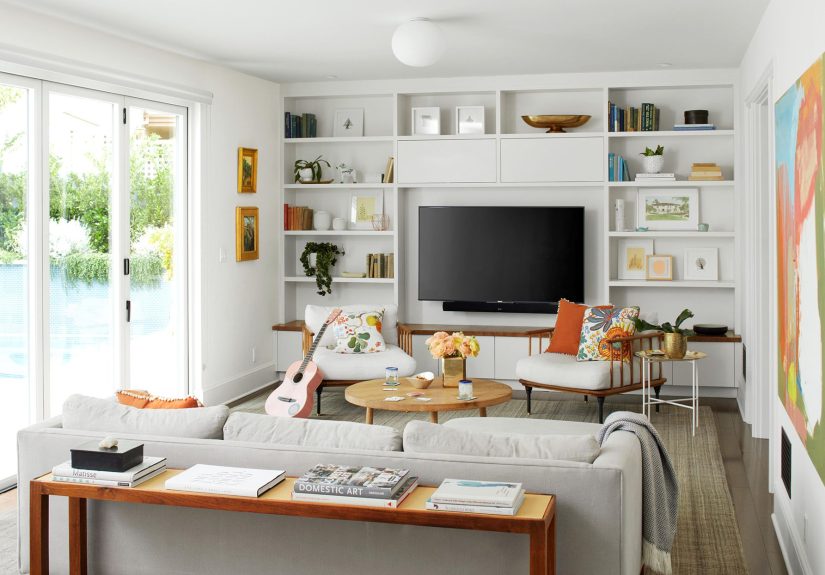
- 11) Make the TV part of a bookcase wall
- 12) Go minimal with a floating shelf and hidden storage
- 13) Use plants to soften the edges
- 14) Create a textured backdrop with wallpaper or plaster
- 15) Embrace the “conversation-first” layout
- Quick Styling Checklist: Make the TV Wall Look Finished
- Conclusion: Your TV Can Live HereWithout Wrecking the Vibe
- Real-World Experiences: What People Learn After Living With a TV Wall
A TV is basically a giant black rectangle that shows up uninvited and then asks to be the center of attention.
The good news: you can absolutely make it play nice with your room. Whether you want your screen to feel like
a sleek “media wall moment” or a discreet background character, the trick is designing around itso the
space looks intentional even when the TV is off (a magical state your living room rarely sees).
Below are 15 stylish, realistic TV room ideas that work in actual homesrentals, open layouts, small living
rooms, and the “we swear we’ll hide the cords later” crowd. You’ll get layout tips, decorating strategies,
and specific examples you can steal without needing a construction crew named Luca.
Before You Decorate: 6 Rules That Make Every TV Setup Look Better
1) Decide if the TV is the star or part of the ensemble
If your household watches sports nightly, don’t fight realitydesign a great focal wall and make it look
polished. If you rarely watch, camouflage it with art, cabinetry, or a darker background so it visually recedes.
2) Scale is everything
A tiny console under a huge screen looks like the TV is wearing skinny jeans. Go wider than the TV (or at least
close) to visually “ground” it. Bigger screens often need bigger furniture, larger decor, and calmer styling.
3) Cable management is not optional (sorry)
Visible cords instantly turn “designer” into “college apartment.” Plan for a cord-hiding route: inside a wall
(with proper, code-compliant solutions), through a paintable raceway, behind paneling, or down into closed storage.
4) Balance the walldon’t crowd the screen
You don’t need to frame the TV with twelve objects like it’s a museum exhibit. The wall should feel balanced:
one strong piece of furniture + two supportive elements (art, sconces, shelves, or tall plants) usually does it.
5) Treat glare and lighting like a design feature
Daylight is great until it turns your screen into a mirror. Use curtains, angled seating, matte finishes near the TV,
and consider soft bias lighting behind the screen for a cozy look that also reduces eye strain.
6) Make room for real life
The prettiest TV wall fails if there’s nowhere for remotes, game controllers, or the router that somehow looks like
it was designed by a villain. Build in storage early so clutter doesn’t win by Friday.
15 Stylish TV Room Ideas That Actually Work
1) Build a “media wall” with shallow built-ins
Add symmetrical shelving or cabinets around the TV to make it feel architectural instead of plopped there.
Built-ins also hide cords, components, and the mysterious collection of remotes that multiply overnight.
- Best for: living rooms that need storage and structure
- Pro move: keep shelves shallow so the wall doesn’t feel bulky
- Style tip: repeat colors (wood tones, black accents, brass) for cohesion
2) Go for the gallery wall “camouflage”
Surround the TV with art so your eye reads a curated collection, not a lone black rectangle.
The trick is to keep frames fairly close to the TV edges and use a consistent palette so it feels intentional.
- Best for: eclectic, transitional, and cozy family rooms
- Pro move: mix sizes, but repeat frame finishes (e.g., black + oak)
- Easy win: include one oversized piece nearby to calm the composition
3) Mount the TV on a darker accent wall
A deep paint color (charcoal, navy, forest green) makes the screen blend in when it’s off.
It’s one of the simplest “hide it in plain sight” strategiesand it adds instant mood.
- Best for: modern, moody, and minimalist spaces
- Pro move: match the TV wall color to nearby trim for a color-drenched look
- Style tip: pair with warm textures (wood, boucle, linen) so it doesn’t feel cold
4) Use wall paneling to make the TV feel built-in
Slat walls, beadboard, picture-frame molding, or fluted treatments create a designed backdrop.
The TV becomes part of a larger feature walllike the “tech” just happens to live there.
- Best for: homeowners who want a custom look without full built-ins
- Pro move: run paneling wider than the TV to avoid the “postage stamp” effect
- Bonus: paneling can help visually mask cord routes
5) Choose a long, low console (and style it with restraint)
A streamlined media console is the easiest way to anchor the TV. The styling rule: fewer, larger pieces.
Think two stacks of books, one sculptural object, and one lampthen stop before it becomes a flea market.
- Best for: renters and anyone who hates drywall projects
- Pro move: pick a console wider than the TV by a few inches on each side
- Storage tip: closed doors hide devices and make the room feel calmer
6) Frame the TV with sconces (a lighting “cheat code”)
Sconces add symmetry and make the TV wall feel finished, like a real focal point. Keep them slightly higher than
the screen and choose shades that fit the room’s vibesleek metal for modern, linen for traditional.
- Best for: rooms that feel flat or under-styled
- Pro move: use plug-in sconces if hardwiring isn’t an option
- Design note: warm bulbs make the wall feel inviting at night
7) Create an “art + TV” ledge wall
Install picture ledges above or beside the TV and lean framed art. This lets you change looks seasonally and
makes the setup feel curated. Keep the ledge styling tight so it doesn’t visually compete with the screen.
- Best for: people who like to refresh decor often
- Pro move: repeat two frame sizes and one accent color for consistency
- Safety: secure ledges properly, especially in homes with kids/pets
8) Hide the TV behind sliding art panels
Sliding panels or hinged artwork can cover the screen when not in use. It’s dramatic, practical, and makes guests
assume you have your life together. (Let them believe it.)
- Best for: formal living rooms or “adult” sitting rooms
- Pro move: choose art that matches your room palette so it feels seamless
- Planning tip: leave ventilation space for electronics
9) Try a TV that displays art when idle
If your TV offers an “art mode,” use it. The key is treating it like a real artwork: pick images that match your
style, add a frame, and avoid the default “bright tropical beach” unless your decor theme is “airport hotel lobby.”
- Best for: design-forward spaces where the screen is highly visible
- Pro move: set brightness to match the room so it doesn’t glow unnaturally
- Style tip: rotate a small, consistent collection instead of everything at once
10) Split the focal points: TV and fireplace (without a neck brace)
Not every room needs the TV above the fireplace. If you can, place the TV on an adjacent wall or in built-ins next
to the hearth so both features can breathe. Your neckand your roomwill thank you.
- Best for: traditional living rooms and older homes
- Pro move: use swivel/tilt mounts if placement options are limited
- Design tip: keep the fireplace styling calmer if the TV wall is bold (or vice versa)
11) Make the TV part of a bookcase wall
Surround the TV with bookshelveseither built-in or modularto create a library vibe. Books soften the tech look,
and the room instantly feels layered and lived-in (in a good way).
- Best for: readers, collectors, and anyone who wants cozy character
- Pro move: mix vertical and horizontal book stacks for rhythm
- Keep it chic: leave some negative space; every shelf doesn’t need “stuff”
12) Go minimal with a floating shelf and hidden storage
A floating shelf under a wall-mounted TV looks clean and modern. Pair it with hidden storage nearby (a closed cabinet
or credenza) so the wall stays uncluttered but functional.
- Best for: small spaces and modern interiors
- Pro move: pick one “hero” object (a lamp or vase) and keep the rest simple
- Tech tip: plan where the soundbar and streaming devices will live before mounting
13) Use plants to soften the edges
Greenery adds life and distracts from the screen’s hard lines. A tall plant to one side and a smaller plant (or
sculptural vase of branches) on the console can make the whole wall feel warmer and more intentional.
- Best for: any styleplants are basically design diplomacy
- Pro move: vary heights so the arrangement feels balanced
- Reality check: choose low-maintenance options if you’re “busy” (or… forgetful)
14) Create a textured backdrop with wallpaper or plaster
Texture makes the wall interesting even when the TV is off. Think grasscloth-style wallpaper, subtle patterns, or a
plaster-like finish that reads sophisticated rather than loud. The screen becomes just one element on a richer wall.
- Best for: elevating builder-grade rooms fast
- Pro move: choose matte finishes to reduce glare and fingerprints
- Renter tip: peel-and-stick wallpaper can get you most of the way there
15) Embrace the “conversation-first” layout
If you want a room that doesn’t revolve around screens, angle seating toward each other and place the TV slightly off
to the sidestill viewable, but not the dictator of furniture placement. This works especially well in living rooms
that host people more than they host Netflix.
- Best for: open-concept spaces and entertaining
- Pro move: use swivel chairs so the room can pivot between chat and movie night
- Design win: it instantly feels more “grown-up”
Quick Styling Checklist: Make the TV Wall Look Finished
- Anchor: a console, built-ins, or paneling so the TV isn’t floating in visual space.
- Balance: add two supportive elements (sconces, shelves, art, or tall decor) and stop there.
- Conceal: hide cords, routers, and power strips so the wall looks calm.
- Soften: add texture (wood, textiles, wallpaper) and a touch of greenery.
- Control: plan lighting to avoid glare and keep the room cozy at night.
Conclusion: Your TV Can Live HereWithout Wrecking the Vibe
Decorating around a TV isn’t about pretending the screen doesn’t exist. It’s about giving it a “home” that makes sense:
the right scale, the right storage, and enough design support that the wall looks intentional even when the TV is off.
Whether you choose built-ins, a gallery wall, a textured accent, or a clean minimalist setup, the best TV room ideas
do the same thing: they blend technology into the room’s style instead of letting it shout over everything else.
Pick one idea that matches your life (not your fantasy life) and build from there. Your living room should work for
movie nights and real lifebecause both happen, sometimes in the same hour.
Real-World Experiences: What People Learn After Living With a TV Wall
Here’s the part nobody tells you in the pretty photos: the “TV area” is less like a decorative moment and more like
a tiny ecosystem. It has weather (glare), wildlife (remote controls), and seasonal migrations (holiday cords and game
consoles). The most successful setups usually come from lessons learned the hard waylike the day someone realizes
the TV is mounted so high that movie night feels like front-row seats at a tennis match.
One common experience: the cord optimism phase. This is when you mount the TV, step back, and say,
“We’ll hide the wires later.” Later becomes “eventually,” and eventually becomes “we’ve named them now.” The fix is
rarely complicated; it’s just easier when you decide up front where everything will go. Even a simple paintable
cord cover can turn chaos into calm, and once you’ve seen the difference, you’ll wonder why you waited.
Another classic: the console that’s too small. People often choose a media stand based on what fits
the wall, not what fits the TV. Then the screen looks oversized, the soundbar has nowhere to live, and styling becomes
a desperate game of “how do I add decor without blocking the sensor?” In real homes, going wider solves about 60% of
the “my TV wall looks awkward” problem instantly. A longer console also gives you breathing room for a lamp, a tray
for remotes, and a few intentional objectswithout turning into clutter.
Then there’s the fireplace dilemma. Many people start with “TV above the fireplace” because it seems
like the obvious focal point. The lived experience can be… mixed. Some love the look, but others discover glare,
awkward viewing angles, and the strange feeling that the room is always looking upward. When people can separate the
TV from the fireplaceeither on an adjacent wall or tucked into side built-insthe room often feels instantly calmer.
Even if you can’t move it, a tilt mount and thoughtful styling (like art or sconces to balance the height) can make
it more comfortable and less visually top-heavy.
Sound is another surprise. A lot of folks focus on how the TV looks and forget that a beautiful room that sounds
like an empty shoebox isn’t exactly cozy. Soft furnishingsrugs, curtains, upholstered seatingchange the experience
dramatically. People often report that once they add a rug and heavier drapes, the whole room feels warmer, quieter,
and more “designed,” even though those items weren’t technically part of the TV wall at all. It’s a reminder that
the TV setup isn’t a single wallit’s the whole room working together.
Finally, one of the most practical lessons: design for your habits, not your highlight reel. If you
snack during movies, build in a surface for drinks. If you game, plan storage for controllers. If you have kids,
choose durable finishes and avoid precarious, tiny decor pieces on the console. The best-looking TV rooms are often
the ones that are quietly prepared for lifebecause nothing ruins a stylish moment faster than scrambling for a place
to hide a router five minutes before guests arrive.
In other words: your TV wall doesn’t have to be a battle between style and function. When you plan the basicsscale,
storage, cords, and lightyou end up with a room that looks good in photos and feels good on a Tuesday night when
everyone’s tired and just wants to watch something comforting. That’s the real design win.