Table of Contents >> Show >> Hide
- Before You Start: What “Embed Video” Really Means in Email
- The 3 Most Common Ways to Put Video in an Email
- The 11-Step Process to Embed Video in Email (Without Breaking Everything)
- Step 1: Decide the goal (and the one metric you’ll actually judge)
- Step 2: Host the video somewhere inboxes can safely point to
- Step 3: Choose your “email video” method based on your audience
- Step 4: Pick a thumbnail frame that earns the click
- Step 5: Add accessibility basics (alt text + “video” context)
- Step 6: (Optional) Create a lightweight GIF preview for extra motion
- Step 7: Use your email platform’s video block when available
- Step 8: If you’re coding, build a “bulletproof” clickable thumbnail
- Step 9: If attempting HTML5 video, include a fallback (always)
- Step 10: Keep the email lightweight to avoid clipping and slow loads
- Step 11: Test across devices, then track clicks and watch behavior
- Common Mistakes (and How to Avoid Them)
- 3 Practical Examples You Can Copy
- FAQ: Video in Email (The Inbox Reality Check)
- Wrap-Up: The “Best” Way to Embed Video in Email
- Real-World Experiences and Lessons (500+ Words)
- SEO Tags
You want video in your email because video is the closest thing marketing has to a magic trick: it can explain, persuade, demo, reassure, and entertain in under two minutes.
Then reality shows up wearing a “This email client does not support that” name tag.
Here’s the truth (delivered gently, like a customer support rep holding a mug of chamomile): most email apps do not reliably play embedded video inside the inbox.
That doesn’t mean video is off-limits. It means “embed video in email” usually translates to one of these:
a clickable thumbnail that opens the video in a browser, an animated GIF preview, or a limited-support HTML5 video embed with fallbacks.
This guide gives you an email-client-friendly approach you can use in Mailchimp, Klaviyo, Constant Contact, HubSpot, or a custom-coded templatewithout angering Gmail, Outlook, or your future self.
Before You Start: What “Embed Video” Really Means in Email
On the web, embedding video is easy: drop in a player, press publish, take a victory lap. In email, it’s complicated because:
- Email clients vary wildly in what HTML and media they allow (some block or strip video-related code).
- Security and privacy rules make email apps cautious about loading interactive content.
- File size matters because heavy emails can load slowly, get clipped, or hurt tracking.
So the best “video email” is usually a fast-loading message that visually looks like a videoand then sends the click to a landing page where the video plays perfectly.
The 3 Most Common Ways to Put Video in an Email
1) Clickable thumbnail (most reliable)
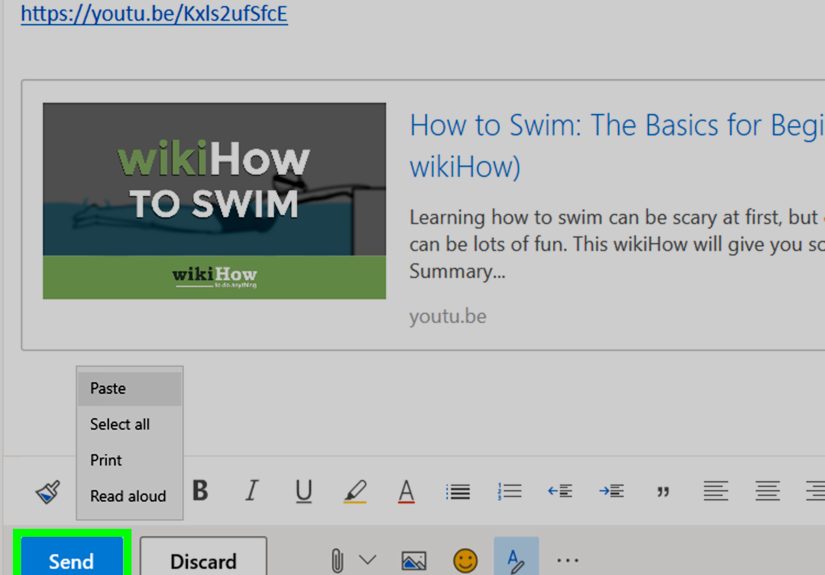
You use a still image (often with a play button overlay) and link it to a hosted video page (your site, YouTube, Vimeo, Wistia, etc.).
This works across essentially all major clients because it’s just an image + linkemail’s comfort zone.
2) Animated GIF preview (high attention, still widely supported)
A GIF gives motion inside the email, which can boost curiosity. It’s not “video,” but it’s close enough to make people click.
The key is to keep it optimized so it loads quicklyand to make sure the first frame still communicates the message if animation doesn’t play.
3) HTML5 video embed (limited support, must include fallbacks)
This uses the <video> tag. It can work in a small set of email environments, but it’s inconsistent enough that you should treat it as a “nice surprise”
for a subset of subscribers, not the main plan. If you try it, you must include a fallback image and link.
The 11-Step Process to Embed Video in Email (Without Breaking Everything)
These steps assume you want maximum compatibility and a clean user experience. You can do all of this inside an ESP editor,
or with custom HTML if you have a template.
Step 1: Decide the goal (and the one metric you’ll actually judge)
Pick the primary purpose of the video:
- Drive clicks to a product page or landing page
- Increase conversions (demo, testimonial, walkthrough)
- Reduce support tickets (how-to video)
- Boost engagement (brand story, event recap)
Then choose the metric that matches. If the email’s job is to get people to watch, click-through rate matters more than “time spent in email.”
(Because nobody “spends time” in an emailthey skim it like it owes them money.)
Step 2: Host the video somewhere inboxes can safely point to
Do not attach the video file to your email. Aside from size and deliverability issues, most people don’t want surprise downloads in 2026.
Instead, host the video on:
- Your website (best control and analytics)
- YouTube (discoverability, familiar player)
- Vimeo (clean embed options)
- Wistia (marketing-friendly analytics and CTAs)
Create a landing page that loads fast, plays well on mobile, and includes a clear next step (buy, book, read more, reply, etc.).
Step 3: Choose your “email video” method based on your audience
If you don’t know what email clients your subscribers use, default to the most compatible option:
clickable thumbnail, optionally with a GIF preview.
Use HTML5 video only if you:
- Have a strong reason (interactive experience for a known audience), and
- Can test thoroughly, and
- Accept that many recipients will see only the fallback
Step 4: Pick a thumbnail frame that earns the click
Your thumbnail is the “movie poster” of your email. Choose a frame that makes sense even at a small size.
Great thumbnails usually include:
- A clear subject (face, product, result)
- High contrast (so it doesn’t get lost in a white inbox)
- Optional short text (3–6 words) that teases the benefit
Add a play button overlay so people instantly recognize it as video content. This seems obviousyet every day, somewhere, a marketer sends a “video”
that looks like a random screenshot and wonders why nobody clicks.
Step 5: Add accessibility basics (alt text + “video” context)
Use descriptive alt text for the thumbnail image. Also consider adding a short line of text near the thumbnail like:
“Watch the 60-second demo” or “Play video”.
Why? Because some users block images, some use screen readers, and some read email in a preview pane where context matters.
Your email should still make sense without the image doing all the work.
Step 6: (Optional) Create a lightweight GIF preview for extra motion
If you want movement in the inbox, turn a short segment into a GIFthink 2–6 seconds, focused on the most compelling moment.
Keep these rules in mind:
- Optimize file size (smaller loads faster and is kinder to mobile data plans).
- Make the first frame count so the message still lands if animation doesn’t play.
- Don’t rely on tiny detailsGIFs compress, and inboxes are not 4K theaters.
Step 7: Use your email platform’s video block when available
Most major ESPs don’t “embed playable video” inside the email. Instead, their video blocks typically:
pull a thumbnail and link to the hosted video.
That’s good! It’s the safe, compatible route.
Typical workflow:
- Drag in a Video block (or add an image block if your ESP doesn’t have video).
- Paste the video URL.
- Confirm the thumbnail looks right (swap in a custom thumbnail if needed).
- Add alt text and a short CTA line.
Pro tip: if your ESP auto-generates a thumbnail you don’t love, replace it with your own. “Auto” is convenient, not always persuasive.
Step 8: If you’re coding, build a “bulletproof” clickable thumbnail
This is the classic approach: an image inside a linked anchor tag. Keep styling simple and inline.
Here’s a basic pattern:
To make it feel even more like a player, you can bake the play icon into the thumbnail image itself
(recommended) instead of relying on fancy overlays that may not render consistently.
Step 9: If attempting HTML5 video, include a fallback (always)
HTML5 video in email is a “works here, fails there” situation. If you decide to try it,
treat the <video> tag as optional frosting, not the cake.
Use a structure with:
poster(thumbnail shown before play)controls(don’t assume autoplay)- A linked fallback image inside the video tag
Important: even where video technically “supports,” autoplay can be blocked, controls may look different,
and some clients may show only the first frame. That’s why the fallback matters.
Step 10: Keep the email lightweight to avoid clipping and slow loads
Video-style emails can quietly become heavy because thumbnails, GIFs, tracking, and extra HTML add up fast.
Here’s how to keep performance (and sanity) intact:
- Compress images (thumbnails and GIF previews).
- Avoid giant GIFsshorter duration and fewer frames helps.
- Minimize HTML bloat (especially if your ESP adds lots of code).
- Watch total message size so Gmail doesn’t clip your email.
Clipping matters because if the email is cut off, users may miss contentand some tracking elements can fail.
Keep your design clean and your assets optimized.
Step 11: Test across devices, then track clicks and watch behavior
Before sending, test:
- Desktop + mobile (iOS Mail, Gmail app, Outlook if possible)
- Images on/off
- Dark mode (thumbnails with transparent edges can look weird)
- Link tracking (UTMs, redirect domains, correct destination)
After sending, measure:
- Click-through rate on the thumbnail/GIF
- Video plays on the landing page (host analytics)
- Downstream conversions (signups, purchases, replies)
If you want to get fancy (in a good way), A/B test:
- Thumbnail image (human face vs. product vs. result)
- CTA text (“Watch now” vs. “See it in action”)
- Placement (near top vs. mid-email)
- Length promise (“30 seconds” often feels irresistibly doable)
Common Mistakes (and How to Avoid Them)
-
Mistake: Attaching a video file.
Fix: Host it and link to it. Use a thumbnail or GIF preview instead. -
Mistake: A thumbnail that doesn’t look clickable.
Fix: Add a play icon overlay and a CTA line (“Play video”). -
Mistake: A GIF that’s huge.
Fix: Trim duration, reduce dimensions, compress, and prioritize the first frame. -
Mistake: Betting everything on HTML5 video.
Fix: Treat it as optional, and ensure the fallback experience is excellent.
3 Practical Examples You Can Copy
Example 1: Product demo email
Goal: Drive clicks to a demo page.
Execution: Thumbnail near the top, play overlay, CTA button below: “Watch the 60-second demo.”
Landing page: Video first, benefits next, then a clear “Start free trial.”
Example 2: Webinar recap
Goal: Get busy subscribers to watch highlights.
Execution: 4-second GIF of the best moment + link to full recap page.
Bonus: Add chapters on the landing page so viewers can jump to what they care about.
Example 3: Onboarding “how-to”
Goal: Reduce confusion and support tickets.
Execution: Simple thumbnail + “Watch how to set up in 90 seconds.”
Extra: Add a text-based checklist under the thumbnail so people can still succeed if they don’t watch.
FAQ: Video in Email (The Inbox Reality Check)
Can I embed a video so it plays directly inside the email?
Sometimes, in some clients. But because support is inconsistent, the safest approach is to use a clickable thumbnail or GIF preview.
If you try HTML5 video, always provide a fallback image that links to the hosted video.
Will video hurt deliverability?
The bigger risk is not “video” itselfit’s heavy emails, suspicious link patterns, and poor sender reputation.
Keep file sizes reasonable, avoid spammy formatting, and link to trusted domains. If you’re using a major ESP and a normal video landing page,
you’re usually in good shape.
Where should I place the video thumbnail?
Often, higher in the email performs better because people see it before they scroll. But test it. The right spot depends on your audience,
your message length, and whether you need context first.
Wrap-Up: The “Best” Way to Embed Video in Email
If you remember only one thing, make it this: the most effective video email is usually not the one that literally plays in the inbox.
It’s the one that loads fast, looks like a video, and gets the click to a landing page where viewing is flawless.
Use a clickable thumbnail as your default. Add a GIF preview if you want motion. Reserve HTML5 video embeds for special casesand never forget the fallback.
Your subscribers get a smooth experience, and you get results without playing “Guess That Email Client.”
Real-World Experiences and Lessons (500+ Words)
The most useful lessons about video in email don’t come from perfect laboratory conditions. They come from the messy, real inbox:
mobile commuters skimming with one hand, desktop users triaging newsletters between meetings, and someone on hotel Wi-Fi wondering why your email weighs as much as a small planet.
Here are patterns teams commonly discover when they start sending video-style emails regularly.
1) The thumbnail is the campaign.
Marketers often spend hours polishing the video, then treat the thumbnail like an afterthought. But the thumbnail is the decision point.
If it doesn’t communicate a benefit in a split second, people won’t clickeven if the video is brilliant.
The fix is simple: design the thumbnail like an ad. High contrast. Clear subject. One promise. A play icon that screams “I am clickable.”
2) “Short” beats “impressive” almost every time.
A two-minute masterpiece can be great on a landing page, but in email, shorter often wins because the commitment feels smaller.
Subject lines and CTA copy that set expectations (“Watch in 45 seconds”) tend to reduce the mental friction of clicking.
The inbox is not where people go to start a new hobby; it’s where they go to decide what matters right now.
3) GIF previews can lift interestbut only when they’re disciplined.
A GIF that’s tightly cropped, short, and focused can create just enough motion to pull the eye.
A GIF that’s long, blurry, or massive can do the opposite: it loads slowly, looks chaotic, and makes the email feel “heavy.”
The winning approach is usually a teaser: a quick transformation, a product result, a reaction shot, or the “aha” moment.
And because not every client treats GIFs the same, the first frame should still deliver the key message.
4) Placement matters more than people expect.
Putting the video thumbnail near the top often performs well because it’s seen early. But there are exceptions.
If your video needs contextlike a complex announcementplacing it after a short setup paragraph can increase clicks because readers understand why they should care.
A good compromise is: thumbnail early, then a one-sentence “why watch,” and a clear CTA.
5) Landing pages do the heavy lifting (so make them worthy).
If your email does its job, the landing page becomes the real experience.
That page should load fast, play nicely on mobile, and avoid distractions that compete with the video.
Captions help because many people watch with sound off. A next-step button helps because watching without a clear follow-up is like finishing a movie and being dropped in a parking lot with no signs.
6) Testing isn’t optionalit’s the difference between “wow” and “why?”
Two subscribers can receive the same email and have completely different experiences depending on their app.
That’s why teams that win with video email build a habit: test the fallback image, test the link destination, test dark mode,
and confirm the email stays lightweight. When something breaks, it usually breaks quietlymeaning you won’t know unless you test.
The overall takeaway: the best video-in-email strategy is less about forcing playback inside the inbox and more about engineering a smooth, persuasive path
from open → curiosity → click → watch → action. Do that consistently, and your “video emails” will feel effortless to subscribers
even though behind the scenes, you’re basically running a small theater production with a strict fire code.