Table of Contents >> Show >> Hide
- What “Sincerely” Actually Communicates
- The 3-Part Formula for a Sincere Letter Ending
- How to Choose the Right Closing (Fast)
- 14+ Sincere Ways to End a Letter (With Examples)
- A Cheat-Sheet Table: Closings by Situation
- How to End the Last Sentence (So the Closing Doesn’t Feel Random)
- Formatting Rules That Keep You Looking Polished
- Common Mistakes (And How to Avoid Them)
- Mini Examples: Endings for Real-Life Letters
- of “Real-World” Experiences and Scenarios (So You Can Picture It)
- Conclusion
Ending a letter sounds easyuntil you’re staring at the blank space under your last sentence like it just challenged you to a duel. You want to sound sincere, not stiff. Warm, not weird. Professional, not robotic. And if you’re emailing someone important, you’d also like to avoid the emotional rollercoaster of, “Was Best too casual? Is Warmly too… warm?”
The good news: a strong closing isn’t about finding the one “perfect” sign-off. It’s about matching your tone to the relationship, purpose, and level of formalitythen pairing it with a clean signature and a final line that makes your message feel complete.
In this guide, you’ll learn exactly how to end a letter sincerely, plus 14+ closing ideas (with examples), and quick rules that keep you out of sign-off trouble.
What “Sincerely” Actually Communicates
Sincerely is the little black dress of letter closings: classic, versatile, and rarely the wrong choice. It signals respect, professionalism, and genuine intent without getting overly emotional or overly familiar. If you’re writing to someone you don’t know wellor you’re sending a formal note, cover letter, complaint letter, or official requestSincerely is a safe, effective default.
The 3-Part Formula for a Sincere Letter Ending
A closing feels “right” when these three pieces work together:
- A final sentence that wraps the message (gratitude, next step, well-wish, or summary).
- A sign-off (your closing phraselike “Sincerely” or “Best regards”).
- A signature (your name and, when needed, contact details).
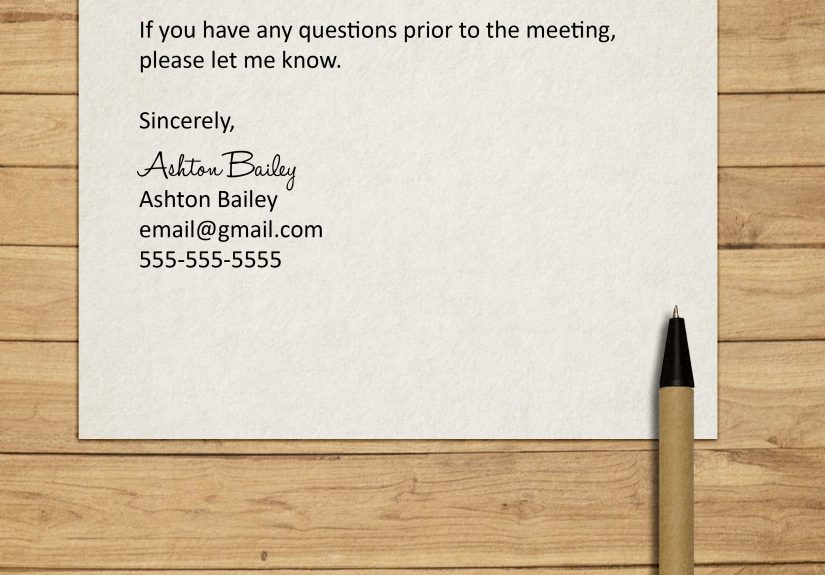
Example of the full formula (business email)
Thank you for your time and consideration. I’m happy to provide any additional information you need.
Sincerely,
Jordan Lee
555-0123 | [email protected]
How to Choose the Right Closing (Fast)
Use this quick checklist before you sign off:
- How formal is the situation? (job application vs. friendly check-in)
- How well do you know the recipient? (first contact vs. long-time colleague)
- What’s your purpose? (requesting help, sharing info, thanking, apologizing)
- What’s the emotional tone? (serious, supportive, upbeat, neutral)
- What’s your brand? (your usual voice and the context you’re writing in)
Pro tip: If your letter is formal, keep the closing simple. The more serious the message, the less “cute” the sign-off should be. Save “Cheers!” for people who have seen you in sweatpants (metaphorically… or literally if you work from home).
14+ Sincere Ways to End a Letter (With Examples)
Below are practical, widely accepted sign-offsgrouped by vibeso you can pick the one that fits.
1) Sincerely
Best for: formal letters, cover letters, official requests, first-time outreach
Example:
Thank you for considering my request. I appreciate your time.
Sincerely,
Avery Chen
2) Sincerely yours
Best for: formal letters with a slightly traditional tone
Example:
I appreciate your attention to this matter and look forward to your response.
Sincerely yours,
Morgan Patel
3) Respectfully
Best for: serious requests, letters to officials, sensitive disagreements
Example:
I understand this is a complex issue, and I appreciate your consideration.
Respectfully,
Taylor Rivera
4) Respectfully yours
Best for: highly formal situations (government, legal-adjacent, institutional)
Example:
Thank you for reviewing the details. I’m available if you have questions.
Respectfully yours,
Sam Wilson
5) Best regards
Best for: professional letters that aren’t ultra-formal
Example:
I look forward to hearing your thoughts when you have a moment.
Best regards,
Jamie Brooks
6) Kind regards
Best for: polite business emails, follow-ups, professional warmth
Example:
Thanks again for your help with this. I really appreciate it.
Kind regards,
Riley Nguyen
7) Regards
Best for: neutral professional tone; quick, informational messages
Example:
Attached are the updated files for your review.
Regards,
Alex Kim
8) Best
Best for: modern business emails; friendly-but-professional
Example:
Let me know what you prefer, and I’ll move forward.
Best,
Casey Reed
9) All the best
Best for: warmer professional notes, mentorship, ongoing relationships
Example:
Wishing you a smooth launchexcited to see how it goes.
All the best,
Dana Ellis
10) Warm regards
Best for: positive relationships; supportive, friendly professionalism
Example:
Thank you again for your guidance. It truly helped.
Warm regards,
Parker James
11) With appreciation
Best for: gratitude without sounding overly emotional
Example:
I appreciate your time and the care you put into reviewing this.
With appreciation,
Quinn Harper
12) With gratitude
Best for: thank-you letters, meaningful help, heartfelt professional notes
Example:
Your support made a real differencethank you for being there.
With gratitude,
Rowan Miles
13) Thank you
Best for: requests, follow-ups, interviews, customer support
Example:
Thank you for your consideration. I look forward to next steps.
Thank you,
Skyler Bennett
14) Thanks again
Best for: when you’ve already thanked them earlier and want a friendly wrap-up
Example:
Thanks again for taking the time to talk today. I appreciate it.
Thanks again,
Emerson Lane
15) Looking forward
Best for: relationship-building, sales, collaboration, next-step emails
Example:
Looking forward to your feedback and the next steps.
Looking forward,
Kai Thompson
16) Cordially
Best for: formal but friendly letters; slightly old-school in a good way
Example:
I appreciate your attention and hope we can resolve this soon.
Cordially,
Noah Price
17) Best wishes
Best for: supportive notes, milestones, congratulations, gentle warmth
Example:
Congrats again on the new roleyou’re going to do great.
Best wishes,
Ari Sutton
18) Take care
Best for: friendly messages, coworkers you know well, caring check-ins
Example:
Hope you get some rest this weekend. You’ve earned it.
Take care,
Logan Park
A Cheat-Sheet Table: Closings by Situation
| Situation | Great choices | Avoid (usually) |
|---|---|---|
| Cover letter / job application | Sincerely, Best regards, Thank you | Cheers, Take care |
| Formal complaint or request | Respectfully, Sincerely, Cordially | Warmly, Best wishes |
| Thank-you letter | With gratitude, With appreciation, Thank you | Regards (can feel chilly) |
| Friendly professional email | Best, Kind regards, Warm regards | Respectfully (too serious) |
| Close coworker / established relationship | All the best, Take care, Thanks again | Sincerely yours (too formal) |
How to End the Last Sentence (So the Closing Doesn’t Feel Random)
Sometimes the sign-off isn’t the problemthe last sentence is. Here are a few reliable “landing lines” that make your ending feel sincere:
- Gratitude: “Thank you for your time and consideration.”
- Next step: “I look forward to your response.”
- Support: “Please let me know if I can provide anything else.”
- Well-wish: “Wishing you a smooth and successful week.”
- Summary: “In short, I’m requesting approval to move forward with the plan.”
Formatting Rules That Keep You Looking Polished
Use a comma after your closing
In standard American letter and email style, closings typically use a comma:
- Sincerely,
- Best regards,
- Thank you,
Capitalize appropriately
Capitalize the first word of your closing phrase. Keep it simple and consistent.
Leave space for your signature (print letters)
If it’s a printed letter, leave a few lines between the closing and your typed name so you can sign your name.
Include a signature block when needed (emails)
For professional emails, a signature block can include your full name, role, phone number, and relevant linksespecially if the recipient may need to contact you quickly.
Common Mistakes (And How to Avoid Them)
- Mismatch in tone: Ending a serious letter with something overly casual can feel jarring. If your letter is formal, keep the closing formal.
- Overthinking “Sincerely”: If you’re spiraling, choose Sincerely. It’s reliable. It won’t embarrass you at 2:00 a.m.
- Being too clever: “Yours in productivity and tacos” might be funny… but only with the right audience.
- Accidentally sounding cold: Very short sign-offs like “Regards” can feel distant if your message is emotional or appreciative. Add a warm final sentence.
- Overly intimate closings: Save “Love” for people who won’t file an HR ticket.
Mini Examples: Endings for Real-Life Letters
Example 1: Cover letter closing
Thank you for your time and consideration. I would welcome the opportunity to discuss how my experience can support your team.
Sincerely,
Jordan Lee
Example 2: Request email closing
Thanks for taking a look at this. Please let me know if you’d like any additional details.
Kind regards,
Priya Shah
Example 3: Thank-you note closing
I’m grateful for your help and encouragement. Thank you again for your time.
With appreciation,
Michael Torres
Example 4: Sensitive message closing
I appreciate your understanding. Please don’t hesitate to reach out if you’d like to talk further.
Warm regards,
Erin Wallace
of “Real-World” Experiences and Scenarios (So You Can Picture It)
Most people don’t realize how much a letter closing can change the emotional “aftertaste” of a message until they’ve lived through a few classic situations. For example, imagine you’re emailing a hiring manager after an interview. Your message is grateful and enthusiasticthen you end with “Regards,” and suddenly it reads like you’re politely backing away from the conversation. Swap that for “Thank you,” or “Best regards,” and it feels aligned with your intent: appreciative, professional, and still confident.
Another common scenario: you’re writing to a professor, advisor, or administrator. You’re asking for help, maybe an extension, a meeting, or guidance. Ending with “Sincerely,” can work, but many writers find “Thank you,” lands better because it gently reinforces your request without sounding demanding. It’s subtle social math: gratitude softens the ask and makes the letter feel human.
Then there’s the workplace “tone balancing act.” You want to be warm without sounding like you’re writing a greeting card to your dentist. “Warm regards” is a great middle lane when you genuinely like the person, but you’re still on professional ground. On the other hand, “Best” is often perfect for teammates and day-to-day business messagesquick, modern, and friendlyespecially when you’ve already established a rapport.
Some experiences are less cheerful. If you’re sending a complaint lettersay, about a billing issueyou might be tempted to end with something harsh or sarcastic (your inner comedian deserves an award). But in real life, the closings that get results are calm and respectful. “Sincerely” and “Respectfully” communicate seriousness without lighting the relationship on fire. You can be firm and still sound like someone others want to help.
People also run into the “relationship gap” problem: you know the recipient casually, but the topic is formal. Maybe you’re asking a colleague for a reference. “Take care” might feel too casual, while “Respectfully” might feel too intense. That’s where “With appreciation” shineswarm, grateful, and professional. It says, “I value you,” without saying, “I’m writing this from a candlelit room.”
Finally, there’s the classic overcorrection: trying to avoid sounding stiff, you choose an overly playful sign-off that doesn’t match the moment. If you’ve ever typed “Cheers!” to someone who definitely does not “cheers,” you know the tiny cringe that follows. A good rule from lived experience: when you’re unsure, choose a neutral closing and let your sincerity show in the final sentence. The sign-off is the bow, not the whole gift.
Conclusion
To end a letter sincerely, you don’t need a magic phraseyou need a match. Match the closing to your relationship, purpose, and tone. Pair it with a final sentence that feels complete, add a clean signature, and you’ll sound confident, respectful, and genuine. When in doubt, Sincerely, Best regards, or Thank you will carry you safely across the finish lineno awkward dismount required.