Table of Contents >> Show >> Hide
- Start With a Simple Plan: Build the Room Around the Laundry “Loop”
- Layout Ideas That Work in Real Homes
- Storage That Looks Good (Not Like a Warehouse Aisle)
- Create the “Finish Station”: Countertops, Folding, Hanging, and Sorting
- Add a Utility Sink (If You Can) and Make It Look Intentional
- Durable Materials That Still Look Great
- Lighting and Ventilation: The Two Things People Forget (Then Regret)
- Decor That Earns Its Keep: Make It Cute, Make It Useful
- Budget-Friendly Laundry Room Makeover Ideas
- Smart Add-Ons That Make Laundry Feel Less Like a Chore
- Real-Life Experiences: What People Learn After Actually Using Their Laundry Room
- Conclusion
The laundry room is the unsung hero of your house. It shows up every week (sometimes daily), tackles stains that look like modern art,
and quietly holds your life togetherone sock at a time. And yet, it’s often treated like a storage closet that happens to contain a washer.
Let’s fix that.
Great laundry room design is a mix of workflow (so chores take less time), storage (so supplies don’t multiply like rabbits),
and style (so you don’t feel like you’re doing laundry in a sad spaceship corridor). Below are practical, real-world
laundry room decorating and design ideasplus specific examples you can copywhether you have a full utility room or a “laundry nook”
that’s basically two machines hugging in a hallway.
Start With a Simple Plan: Build the Room Around the Laundry “Loop”
Before paint colors and cute baskets, map your laundry routine. Most households repeat the same loop:
drop → sort → wash → dry → fold/hang → store. The best laundry rooms support that loop with clear zones.
Even in a tiny space, you can “zone” with shelves, bins, and a small counter.
The 5 zones that make laundry easier (and faster)
- Drop zone: hamper(s), hooks for gym bags, a spot for pocket items (hello, rogue receipts).
- Sort zone: divided bins, rolling sorter, or labeled baskets for lights/darks/delicates.
- Wash zone: detergent, stain treatment, measuring spoons/cups, and a “don’t forget” checklist.
- Dry zone: dryer sheets, dryer balls, lint bin, drying rack/rod for air-dry items.
- Finish zone: folding counter, hanging bar, iron/steamer storage, and a “clean staging” basket.
A quick win: hang a small framed sign (or dry-erase board) with your household’s top 5 settings:
“Towels: hot,” “Delicates: cold,” “Athleisure: gentle,” and so on. It’s decor that saves mistakes.
Layout Ideas That Work in Real Homes
Laundry rooms come in all shapes: closets, galley hallways, basements, mudroom combos, and sometimes a corner of a bathroom.
Here are layout ideas that maximize function without making the room feel cramped.
1) The laundry closet: make “tiny” feel intentional
If your laundry is in a closet, the decorating goal is “pretty when open, invisible when closed.” Consider:
- Stacked washer/dryer to free up wall space for shelves and a hanging rod.
- Doors that breathe (louvered or vented) or a door that stays open during cycles to help humidity escape.
- One hero surface: a slim folding shelf that flips down, or a pull-out countertop above/between machines.
- Lighting upgrade: bright, even overhead light so you can actually see stains before they become “vintage.”
2) The narrow galley laundry: think “counter + vertical storage”
A skinny laundry room wins when you treat it like a mini kitchen:
cabinets or shelves above, and a continuous counter for folding. If you can’t do full cabinetry, use
floating shelves plus matching bins to keep the wall clean and cohesive.
3) L-shaped or U-shaped laundry: the dream setup
If you have the space, an L or U layout creates natural zones: machines on one wall, folding counter on another,
and storage/utility sink on the third. This is the ideal layout for families because it supports sorting,
stain-treating, and folding without playing countertop Tetris.
4) Mudroom + laundry combo: design for traffic and mess
When laundry shares space with shoes, backpacks, and wet dog adventures, focus on durability and drop-zone storage:
a bench, hooks, cubbies, and closed cabinets for detergents (especially helpful with kids). Bonus points for a washable rug
and wall protection (board-and-batten, beadboard, or wipeable paint).
Storage That Looks Good (Not Like a Warehouse Aisle)
Laundry room storage can be beautiful if you follow one rule:
hide the ugly, display the pretty. Detergent bottles are not décor. Unless your aesthetic is “chemical rainbow.”
Closed storage: the “calm room” secret
- Upper cabinets hide visual clutter and keep supplies out of reach of kids/pets.
- Lower cabinets can conceal hampers, hold bulk items, and store cleaning tools upright.
- Pull-out trays make deep cabinets usable (no more spelunking for stain remover).
Open storage: use it, don’t abuse it
Open shelves work best when you limit what’s visible. Try this formula:
matching bins + one or two “pretty” items (like a plant, framed print, or woven basket).
Label bins by category: “Stain,” “Delicates,” “Backstock,” “Cleaning Cloths.”
Wall space is your best friend
- Hooks and rails for hangers, lint roller, small tools, or a mesh bag of dryer balls.
- Pegboard for a flexible tool wall (brushes, garment bags, scissors, measuring scoop).
- Between-the-machines cart for small roomsgreat for detergents and quick-grab supplies.
Create the “Finish Station”: Countertops, Folding, Hanging, and Sorting
If you do one upgrade, make it a finish station. Folding on top of a vibrating washer is basically CrossFit.
A stable surface makes laundry feel less chaotic and more… like a task you can finish before midnight.
Countertop ideas that handle real life
- Laminate is budget-friendly and easy to wipe down.
- Butcher block adds warmth and looks high-end, but seal it well to protect from moisture.
- Quartz or solid surface is durable and stain-resistantgreat if you pre-treat stains often.
Hanging solutions for air-dry items
Air-drying doesn’t need a full-size rack hogging the floor. Consider:
a wall-mounted drying rack that folds flat, a ceiling-mounted drying rack, or a sturdy hanging rod over the counter.
This is especially helpful in small laundry rooms where every inch counts.
Sorting systems that don’t look messy
The most workable sorting setup is the one your household will actually use. Two examples:
- Family bins: one labeled basket per person for clean clothes staging (fast for busy weeknights).
- Color bins: lights/darks/delicates bins for pre-sorting (great for larger households).
Add a Utility Sink (If You Can) and Make It Look Intentional
A utility sink is the MVP for soaking stained clothes, rinsing muddy shoes, hand-washing delicates, and watering plants.
If you’re remodeling, this is one of the best functional upgrades you can add.
Design upgrades that instantly elevate the sink area
- Faucet with pull-down sprayer for rinsing and quick cleanups.
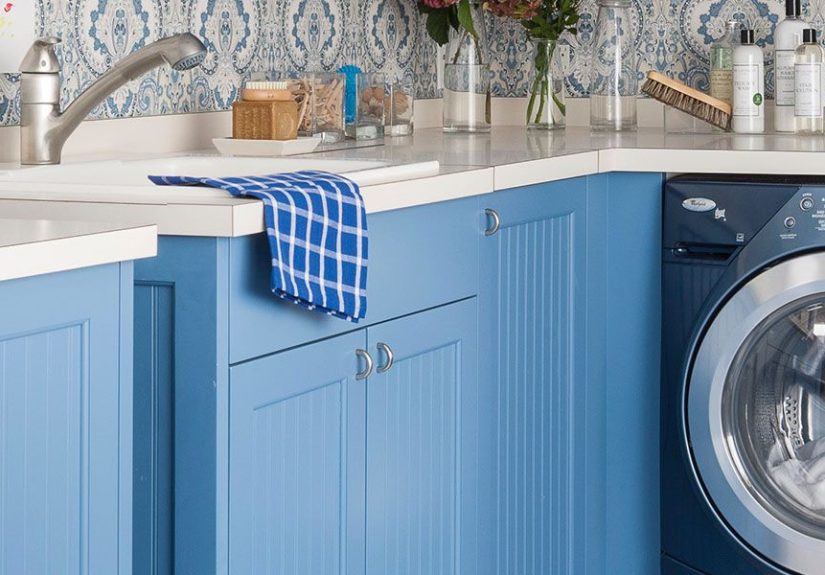
- Backsplash behind the sink to protect walls from splashes and add style.
- Sink-side shelf or niche for stain treatments, hand soap, and a nail brush.
Durable Materials That Still Look Great
Laundry rooms deal with water, humidity, detergent drips, and heavy foot traffic. Your materials should be ready for that reality.
Think “easy to clean” and “won’t panic if it gets wet.”
Flooring ideas for a hardworking laundry room
- Porcelain tile (classic and water-resistant).
- Luxury vinyl plank (LVP) for warmth underfoot and strong moisture performance.
- Sealed concrete (especially in basements) for an industrial, durable vibe.
- Washable rug runner for softness and stylechoose low-pile so doors don’t catch.
Paint and wall finishes that survive humidity
Laundry rooms benefit from wipeable finishes. A satin or semi-gloss paint is easier to clean than flat paint,
and it stands up better to moisture. Want drama? This is a great room for bold color or playful wallpaper
especially in small spaces where you can “go big” without overwhelming the home.
Backsplashes aren’t just for kitchens
A backsplash behind the machines or sink protects the wall and adds a finished look. Subway tile is timeless,
but you can also use patterned tile, beadboard, or even peel-and-stick backsplash panels for a budget makeover.
Lighting and Ventilation: The Two Things People Forget (Then Regret)
A dim laundry room feels like a basement chore dungeon. Bright, layered lighting makes the space feel clean and modern,
and it helps you spot stains before you dry-set them forever.
Lighting ideas that work
- Bright overhead fixture (flush mount, semi-flush, or a small pendant if ceiling height allows).
- Under-cabinet lighting over folding counters for task lighting.
- Warm-neutral bulbs so whites look white (not “mystery beige”).
Ventilation tips for a fresher laundry room
Laundry creates humidity. If the room is small or enclosed, consider an exhaust fan or keep the door open during cycles.
Make sure the dryer venting is correctly routed and maintained. In damp basements or busy households, a small dehumidifier
can help keep the space comfortable and reduce musty odors.
Decor That Earns Its Keep: Make It Cute, Make It Useful
Laundry room decor doesn’t need to be fussy. The best laundry room decorating ideas are practical, low-maintenance,
and happy to be splashed occasionally.
Easy decor upgrades
- Art you enjoy: a framed print, a funny quote, or vintage laundry sign (keep it tasteful; you’re not in a sitcom).
- Greenery: a pothos or snake plant (both are forgiving if you forget they exist).
- Basket uniformity: matching baskets instantly make open shelving look “designed.”
- Hardware swap: change cabinet pulls for an instant facelift.
Color ideas that make the room feel bigger
Light colors bounce light and make small laundry rooms feel open. If you want bold, go for itdeep blues, greens,
or warm neutrals can look stunning with bright trim and good lighting. If painting cabinets feels like too much,
try a bold wall, wallpaper on one accent wall, or a colorful door.
Budget-Friendly Laundry Room Makeover Ideas
You don’t need a full renovation to get a functional, stylish laundry room. Here are high-impact upgrades at different effort levels.
Weekend wins (low cost, high payoff)
- Declutter: remove anything that doesn’t support laundry or cleaning.
- Add a shelf + rod combo above machines for instant storage and hanging space.
- Use clear, labeled containers for pods, clothespins, and stain tools.
- Install hooks for drying bags, delicates, and reusable shopping bags.
- Upgrade lighting and add a bright, washable runner.
Medium projects (a little more work)
- Build a simple folding counter over front-load machines.
- Install a wall-mounted drying rack that folds flat when not in use.
- Add beadboard or a half-wall treatment to protect walls and add character.
- Paint cabinets or add peel-and-stick wallpaper for personality.
Full remodel moves (if you’re going all in)
- Add a utility sink and a dedicated stain-prep area.
- Upgrade to closed cabinetry with pull-outs and built-in hamper storage.
- Create a mudroom-laundry combo with bench seating, cubbies, and durable flooring.
Smart Add-Ons That Make Laundry Feel Less Like a Chore
A few well-chosen additions can dramatically improve daily useespecially in small laundry rooms:
- Laundry pedestals or bases: can add storage and reduce bending for front-load machines.
- Rolling sorting cart: perfect for moving loads and pre-sorting.
- Fold-down ironing board or compact steamer station: saves space and keeps tools handy.
- “Pocket bowl” or tray: for coins, hair ties, and the occasional Lego you didn’t know you owned.
Real-Life Experiences: What People Learn After Actually Using Their Laundry Room
Design inspiration is fun. Living with your laundry room is where the truth comes out. Here are the most common
“wish I’d known” experiences homeowners share after a few months of real laundry lifeplus what to do about them.
First, people are often surprised by how much they value a real folding surface. In photos, a counter looks like a luxury.
In real life, it’s a sanity saver. When you have a stable spot to fold and stack, laundry stops migrating across the house
like it’s trying to achieve world domination. A simple countertopeven a budget laminate piececan reduce piles and speed up the process
because you can fold immediately as clothes come out of the dryer.
Second: open shelving is a relationship test. It looks beautiful on day one, and then detergent bottles, random tools,
and “temporary” clutter arrive like uninvited guests who brought snacks and never left. The experience many people report is that
open shelves work best when you limit them to a curated set of items: matching bins, spare towels, and maybe a plant. Everything else
(especially bright plastic bottles) tends to look messy fast. The fix is simple: combine one or two open shelves with at least one closed
cabinet or a tall pantry cabinet to hide the chaos.
Third: households quickly discover that sorting systems must match behavior. A three-bin sorter is greatunless everyone in the home
refuses to sort and dumps everything into the nearest container like they’re making a free throw. Many families find success with either
“one bin per person” (clean staging) or “two bins only” (lights/darks) to keep the habit easy. If you’re the only sorter in the house,
keep a simple rolling basket nearby and sort while loads are starting, not when the mountain forms.
Fourth: humidity is sneaky. People often notice musty smells or slow-drying items after the room has been in use for a while,
especially in basements or tight closets. The experience is that ventilation matters more than you expect. Even small stepsleaving the door
open during cycles, cleaning the lint trap regularly, and ensuring the room has airflowcan make the space feel fresher. In damp areas, a
small dehumidifier can be a game-changer.
Finally, the most underrated experience: adding a touch of style makes you more likely to keep the room tidy. A fun wallpaper, a bold paint color,
or a cute runner doesn’t just look niceit changes how the space feels. When the laundry room looks finished, people tend to put things away,
wipe surfaces down, and keep supplies contained. It’s not magic; it’s psychology. Design the room like it matters, and it starts behaving like it does.
Conclusion
The best laundry room decorating and design ideas come down to three things: a workflow that makes sense, storage that prevents clutter,
and a few style choices that make the room feel like part of your home (not a forgotten utility cave). Start small if you need toadd a shelf,
improve lighting, create a folding spotthen upgrade materials and built-ins over time. Your future self, holding a warm stack of towels,
will be extremely grateful.