Table of Contents >> Show >> Hide
- What Are Cat Nail Caps, Exactly?
- Before You Start: A Few Smart Rules
- How to Put Nail Caps on Your Cat: 10 Steps
- Step 1: Gather Everything Before You Touch a Paw
- Step 2: Choose the Right Nail Cap Size
- Step 3: Pick the Right Moment, Not Just the Right Product
- Step 4: Get Your Cat Comfortable With Paw Handling
- Step 5: Trim Only the Sharp Tip of Each Nail
- Step 6: Dry-Fit One Cap Before Adding Glue
- Step 7: Add a Small Amount of Glue
- Step 8: Extend the Claw and Slide the Cap On
- Step 9: Hold Briefly, Then Repeat in Small Batches
- Step 10: Reward, Observe, and Check the Caps Over Time
- How Long Do Cat Nail Caps Last?
- Common Mistakes to Avoid
- When to Ask a Vet or Groomer to Help
- Are Nail Caps Better Than Declawing?
- Real-Life Experiences With Cat Nail Caps: What People Usually Learn the Hard Way
- Conclusion
If your cat treats your couch like a personal woodworking project, nail caps can be a surprisingly handy compromise. They do not turn your cat into a stuffed animal, and they do not magically make scratching disappear as a behavior. What they can do is blunt the damage while you keep up with trimming, training, and giving your cat better places to scratch. In other words, nail caps are less “cat makeover” and more “tiny peace treaty for your furniture.”
This guide walks you through exactly how to put nail caps on your cat in 10 practical steps. You will learn how to choose the right size, how much glue to use, how to keep your cat calm, and what to do after application so the whole process is safer and less dramatic. Because yes, your cat may act like you have personally betrayed the family. But with the right approach, many cats tolerate nail caps just fine.
What Are Cat Nail Caps, Exactly?
Cat nail caps are small, soft plastic or vinyl covers that fit over the tips of your cat’s claws. They are usually secured with a pet-safe adhesive and wear off as the nail grows. They are often used as a temporary alternative to declawing, especially for households trying to reduce scratches on people, furniture, curtains, or floors.
That said, nail caps are not a substitute for good cat care. Your cat still needs scratching posts, routine nail checks, and a calm introduction to paw handling. And if your cat seems painful, panicky, or furious enough to audition for an action movie, it is smart to stop and ask your veterinarian or groomer for help.
Before You Start: A Few Smart Rules
- Do not apply nail caps to nails that look broken, infected, bleeding, or swollen.
- Do not force a terrified cat through the full process in one sitting.
- Do not overfill the caps with glue. More glue does not equal more success. It usually equals more mess.
- Do not skip scratching posts. Nail caps reduce damage, but scratching is still a normal cat behavior.
- Do not assume every cat will love them. Some cats adjust quickly, and some vote “absolutely not.”
How to Put Nail Caps on Your Cat: 10 Steps
Step 1: Gather Everything Before You Touch a Paw
The quickest way to lose a cat’s patience is to start the job and then wander off looking for supplies. Set up first. You will usually need:
- Cat nail caps in the correct size
- The adhesive that came with the caps
- Cat nail clippers or sturdy human nail clippers
- A towel or blanket, if your cat likes the “burrito lifestyle”
- Treats your cat actually cares about
- Good lighting, because guessing where the quick is never ends well
- A paper towel, for wiping excess glue
Choose a quiet room where your cat already feels safe. This is not the moment for a loud television, a vacuum cleaner, or a visiting toddler who wants to “help.”
Step 2: Choose the Right Nail Cap Size
Fit matters. A nail cap that is too large can feel awkward and may not stay on properly. One that is too small can be uncomfortable or fail to slide into place. Most brands size caps by your cat’s weight, but that is only a starting point. Cats, as usual, did not agree to be standardized.
Before using glue, do a dry test on one claw. The cap should slide over the nail comfortably and cover the claw without looking oversized or loose. If it seems like your cat’s nail is swimming inside the cap, go smaller. If the cap barely fits or refuses to slide on, go up a size.
Step 3: Pick the Right Moment, Not Just the Right Product
A sleepy cat after a meal is usually a better candidate than a zooming cat at 11 p.m. after sprinting through the hallway for no visible reason. Timing matters more than people think. A calm cat is easier to handle, easier to reward, and much less likely to turn this into a wrestling tournament.
If your cat hates paw handling, do not jump straight to full application day. Spend several short sessions touching paws, pressing gently on the toes, and rewarding calm behavior. That warm-up work makes a huge difference. Even experienced veterinary teams often build tolerance gradually, not all at once.
Step 4: Get Your Cat Comfortable With Paw Handling
Sit with your cat in your lap, beside you on a couch, or on a secure table with a non-slip towel. Gently hold one paw, massage it for a second, then reward your cat. Repeat until your cat stops acting like you have committed a felony. Next, lightly press the toe so the claw extends. Reward again.
This step sounds small, but it is the foundation for everything else. If your cat cannot tolerate toe handling, the rest will feel like a very ambitious dream sequence.
Step 5: Trim Only the Sharp Tip of Each Nail
Most nail cap instructions recommend trimming just the sharp tip so the cap can fit well and sit neatly over the nail. Press gently on the top and bottom of the toe to extend the claw. Look for the pink quick inside the nail and trim only the hooked, clear tip. Think “tiny snip,” not “full manicure.”
If your cat has clear nails, the quick is usually easier to see. If your cat has darker nails, be extra conservative and trim only the very tip. It is better to trim too little than too much. Cutting the quick hurts, causes bleeding, and instantly ruins your cat’s confidence in your beauty-salon credentials.
Important kitten note: Some nail cap manufacturers advise leaving more nail length on kittens so the adhesive has enough surface area. So if you are applying caps to a kitten, follow the specific instructions on your product label rather than assuming adult-cat trimming rules apply the same way.
Step 6: Dry-Fit One Cap Before Adding Glue
Now that the nail is trimmed, test one cap again without adhesive. This helps you confirm the fit before things get sticky. Slide the cap onto the nail and check that it reaches comfortably toward the base of the claw without forcing it.
This is also the moment to make sure you are not rushing. If your cat is still calm, great. If your cat is starting to whip that tail around like an irritated metronome, pause, give treats, and slow down.
Step 7: Add a Small Amount of Glue
Now for the part people overdo: the adhesive. Fill the nail cap only about one-third full, or just enough to coat the inside once you gently squeeze it. That is plenty. If glue starts oozing out like a tiny science-fair volcano, you used too much.
Too much glue can make the cap messy, uncomfortable, and harder to place cleanly. Too little glue can make it fall off quickly. Aim for the Goldilocks zone: enough to hold, not enough to create drama.
Step 8: Extend the Claw and Slide the Cap On
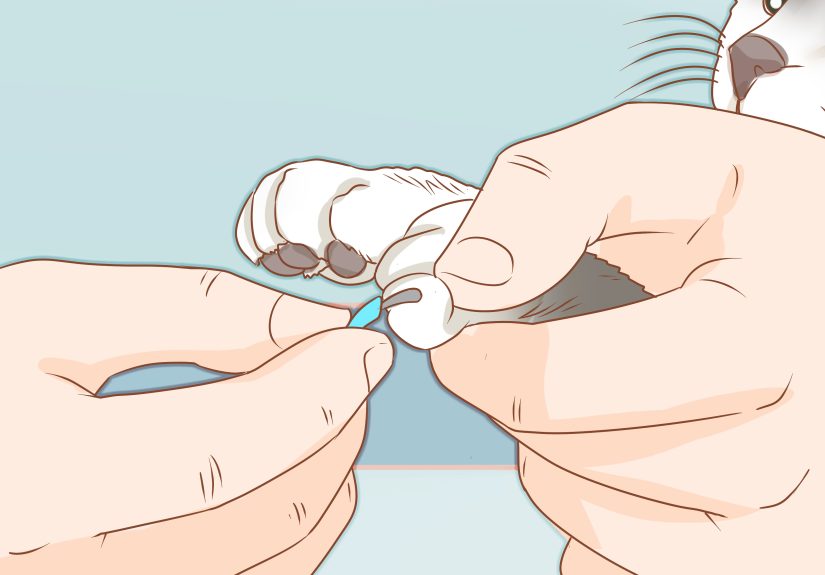
Hold the paw gently with your thumb on top and finger underneath. Press lightly so the claw extends. Then slide the glued cap straight onto the nail. You want it snug and smooth, not crooked, twisted, or halfway on like a badly parked car.
Try not to get adhesive on your cat’s fur or skin around the nail. If a bit squeezes out, wipe it away carefully with a paper towel. Stay calm and matter-of-fact. Cats are emotional sponges; if you act like a disaster has occurred, they are more likely to agree.
Step 9: Hold Briefly, Then Repeat in Small Batches
Once the cap is on, hold it in place for a few seconds so it can set. Then move to the next nail if your cat is still relaxed. Many owners do best with small batches: one paw, a few nails, or even just two caps in the first session.
You do not earn extra medals for finishing all claws in one go. In fact, doing fewer nails well is often the smarter move. If your cat stays comfortable, you can do more. If your cat is done, your cat is done. That is not failure. That is feline project management.
Step 10: Reward, Observe, and Check the Caps Over Time
When you finish, reward your cat like they just completed a heroic civic duty. Use treats, praise, petting, or a favorite toy. Then let your cat walk around and act mildly offended for a while.
Monitor the nail caps over the next few days. A cat may shake a paw, walk a little oddly for a short time, or give you a look of deep personal disappointment. Mild adjustment behavior can be normal. But remove or stop using nail caps and call your vet if you notice swelling, redness, bleeding, limping, constant chewing at the paws, or obvious distress. Nail caps are supposed to reduce trouble, not create a whole new season of it.
How Long Do Cat Nail Caps Last?
Most nail caps last until the nails grow enough for the caps to shed naturally, which often means a few weeks. In many cases, they need replacing roughly every four to six weeks. Some cats lose them sooner, especially if they are energetic scratchers or Olympic-level groomers. Others keep them on longer than you expect.
Check the claws weekly. You want to make sure the caps still fit well, none are damaged, and the nails underneath are growing normally.
Common Mistakes to Avoid
Using too much glue
This is the classic beginner mistake. A small amount is enough. Overfilling the cap makes a mess and increases the odds of glue squeezing out where it should not.
Trying to do all four paws in one stressful session
Unless your cat is unusually cooperative, smaller sessions are often easier and kinder. Nail caps are a marathon, not a hostage negotiation.
Skipping nail trimming entirely
Most adult cats need the sharp tip trimmed so the cap fits correctly. If you skip that step, the cap may sit poorly or pop off more easily. The exception is when the product instructions for kittens say otherwise.
Forgetting that scratching is still normal
Nail caps do not change the fact that cats scratch to stretch, mark, and maintain their claws. Keep sturdy scratching posts available, and reward your cat for using them.
Ignoring body language
If your cat’s ears flatten, tail lashes hard, or body stiffens, take a break. The goal is not merely to get the caps on. The goal is to preserve trust so future grooming is still possible.
When to Ask a Vet or Groomer to Help
DIY is fine for many cats, but there is zero shame in outsourcing the tiny claw helmets. Ask for professional help if:
- Your cat becomes aggressive or panicked during paw handling
- You cannot tell where the quick is
- Your cat has unusually thick, curved, brittle, or damaged nails
- The nail caps keep popping off immediately
- You notice irritation after application
- You simply want someone to show you the process once
Sometimes one appointment with a veterinarian or experienced groomer is enough to turn “I could never do this” into “Okay, I can do this, but I reserve the right to complain.”
Are Nail Caps Better Than Declawing?
For many households, yes. Nail caps are temporary and non-surgical, while declawing is a far more serious procedure that many veterinary and welfare groups discourage except in limited circumstances. Nail caps, regular trims, appropriate scratching posts, environmental enrichment, and positive reinforcement usually make a much better first plan.
That does not mean nail caps are perfect for every cat. Some cats tolerate them well, some merely tolerate them because they are saints, and some reject them with theatrical conviction. But as temporary tools, they can be useful when applied thoughtfully and monitored closely.
Real-Life Experiences With Cat Nail Caps: What People Usually Learn the Hard Way
The funny thing about learning how to put nail caps on your cat is that the first attempt rarely looks like the polished tutorial version. In real homes, with real cats, things get weird fast. The cap sticks to your finger instead of the claw. Your cat suddenly discovers they have somewhere extremely important to be. You think you are holding the paw gently, but your cat responds like you have proposed tax reform.
Most first-time owners discover that preparation matters more than confidence. People often assume the hardest part is the glue, but it is usually the handling. Once the cat accepts paw touching, the rest becomes much easier. A lot of owners also realize their cat does better with micro-sessions. Two nails, treat break. Two more nails, another treat. That rhythm feels slower, but it usually works better than trying to power through the whole job in one ambitious sitting.
Another common experience is thinking the cat hates the nail caps forever, when really the cat just hates the first five minutes. Many cats do a short period of dramatic paw shaking, exaggerated walking, or offended staring, and then go back to regular business, such as demanding food 11 seconds after finishing dinner. That adjustment phase can make owners nervous, but calm observation helps. If the cat settles and moves normally, great. If the cat fixates on the caps, chews constantly, limps, or seems distressed, that is your sign to stop and call the vet.
People also learn that nail caps are not magic. They protect furniture and skin from damage, but they do not replace scratching posts, play sessions, or nail checks. If a cat is anxious, bored, or frustrated, the caps alone will not solve the bigger issue. The most successful experiences usually happen in homes where owners also give the cat good scratching surfaces, keep routines predictable, and reward calm behavior.
And then there is the humility factor. Even people who are very competent at everything else in life can be defeated by one six-pound cat and a tube of adhesive. That is normal. Some owners become nail-cap experts after one weekend. Others wisely decide a groomer can have this particular honor. Either outcome is perfectly respectable. The goal is not to win a championship in feline pedicures. The goal is to keep your cat comfortable, protect your household a bit, and make grooming less stressful over time.
So if your first session is clumsy, welcome to the club. Most cat people have been there. They started with high hopes, left with one successfully capped nail, and called it progress. Honestly, that is progress. With patience, better timing, and enough treats to impress a small dictator, the process usually gets easier.
Conclusion
If you want to know how to put nail caps on your cat without turning your living room into a tiny stress festival, the secret is simple: go slowly, use the right size, trim carefully, use only a small amount of glue, and reward generously. Nail caps can be a practical, humane tool when they are applied properly and paired with good scratching options and regular claw care.
Think of them as a temporary helper, not a permanent shortcut. Your cat still needs patience, handling practice, and plenty of approved places to scratch. But once you get the routine down, those little caps can save your sofa, spare your skin, and make life a little easier for everyone involved, including the furry critic supervising the whole operation.