Table of Contents >> Show >> Hide
- What People Mean When They Say an “Inhumane” Hospital Birth Policy
- The Postpartum Clock: Why “Just Go Home” Isn’t Always Safe
- The Law That Basically Says: “Stop Kicking New Moms Out Like It’s Checkout Time”
- Why This Keeps Happening Anyway: Incentives, Not Villains
- Real-World Examples of “Inhumane” Policy Pressure (Without the Internet Fairy Tale)
- The Postpartum Risk Nobody Warns You About Enough: “After the Applause”
- How to Protect Yourself Before Delivery: A Practical Checklist
- Support Isn’t Fluff: It Can Change Outcomes
- What Hospitals and Insurers Can Do So Parents Don’t Need “Karma” Stories
- Conclusion: The Point Isn’t RevengeIt’s Reform
- Real-Life Experiences Related to “Inhumane” Hospital Birth Policies (Extended Section)
- Experience #1: The Discharge Talk That Feels Like a Countdown Timer
- Experience #2: The “Covered” Service That’s Practically Unreachable
- Experience #3: The Bill That Lands After You Finally Feel Human Again
- Experience #4: The Prior Authorization Game Nobody Told You You’d Be Playing
- Experience #5: The Power of One Good Human in a Messy System
There are two kinds of “push” in childbirth: the kind your body does, and the kind your insurance plan doesusually
right when you’re trying not to throw up on a nurse’s shoes.
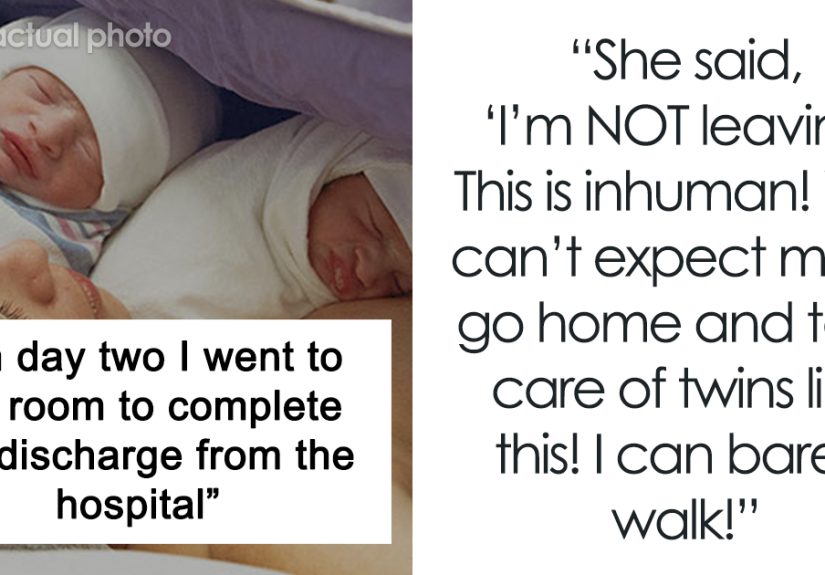
The internet loves a good karma story, and one of the most shared is an anecdote about a high-ranking health insurance
executive who showed up to deliver her baby… and suddenly discovered that the “efficient” postpartum hospital stay
policy her company championed felt less like “cost containment” and more like “are you kidding me right now?”
Whether you’ve read that specific tale or not, the scenario lands because it taps into a very real American reality:
maternity care is high-stakes, high-emotion, and often paired with paperwork that looks like it was designed by a
committee of bored accountants.
This article breaks down what’s actually behind “inhumane” hospital birth policies (spoiler: they’re usually built on
incentives, not empathy), what U.S. law and medical guidance say about postpartum stays, and how parents can protect
themselves from the worst of the systemwithout turning their birth plan into a 47-page legal thriller.
What People Mean When They Say an “Inhumane” Hospital Birth Policy
When someone calls a hospital birth policy “inhumane,” they’re rarely talking about a single rule. It’s typically a
stack of pressures that, together, make families feel rushed, unheard, and financially cornered. Common culprits include:
- Artificially short postpartum stays (especially if mom or baby needs monitoring)
- Coverage “gotchas” like surprise bills, out-of-network clinicians in an in-network hospital, or denied services
- Rigid administrative protocols that ignore how messy labor can be (because labor did not get the memo)
- Barriers to support (like limiting labor support people or making doula access difficult)
The viral story often circulates around postpartum length-of-stay restrictionsan issue that got so bad in the 1990s it
helped prompt federal protections requiring plans to cover minimum postpartum stays in many circumstances. Translation:
the “inhumane policy” theme isn’t just internet drama; it’s a remix of a long-running U.S. maternity care tension:
medical reality moves at the speed of a human body, but billing systems move at the speed of a spreadsheet.
The Postpartum Clock: Why “Just Go Home” Isn’t Always Safe
A normal, uncomplicated vaginal delivery can look deceptively “simple” on paper: baby arrives, everyone cries,
you take a cute photo, and then someone hands you a bill that makes you briefly consider returning the baby
(kidding! mostly!).
In real life, the hours after birth are when a lot of important things get confirmed (or caught):
bleeding, blood pressure, infection warning signs, pain control, mobility, breastfeeding support, newborn feeding
and jaundice checks, and mental health screening. And if delivery involves surgerylike a cesareanrecovery needs
a different level of monitoring.
C-sections are common, and they change the math
About a third of U.S. births are by cesarean section. That’s not a niche scenarioit’s a mainstream one.
A C-section can be life-saving, but it’s still major abdominal surgery, and the recovery timeline is not something
you can “power through” with a granola bar and positive vibes.
Now add the financial dimension: pregnancy, delivery, and postpartum care can average over $20,000 in total spending,
with thousands in out-of-pocket costs even for people with employer coverage. That’s a powerful incentive for
payers and systems to nudge care toward “faster,” even when “faster” is not always better.
The Law That Basically Says: “Stop Kicking New Moms Out Like It’s Checkout Time”
Here’s the part that makes the viral story feel believable: there really were years when some insurers pushed for
extremely short postpartum stays. The backlash helped cement protections that generally prevent group health plans
that cover maternity care from restricting postpartum hospital stays to less than:
- 48 hours after a vaginal delivery
- 96 hours after a cesarean delivery
The key idea isn’t “everyone must stay exactly this long.” It’s that the decision should be driven by the attending
clinician and the patientnot by a blanket rule designed to save money. In other words: postpartum care is not a
drive-thru.
If you’ve ever wondered why people get so heated about “inhumane hospital birth policy” discussions, it’s because
the postpartum window is a time when small delays or missed issues can become big problems. And the U.S. still has
troubling maternal outcomes compared with peer countries, with many pregnancy-related deaths considered preventable.
Why This Keeps Happening Anyway: Incentives, Not Villains
It’s tempting to imagine a smoky boardroom where executives cackle over denied claims. Reality is usually less
theatrical and more depressing: incentives. In a fee-for-service world, some interventions are reimbursed more
predictably than time-intensive, relationship-based care. And on the payer side, reducing utilization (fewer days,
fewer services) is an easy lever to pullespecially when the human cost doesn’t show up neatly on a quarterly report.
There’s also a mismatch between “covered” and “accessible”
The Affordable Care Act requires many plans in the individual and small group markets to cover “maternity and newborn
care” as an essential health benefit. That’s a big deal. But “covered” doesn’t always mean “easy to use,” especially
when families face deductibles, coinsurance, narrow networks, prior authorization requirements, or confusing benefit
designs.
The result is a special American kind of stress: you’re trying to keep a tiny human alive, and meanwhile your
insurance portal is asking if you’d like to appeal a denial “within 180 days.” Great. The baby will be in college
by then.
Real-World Examples of “Inhumane” Policy Pressure (Without the Internet Fairy Tale)
Even if you ignore viral anecdotes, plenty of real scenarios can make birth policies feel brutal:
1) The early-discharge squeeze
Families may feel pressured to leave before they feel confident about feeding, bleeding, pain control, or warning
signsespecially if staffing is tight or the hospital is busy. Early discharge can be safe for some people, but it
works best when paired with fast follow-up and clear instructions.
2) Surprise billing anxiety (even when you “did everything right”)
U.S. law now offers protections against many surprise bills in certain situations, including when out-of-network
clinicians provide care at an in-network facility for covered services. Still, billing confusion can linger,
and families may not know what’s protected, what’s not, and how to challenge a questionable bill.
3) Postpartum care gaps
Medical organizations increasingly emphasize postpartum as an ongoing period of carenot a single “six-week checkup.”
Ideally, postpartum support includes early contact and a comprehensive visit within the first 12 weeks, with ongoing
care as needed. But coverage, scheduling, transportation, childcare, and paid leave realities can make that hard.
The Postpartum Risk Nobody Warns You About Enough: “After the Applause”
In movies, birth is the big finale. In real life, birth is the season premiere of the “fourth trimester.”
And the postpartum period is when many serious complications can show uphigh blood pressure, infection, hemorrhage,
blood clots, and mental health crises, among others.
U.S. data show maternal mortality rates that remain concerning, and public health agencies note that a large share of
pregnancy-related deaths are preventable. That’s why “rush them out” policies feel so cruel: the stakes are not just
comfortthey’re safety.
How to Protect Yourself Before Delivery: A Practical Checklist
You shouldn’t have to become a part-time insurance analyst to have a baby. But until the system gets its act together,
a little preparation can save a lot of pain.
Ask these questions at 28–34 weeks (yes, it’s annoying; yes, it helps)
- Is my hospital in-network? Confirm for both maternity and newborn care.
- Is my OB/midwife in-network? (And any backup group that covers deliveries?)
- Does my plan require prior authorization for induction, C-section, NICU, or anesthesia?
- How is the newborn covered? When does coverage start, and what paperwork is needed?
- What are my out-of-pocket maximum and deductible? Get clarity on what you’ll likely hit.
- What postpartum services are covered? Lactation support, pelvic floor therapy, mental health visits.
Pro tip: when you call your insurer, write down the date, time, representative name (or ID), and a summary of what
they told you. It feels dramatic… until it becomes extremely useful.
Support Isn’t Fluff: It Can Change Outcomes
One of the most underrated “policies” is whether a laboring person is allowed meaningful continuous support. Evidence
summaries have found that continuous labor support is associated with lower likelihood of cesarean birth and other
interventions, and higher satisfaction with the birth experience. Translation: support is not a luxury add-on; it can
be part of better outcomes.
Where doulas come in
Doulas provide non-clinical supportemotional, informational, and physicalbefore, during, and after birth. Research
reviews frequently associate doula support with improved outcomes (like fewer C-sections) and better experiences,
especially for people facing higher barriers to care.
Coverage is expanding in some places (including Medicaid programs in certain states), but access is still uneven.
If your plan doesn’t cover a doula, ask if it covers childbirth education or lactation visitsthen consider whether a
doula is financially feasible as a targeted out-of-pocket investment (even one or two prenatal visits plus labor
support can be meaningful).
What Hospitals and Insurers Can Do So Parents Don’t Need “Karma” Stories
If we want fewer viral “taste of your own medicine” moments, systems have to stop designing care around what’s
easiest to bill.
- Align discharge policies with clinical reality and ensure fast follow-up for those who go home early.
- Reduce administrative friction for medically necessary postpartum services (blood pressure checks, mental health visits, lactation).
- Support evidence-based maternity care that avoids unnecessary interventions and protects patient autonomy.
- Expand postpartum coverage and continuity, especially for populations at higher risk and those with limited access.
And yes, we can say the quiet part out loud: if your business model depends on people being too exhausted to appeal
a denial, you didn’t build healthcareyou built a trap with a waiting room.
Conclusion: The Point Isn’t RevengeIt’s Reform
The reason the “insurance executive experiences her own inhumane hospital birth policy” story sticks is simple:
it flips the usual script. In real life, the people who write rules rarely feel them in their bodies. Childbirth
doesn’t care about titles. It doesn’t negotiate with deductibles. It doesn’t accept “we’ll get back to you in 14
business days.”
But the goal isn’t to hope the right executive has the right bad day. The goal is to build a maternity care system
where postpartum stays, billing, and support are designed around safety and dignityso parents don’t need “karma”
to get humane care.
Real-Life Experiences Related to “Inhumane” Hospital Birth Policies (Extended Section)
Below are experiences many families recognizenot because they’re dramatic, but because they’re painfully ordinary.
Think of these as “field notes” from the gap between what maternity care should be and what it sometimes
becomes when policy gets the final word.
Experience #1: The Discharge Talk That Feels Like a Countdown Timer
Some parents describe the moment a nurse says, “We’re aiming to discharge you tomorrow,” as oddly stressfullike
someone started a stopwatch on your recovery. You’re still figuring out how to sit up without wincing, your baby is
cluster-feeding like it’s their full-time job, and your brain is running on three hours of sleep and a granola bar.
When discharge feels inevitable instead of individualized, families can interpret it as: “Your comfort and safety are
optional; your bed is needed.” Even when clinicians are compassionate, the pressure can feel systemic.
Experience #2: The “Covered” Service That’s Practically Unreachable
Parents often hear, “Yes, lactation support is covered,” and imagine actual help. Then reality arrives: the
in-network lactation consultant has a two-week wait, the hospital’s outpatient clinic doesn’t take your plan, and the
one appointment you can get is during the exact hour your partner has to be at work and you have no childcare.
Technically covered. Practically impossible. The result is a predictable spiral: feeding gets harder, anxiety climbs,
sleep disappears, and the family feels like they failedwhen the system simply didn’t deliver what it promised.
Experience #3: The Bill That Lands After You Finally Feel Human Again
There’s a particular kind of heartbreak to getting a surprise bill weeks after birthright when you’ve stopped
bleeding, started to trust your body, and finally learned how to open a diaper one-handed. Suddenly you’re staring at
line items that read like a science-fiction novel (“facility fee,” “provider out of network,” “misc. supplies”) and
wondering if skin-to-skin had a surcharge. Even when laws reduce the worst abuses, billing confusion still creates
stress, and stress is a terrible postpartum companion.
Experience #4: The Prior Authorization Game Nobody Told You You’d Be Playing
For some families, the most “inhumane” part isn’t clinicalit’s administrative. It’s learning that a medically
recommended service (a pump, pelvic floor therapy, mental health counseling, a needed medication) requires forms,
phone calls, and appeals at the exact moment you are least capable of doing paperwork. New parents describe it like
this: “I’m bleeding, leaking milk, crying for reasons I can’t name, and someone wants a fax.” That sense of absurdity
sticks with people for years.
Experience #5: The Power of One Good Human in a Messy System
Here’s the hopeful pattern: families often remember one person who made the whole experience feel survivablea nurse
who taught them how to swaddle without judgment, a doctor who explained options like a teammate, a billing staffer who
quietly fixed an error, a doula who reminded them to drink water and breathe. These stories matter because they prove
the problem isn’t birth itself; it’s when policy strips away time, support, and clarity. When the system allows
clinicians to practice with dignityand families to receive care without fear“inhumane policy” becomes an unthinkable
phrase, not a trending topic.