Table of Contents >> Show >> Hide
- Why This Classic Roast Chicken Recipe Works
- Classic Roast Chicken Recipe Ingredients
- Equipment You’ll Want
- Step-by-Step: How to Make a Classic Roast Chicken
- Classic Roast Chicken Timing Guide
- How to Make the Pan Juices Better (Without Extra Work)
- Optional Upgrades for a More “Restaurant” Roast Chicken
- Common Roast Chicken Mistakes (And How to Avoid Them)
- Serving Ideas for Classic Roast Chicken
- Leftover Roast Chicken Tips
- of Real-World Roast Chicken Experience
- Conclusion
There are fancy dinners, and then there is classic roast chickenthe kind of meal that makes your kitchen smell like you absolutely have your life together, even if you’re wearing mismatched socks and using a butter knife as a “temporary” spoon.
A great roast chicken is simple, but not accidental. Crisp skin, juicy meat, and flavorful pan juices come from a few smart moves: drying the bird well, seasoning generously, roasting at the right temperature, and checking doneness with a thermometer. This guide gives you a reliable, old-school method with modern food-safety best practices and plenty of room to make it your own.
Why This Classic Roast Chicken Recipe Works
The best versions of roast chicken from trusted test kitchens all agree on a few things: keep the ingredient list simple, use aromatics like lemon and herbs, roast the chicken over vegetables for extra flavor, and let the bird rest before carving. This recipe follows that same winning formula.
- Crispy skin: Drying the chicken well and roasting uncovered helps the skin brown beautifully.
- Juicy meat: A thermometer keeps you from overcooking the breast.
- Big flavor, low drama: Lemon, garlic, herbs, butter, salt, and pepper do the heavy lifting.
- Built-in side dish: Roasting vegetables under the chicken turns pan drippings into gold.
Classic Roast Chicken Recipe Ingredients
For the Chicken
- 1 whole chicken (4 to 5 pounds), giblets removed
- 2 to 2 1/2 teaspoons kosher salt (plus more to taste)
- 1 teaspoon freshly ground black pepper
- 1 lemon, halved
- 1 head garlic, halved crosswise
- 4 to 6 sprigs fresh thyme or rosemary (or a mix)
- 2 tablespoons unsalted butter, melted (or softened)
- 1 tablespoon olive oil (optional, especially if skipping butter)
For the Roasting Pan Vegetables
- 1 large onion, cut into wedges
- 3 to 4 carrots, cut into chunks
- 2 to 3 potatoes or 1 fennel bulb, cut into chunks/wedges (optional)
- 1 to 2 tablespoons olive oil
- Salt and pepper, to taste
Optional Pan Sauce Upgrade
- 1/2 cup chicken broth or dry white wine
- 1 teaspoon Dijon mustard
- 1 teaspoon flour or cornstarch slurry (if you want a thicker sauce)
Equipment You’ll Want
- Roasting pan, oven-safe skillet, Dutch oven, or rimmed sheet pan
- Instant-read thermometer (your most important tool)
- Kitchen twine (optional)
- Tongs and a cutting board
Step-by-Step: How to Make a Classic Roast Chicken
1) Prep the Chicken Safely
If your chicken is frozen, thaw it safely in the refrigerator (best option), cold water, or the microwavenever on the counter. Once thawed, remove the giblets and pat the chicken very dry inside and out with paper towels.
Important modern food-safety note: do not rinse raw chicken. Washing it can spread bacteria around your sink and counters. Drying it with paper towels gives you better browning anyway, so your skin gets crisp instead of steamy.
2) Season Like You Mean It
Sprinkle salt and pepper inside the cavity first, then all over the outside. If you want extra flavor insurance, loosen the skin over the breast and rub a little butter underneath. Rub the rest of the butter (or olive oil) over the skin.
This is where many home cooks under-season. Roast chicken needs enough salt to season the meat, not just the skin. Think “confidently seasoned,” not “accidentally bland.”
3) Add Aromatics to the Cavity
Stuff the cavity with the lemon halves, garlic, and herb sprigs. These won’t make the inside taste like a perfume shop, but they will gently infuse the chicken and pan juices with a classic roast-chicken aroma.
4) Build the Vegetable Bed
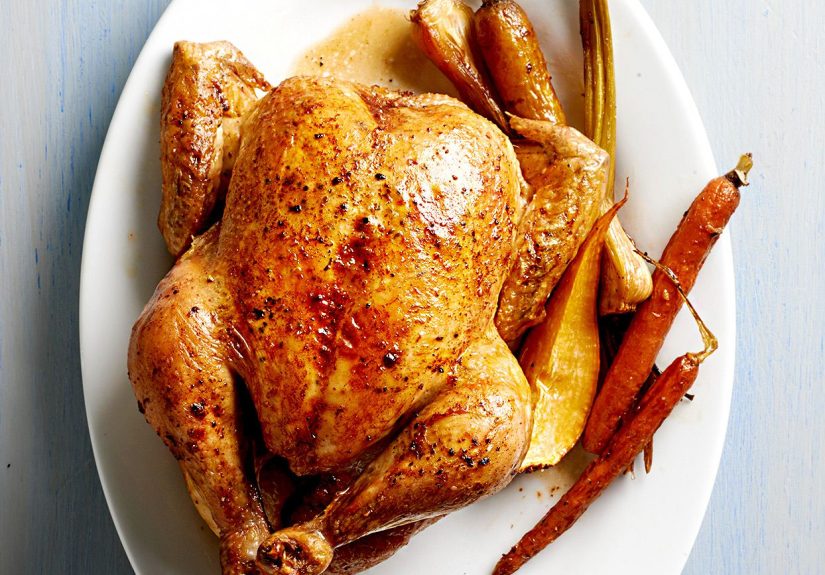
Toss onion, carrots, and any extra vegetables with olive oil, salt, and pepper. Spread them in the bottom of your pan. Set the chicken on top, breast-side up. This does two things: it lifts the bird for better air circulation and turns the vegetables into a ridiculously good side dish.
Tuck the wing tips under the chicken so they don’t burn. You can tie the legs loosely with kitchen twine if you want a more traditional look, but it’s optional.
5) Roast the Chicken
Preheat your oven to 425°F. Roast the chicken uncovered until the skin is deep golden and the internal temperature reaches 165°F.
A good rule of thumb is about 15 minutes per pound, but ovens vary, chicken sizes vary, and the universe enjoys chaosso start checking early with a thermometer.
6) Check Doneness the Right Way
Insert an instant-read thermometer into:
- the thickest part of the thigh (without touching bone), and
- the thickest part of the breast (without touching bone).
For a simple, reliable home method, cook until both areas are at least 165°F. The juices should also run mostly clear, but color alone is not a reliable safety test. The thermometer is the boss here.
7) Rest Before Carving
Transfer the chicken to a cutting board or platter and let it rest for 20 minutes. This step matters. If you carve immediately, the juices run out onto the board, and your chicken turns into a missed opportunity.
During the rest, you can toss the vegetables in the pan juices, finish a quick pan sauce, and pretend you planned everything perfectly.
Classic Roast Chicken Timing Guide
Estimated Cook Time by Weight
- 3.5-pound chicken: 50 to 60 minutes
- 4-pound chicken: 60 to 75 minutes
- 5-pound chicken: 75 to 95 minutes
These are estimates, not promises. Your pan type, oven accuracy, and whether the chicken started cold can all affect timing. A thermometer gives you certainty; guessing gives you stories.
How to Make the Pan Juices Better (Without Extra Work)
Roast chicken pan drippings are one of the best “free” sauces in cooking. Here’s how to make them even better:
- Deglaze: After removing the chicken, place the pan over low heat and add broth or white wine.
- Scrape: Use a wooden spoon to loosen the browned bits (that’s flavor).
- Finish: Stir in a little Dijon or a small knob of butter for shine and body.
- Thicken (optional): Add a small slurry if you want a gravy-style consistency.
Optional Upgrades for a More “Restaurant” Roast Chicken
Dry-Brine for Better Skin
If you have time, salt the chicken and leave it uncovered in the refrigerator for several hours or overnight. This helps dry the skin and seasons the meat more deeply. It’s one of the easiest ways to improve texture without adding extra ingredients.
Herb Butter Under the Skin
Mix softened butter with chopped thyme, rosemary, garlic, and lemon zest. Rub it under the breast skin and a little on top. This adds flavor and helps protect the white meat from drying out.
Roast Over Root Vegetables
Carrots, onions, parsnips, potatoes, and fennel all work well. The vegetables absorb chicken fat and juices while the chicken gets elevated for better browning. It’s an efficient, one-pan dinner and tastes like way more effort than it is.
Common Roast Chicken Mistakes (And How to Avoid Them)
Mistake #1: Wet Chicken Skin
If the skin is wet when it goes into the oven, it will steam before it browns. Translation: pale, floppy skin. Pat it dry thoroughly and, if possible, let it chill uncovered for a few hours.
Mistake #2: Under-Seasoning
Whole chickens are big. A timid pinch of salt won’t cut it. Season inside and out, and don’t forget the vegetables in the pan.
Mistake #3: No Thermometer
“The juices run clear” is an old-school clue, but it is not precise. The difference between juicy and dry can be just a few minutes. Use an instant-read thermometer and remove the guesswork.
Mistake #4: Carving Too Soon
Resting is not optional if you care about juicy chicken. Give it 20 minutes. Your patience will be rewarded with slices that stay moist instead of a puddle on the cutting board.
Serving Ideas for Classic Roast Chicken
Roast chicken is basically a dinner-party cheat code. It feels special but works on a weeknight. Here are a few easy serving ideas:
- Mashed potatoes + roasted vegetables + pan sauce
- Simple green salad + crusty bread + pan drippings
- Rice pilaf + sautéed greens + lemon wedges
- Mac and cheese + roasted carrots for a comfort-food version
Leftover Roast Chicken Tips
Leftover roast chicken is almost better than the original dinner because it means sandwiches, soup, pasta, wraps, salads, and quick weeknight tacos are all suddenly easy.
- Refrigerate leftovers within 2 hours (or 1 hour if it’s very hot out).
- Store in an airtight container.
- Use within 3 to 4 days for best safety and quality.
- Reheat leftovers to 165°F.
Bonus move: save the carcass. Add onion, celery, carrot, and water, and make a simple homemade stock. Your future soup will thank you.
of Real-World Roast Chicken Experience
If you ask a dozen home cooks about their first classic roast chicken recipe, you’ll usually hear the same emotional timeline: confidence at the grocery store, mild panic while seasoning a slippery bird, deep pride when the kitchen starts smelling amazing, and then total triumph when the skin comes out golden. Roast chicken has that effect. It feels like a “grown-up” meal, but once you do it a few times, it becomes one of the most forgiving dinners in your rotation.
One of the most common experiences is learning that the little details matter more than complicated techniques. People often expect a secret ingredient, but the biggest improvements usually come from basic habits: patting the chicken dry, seasoning the cavity, and using a thermometer. The first time someone switches from guessing doneness to actually checking the temperature, the results are usually dramatic. Suddenly, the breast meat isn’t dry, the thighs are cooked through, and the whole meal feels more consistent. That single tool saves a lot of “it looked done” regret.
Another very relatable roast chicken moment is discovering how much flavor ends up in the pan. New cooks sometimes focus only on the bird and forget about what’s underneath it. Then they roast the chicken over onions and carrots for the first time, taste the vegetables, and realize those pan drippings are basically liquid flavor. It feels like finding money in an old coat pocket. That’s why so many people stick with roast chicken as a signature meal: it rewards smart setup, not just cooking skill.
There’s also the “resting lesson,” which nearly everyone learns the hard way. You pull a beautiful chicken out of the oven, it looks incredible, and every instinct says, “Cut it now.” Then the juices flood the cutting board, and you realize patience was part of the recipe. Home cooks who make roast chicken regularly get very good at using that resting time well. They finish the salad, warm the bread, pour drinks, or whisk together a quick pan sauce. What feels like waiting at first becomes part of the rhythm.
Roast chicken also shines because it fits different moods. It can be a Sunday dinner with candles and cloth napkins, or a Tuesday “I need real food” meal with paper towels on the table. It scales well for families, leftovers are useful, and the flavor is familiar without being boring. Even people who like bold seasoning blends come back to a classic version because lemon, herbs, garlic, salt, and butter just work.
Finally, roast chicken has a confidence-building effect that few recipes can match. Once someone learns how to roast a whole chicken successfully, other cooking projects feel easier. Turkey is less intimidating. Pan sauces make sense. Thermometers become normal. Kitchen timing improves. It’s more than a recipeit’s a skill milestone. And yes, it also makes your kitchen smell like the kind of place people want to hang out in, which is a pretty great side effect for one humble bird.
Conclusion
A classic roast chicken recipe does not need a long ingredient list or complicated tricks. It needs good seasoning, dry skin, the right oven heat, and a thermometer. Master those basics, and you’ll get crispy skin, juicy meat, flavorful vegetables, and pan juices worth fighting over.
Make it once, and it’s dinner. Make it a few times, and it becomes your signature.