Table of Contents >> Show >> Hide
- What Is the Compas Direction Desk (and Why Is Everyone Whispering About It)?
- Jean Prouvé in One (Fun) Paragraph
- Design DNA: Industrial, Warm, and Weirdly Timeless
- Materials, Finishes, and Color Options
- Dimensions and Ergonomics: Small Desk, Serious Intent
- How the Compas Direction Desk Performs in Real Life
- Styling Ideas: Make It Look Intentional (Without Trying Too Hard)
- Buying Guide: How to Choose the Right Configuration
- Care and Maintenance: Keep It Beautiful Without Becoming a Furniture Monk
- Is the Jean Prouvé Vitra Compas Direction Desk Worth It?
- FAQ
- Real-World Experiences: Living With the Compas Direction Desk ( of Truthiness)
- Conclusion
If desks had personality types, the Jean Prouvé Vitra Compas Direction Desk would be the “quiet genius”:
calm, engineered, and somehow always the smartest thing in the roomwithout ever bragging about it. It’s compact,
architectural, and just opinionated enough to make your laptop feel underdressed (in a good way).
This guide pulls together the most useful real-world detailsdesign story, materials, sizes, finish options, styling,
buying tips, and careso you can decide if the Compas Direction desk is the right forever desk for your home office
(or the right “I’m an adult now” desk for your first apartment that finally has doors).
What Is the Compas Direction Desk (and Why Is Everyone Whispering About It)?
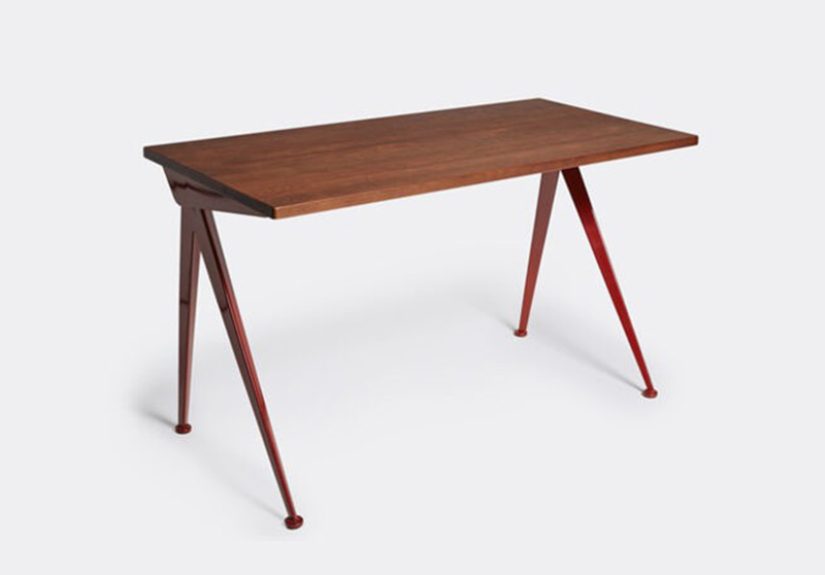
Designed in 1953, the Compas Direction is a small, refined writing desk with a big structural idea:
the legs flare like a drafting compass“le compas” in Frenchcreating a stance that looks light but behaves sturdy.
It’s not a bulky “executive” desk. It’s the kind of desk that says, “Yes, I answer emails. But I also respect geometry.”
The “Compass Legs” Are Not a Gimmick
The legs are the headline. Their splayed profile references the hinged arms of a compass, but the point isn’t decoration.
The shape helps distribute load and stabilize the desktop without visual heaviness. The result is an airy silhouette that
still reads as industrialmore “engineer’s studio” than “farmhouse influencer.”
Why Vitra Matters Here
Plenty of furniture gets “inspired by” famous designs. The difference with Vitra is that it’s an authorized production
with serious attention to construction and finishesmade to be used daily, not just admired from across the room.
In other words: you’re buying a functioning classic, not a costume.
Jean Prouvé in One (Fun) Paragraph
Jean Prouvé wasn’t the type to sketch a pretty chair and call it a day. He saw himself as an engineer and maker, working
across furniture and architecture with an obsession for structure, materials, and industrial methods. His work spans
everything from small objects to building components and prefabricated housing ideasalways with a “how does it actually
get built?” mindset. If your favorite design philosophy is “beauty is a side effect of smart construction,” Prouvé is your guy.
Design DNA: Industrial, Warm, and Weirdly Timeless
The Compas Direction desk is basically a handshake between two worlds:
metalwork confidence on the bottom and wood warmth on top.
The contrast keeps it from feeling cold or corporate. It’s minimal, but not sterile.
Architectural Lines Without Looking Like Office Furniture
Many “modern” desks lean into either ultra-tech (glass, chrome, cables everywhere) or ultra-cozy (thick slabs, chunky bases).
Compas Direction lands in the middle: crisp lines, honest materials, and proportions that work in a living spaceespecially
if your “home office” is actually the corner near the window that also hosts your plants’ social club.
Materials, Finishes, and Color Options
Vitra’s Compas Direction desk is typically defined by two core elements:
a solid wood top and a powder-coated steel base.
That pairing is why it feels both premium and practicalwood where you live, metal where you need strength.
Desktop Options: Oak or Walnut (Pick Your Vibe)
- Solid oak (natural, oiled): bright, clean, and friendly with almost any interior.
- Solid oak (darker finishes): moodier, more “library energy,” great with warm lighting.
- Solid American walnut (oiled): rich, classic, and effortlessly expensive-looking.
If you’re torn, choose based on your room’s “temperature.” Cool-toned rooms (gray, black, white) often love walnut to add warmth.
Warm-toned rooms (beige, terracotta, oak floors) can look seamless with oak.
Base and Frame: Powder-Coated Steel (a Color Story You Can Actually Enjoy)
The base is powder-coated steel, which means it’s durable and easy to live with. Color options often include deep neutrals
(like black) and more character-forward shades (including some historically inspired Prouvé tones). If you want the desk to
blend in, pick a dark neutral. If you want it to feel like a “designed object,” choose a distinctive color and let the legs be the point.
Dimensions and Ergonomics: Small Desk, Serious Intent
The Compas Direction is intentionally compactbuilt for focused work rather than sprawling paperwork. It’s especially
well-suited to modern “paperless” workflows: laptop, keyboard, notebook, coffee, maybe a mild existential crisis.
Still, it has enough presence to anchor a room.
Typical Sizes
Many current configurations are around 49 inches wide (1250 mm) with a depth that may vary by version.
The overall height is typically around 28.75 inches (730 mm), which aligns well with standard desk seating.
Is It Big Enough for a Monitor?
Yesif you’re realistic. A single monitor, laptop stand, or compact dual setup can work nicely. If your setup resembles
a NASA launch station with three arms and a docking bay, you’ll probably want a larger desk or a dedicated monitor shelf.
For monitor arms, use a protective pad under clamps to keep the wood pristine.
How the Compas Direction Desk Performs in Real Life
Design classics sometimes look incredible and function… politely. Compas Direction is different: it’s meant to be used.
Here’s what tends to matter day-to-day.
Stability
Those splayed legs aren’t just handsome. They help the desk feel planted without needing a bulky base. For most everyday
worktyping, writing, sketchingit’s solid and confidence-inspiring.
Comfort and Leg Room
The form keeps things open underneath. That matters if you hate feeling boxed in or you shift positions while working.
The desk reads light, and your knees enjoy the same benefit.
Surface Feel
A solid wood top has a “soft landing” feeling: warmer than laminate, nicer under your hands, and visually calming.
Over time, it can develop subtle characterespecially if you’re the sort of person who believes a desk should show evidence
of having hosted a real life.
Styling Ideas: Make It Look Intentional (Without Trying Too Hard)
The Compas Direction desk plays well with multiple aesthetics. Think of it as a design “translator”:
it can speak Scandinavian, mid-century modern, industrial, and contemporarywithout changing its accent.
Mid-Century Modern Home Office
- Pair with a refined upholstered chair or a classic modern office chair silhouette.
- Add a warm desk lamp and a single art print with generous white space.
- Keep accessories minimal: one tray, one pen cup, one small plant. Yes, your plant deserves a promotion.
Industrial-Minimal Setup
- Choose a darker base color and keep the surrounding palette tight (black, white, gray, wood).
- Use a slim monitor, matte accessories, and cable management that doesn’t scream “I gave up.”
- Consider a wall-mounted shelf above the desk to free up surface space.
Small-Space Apartment Work Nook
This is where the desk shines. Because it’s compact, it can live in a bedroom corner, a living-room alcove, or even a wide hallway
without dominating the space. Add a comfortable chair and a compact rug to visually define the “work zone,” then close your laptop
at 6:00 p.m. and pretend you’ve never heard of email.
Buying Guide: How to Choose the Right Configuration
This desk tends to be an investment piece, so it’s worth choosing deliberately. Here’s how to avoid buyer’s remorse (and the
late-night “should I have picked walnut?” spiral).
Pick the Top First
The wood top dominates what you see. If your room already has lots of oak, walnut can add contrast. If your room is visually busy,
oak can calm things down. Also consider maintenance preferences: darker finishes can hide small marks; lighter finishes can feel brighter.
Choose a Base Color That Matches Your Lifestyle
- Neutral base (like deep black): versatile, timeless, and forgiving.
- Statement base (color-forward): turns the desk into a conversation starter (even if the only person you talk to is your dog).
Confirm the Depth You Need
If you work mostly on a laptop, the smaller depth may be plenty. If you want a monitor plus a generous writing zone,
choose a deeper version if available. Depth matters more than people thinkespecially when you add a monitor stand,
a notebook, and a coffee that insists on taking up emotional space.
Care and Maintenance: Keep It Beautiful Without Becoming a Furniture Monk
The good news: this is not a fragile museum piece. The better news: basic care keeps it looking excellent for decades.
For the Wood Top
- Use coasters for hot drinks (yes, even if you “never spill”).
- Wipe with a soft, slightly damp cloth; avoid harsh cleaners.
- If you write with heavy pressure, use a desk pad to prevent dents.
For the Powder-Coated Base
- Dust regularly and wipe with a damp cloth when needed.
- Avoid abrasive pads that can dull the finish.
- Use felt pads under accessories if you’re prone to dramatic pen holders.
Is the Jean Prouvé Vitra Compas Direction Desk Worth It?
If you want a desk that’s purely about square footage-per-dollar, no. If you want a desk that balances
craft, engineering logic, authorized production quality, and a design story that still feels modern,
the Compas Direction is a strong yes.
It’s especially worth considering if you:
- Work from home and want a home office desk that doesn’t look like it came from a corporate supply catalog.
- Prefer compact desks with high design value (small footprint, big presence).
- Love industrial-modern details but still want warmth from real wood.
- Buy fewer, better thingsand actually keep them.
FAQ
Is the Compas Direction desk good for writing and sketching?
Absolutely. The proportions and sturdy feel make it great for handwriting, journaling, drawing, and focused workespecially
if you keep the surface relatively clear.
Does it work as a student desk?
It can, and it’s a particularly good match for a “paper-light” workflow: laptop, tablet, a couple notebooks. For heavy textbook
piles, consider adding a small side shelf or storage nearby.
How do I avoid cable chaos?
Use a slim under-desk cable tray, mount a power strip underneath, and run one clean cord to the outlet. Your future self will
thank you, and your video calls will stop looking like you’re broadcasting from a spaghetti factory.
Real-World Experiences: Living With the Compas Direction Desk ( of Truthiness)
Let’s talk about what it’s like to live with the Jean Prouvé Vitra Compas Direction Desk, day after day,
when the romance of “design classic!” meets the reality of “I have 47 tabs open and my calendar is judging me.”
Here are the kinds of experiences owners and design-leaning humans tend to haveminus the glossy catalog lighting.
Week 1: The desk becomes the room’s main character. You’ll notice it immediately: the compass legs don’t just
hold up the top; they hold up the whole vibe. Even in a small space, it reads intentional. People who don’t care about furniture
will ask, “Where’d you get that?” People who do care will squint at it like they’re trying to remember the name of a French
designer they once heard about at brunch. (Spoiler: it was Prouvé.)
Week 2: You develop opinions about surface discipline. This is not a “pile everything here forever” desk.
It’s compact, which is a polite way of saying it encourages you to stop hoarding sticky notes like they’re survival supplies.
The desk gently nudges you toward a cleaner workflow: laptop centered, notebook off to the side, pen that actually works,
and maybe a lamp that makes you feel like you’re writing a novel instead of replying “Per my last email.”
Week 3: You realize the desk rewards good lighting. Wood tops look better with warm, directional light.
Suddenly you care about bulbs. You say things like “2700K feels cozy.” You consider a task lamp not because you need it,
but because the desk deserves it. The powder-coated legs catch shadows in a way that makes the geometry poplike the desk
is quietly flexing its engineering degree.
Week 4: The desk teaches you to love “enough space.” If your life is one giant spreadsheet, you may still
crave a bigger surface. But for most modern workemail, documents, design apps, callsthe desk feels right-sized.
The key is pairing it with smart support: a small drawer unit, a shelf above, or a tidy cart nearby. You stop expecting the
desk to be your entire storage strategy and start treating it like a focused workspace. The result is oddly calming.
Month 2: You stop thinking about the desk, which is the biggest compliment. Great furniture disappears into
your life in the best way. The Compas Direction desk becomes the reliable stage for your day: solid, comfortable, visually
satisfying. It doesn’t squeak. It doesn’t wobble. It doesn’t feel trendy in a way you’ll regret. It just… works.
And every once in a while, you’ll catch the angle of those legs and think, “Okay, that’s still cool.”
Conclusion
The Jean Prouvé Vitra Compas Direction Desk is a rare mix of design history and daily usefulness: a compact
modern desk with industrial clarity, real wood warmth, and a silhouette that stays interesting for years. If you want one desk
that can carry a contemporary home office without screaming “office,” Compas Direction is a classic for a reasonquietly smart,
beautifully made, and ready for real life.