Table of Contents >> Show >> Hide
- Why Rainy-Day Recess Still Matters in Preschool
- Start Before the Clouds Show Up
- Build an Indoor Recess That Actually Works
- How to Manage Behavior Without Over-Managing the Joy
- Common Mistakes to Avoid
- Should Preschoolers Ever Go Outside in Light Rain?
- A Simple Rainy-Day Recess Framework
- Rainy-Day Recess Can Support Learning Too
- Conclusion
- Experiences From Real Preschool Rainy-Day Recess Moments
- SEO Metadata
Managing rainy-day recess in preschool is one of those jobs that sounds cute until you are standing in a classroom with 16 energetic children, three indoor voices that have gone missing, and a weather app that keeps laughing in percentages. Preschoolers still need to move, play, talk, imagine, negotiate, wiggle, and reset, even when the playground is off-limits. In fact, they may need it even more. A good rainy-day recess plan is not just a backup for bad weather. It is a smart part of classroom management, child development, and everyone’s continued hope of making it to pickup time with dignity intact.
The strongest preschool classrooms do not treat indoor recess as “free time until the storm stops.” They treat it as a purposeful block that protects what recess is supposed to do: release energy, support social development, give children choice, and help them return to learning with less frustration and more focus. That means rainy-day recess in preschool should include movement, predictable routines, safe materials, and enough flexibility to meet the needs of very different children in the same room.
Why Rainy-Day Recess Still Matters in Preschool
When outdoor play disappears, the need behind it does not. Preschoolers are still building balance, coordination, body awareness, language, self-regulation, and social problem-solving. They learn through movement and interaction, not through sitting still and pretending the rain does not exist. If a class loses outdoor recess and nothing meaningful replaces it, the rest of the day often gets bumpier. Transitions drag. Conflicts multiply. Circle time gets squirglier. Teachers start narrating like sports commentators just to keep up.
That is why the best approach to managing rainy-day recess in preschool starts with one simple mindset: indoor recess is not a lesser version of recess. It is recess with different tools. The goal is not to keep children perfectly quiet and unbelievably tidy. The goal is to help them move, connect, and regulate in a safe indoor environment.
Start Before the Clouds Show Up
The most successful rainy-day recess plans are built long before the first stormy morning. If teachers wait until children are already disappointed, damp, and asking, “Can we still go outside though?” the room starts from behind. A prepared classroom has a predictable indoor recess routine that children already know.
Create a Simple Backup Plan
Preschool classrooms do best with routines that are easy to remember and easy to repeat. Instead of inventing a new plan every time it rains, create one rainy-day structure and keep it consistent. Children feel calmer when they know what happens next. Teachers do too.
A strong backup plan usually includes:
- a clear signal that recess will be indoors,
- a short explanation without drama,
- pre-set activity zones or bins,
- simple safety rules,
- a movement-first option,
- and a calm transition back to the rest of the day.
In other words, do not announce indoor recess like it is a national emergency. Announce it like a normal part of school life. Preschoolers borrow the adult’s tone. If the teacher acts like the day is ruined, the class often agrees.
Teach the Routine on a Sunny Day
Children should practice indoor recess routines before they desperately need them. Show them where each station is, how many children may join, how to rotate, what voices sound like indoors, and what cleanup looks like. Think of it like a fire drill, but with scarves and beanbags instead of alarms.
Build an Indoor Recess That Actually Works
The best indoor recess ideas for preschool balance big-body play with social, sensory, and imaginative play. Not every child needs the same kind of reset. One child may need to jump. Another may need to stack, sort, squeeze, or pretend to be a veterinarian treating a stuffed giraffe with a cough. A well-planned room makes space for both.
1. A Gross-Motor Zone
This is the heart of rainy-day recess. Preschoolers need a safe place to move their large muscles indoors. That does not mean turning the room into a trampoline park with laminated labels. It means using space wisely and choosing activities with clear boundaries.
Good options include:
- freeze dance,
- animal walks,
- marching and movement songs,
- masking-tape balance lines,
- pillow or floor-dot obstacle paths,
- beanbag toss,
- balloon volleyball,
- slow-motion relays,
- yoga cards,
- and “mirror me” movement games.
The trick is to choose activities that feel active without becoming chaotic. Slow-motion challenges, balance walks, and freeze games are especially helpful because they combine movement with body control. Children get to wiggle without the classroom turning into a traffic report.
2. A Dramatic Play Zone
Dramatic play is a rainy-day hero. It gives children a place to collaborate, use language, solve conflicts, and create stories. On indoor recess days, this area often becomes the emotional pressure valve of the room. One group pretends to run a bakery. Another group builds a spaceship out of cushions. Someone becomes the dog. There is always a dog.
Simple props work best: scarves, hats, puppets, play food, cardboard boxes, stuffed animals, clipboards, and fabric pieces. Open-ended materials usually last longer than flashy toys because children can turn them into almost anything. That flexibility matters on stormy days when attention spans may be shorter and emotions bigger.
3. A Sensory and Fine-Motor Zone
Not every child needs loud movement to recharge. Some need their hands busy and their bodies calmer. A sensory or fine-motor space can include playdough, lacing cards, large beads, magnetic tiles, chunky puzzles, sorting trays, water-free sensory bins, or drawing prompts. These quieter experiences are especially useful for children who become overwhelmed when the room gets noisier than usual.
This area also supports independence. Children who can choose a manageable, engaging activity are less likely to drift into conflicts simply because they are bored and boxed in by the weather.
4. A Music, Literacy, and Language Corner
Rainy-day recess does not have to stop being playful when learning sneaks in. Songs, rhymes, fingerplays, call-and-response games, and read-aloud retellings are excellent preschool tools because they combine language with rhythm and participation. Children can clap syllables, act out nursery rhymes, chant weather words, or retell a familiar story with motions. This keeps indoor recess feeling joyful while also strengthening oral language and early literacy skills.
The key is to keep it playful. Indoor recess is not the moment for a surprise worksheet ambush.
5. A Calm-Down Space
Rain changes moods. Some children get silly. Some get cranky. Some are just plain disappointed because puddles are outside and they are not. A small calm-down area with soft seating, books, visual breathing prompts, fidgets, or stuffed animals can help children regulate before frustration spills into the whole room. This is not a punishment spot. It is a support space.
How to Manage Behavior Without Over-Managing the Joy
Behavior support during rainy-day recess is not about stopping children from being children. It is about giving them enough structure to succeed. Preschoolers usually do better when adults set the room up for good choices instead of correcting every poor one after the fact.
Use Visuals and Countdowns
Transitions are often the trickiest part of indoor recess. Children may resist stopping because the fun finally got going, or because they never got enough movement in the first place. A picture schedule, a “first-then” board, a two-minute warning, and a cleanup song all help. Predictability lowers resistance. Surprises tend to raise it.
Offer Limited Choices
Choice builds cooperation, but too many choices can blow up into indecision or conflict. Offer two or three clear options instead of nine. “Do you want freeze dance, blocks, or puppets?” is much easier for a preschooler than “Go choose anything in the room and please do not weaponize it.”
Keep Groups Small
Indoor recess goes more smoothly when activity areas have limits. A dramatic play zone for four children is easier to manage than one for eleven enthusiastic customers and one exhausted cashier. Visual spot markers, name cards, or simple signs can help children understand capacity without constant adult negotiation.
Do Not Use Movement as a Reward or Punishment
Children should not have to “earn” the right to move, especially on a rainy day when movement is already limited. Taking away active play often makes regulation harder, not easier. If a child struggles in one space, the better answer is usually a different kind of activity, more support, or a smaller group.
Common Mistakes to Avoid
Even experienced teachers can fall into rainy-day habits that make the day harder. A few of the most common mistakes include:
- Replacing recess with screens by default. A short, purposeful video might occasionally support a transition, but passive screen time should not become the main plan.
- Choosing only seated activities. Coloring is lovely, but not as the sole strategy for children who needed the playground.
- Packing the room with too many materials. More options do not always mean better play. They sometimes mean a faster mess and louder arguments.
- Skipping cleanup routines. Children need a predictable way to end play and return to the next part of the day.
- Ignoring disappointment. Preschoolers may genuinely feel upset when outdoor recess is canceled. Naming the feeling helps more than dismissing it.
Should Preschoolers Ever Go Outside in Light Rain?
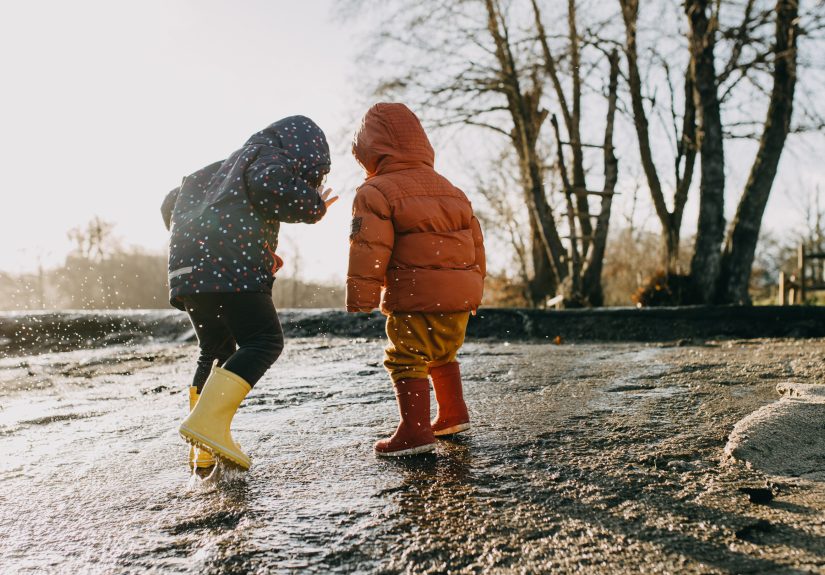
This depends on school policy, supervision, clothing, temperature, lightning risk, surface safety, and local conditions. In some programs, wet-weather outdoor play is still possible with boots, rain gear, and a safe space. In others, indoor recess is the only practical option. The smartest approach is not “always inside” or “always tough it out.” It is “follow safety rules and make a thoughtful call.”
When outdoor play is safe and properly supported, many children benefit from fresh air, nature, and sensory exploration. But when conditions create slipping hazards, unsafe visibility, flooding, lightning concerns, or inadequate clothing, indoor recess is the better choice. Safety is not the enemy of fun. It is the reason fun gets to continue tomorrow.
A Simple Rainy-Day Recess Framework
Teachers who want a practical structure can use this three-part model:
Launch: 3 to 5 Minutes
Gather children, explain that recess is indoors today, review choices, and remind them of the rules. Keep the tone calm and upbeat.
Play: 15 to 25 Minutes
Open the activity zones. Start with movement first for the children who need it most. Rotate support where needed, but do not over-direct every minute.
Landing: 3 to 5 Minutes
Use a cleanup song, breathing reset, or short closing circle. End with something regulating, not revving. A fast classroom does not magically become a quiet one just because the timer beeps.
Rainy-Day Recess Can Support Learning Too
One of the nicest surprises about managing rainy-day recess in preschool is that it can support learning without feeling like “school disguised as fun.” Children count jumps, compare tower heights, retell stories with puppets, practice taking turns, follow multi-step directions, and use new vocabulary during dramatic play. Movement songs strengthen listening. Rhymes sharpen sound awareness. Cooperative games build social language. Open-ended materials invite creativity and problem-solving.
That does not mean teachers should turn every indoor recess into a lesson wrapped in glitter. It means good play is already doing important developmental work. Preschoolers are not “off task” when they play well. They are often exactly where they need to be.
Conclusion
Rainy-day recess in preschool will probably never become anyone’s easiest block of the day. It asks teachers to be flexible, organized, playful, and alert all at once, which is a very ambitious request before lunch. But with the right structure, indoor recess can be far more than a backup plan. It can be a chance for children to move, imagine, negotiate, sing, build, calm down, and reconnect.
The goal is not perfection. The goal is a classroom where children still get what recess is meant to provide, even when the swings are dripping and the slide is taking the day off. When teachers prepare for rainy days with smart routines, intentional movement, and developmentally appropriate choices, indoor recess stops feeling like damage control and starts feeling like part of a strong preschool program.
Experiences From Real Preschool Rainy-Day Recess Moments
Anyone who has spent time in a preschool classroom knows rainy-day recess has its own personality. It usually begins with a few hopeful faces at the window, one child announcing, “It’s only a little rain,” and another arriving fully prepared to make dramatic eye contact with the sky as if personally betrayed by the clouds. The emotional weather inside the room can change fast. That is why experience matters so much. Teachers learn that children are not just reacting to the rain. They are reacting to a change in routine, a loss of expected movement, and the sudden challenge of sharing indoor space for longer than usual.
In many classrooms, the first ten minutes set the tone for everything that follows. When teachers move quickly into a familiar plan, children usually settle faster. A class that hears, “Today we have indoor recess, so you may choose movement, building, or puppets,” tends to recover better than a class that hears a long adult debate about weather, staffing, or slippery mulch. Preschoolers do not need a meteorology lecture. They need a plan and a path into play.
Teachers often notice that the children who struggle most on rainy days are not always the loudest ones. Sometimes it is the child who loves scooters and now hovers near the bookshelf, unsure what to do. Sometimes it is the child who usually plays well outside but becomes territorial indoors because the dramatic play kitchen suddenly feels crowded. Sometimes it is the child who starts spinning, shouting, or crashing into others because the room is full of energy with nowhere obvious to put it. Experience teaches teachers to watch for those patterns early and redirect before the room becomes one giant negotiation.
Many preschool educators also learn that the best indoor recess activities are not necessarily the fanciest. A strip of tape on the floor can become a balance beam, a river, a road, or the “only safe path across the lava.” A basket of scarves can launch dancing, storytelling, peekaboo games, and costume play. A balloon can save a morning. So can a cleanup song that children know by heart. On rainy days, familiar materials often work better than brand-new ones because children can start playing right away instead of needing a full introduction.
Another common experience is discovering how much social learning happens when outdoor freedom shrinks. Indoors, children have to negotiate space more deliberately. They practice asking for a turn, waiting, joining a game, and handling disappointment in tighter quarters. That can be messy, but it is meaningful. Teachers who stay close, coach language, and keep expectations realistic often see tremendous growth over time. Rainy-day recess may not look magical in the moment, but it can quietly build patience, flexibility, and cooperation.
Perhaps the most encouraging experience teachers report is this: once a class knows the rainy-day routine, the whole event becomes less dramatic. Children still prefer sunshine. So do adults with playground duty. But indoor recess gets easier when it is treated as normal, intentional, and worth doing well. Eventually, the room begins to hum instead of boil. That is when a rainy day stops feeling like an interruption and starts feeling like just another preschool adventure, with slightly wetter shoes and a lot more freeze dance.