Table of Contents >> Show >> Hide
- Why “Mise en Place” Belongs in Your Drawers
- Step One: The 20-Minute Drawer Reset (Do This Before You Shop)
- Choosing Kitchen Tool Drawer Organizers: What Actually Works
- 1) Expandable utensil trays (best for standard-width drawers)
- 2) Modular bins (best for deep drawers and weird layouts)
- 3) Adjustable drawer dividers (best for long tools and flexible sections)
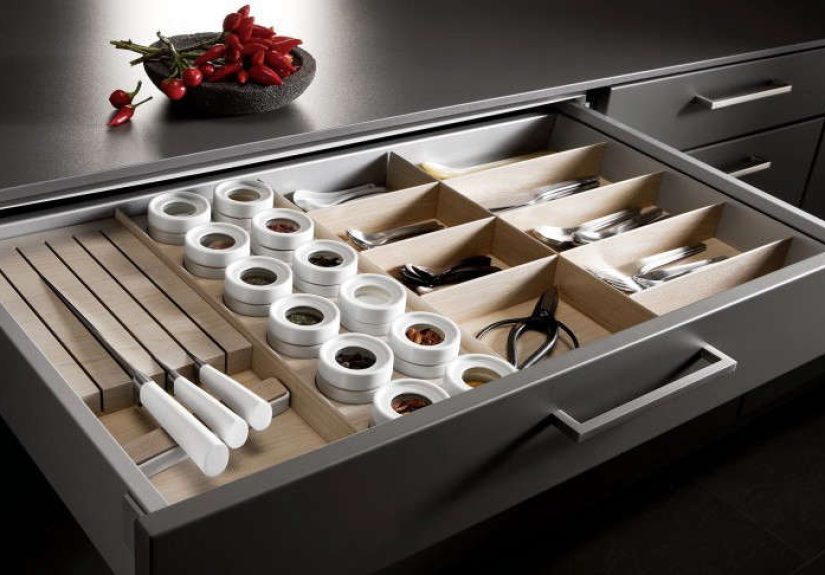
- 4) In-drawer knife organizers (best for safety and counter space)
- 5) Peg-style systems (best for large drawers and heavy tools)
- 6) Stacked/angled organizers (best for narrow drawers)
- Design Your Drawer Like a Workstation (Not a Storage Unit)
- Material Matters: Bamboo vs. Plastic vs. Metal
- Common Mistakes That Make Organized Drawers Fail
- Maintenance: The 10-Minute Weekly Reset
- Experiences Related to “Mise en Place: Kitchen Tool Drawer Organizers”
- Conclusion
If your “utensil drawer” is actually a chaotic soup of spatulas, whisks, and that one mystery gadget you swear you
didn’t buy, you’re not alone. Most kitchens have at least one drawer that functions like a witness-protection program
for tongs: they go in, and no one ever sees them again.
The cure isn’t just “buy a tray.” The cure is a mindset: mise en placethe chef-y practice of getting
everything ready and in its place before cooking. And here’s the secret: mise en place doesn’t start when you
chop onions. It starts when you open your drawers.
This guide breaks down how to choose (and actually use) kitchen tool drawer organizersso your tools support your
cooking flow instead of sabotaging it.
Why “Mise en Place” Belongs in Your Drawers
In professional kitchens, mise en place is about prepping ingredients and staging tools so the cook can move quickly,
safely, and cleanly. At home, it’s the same ideaminus the ticket printer yelling at you.
A well-organized tool drawer is mise en place you do once, then benefit from daily. When your peeler, microplane,
measuring spoons, and silicone spatula all have predictable homes, you:
- Cook faster (less rummaging, more sautéing).
- Make fewer mistakes (no “Where’s the tablespoon?” panic).
- Keep counters clearer (tools live where they belonginside, not everywhere).
- Reduce duplicates (you stop buying “backup tongs” like it’s a survival hobby).
- Clean as you go more easily (a tidy system encourages tidy habits).
Step One: The 20-Minute Drawer Reset (Do This Before You Shop)
The most expensive drawer organizer in the world can’t fix a drawer that’s hosting 47 gadgets you don’t use. Start here:
1) Empty the drawer completely
Yes, completely. This is the part where you find the missing cookie cutter, three rubber bands, and a stray takeout menu
from a restaurant that closed in 2019.
2) Clean it like you mean it
Wipe out crumbs and dust, then consider adding a non-slip drawer liner. Liners reduce sliding and help
protect organizers from shifting every time you open the drawer like a game-show contestant.
3) Measure the interiorwidth, depth, and usable height
Measure inside the drawer, not the cabinet opening. This is where most people go wrong. Your goal is a setup that fits
your drawer, not a fantasy drawer from a showroom kitchen.
4) Sort tools into “how you cook,” not “what they are”
Instead of one giant utensil pile, create functional groups. Common categories:
- Daily cooking: spatulas, tongs, wooden spoon, ladle, whisk.
- Prep: peeler, can opener, garlic press, zester, kitchen shears, meat thermometer.
- Baking: measuring cups/spoons, piping tips, small offset spatula.
- Serving: serving spoons, salad tongs, gravy ladle.
- Specialty/rare: corn holders, melon baller, shrimp deveiner (we see you).
5) Declutter with a “two-rule” test
Keep:
(1) two of the essentials (like two spatulas if you genuinely use both), and
(2) one of the specialty items unless it’s used constantly.
If you own four avocado slicers, congratulationsyou also own a problem.
Choosing Kitchen Tool Drawer Organizers: What Actually Works
Drawer organizers fall into a few core types. The best choice depends on your drawer size, your cooking style, and how
committed you are to not letting the “junk drawer energy” spread.
1) Expandable utensil trays (best for standard-width drawers)
These trays adjust in width, making them a strong option for drawers that aren’t quite standard. Look for trays with:
- A mix of short and long compartments (you’ll need at least one long lane for tools).
- Non-slip feet or a grippy base.
- Straight edges that reduce wasted “dead space” along drawer walls.
Best for: everyday cooking tools and flatware in medium-depth drawers.
Watch out for: trays that expand but create awkward gaps or flimsy edges when fully extended.
2) Modular bins (best for deep drawers and weird layouts)
Modular systems let you “build” a layout using small bins that combine like kitchen Tetrisexcept you win by finding
the can opener on the first try.
Best for: deep drawers, oversized drawers, and mixed categories (prep tools + gadgets + small accessories).
Pro tip: choose a set with at least two depths so you can separate small items from bulky tools.
3) Adjustable drawer dividers (best for long tools and flexible sections)
Spring-loaded or tension dividers create “lanes” across a drawer. They’re excellent for keeping spatulas, whisks, and
tongs from migrating into each other’s personal space.
- Use one long section for your most-used tools.
- Create a smaller section for prep gadgets.
- Add a mini-bin inside a section for tiny items (corn cob holders can live here and stay out of trouble).
Best for: long utensils, narrow drawers, and people who want a custom feel without custom pricing.
4) In-drawer knife organizers (best for safety and counter space)
If knives currently live loose in a drawer, that drawer is basically a villain origin story.
In-drawer knife organizers store blades flat and separated, which helps protect both knives and fingers.
Best for: kitchens that want clear counters or safer storage, especially with kids at home.
Bonus: some people add a grippy liner (like cork-style liners) under knives to reduce sliding and noise.
5) Peg-style systems (best for large drawers and heavy tools)
Pegboard-style inserts inside drawers aren’t just for pots and pansthey can be adapted for bulky kitchen tools, lids,
and awkwardly-shaped items that refuse to stack politely.
Best for: wide, deep drawers and cookware-adjacent organization.
6) Stacked/angled organizers (best for narrow drawers)
If you live in a small apartment or your kitchen is a “cozy vintage layout” (translation: tiny), stacked cutlery designs
can hold a surprising amount in a narrow footprint. They’re also great when you want to leave space next to the organizer
for larger tools.
Design Your Drawer Like a Workstation (Not a Storage Unit)
Here’s how to turn “organized” into “chef-efficient.” The key is to place tools based on frequency and
workflow.
The Prime Real Estate Rule
The easiest-to-reach drawerusually near the stove or main prep areashould hold the tools you use most often:
tongs, spatula, whisk, wooden spoon, ladle, fish turner (if you’re fancy), and a thermometer.
Create zones that match your cooking habits
- Prep zone (near cutting board): peeler, shears, zester, can opener, measuring spoons, thermometer.
- Cook zone (near stove): spatulas, tongs, spoon, whisk, ladle.
- Bake zone (near mixer/pantry): measuring cups, small spatulas, cookie scoop, pastry brush.
- Serve zone (near dishes): serving spoons, salad tools, gravy ladle.
A concrete example: a 30-inch “main utensil drawer” layout
If you have one primary drawer, try this structure:
- Left: long lane for tongs + spatulas + whisk.
- Middle: modular bin for prep gadgets (peeler, can opener, shears).
- Right: small compartments for measuring spoons, clips, and tiny tools.
- Front edge: a shallow bin for “daily grab” items (thermometer, lighter, mini spatula).
Material Matters: Bamboo vs. Plastic vs. Metal
You don’t need a PhD in Organizer Science, but material does affect durability and cleaning.
Bamboo/wood
- Pros: looks warm and “intentional,” sturdy, often fits modern kitchens beautifully.
- Cons: can stain if wet tools go back damp; may require occasional deeper cleaning.
- Best for: dry utensils and a polished look.
Plastic
- Pros: easy to wipe clean, great for messy or high-use drawers, budget-friendly.
- Cons: can scratch over time; cheaper versions may slide unless lined/grippy.
- Best for: real life (kids, heavy cooking, frequent cleaning).
Metal/mesh
- Pros: durable, modern look, often very sturdy.
- Cons: can be noisy if tools clink; may need liner underneath.
- Best for: high durability and minimalist style.
Common Mistakes That Make Organized Drawers Fail
- Buying organizers before decluttering. You can’t “organize” 19 whisks. You can only admit you have 19 whisks.
- Ignoring height. Deep drawers need deeper bins, or everything becomes a pile on top of your tray.
- Creating too many micro-categories. If your system needs a map, it’s too complex.
- Not leaving breathing room. A perfect fit should still allow easy in-and-out without tools catching.
- Letting the “miscellaneous” section grow unchecked. Miscellaneous is a slippery slope. Today it’s bag clips; tomorrow it’s a tape measure and a birthday candle.
Maintenance: The 10-Minute Weekly Reset
The best drawer organizer is the one that stays organized. Once a week (or once every other week), do this:
- Quick sweep: toss crumbs and wipe the front edge.
- Tool check: return items to their lanes/compartments.
- Duplicate control: if you notice “extra” gadgets creeping in, relocate them or donate.
- One upgrade rule: only change one thing at a time (a new bin, a divider, a liner). Constant rearranging = drawer chaos reborn.
Experiences Related to “Mise en Place: Kitchen Tool Drawer Organizers”
The funny thing about kitchen drawers is that they’re less like storage and more like storytelling. You can learn a lot
about how someone cooks just by watching what happens when they reach for a spatula. Below are a few common (very real-life)
experiences that show why drawer organization is basically mise en place in disguiseand how small changes can make cooking
feel calmer and more fun.
Experience #1: The Great Spatula Avalanche
You open the utensil drawer and the tongs are on top of the whisk, which is on top of the ladle, which is somehow tangled
with a bag clip. You pull one thing out and five things shift like they’re auditioning for a disaster movie. This is the
moment many people realize: the drawer doesn’t need “more space.” It needs lanes.
When long tools live in one long section (divider lane or expandable tray lane), they stop crossing paths. The “avalanche”
ends because the tools can’t pile up as easily. Bonus: you stop doing that little drawer-jiggle move where you push the
drawer closed with your hip and hope for the best.
Experience #2: Cooking Gets Faster Without You “Trying Harder”
A surprisingly satisfying shift happens after you organize for function: you start cooking more efficiently without
feeling like you’re performing. If measuring spoons always sit in the same front-right compartment, you don’t spend mental
energy searching. If your peeler and shears live together, prepping vegetables becomes a smooth sequence instead of a scavenger hunt.
This is mise en place at home: not perfectionjust predictability.
Experience #3: The “Why Do We Own Three Can Openers?” Revelation
Decluttering a tool drawer often reveals duplicates you didn’t know you hadbecause you couldn’t see what you had. Once you
sort everything, you notice the patterns: three peelers (but you only like one), two garlic presses (neither of which you
clean immediately), and a novelty tool that seemed brilliant online but now just… exists.
The most practical lesson here is that good drawer organizers don’t just store tools; they help you curate
them. When each tool has a defined spot, you can tell instantly if you’re adding clutter or adding value. That’s how you
prevent the drawer from becoming a museum of kitchen gadgets.
Experience #4: Holiday Cooking Suddenly Feels Less Like a Sport
Big cooking daysThanksgiving, a birthday dinner, a weekend brunchare where mise en place shines. When you’re juggling
multiple dishes, the kitchen tool drawer becomes your pit crew. A well-organized drawer means you can grab the thermometer,
whisk, and ladle without breaking stride. You don’t have to stop and think. You just move.
People often notice that they “clean as they go” more naturally during big cooking sessions once drawers are organized.
Tools return to their compartments because it’s easy and satisfying. The kitchen stays clearer, which makes the whole day
feel less chaoticeven if you’re still doing twelve things at once.
Experience #5: Small Kitchens Benefit the Most
If your kitchen has limited counter space, drawer organization isn’t a nice-to-have; it’s survival. Storing knives safely
in a drawer, using a stacked organizer for cutlery, and assigning a narrow lane for long utensils can free up counter real
estate immediately. When your drawers do their job, you don’t need countertop crocks and containers multiplying like rabbits.
The biggest “small kitchen” win is psychological: when drawers open neatly and close smoothly, the space feels larger.
You stop feeling like you’re cooking inside a cluttered puzzle box, and you start feeling like you have a functional little
workstation. That’s the heart of mise en placeyour tools are ready for you, not hiding from you.
Conclusion
Mise en place isn’t about turning your kitchen into a photo shoot. It’s about reducing friction so cooking feels easier.
When your kitchen tool drawer organizers match your real habitshow you prep, cook, bake, and serveyou spend less time
searching and more time actually enjoying the process (and the food).
Start with a reset: empty, clean, measure, and declutter. Then choose organizers that fit your drawer and your routines.
Build zones, give long tools a lane, and keep a simple maintenance rhythm. Do that, and your drawers won’t just look better
they’ll work better. And that’s mise en place you’ll notice every single day.