Table of Contents >> Show >> Hide
- Introduction: Why Thailand Keeps Stealing the Scene
- Why Filmmakers Love Shooting Movies in Thailand
- Iconic International Movies Filmed in Thailand
- Standout Thai Movies Made in Thailand
- How Movies Filmed in Thailand Shape Tourism
- Practical Tips for Exploring Thailand’s Movie Locations
- 500-Word Experience: What It’s Like to Chase Movies Made in Thailand
- Conclusion: Watching, Traveling, and Respecting the Set
Introduction: Why Thailand Keeps Stealing the Scene
When you picture movies made in Thailand, chances are your brain jumps straight to a turquoise bay, a sunburned backpacker, and some suspiciously perfect sand. But Thailand’s film resume goes way beyond one iconic Leo movie. From classic James Bond adventures and gritty war dramas to ghost stories and high-octane martial arts, this country has played host to decades of international and local productions.
The result? A dream destination for both movie lovers and travelers. Thailand offers dense jungles, futuristic city skylines, sleepy villages, and those beaches that look like someone turned the saturation up to 200%. It’s no wonder directors keep coming back and streaming platforms are packed with movies filmed in Thailand. In this guide, we’ll break down some of the most famous international films shot here, highlight standout Thai movies, and share practical tips for exploring the real-life locations behind the scenes.
Why Filmmakers Love Shooting Movies in Thailand
Thailand is one of Southeast Asia’s most popular film-production hubs, and it’s not just about pretty scenery. The country offers experienced local crews, competitive production costs compared with Western countries, and solid infrastructure in cities like Bangkok and Chiang Mai. Add in supportive film commissions, modern soundstages, and a mix of urban chaos and untouched nature, and it becomes obvious why so many productions list “filmed on location in Thailand” in the credits.
Another big plus: Thailand can convincingly stand in for other places. Over the years, it has doubled as Vietnam, Cambodia, generic “Southeast Asia,” and even alien planets. If you’ve ever watched a movie and thought, “Wow, I’d love to visit there… wherever that is,” there’s a decent chance you were actually looking at Thailand.
Iconic International Movies Filmed in Thailand
Let’s start with the international hits the movies that put Thailand on moviegoers’ radar and sparked entire waves of film-inspired tourism.
1. The Man with the Golden Gun (1974)
Thailand’s big Hollywood breakout came with James Bond. The Man with the Golden Gun sent Roger Moore’s 007 to the limestone cliffs and emerald waters of Phang Nga Bay. The villain Scaramanga’s lair was filmed on a small island now nicknamed “James Bond Island,” which has since become a must-visit stop on many Phang Nga boat tours. The movie helped cement Thailand’s reputation as a glamorous, slightly dangerous tropical playground perfect for car chases, boat chases, and probably any other chase you can think of.
2. The Deer Hunter (1978) & Good Morning, Vietnam (1987)
War movies have also leaned heavily on Thailand’s landscapes. Parts of The Deer Hunter and Good Morning, Vietnam were filmed in Thailand, which stood in for Vietnam and neighboring countries. Jungle scenes, rivers, and rural areas offered the right look while being more logistically accessible than filming in postwar Vietnam at the time. It’s not exactly “holiday inspiration,” but it shows just how versatile Thailand can be on screen.
3. The Beach (2000)
If there’s one movie that truly changed tourism in Thailand, it’s The Beach. Starring Leonardo DiCaprio as a restless backpacker hunting for a secret island, the film used locations around Bangkok, Phuket, and the now-famous Maya Bay on Ko Phi Phi Leh. That last location, with its steep cliffs and neon-blue water, became a global obsession and triggered a massive tourism boom. So massive, in fact, that Maya Bay later had to be closed and carefully restored after environmental damage from thousands of visitors per day. These days, visitor numbers are capped and access is more controlled a powerful reminder that movie magic and sustainability need to go hand in hand.
4. The Hangover Part II (2011)
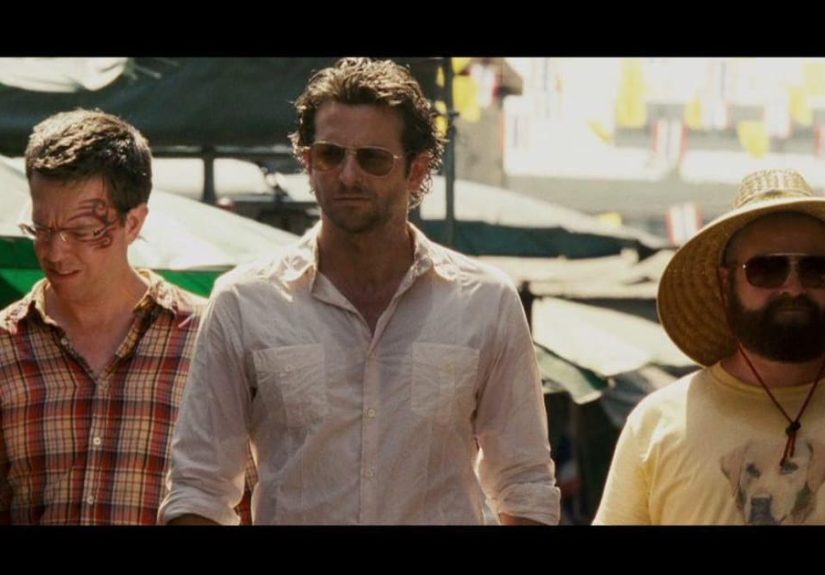
When Hollywood wanted to crank the chaos up a notch for the sequel to its infamous bachelor-party comedy, it headed to Bangkok. The Hangover Part II features rooftop bars, crowded streets, riverboats, and morning-after scenes in places that look exactly like the worst best night of your life. The Sirocco rooftop restaurant at Lebua State Tower, in particular, became instantly recognizable thanks to the movie’s “we’re way too high up for this” shots of the Bangkok skyline.
5. Only God Forgives (2013)
Ryan Gosling swapped neon Los Angeles for neon Bangkok in Nicolas Winding Refn’s ultra-stylized crime thriller Only God Forgives. The film leans into Bangkok’s darker, moodier corners: back alleys, boxing rings, karaoke bars, and crimson-lit interiors. It’s not a tourist brochure, but if you’re into atmospheric, visually rich films, this is one of the most striking movies filmed in Thailand.
6. Rambo (2008)
Sylvester Stallone returned to his legendary franchise with Rambo (often called Rambo IV), shot largely in northern Thailand close to the Myanmar border. The movie uses rugged jungles and muddy rivers to create a grim, realistic backdrop for its rescue mission story. While it’s not light viewing, it captures a very different side of Thailand remote, raw, and far removed from beach resorts.
7. Da 5 Bloods (2020), Extraction (2020), and The Creator (2023)
More recently, streaming-era hits have discovered the benefits of shooting in Thailand. Spike Lee’s Da 5 Bloods, an ambitious story about Vietnam War veterans returning to Southeast Asia, was filmed primarily in Chiang Mai and surrounding regions. Action thriller Extraction used Thai locations to stage its chaotic chases and shootouts. Sci-fi epic The Creator also leaned heavily on Thai landscapes and cityscapes, blending them with digital effects to create a believable near-future world. These titles highlight how Thailand continues to evolve as a flexible, modern production hub.
Standout Thai Movies Made in Thailand
Of course, not all movies made in Thailand are foreign productions. Thailand’s own film industry has produced some incredible work that travels well beyond its borders. If you want to go deeper than the usual backpacker watchlist, add these Thai movies to your queue.
1. Ong-Bak: Muay Thai Warrior (2003)
Ong-Bak introduced the world to Tony Jaa and a new level of physical action. Shot across Thai villages and urban neighborhoods, the film famously avoided heavy CGI and stunt doubles. What you see rooftop jumps, bone-crunching fights, and acrobatic chases is basically Tony Jaa plus gravity. The movie boosted global interest in Muay Thai and showed that Thai action films could compete on the world stage.
2. Shutter (2004)
If you like your cinema spooky, Shutter is a must. This Thai horror classic centers on a photographer who starts noticing mysterious figures appearing in his photos. Filmed largely in Bangkok and surrounding areas, it combines urban settings with psychological dread and folklore-inspired twists. The film sparked remakes and helped position Thailand as a major player in global horror.
3. Pee Mak (2013)
Pee Mak is one of Thailand’s biggest box office hits, blending horror, romance, and comedy. Loosely based on the famous Mae Nak ghost legend, it manages to be genuinely creepy and laugh-out-loud funny at the same time. Filming took place on stylized sets and rural locations that evoke 19th-century Thailand, giving international audiences a peek at historical aesthetics as well as modern Thai humor.
4. Bad Genius (2017)
Few movies about exam cheating are this tense. Bad Genius turns standardized tests into high-stakes heists. Shot in Bangkok and other Thai cities (with some scenes abroad), it follows gifted students who monetize their brains in creative and highly illegal ways. The stylish cinematography, slick pacing, and commentary on inequality and academic pressure earned it festival buzz and strong streaming numbers worldwide.
5. Uncle Boonmee Who Can Recall His Past Lives (2010)
On the arthouse end of the spectrum, Apichatpong Weerasethakul’s Uncle Boonmee won the Palme d’Or at Cannes. The film unfolds slowly in rural northeastern Thailand, blending everyday life with spirits, reincarnation, and surreal imagery. It’s not a conventional crowd-pleaser, but it’s a beautiful example of how Thai cinema can be deeply rooted in local culture and Buddhist philosophy while resonating with global audiences.
How Movies Filmed in Thailand Shape Tourism
The relationship between movies and tourism in Thailand is strong enough to have its own buzzword: set-jetting. Fans travel specifically to recreate scenes from their favorite films kayaking where Bond sailed, hiking in jungles that once hosted Rambo, or posing on beaches made famous by The Beach. Local tour operators have leaned into this, offering “James Bond Island” cruises, “The Beach” day trips, and film-location city tours in Bangkok.
But the movie-tourism connection comes with a warning label. Maya Bay’s closure and later controlled reopening showed the downside of unchecked crowd surges. Similarly, new series like The White Lotus have put islands such as Koh Samui under fresh spotlight, raising fears of overtourism and environmental stress. Thailand now has stricter rules in some national parks, caps on daily visitors, and more conversations around sustainable travel. For movie fans, that means a new responsibility: enjoy the locations, but leave them as pristine as they looked on screen.
Practical Tips for Exploring Thailand’s Movie Locations
If you’re planning a trip inspired by movies made in Thailand, start with a rough route instead of trying to hit every location in one go. A classic loop might include Bangkok (for rooftop bars, street markets, and urban-film vibes), Phuket or Krabi (for island-hopping and bays seen in countless films), and Chiang Mai (where jungles and mountains host everything from war dramas to modern thrillers).
Consider booking at least one guided tour specifically focused on film locations. Local guides often know behind-the-scenes stories, like which scenes were shot where, or how certain sets transformed into what you see on screen. And always check current regulations before visiting protected areas such as Maya Bay or national parks access rules can change as authorities adjust to environmental needs.
500-Word Experience: What It’s Like to Chase Movies Made in Thailand
Imagine designing a trip where your itinerary is basically your watchlist. Day one, you land in Bangkok with The Hangover Part II fresh in your mind. You’re not planning to replicate the entire movie (for obvious legal and health reasons), but you do want to see that skyline. So you ride the BTS, weave through crowded streets, and head up to a rooftop bar. The city below glows, the Chao Phraya River snakes in the distance, and for a moment you get why so many directors choose this view as their establishing shot.
A few days later, you make your way south to Krabi or Phuket, then board a boat to explore islands that feel oddly familiar. You’ve seen them before in The Beach, in promo posters, in your friend’s Instagram feed. But watching limestone cliffs rise straight out of the water in real life is completely different. The captain cuts the engine in a quiet cove, and for once, nobody is talking. Everyone is just staring, trying to sync the images in their head with the reality in front of them.
If you visit somewhere like Maya Bay under the current restrictions, the experience is quieter and more controlled than in the pre-closure days. You’ll likely have a limited time on the sand, strict rules about swimming, and designated paths for boats. At first it might feel a bit structured, but then you remember the alternative: overcrowded shores, damaged coral, and a bay that looks nothing like the movie. The new system is a compromise one that lets movie fans enjoy the place without destroying the very magic they came for.
Heading north, you might base yourself in Chiang Mai, using the city as a launchpad for day trips to jungles and hill regions where films like Da 5 Bloods and Rambo staged their most intense scenes. Trekking through dense forests, you hear the same chorus of insects and birds that sound designers used to build atmosphere. It’s peaceful in person, but you can almost hear the echo of dramatic dialogue layered over the top.
One of the best parts of exploring movies filmed in Thailand is how often your path intersects with everyday local life. You might pass students in uniforms who look like they walked straight out of Bad Genius, or see Muay Thai gyms that remind you of Ong-Bak. You grab noodles from a street stall, watch a monk walk by, and realize that for locals, these aren’t film sets they’re just home. That grounding perspective keeps the whole trip from turning into a giant theme park.
By the time you fly home, your camera roll is full of side-by-side comparisons: the frame from the movie and your own shot from almost the same angle. The biggest difference? Your version includes sunscreen streaks, slightly crooked horizons, and maybe a photobombing tuk-tuk. But that’s the charm. Movies made in Thailand might have drawn you in, but the real payoff is discovering the country beyond the frame the sounds, tastes, and small unscripted moments that no director could ever fully capture.
Conclusion: Watching, Traveling, and Respecting the Set
From Bond villains’ islands and neon-soaked Bangkok streets to indie arthouse dramas and record-breaking local comedies, movies made in Thailand showcase just how diverse this country is. They shape how the world imagines Thailand sometimes accurately, sometimes not and they inspire millions of travelers to see those locations for themselves.
Whether you’re a casual viewer or a full-on film nerd, exploring movies filmed in Thailand is a great way to plan a trip, deepen your understanding of Thai culture, and support local industries. Just remember: the entire country is both a set and a home. Enjoy the show, take the photos, but tread lightly so future generations of movie lovers can fall in love with the same landscapes all over again.