Table of Contents >> Show >> Hide
- Why the 7 p.m. Meeting Failed Before It Even Started
- What the No-Show Really Says About Leadership
- Why Parents Skip Meetings Even When They Care Deeply
- How Schools Should Handle Parent Meetings Instead
- The Bigger Lesson for New School Leaders
- When No One Shows Up, What Should Happen Next?
- Experiences That Mirror This Scenario in Real Life
- Conclusion
- SEO Tags
Note: This article treats the headline as a realistic, scenario-based feature grounded in real U.S. education research and family-engagement best practices.
On paper, 7 p.m. probably looked brilliant.
Late enough for working parents. Early enough to avoid the “too late for school night” complaints. Professional. Efficient. Maybe even bold in that fresh-boss, clipboard-energy kind of way. The kind of decision that gets made in an office with fluorescent lighting, a calendar app, and exactly zero muddy driveways.
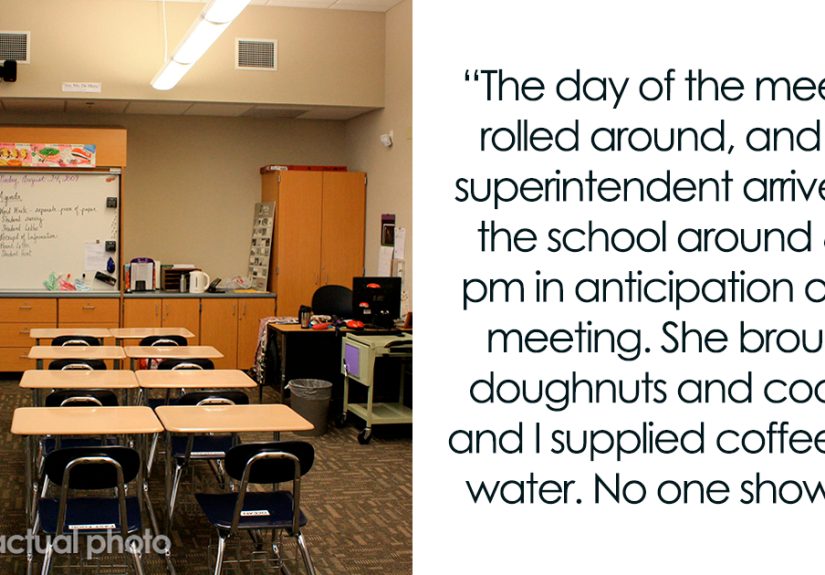
Then meeting night arrived. The principal straightened the attendance sheet. Teachers waited. Chairs sat in neat little rows like they were auditioning for a play called Community Engagement. And thennothing. No line at the door. No rustle of jackets. No apologetic latecomers carrying toddlers and paper folders. Just silence, a wall clock, and one very awkward lesson in how not to build trust with families.
The headline sounds dramatic, but the situation is painfully believable. In rural communities, school-family engagement does not fail because parents do not care. It usually fails because leaders confuse availability with convenience, attendance with partnership, and official scheduling with actual listening. That is a costly mix-up.
This article breaks down why a 7 p.m. parents’ meeting in the countryside can flop so badly, what that reveals about leadership, and how schools can build family engagement that works in the real worldnot just in administrative fantasyland.
Why the 7 p.m. Meeting Failed Before It Even Started
The biggest mistake was not the clock. It was the assumption behind the clock.
A new supervisor or district boss might look at a rural school and think, “Parents are off work by evening, so 7 p.m. is perfect.” That sounds logical until you remember that real families do not live inside tidy little time blocks. They live inside routines, distances, obligations, and exhaustion.
In rural communities, evenings are often crowded, not empty. Parents may have long commutes, second jobs, livestock chores, elder care responsibilities, younger children to feed and bathe, limited transportation, or unreliable internet for last-minute messages. Some families get home late. Others are home earlier but are absolutely not free. There is a huge difference.
That difference is where leadership either becomes humanor becomes hilariously out of touch.
“After Work” Does Not Mean “Available”
One of the most common school leadership mistakes is assuming that if parents are not physically at work, they must be free for school business. But for many families, especially working-class and rural households, the hours after work are the busiest hours of the day.
Dinner has to happen. Kids have to be wrangled. Laundry waits in a heap like an unpaid intern. Someone may still be on the road. Someone else may be covering a shift that changed with almost no notice. The school may imagine 7 p.m. as a calm civic hour. Parents may experience it as survival o’clock.
And that is before adding the emotional layer. If the meeting invitation feels top-down, vague, or mandatory in tone, busy parents will often rank it below immediate family needs. Not because school does not matter, but because urgency wins. Every time.
Rural Logistics Change Everything
Urban and suburban school leaders sometimes underestimate how much geography shapes family participation. In the countryside, “come to school tonight” can mean a long drive on dark roads, extra fuel costs, weather concerns, and arranging care for other children. Even families that deeply value education may skip an evening meeting if attending requires an hour round trip and a babysitter.
That is why any leader who schedules a meeting without considering transportation, travel time, child care, and work patterns is not really planning for attendance. They are planning for disappointment with better stationery.
The Meeting Was Probably Built for the School, Not the Parents
Let us be honest: many parents’ meetings are designed around what is convenient for the institution. One meeting. One time. One room. One agenda. One long speech. Maybe a projector if someone can find the right cable.
That model is easy for administrators. It is not always useful for families.
Parents are more likely to show up when they understand exactly why the meeting matters, how it affects their child, how long it will last, and whether their voice is actually wanted. A vague notice about an “important parent meeting” at 7 p.m. often sounds less like an invitation and more like an ambush with folding chairs.
What the No-Show Really Says About Leadership
When nobody shows up, some leaders immediately blame parents. They say families are disengaged, apathetic, or uninvolved. That explanation is emotionally satisfying, especially for people who enjoy being wrong with confidence.
But the smarter interpretation is this: the school failed to remove barriers and failed to earn attendance.
Strong family engagement is not built by announcing a meeting and hoping parents rearrange their lives around it. It is built through trust, flexibility, relevance, and respect. Parents participate more when schools communicate clearly, offer multiple options, schedule thoughtfully, and treat families like partners rather than an audience.
In other words, the empty room was not just a scheduling problem. It was a feedback form with fluorescent lighting.
The Principal Probably Knew This Already
One detail in this kind of story matters a lot: the principal was ordered to set the meeting at 7 p.m. That suggests the person closest to the community may not have made the final call.
And that is how these failures often happen. Someone new arrives. They want to establish authority. They assume standardization equals competence. They impose a schedule that looks efficient from above, while ignoring the local knowledge of the people who actually know the families.
The countryside principal may have understood perfectly well that 7 p.m. was a bad fit. Maybe Thursday night was market night. Maybe several parents work late shifts. Maybe the school has a bus-dependent population. Maybe families respond better to staggered grade-level sessions or Saturday morning drop-ins. Good principals know these rhythms. Bad systems often ignore them.
When leaders override local knowledge, they do not just risk a low turnout. They send a message: “We know your community better than you do.” Communities rarely enjoy that song.
Why Parents Skip Meetings Even When They Care Deeply
Parents can care enormously about their children’s education and still miss school events. Those two things are not opposites. They often exist together.
Here are the most common reasons families do not attend:
- Work schedules: Some parents cannot leave work early, while others work evenings, nights, or unpredictable shifts.
- Transportation: Distance, fuel costs, vehicle access, and road conditions all matter more in rural areas.
- Child care: A parent may want to attend but have no safe or affordable option for younger children.
- Communication problems: Notices may arrive too late, sound too formal, or fail to explain the purpose.
- Past negative experiences: Some parents associate school meetings with criticism, embarrassment, or being talked down to.
- Meeting design: If the event feels long, generic, or irrelevant, parents may decide the cost of attending is higher than the value.
That last point matters. Family engagement is not a test of loyalty. It is a practical exchange. Parents ask, often silently, “Will this help my child? Will my time be respected? Will I leave with something useful?” If the answer is unclear, attendance drops.
How Schools Should Handle Parent Meetings Instead
If a school truly wants better turnout, it should stop treating a parent meeting like a one-shot announcement and start treating it like a service designed around families.
1. Ask Parents Before Setting the Time
This sounds obvious because it is obvious. A quick survey by text, paper slip, or phone call can reveal whether families prefer early evening, late afternoon, morning sessions, or multiple smaller options. Schools do not need a 47-page strategic plan. They need humility and a clipboard.
2. Offer More Than One Format
One giant all-school meeting is rarely the best solution. Consider repeating the session twice, offering grade-level meetings, using short teacher conferences, or mixing in phone and virtual options when possible. Flexibility communicates respect.
3. Explain the Value Clearly
Parents are more likely to attend when the invitation answers three questions fast: What is this about? Why should I come? How long will it take?
“Parents’ Meeting at 7 p.m.” is weak. “30-minute meeting about reading goals, attendance updates, and next month’s field trip support” is far better. Specificity beats mystery every time.
4. Remove Practical Barriers
If the school can provide on-site child care, translation, transportation support, snacks, or a kid-friendly corner, turnout may improve dramatically. These are not “extras.” They are participation tools.
5. Make the Meeting Short, Useful, and Two-Way
No parent wants to drive 25 minutes to hear 50 minutes of announcements that could have been sent in a flyer. Keep meetings focused. Share concrete information. Build in time for questions. Let parents speak. The best meetings feel less like a lecture and more like a partnership.
The Bigger Lesson for New School Leaders
New leaders often feel pressure to act fast. They want visible decisions, clean systems, and signs of control. But schools are not machines. They are communities. And communities do not respond well to leadership that arrives with answers before it has asked questions.
A smart boss entering a rural school would start by learning the local rhythm. When do parents work? When do buses run? What nights are bad for family turnout? Which communication channels do families actually use? What has worked before? What has failed spectacularly? Every school has this informal wisdom. It may not be written in a report, but it is usually written all over the faces of experienced principals, teachers, and office staff.
The fastest way for a new boss to lose credibility is to ignore that knowledge. The fastest way to gain it is to respect it.
And yes, sometimes leadership growth begins with an empty room.
When No One Shows Up, What Should Happen Next?
The worst possible response is defensiveness. The second worst is scheduling the exact same meeting again and acting shocked when the sequel flops too.
The right response is curiosity. Ask what got in the way. Call families without blame. Survey them. Talk to teachers. Ask the principal what timing would actually work. Then adjust.
A failed meeting can become a turning point if leaders learn the correct lesson: family engagement is not about forcing families into the school’s timetable. It is about designing school communication around family reality.
That shift changes everything.
Once schools stop measuring commitment by who can physically appear in a room at a single hour, they begin to see engagement more accurately. A parent who cannot attend a 7 p.m. meeting may still read every message, help with homework, respond to texts, ask about grades, set routines, and advocate fiercely for their child. Schools that recognize those forms of involvement build stronger trust and better outcomes.
So no, the empty chairs were not proof that parents did not care. They were proof that leadership had not listened yet.
Experiences That Mirror This Scenario in Real Life
Anyone who has spent time in schools has seen some version of this story. Maybe it was not a countryside campus and maybe it was not exactly 7 p.m., but the pattern is familiar: a decision gets made from the top, the community reacts by not reacting at all, and everyone learns something the hard way.
Teachers often see the warning signs first. They know which students take the late bus, which parents work in health care, retail, agriculture, factories, food service, or transportation, and which families are juggling three children in three different grades. They know who checks text messages, who answers phone calls, who needs printed notices, and who will absolutely not make it to a long evening meeting unless the event is tied to something concrete and immediate.
Principals usually know it too. The seasoned ones understand that turnout is about patterns, not promises. If a school has struggled with attendance at one-size-fits-all parent events in the past, simply making the invitation sound more serious will not fix it. Families do not become more available because a memo uses bold font.
Parents, meanwhile, often experience these situations very differently from how schools imagine them. A mother may read the meeting notice and genuinely want to attend, but her shift runs late. A father may plan to go until a tractor breaks down, a younger child gets sick, or a ride falls through. A grandparent guardian may feel uneasy about attending because prior meetings felt formal, rushed, or subtly judgmental. From the school’s point of view, these families “did not show up.” From the family’s point of view, life happened at full speed.
That mismatch in perspective is where frustration grows. Schools may feel ignored. Parents may feel misunderstood. Neither side is fully wrong, but the institution has the greater responsibility to adapt because it controls the structure. Families do not set the agenda, pick the time, write the notice, or decide the format. Schools do.
The encouraging part is that small changes often produce big improvements. A principal who switches from one large night meeting to shorter appointment windows can suddenly see participation rise. A school that sends reminders three ways instead of one gets better responses. An event that offers child care, snacks, and a clear 30-minute agenda feels doable in a way that a vague “mandatory parent meeting” never will. Sometimes the difference between an empty room and a full one is not community spirit. It is better planning.
And there is a deeper human lesson here. People support institutions that respect their reality. When school leaders show they understand parents’ schedules, pressures, and limits, families are more likely to trust the school in return. That trust does not always arrive in applause. Sometimes it arrives in a returned phone call, a signed paper, a short conference, a text reply, or finally, a parent walking through the door because this time the school made it possible.
That is the real story hidden inside the headline. The no-show was embarrassing, sure. But it was also useful. It exposed a false assumption and forced a better question: not “Why didn’t parents come?” but “What would make it easier for them to say yes?”
Once a school starts asking that question honestly, it stops chasing attendance for appearances and starts building engagement that actually lasts.
Conclusion
The lesson from this countryside meeting disaster is simple: family engagement cannot be commanded into existence by a new boss with a confident calendar invite. If school leaders want parents in the roomor involved in any meaningful waythey have to plan around real family lives, especially in rural communities where distance, work, transportation, child care, and trust all shape participation.
An empty parents’ meeting is not always a sign of indifference. More often, it is a sign that the school asked the wrong thing, at the wrong time, in the wrong way. The good news is that this is fixable. Schools that listen first, offer flexible options, remove barriers, and respect local knowledge can turn no-shows into real partnerships.
And that is a much better outcome than making 30 folding chairs stare at each other for an hour.