Table of Contents >> Show >> Hide
- Pigeon Toe Ceramics: Portland-Made, Playful, and Proudly Practical
- What You’re Actually Getting: The Disc String Lights, Decoded
- How These Lights Change a Space (Even If Your Space Is… Modest)
- Portland Weather Reality Check: Damp, Wet, and Worth Planning For
- Installation That Looks Good and Holds Up: A Practical Mini-Plan
- Styling Ideas: Making Ceramic String Lights Feel Like “You,” Not a Catalog
- Care Tips: Keep Them Glowing (and Looking Good) Season After Season
- Where These Lights Fit in Portland Life
- Conclusion: A Patio Upgrade That’s More Than Just “Pretty Lights”
- Outdoor String Lights from Pigeon Toe Ceramics: Real-World Experiences (500+ Words)
Portland has a special kind of romance: drizzle on cedar, ferns doing the most, and that one friend who says, “It’s not raining, it’s misting,” while everyone else quietly accepts defeat. In a city where patios are basically a second living room (with better plants and worse Wi-Fi), lighting isn’t just decorationit’s survival. And if you’re going to string up lights outside, you might as well choose a set that looks like it belongs in a design magazine and can handle a moody Pacific Northwest forecast.
Enter Pigeon Toe Ceramics: a Portland maker known for playful, modern objects made in their North Portland studio. Their ceramic disc string lights take a familiar ideapatio lightsand make it feel intentional, sculptural, and quietly “I have my life together,” even if your patio furniture is two chairs and a questionable side table.
Pigeon Toe Ceramics: Portland-Made, Playful, and Proudly Practical
Pigeon Toe Ceramics is a female-owned ceramics and home goods company that has been designing and manufacturing in North Portland since 2009. The brand’s story has the kind of creative sibling energy Portland does so well: it was founded by Lisa, and later became a sister duo with Sam joining as co-owner (and eventually leading day-to-day operations). The result is a small team with a big design point of viewmodern shapes, punchy colors, and a sense that home decor should be fun, not fussy.
What matters for outdoor string lights is that “made in Portland” here isn’t just a vibeit’s a production reality. These aren’t mass-produced plastic globes. The disc shades are ceramic, thoughtfully glazed, and designed to bring a little craft to the kind of spaces where most of us are usually just trying to keep a citronella candle from tipping over.
Why ceramic lights feel different than the usual patio set
Typical outdoor string lights lean on a predictable formula: bulbs, cord, done. Pigeon Toe’s approach adds a ceramic shade to each bulblike tiny modern lanternsso the light has a soft, designed “edge” instead of a bare-bulb glare. It’s a small change that reads big at night, especially on a porch or under a pergola where light quality matters.
What You’re Actually Getting: The Disc String Lights, Decoded
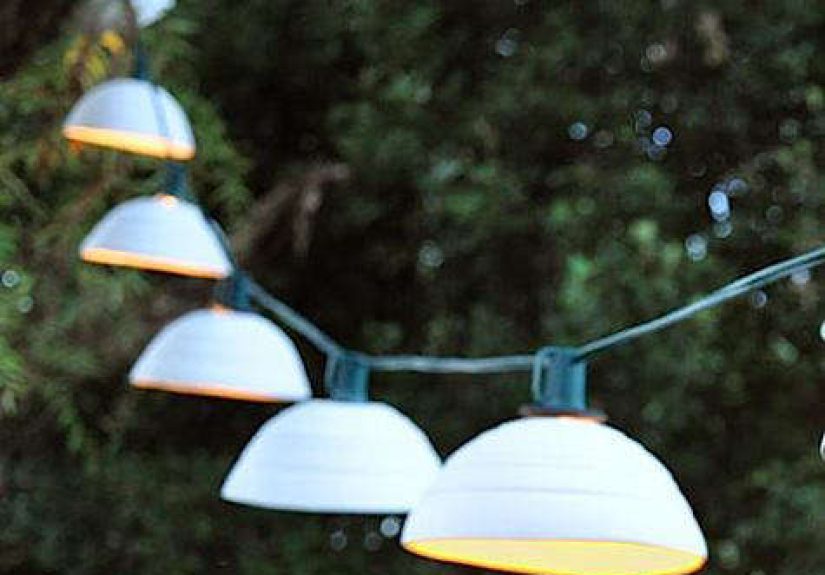
Pigeon Toe’s disc string lights feature tinted ceramic (stoneware) shades strung along a dark green indoor/outdoor cord, with bulbs spaced about 12 inches apart. They’re available as sets of 10 or 25 shades, offered in an array of the brand’s classic colors. Translation: you can choose the moodsoft and sunny, earthy and grounded, or boldly modernwithout treating your patio like an afterthought.
Design details that matter outdoors
- Disc shades: Ceramic discs create a clean, modern silhouette that looks good even in daylight.
- Color as a feature: The glaze isn’t just prettyit changes how the light feels after dark, warming or softening the glow.
- Outdoor-friendly cord: A darker green cord visually disappears against trees, hedges, and fences (AKA the stuff Portland grows effortlessly).
- Set options: 10 discs works for balconies and smaller patios; 25 discs can carry a larger yard, pergola, or fence line.
One practical note: handmade goods often come with a lead time, so these aren’t the “panic-buy today for your party tomorrow” kind of lights. They’re the “order now and feel smug later” kind of lightsthe ones you plan for because you want them to be part of your space for years.
How These Lights Change a Space (Even If Your Space Is… Modest)
Outdoor string lights are basically the cheat code for making any exterior feel welcoming. Add ceramic shades and suddenly your patio reads more “intentional lounge” than “landlord-installed floodlight.” Here are a few Portland-realistic ways these lights can work:
1) The “covered porch that doubles as a social calendar”
Many Portland homes have porches that are half hangout zone, half package-security system. String the lights along the ceiling line or wrap them around porch columns for even coverage. The ceramic discs give a refined look that pairs well with classic Northwest materials: fir, cedar, painted siding, and that one chair you keep re-staining every summer.
2) The “small balcony, big personality”
If you’re working with apartment square footage, a 10-disc set can be plenty. Hang them along the railing (using outdoor-safe clips) or zig-zag across the top of the balcony enclosure. Because the discs are sculptural, they look like decor even when the lights are off.
3) The “backyard pergola that makes everyone say ‘whoa’”
For a pergola or larger yard setup, 25 discs gives you the coverage to create that canopy effectlike an outdoor ceiling made of glow. This works especially well for long summer evenings (yes, Portland gets those too) and for fall gatherings when everyone is wearing flannel and pretending they don’t need a blanket.
Portland Weather Reality Check: Damp, Wet, and Worth Planning For
Outdoor lighting in Portland isn’t just about aesthetics. It’s about moisture, temperature swings, and the kind of wind that arrives on a Tuesday and knocks over your carefully arranged potted plants like it’s doing you a favor.
Damp vs. wet locations: what the labels mean for string lights
When you shop for outdoor lighting or extension cords, you’ll see language like dry, damp, and wet. In plain English: dry is indoors; damp can handle humidity and protected outdoor areas; wet can handle direct exposure to water. If your lights will be fully exposed to rain, you want components that are suitable for that kind of environmentespecially cords, connections, and sockets.
GFCI isn’t optionalyour patio doesn’t need chaos
Outdoor outlets should be protected by a GFCI (ground-fault circuit interrupter), which helps reduce shock risk when water is involved. If you’re plugging in patio lighting, choose a GFCI-protected outlet or use a portable GFCI device, and keep connections protected from standing water. This is one of those “not sexy, extremely important” parts of outdoor lighting that keeps the vibe magical instead of hazardous.
Connection protection: the sneaky weak point
Even with lights that are appropriate for outdoor use, the connection between the plug and extension cord is where problems often start. Use weather-resistant covers for outdoor plug connections, and keep plugs elevated off the ground when possible. Also avoid daisy-chaining extension cords. It’s tempting, but it can increase heat and load issuesbasically turning your dreamy patio glow into a “why does it smell like hot plastic?” situation.
Installation That Looks Good and Holds Up: A Practical Mini-Plan
Installing outdoor string lights is easy to do badly. (If you’ve ever seen a cord sagging like a tired jump rope, you know.) Here’s a simple approach that helps the lights look intentional and stay put in real-world conditions.
Step 1: Decide what you want the light to do
- Ambient glow: Zig-zag overhead for even light coverage.
- Edge lighting: Run along a fence or railing to define the space.
- Feature moment: Frame a seating area or outdoor table like it’s a stage set (but, you know, for snacks).
Step 2: Measure twice, hang once
Before you install anything, measure the path you want the lights to take. Think about where power is, where you’ll place slack, and whether you need a longer outdoor-rated extension cord. Choose the correct length so you’re not tempted to connect multiple cords.
Step 3: Use the right hardware (no nails, no regrets)
Use outdoor-rated clips, hooks, or guide wire when necessary. Avoid staples or nails that can pierce insulation. If you need a cleaner line across a span (like between two posts), a guide wire helps support the weight and keeps the cord from drooping.
Step 4: Keep cords out of walkways
Route cords where people won’t trip. Patio lighting should feel effortlessnot like an obstacle course designed by a chaotic squirrel.
Styling Ideas: Making Ceramic String Lights Feel Like “You,” Not a Catalog
Pigeon Toe’s disc lights play well with lots of outdoor styles because the shape is simple and the color carries the personality. A few combinations that feel especially at home in Portland:
Modern Northwest
Pair muted or earthy glaze colors with cedar furniture, charcoal cushions, and matte black planters. Add a few grasses or ferns, and you’ve got that calm, architectural look that still feels cozy.
Cheerful color pop
Choose a brighter glaze color and echo it in textilesoutdoor pillows, a picnic blanket, or even painted plant pots. The discs become a repeating design element instead of “just lights.”
Vintage-meets-handmade
If your patio leans thrifted (Portland approves), ceramic string lights add a modern anchor. They look great with mismatched chairs, a weathered table, and that one enamel tray you found and refuse to admit you didn’t “inherit.”
Care Tips: Keep Them Glowing (and Looking Good) Season After Season
Ceramic is durable, but outdoor living always adds wear-and-tear variables: wind, moisture, temperature swings, and the occasional accidental tug when someone tries to “just move the table a little.”
Simple maintenance that actually helps
- Inspect before the rainy season: Check cords and sockets for damage or wear.
- Clean gently: Wipe ceramic shades with a soft cloth as needed; avoid harsh abrasives that can dull finishes.
- Protect connections: Use weather-resistant covers and keep plugs off the ground.
- Consider seasonal storage: If your setup is fully exposed and you won’t use it for months, storing the lights can extend their life.
Think of it like caring for a good coat: it can handle weather, but it’ll last longer if you don’t leave it in a puddle on purpose.
Where These Lights Fit in Portland Life
Pigeon Toe has become a recognizable Portland name not just because they make beautiful things, but because those things slot easily into how people live here: small gatherings, big appreciation for craft, and an almost competitive commitment to making outdoor spaces usable for as many months as possible.
If you like the idea of shopping locally (or at least Portland-locally), Pigeon Toe’s work is also known around town through retail partners and local design circles. It’s the kind of brand that feels native to the cityequal parts practical and playful.
Conclusion: A Patio Upgrade That’s More Than Just “Pretty Lights”
Outdoor string lights are one of the highest-impact, lowest-drama ways to transform a space. Pigeon Toe Ceramics’ disc string lights take that familiar glow and elevate it with handcrafted ceramic shades, Portland-made color, and a modern silhouette that looks good in daylight and even better at night.
The best part is how adaptable they are: small balcony, covered porch, backyard pergolathese lights don’t demand a perfect outdoor setup. They just make whatever you have feel more intentional. Add smart installation choices (GFCI protection, outdoor-rated cords, protected connections), and you get a setup that’s as functional as it is charming.
In a city where the weather loves drama but people love patios anyway, a set of well-made outdoor string lights is basically a love letter to your future self. The one who’s sitting outside under a soft glow, holding something warm, and thinking, “Okaythis was a good decision.”
Outdoor String Lights from Pigeon Toe Ceramics: Real-World Experiences (500+ Words)
The most interesting thing about living with ceramic string lights is that they don’t behave like “seasonal decor.” Most outdoor lights feel temporarysomething you hang up for a party, a holiday, or a summer stretch, then forget in a box with a mystery tangle you’ll face later. Pigeon Toe’s disc lights tend to become part of the patio’s identity. They look finished in the daytime, like a design element, and then they earn their keep at night by making everything feel softer: faces, fences, even the world’s most chaotic patio corner.
People often notice the glow first. A bare bulb can feel bright in a “stadium parking lot” way, which is not the vibe most of us want next to a bowl of chips and a conversation about whether anyone has ever successfully kept basil alive. The ceramic shade changes the light qualityless harsh, more ambientso you get a gentle halo effect around each bulb. It’s especially noticeable on covered porches where light bounces off painted ceilings and siding. Suddenly, the porch isn’t just “outside.” It’s a room.
The second thing people notice is how the lights photograph. Portland gatherings have a way of turning into “quick photo” momentssomeone brings a birthday cake, a friend’s dog chooses a lap, the sky does that improbable pink thing after a rainy day. Ceramic disc lights don’t scream for attention in photos, but they show up as little design beats: repeated circles of warm light, a clean line overhead, and just enough detail to make the whole scene look curated rather than accidental.
There’s also the very Portland experience of using outdoor spaces in shoulder seasons. A lot of patios here are active well into fallblankets, hot drinks, and “we’ll just sit under the heater” optimism. In those months, lighting becomes more important than furniture. If it gets dark at 5 p.m., your patio either becomes a void or it becomes a cozy extension of the house. Disc string lights help shift the default toward cozy. They give you enough light to hang out, but not so much that it feels like you’re performing tasks. It’s social light, not work light.
Of course, real life includes real weather. The most common “experience lesson” with any outdoor string lights is learning that moisture finds the weakest point: the connection at the plug, the place where a cord rests in a puddle, the spot where wind rubs a line against rough wood. Owners who feel happiest with a long-term setup tend to treat installation like a tiny project, not a five-minute toss-up. They’ll protect connections with outdoor covers, keep cords elevated, and avoid running cords where people walk. These small decisions make the day-to-day experience calmerno flickers, no “is that safe?” questions, and no emergency indoor retreat when the forecast does what it always does.
The final experience is the one you can’t really buy with typical patio lights: a sense of craft. The ceramic discs feel like objects, not accessories. They’re part of the story of your space, which is why they pair so well with the Portland habit of collecting meaningful things a mug from a local maker, a thrifted bench, a planter you made from something that used to be something else. When your outdoor lights are also made by a local studio with a recognizable design language, your patio starts to feel personal. Not perfect. Not staged. Just genuinely yours.