Table of Contents >> Show >> Hide
- What kinds of liver cancer can be treated with radiation?
- How radiation for liver cancer works
- What happens before treatment?
- Who is a good candidate for radiation for liver cancer?
- Side effects of radiation for liver cancer
- Radiation for liver cancer success rate: what does “success” actually mean?
- How radiation compares with other liver cancer treatments
- Questions to ask your doctor before starting radiation
- What the experience often feels like in real life
- Bottom line
Liver cancer treatment can sound like a menu written by a very stressed scientist: resection, transplant, ablation, embolization, immunotherapy, targeted therapy, and, yes, radiation. For years, radiation got a bit of an unfair reputation in liver cancer care, partly because the liver is a delicate organ and partly because older techniques were not as precise as today’s options. But modern radiation therapy has changed the conversation. In the right patient, at the right time, and for the right goal, radiation can be a powerful tool.
That does not mean it is magic. It also does not mean one number can neatly summarize the “success rate.” Radiation for liver cancer works best when an oncology team matches the technique to the person in front of them, not to a generic internet headline. Tumor size, location, liver function, whether the cancer started in the liver or spread there, and whether the goal is cure, control, symptom relief, or a bridge to transplant all matter.
This guide breaks down how radiation for liver cancer works, which side effects are most common, and what success really means in the real world. Consider it the plain-English version of a very complicated medical flowchart.
What kinds of liver cancer can be treated with radiation?
When people say “liver cancer,” they are often talking about hepatocellular carcinoma (HCC), the most common primary liver cancer. Radiation may also be used for intrahepatic cholangiocarcinoma, which starts in the bile ducts inside the liver, and for liver metastases, meaning cancer that started somewhere else and spread to the liver.
Radiation is usually considered when surgery is not possible, when a tumor is hard to reach with ablation, when the cancer needs to be controlled while a patient waits for transplant, or when doctors want to reduce pain or other symptoms. In some cases, it is used along with embolization, systemic therapy, or other liver-directed treatments as part of a broader treatment plan.
How radiation for liver cancer works
The goal of radiation therapy is simple in theory: damage cancer cells so badly that they can no longer grow and divide. The challenge is doing that without harming too much healthy liver tissue nearby. Modern liver radiation is all about precision, motion control, and dose planning, because the liver moves when you breathe and it sits next to organs that would very much prefer not to be irradiated.
External beam radiation therapy (EBRT)
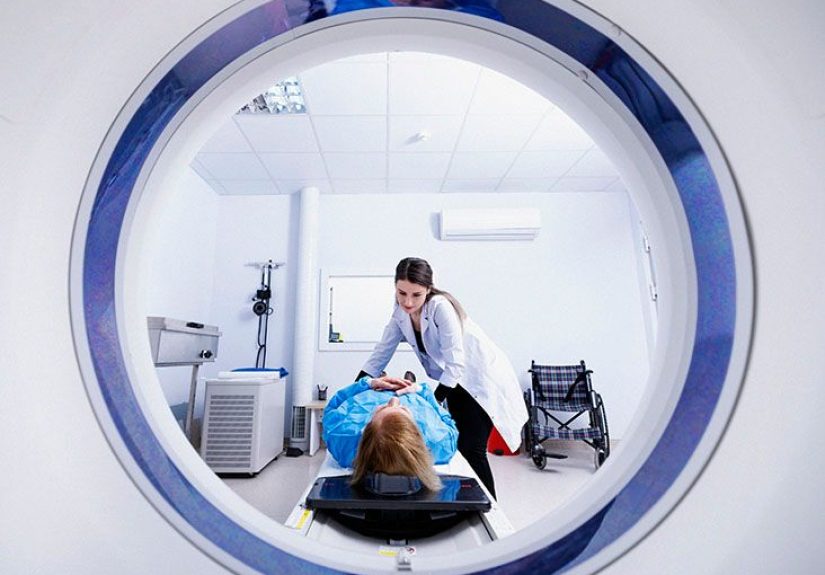
External beam radiation therapy sends high-energy radiation from a machine outside the body toward the tumor. Before treatment begins, the patient usually has planning scans so the radiation team can map the tumor and surrounding organs in detail. Tiny positioning marks, custom supports, and breathing-control techniques may be used so the beam hits the intended spot again and again with the accuracy of an overachieving GPS.
Traditional EBRT may be given over several sessions, but in liver cancer, many centers now favor highly focused forms of treatment when appropriate.
Stereotactic body radiation therapy (SBRT)
SBRT, also called stereotactic ablative radiotherapy in some centers, delivers very high doses of radiation to a small, well-defined tumor in just a few treatment sessions. Think of it as the sniper version of radiation. It is often used for limited liver tumors, especially when surgery or ablation is not a good fit.
Because SBRT is so precise, it can produce strong local tumor control while limiting radiation to normal liver tissue. It may be used for early-stage HCC, for tumors near blood vessels where heat-based ablation is less ideal, or as a bridge to transplant. It is also sometimes used for recurrent disease or for selected liver metastases.
Proton therapy and image-guided radiation
Some major cancer centers also use proton therapy or advanced image-guided approaches for liver tumors. These strategies aim to reduce radiation exposure to normal tissues even more, which can be especially helpful when the tumor is close to critical structures or when a patient has limited healthy liver reserve.
Internal radiation: Y-90 radioembolization
Yttrium-90 radioembolization, often shortened to Y-90, is a different animal. Instead of aiming beams from outside the body, doctors deliver tiny radioactive beads into the artery feeding the liver tumor. Those microspheres lodge near the tumor and release radiation over time. Because liver tumors often draw much of their blood supply from the hepatic artery, this technique can deliver a concentrated dose where it is needed most.
Y-90 is sometimes called radioembolization, selective internal radiation therapy, or transarterial radioembolization (TARE). It is minimally invasive, usually done by interventional radiology, and often used for unresectable HCC, some bile duct cancers, and liver-dominant metastatic disease.
What happens before treatment?
Radiation for liver cancer is not a “show up and wing it” situation. Planning matters.
Before EBRT or SBRT
Patients usually undergo a simulation visit with CT imaging, and sometimes MRI fusion, to map the tumor. The team may evaluate breathing motion, create a custom positioning setup, and decide how many fractions, or treatment sessions, are needed. Blood tests are often reviewed to assess liver function, especially because many people with HCC also have cirrhosis.
Before Y-90
Y-90 usually requires a preparatory angiogram first. During this step, doctors map the liver’s blood vessels and check whether radioactive material might accidentally flow to the stomach, intestine, or lungs. That “scouting mission” helps the team calculate dose and reduce risk. The actual Y-90 treatment is often performed later, after that planning phase is complete.
Who is a good candidate for radiation for liver cancer?
There is no one-size-fits-all answer, but radiation may be a good option for patients who:
- Have tumors that cannot be removed surgically
- Are not candidates for transplant right now
- Cannot safely undergo ablation because of tumor location
- Need local tumor control while waiting for transplant
- Have liver-dominant disease that may respond to Y-90
- Need symptom relief, such as control of pain or bleeding
Radiation may be harder to use when liver function is already severely impaired, when there is extensive disease throughout the liver, or when nearby organs would receive too much dose. That is why the treatment decision is often made by a multidisciplinary team that includes hepatology, medical oncology, interventional radiology, surgery, and radiation oncology.
Side effects of radiation for liver cancer
Now for the question most people really want answered: what is this going to feel like?
The honest answer is that side effects depend on the type of radiation, the dose, the size and location of the tumor, how much healthy liver is involved, and the condition of the liver before treatment starts. People with cirrhosis or poor baseline liver function can have a tougher road than those with healthier livers.
Common side effects of EBRT and SBRT
- Fatigue: probably the most common complaint, and annoyingly vague until you have it
- Nausea or upset stomach: especially when the treated area is near the stomach or bowel
- Temporary abdominal discomfort: a feeling of soreness, fullness, or mild pain
- Skin irritation: less dramatic than movie radiation scenes, but possible depending on beam arrangement
- Reduced appetite: which can be a bigger deal than it sounds in people already losing weight
These side effects are often temporary and manageable, but “temporary” can still feel long when you are tired, not hungry, and trying to remember which anti-nausea pill goes with which meal.
Potential liver-related risks
The more serious concern is injury to healthy liver tissue. Radiation can sometimes worsen liver function, especially in people who already have cirrhosis. Doctors may monitor bilirubin, albumin, clotting labs, and symptoms such as swelling, jaundice, or confusion. In rare cases, patients can develop significant liver toxicity, and that risk becomes more important when the liver reserve is already limited.
Side effects of Y-90 radioembolization
Y-90 has its own side effect profile. Many patients do fairly well, but common short-term issues can include:
- Fatigue
- Mild fever or flu-like feelings
- Nausea
- Abdominal pain or pressure
- Temporary appetite loss
Because Y-90 is delivered through the blood vessels, there is also a risk of non-target radiation if beads reach the wrong area. That is why careful mapping is so important. Rare but serious complications can include stomach or intestinal ulceration, gallbladder irritation, lung shunting issues, or worsening liver failure in susceptible patients.
Long-term side effects
Some side effects fade within weeks to months, but not all problems read the memo. A subset of patients can have more persistent digestive symptoms, ongoing fatigue, or late liver complications. The risk rises with higher doses, larger treated areas, prior liver disease, and combination treatment with other therapies.
Radiation for liver cancer success rate: what does “success” actually mean?
This is where online articles often get a little too confident. “Success rate” sounds tidy, but it actually lumps together several different outcomes:
- Local control: whether the treated tumor stays controlled where it was targeted
- Response rate: whether the tumor shrinks on imaging
- Progression-free survival: how long before the cancer grows or spreads
- Overall survival: how long patients live after treatment
- Bridge-to-transplant success: whether treatment keeps the cancer in check until transplant
- Symptom relief: whether the person actually feels better
Those are not the same thing. A treatment can have excellent local control and still not be a cure if cancer later appears elsewhere in the liver or outside it.
How successful is SBRT for liver cancer?
In selected patients, especially those with limited tumors and carefully planned treatment, SBRT can produce excellent local control. That means the specific tumor that was targeted often stays controlled for a long time. This is one reason SBRT has become an important option for patients who are not candidates for surgery or ablation.
That said, strong local control does not automatically equal long-term cure. Many people with HCC have underlying cirrhosis, and the liver remains at risk for future tumors even when the treated lesion responds beautifully. So the realistic takeaway is this: SBRT can be highly effective for the tumor being treated, but the overall outlook still depends on the rest of the liver and the rest of the cancer story.
How successful is Y-90 for liver cancer?
Y-90 can also achieve meaningful tumor response and disease control, particularly in carefully selected patients with unresectable HCC. In some cases, it is used to downstage disease, control a dominant lesion, or buy time before surgery or transplant. In other cases, it is used because the goal is local control with less systemic toxicity than some drug options.
Its effectiveness tends to look best in patients with limited tumor burden, good liver function, and disease that remains mostly confined to the liver. When the cancer is more advanced or liver function is more fragile, the benefits can still be real, but the odds become less generous. Cancer, unfortunately, is not known for grading on a curve.
Factors that most affect outcomes
- Tumor size and number of lesions
- Whether major blood vessels are involved
- Baseline liver function and degree of cirrhosis
- Whether the cancer is primary liver cancer or metastasis
- Whether radiation is used alone or with other treatments
- Whether the goal is cure, control, bridge therapy, or palliation
So if you see one article claiming an impressive number and another sounding much more modest, both may be technically correct. They may simply be talking about different patients, different endpoints, and different stages of disease.
How radiation compares with other liver cancer treatments
Radiation is rarely the whole story. Surgery and liver transplant remain the preferred curative options for eligible patients. Ablation is often highly effective for small tumors in the right location. Embolization approaches, including TACE and Y-90, are key liver-directed tools. Systemic therapy, including immunotherapy and targeted therapy, plays a major role in unresectable or advanced disease.
What makes radiation valuable is that it fills important gaps. It can treat tumors that are awkwardly located, help control cancer while patients wait for transplant, complement systemic therapy, or offer a local option when other procedures are not possible. In short, it is not always the star of the show, but it is often the cast member that saves the third act.
Questions to ask your doctor before starting radiation
- What type of radiation are you recommending and why?
- Is the goal to cure the tumor, control it, relieve symptoms, or bridge me to another treatment?
- How might my liver function affect the risks?
- What side effects are most likely in my case?
- How will you monitor whether the treatment worked?
- Could this be combined with embolization, immunotherapy, or other treatment?
- What symptoms should make me call right away after treatment?
What the experience often feels like in real life
Radiation for liver cancer is not just a technical event on a calendar. For many patients, it feels like a long stretch of waiting, planning, hoping, and learning a new language full of scans, fractions, mapping, and follow-up labs. The actual treatment may be quick, but the emotional experience is usually much bigger than the time spent under a machine or in a procedure suite.
Many people describe the planning phase as both reassuring and overwhelming. Reassuring because the team is being extremely careful. Overwhelming because every appointment seems to generate three more appointments. A person might have blood work on Monday, a simulation scan on Wednesday, a consult on Friday, and then spend the weekend trying to explain to relatives that “targeted radiation beads” are, in fact, a real thing and not a rejected superhero plot.
During SBRT, some patients are surprised by how uneventful the sessions feel. There is no dramatic zap sensation. No movie-style sparks. Mostly, there is positioning, lying still, listening to the machine, and thinking about literally anything else. The harder part can be the cumulative effect afterward: tiredness that sneaks up slowly, appetite changes, mild nausea, or the frustration of feeling “not sick enough to stay in bed, but not well enough to feel normal.”
People who undergo Y-90 often talk about the contrast between the minimally invasive nature of the procedure and the very non-minimal emotions surrounding it. Because the treatment is delivered through the artery, the procedure itself can seem elegant and surprisingly brief. Then comes the home recovery period, where fatigue, abdominal pressure, and uncertainty can make every sensation feel suspicious. Was that normal soreness, or something worth calling about? Good care teams try to answer those questions before patients even have to ask them.
One of the most common themes in patient experience is the importance of follow-up imaging. After radiation, tumors do not always disappear on a dramatic schedule. Some shrink gradually. Some look inflamed before they look improved. That means scan day can be stressful. Patients often say the hardest part is not the treatment itself but the wait between treatment and the first scan that tells them whether the plan worked.
Another real-life issue is that liver cancer often does not show up alone. Many patients are also managing cirrhosis, hepatitis history, fatigue, weight loss, or side effects from other treatments. So the radiation experience is often layered. A person is not just dealing with one tumor and one therapy. They are balancing medications, meals, transportation, family worry, insurance paperwork, and the deeply glamorous task of remembering which office handles which appointment.
Still, many patients value radiation because it offers a local, focused option when surgery is not available or not safe. Some feel encouraged by how precise the treatment has become. Others appreciate having a plan that can control disease while they wait for transplant or the next treatment step. The experience is rarely easy, but many people find it more manageable than they feared once they understand what to expect and when to ask for help.
Bottom line
Radiation for liver cancer is no longer a side-note treatment. Modern options such as SBRT and Y-90 radioembolization have made radiation an important part of liver cancer care for selected patients. It can shrink tumors, control local disease, bridge patients to transplant, and sometimes offer excellent tumor control when surgery or ablation is not possible.
The side effects are real, but they vary widely. Fatigue, nausea, abdominal discomfort, and appetite changes are common, while more serious liver-related complications are more likely in patients with limited liver reserve. As for success rate, there is no universal number that tells the whole story. Outcomes depend on the type of liver cancer, the stage, the treatment goal, and the health of the liver itself.
The smartest way to think about radiation for liver cancer is not “Does it work?” but “For whom, for what goal, and under what conditions does it work best?” That is the question modern oncology actually tries to answer. And thankfully, it now has better tools than ever to do it.