Table of Contents >> Show >> Hide
Let’s start with a truth the internet forgets whenever it gets snarky about ink: a popular tattoo is not automatically a bad tattoo. Roses are popular because they look good. Butterflies are popular because, well, they are butterflies. And script tattoos keep showing up because human beings are apparently incapable of resisting the urge to turn their inner monologue into cursive.
Still, if you spend enough time scrolling tattoo forums, trend roundups, artist interviews, and comment sections, you’ll notice a pattern. Certain designs get labeled overdone, predictable, or the tattoo equivalent of ordering plain toast at a five-star brunch spot. The criticism is not always fair, but it is definitely loud. So here it is: a fun, balanced look at 30 tattoo designs that people online love to roast, plus why these motifs keep surviving every wave of mockery.
If you already have one of these designs, relax. Nobody is coming to confiscate your forearm. The point is not to shame people for liking classic tattoo ideas. It is to understand why some tattoo trends get dragged as uncreative, and how to make even a familiar design feel far more personal.
Why Certain Tattoo Designs Get Called “Uncreative” Online
The internet loves two things: calling something timeless and calling the exact same thing embarrassing five minutes later. Tattoos sit right in the middle of that chaos. A design usually gets branded uncreative for one of four reasons. First, it has been copied so often that people can spot it from across the grocery store. Second, it exploded on Pinterest, Instagram, or celebrity culture and lost its sense of intimacy. Third, the symbolism became so generic that it started feeling pre-packaged. And fourth, the tattoo is not bad in itself, but it is often done in the exact same placement, size, and style.
That last point matters. Online criticism is often less about the design than the lack of personalization. A tiny infinity sign can look elegant. Ten thousand tiny infinity signs placed on the same wrist in the same font? That is when the internet starts sharpening its jokes.
30 Tattoo Designs People Online Constantly Call Overdone
- The infinity symbol. A longtime champion of “meaningful but easy.” Online critics see it as the universal sign for “I panicked at the consultation and picked the first thing on Google Images.”
- Feathers turning into birds. This one had a serious social media era. People online mock it because the visual formula is so familiar it practically comes with preset wind effects.
- Lions with crowns. Bold? Yes. Common? Also yes. The criticism is that it often feels like preloaded symbolism: strength, power, royalty, and absolutely no further notes.
- Clocks with roses. Time and beauty, life and death, love and memory. It is dramatic, classic, and so common that online commenters treat it like the official wallpaper of tattoo studios.
- Compasses. Once a symbol of direction, travel, and finding your way, the compass has become shorthand for “I enjoy the idea of adventure and own at least one weekender bag.”
- Roman numerals. Dates matter. The internet just wishes people would stop choosing the exact same sleek numeral layout every single time.
- Heartbeat or EKG line tattoos. These are often meant to symbolize life, survival, or love, but critics say they can look more like a stock graphic than a deeply personal design.
- Anchors. Stability, hope, grounding. The symbolism is solid. The online complaint is that the anchor became so widespread it drifted from meaningful to starter-pack.
- Dreamcatchers. The design can be beautiful, but it gets criticized heavily for becoming both overused and, in many cases, culturally disconnected from its origins.
- Barbed wire. Especially around the bicep or wrist. For some people it is nostalgic, for others it is the tattoo equivalent of a flip phone with strong opinions.
- Generic script quotes. Not all quote tattoos are bad. Online people just have a special eye-roll reserved for vague phrases like “believe,” “breathe,” or “only God can judge me.”
- Bird silhouettes flying away. Usually placed near the shoulder or collarbone. The complaint is simple: it has become visual autopilot.
- Cross on the wrist or forearm. This is meaningful for many wearers, but the internet often criticizes the copy-paste execution rather than the faith behind it.
- Butterflies in minimalist black linework. Butterflies are timeless, but online discourse tends to roast the ultra-basic versions that all look like they were printed from the same mood board.
- Finger crowns. Tiny crown tattoos had a big moment. The problem is that the moment never fully left, and now critics see them as social-media-era royalty branding.
- Matching king and queen tattoos. These get mocked because they often age badly after the relationship does its own little plot twist.
- Coordinates. A house, a hometown, a memorial location, a special trip. Fine in theory. Online critics just find the visual execution cold and repetitive.
- Mountains with a pine tree line. Outdoorsy, clean, and very loved by people who own reusable water bottles and say “let’s escape the city.”
- Wolf howling at the moon. There is nothing inherently wrong with it. The internet simply believes this design has been dramatically howling for far too long.
- Owls with hyper-detailed eyes. Once everywhere, still occasionally intense. Critics say they can feel like an old tattoo trend that refuses to leave the group chat.
- Mandalas placed the obvious way. Mandalas can be stunning, but when they are done with zero custom thought, online commenters call them spiritual wallpaper.
- Lotus flowers done in the standard symmetrical layout. Beautiful symbol, repeated endlessly. People online usually do not roast the flower itself; they roast the sameness.
- Arrow tattoos. Direction, focus, perseverance. Also one of the most common minimalist tattoo ideas of the past decade.
- Paper airplanes. Cute, tiny, and often attached to a dotted line. The internet has seen this one take off so many times it no longer counts as turbulence.
- Sun and moon pairings. This design can be poetic, but critics say it often feels like a default setting for people who want a cosmic tattoo without choosing anything specific.
- Chemical formulas. Dopamine, serotonin, caffeine, love. These tattoos get mocked when they look more like a whiteboard joke than a design with lasting emotional weight.
- Heartbeat into a heart shape. A remix of the already popular EKG tattoo. Online people tend to react like they have been shown this exact idea 400 times before lunch.
- Small music notes. These can be charming, but they are often criticized for being the most literal way possible to say, “I enjoy music.”
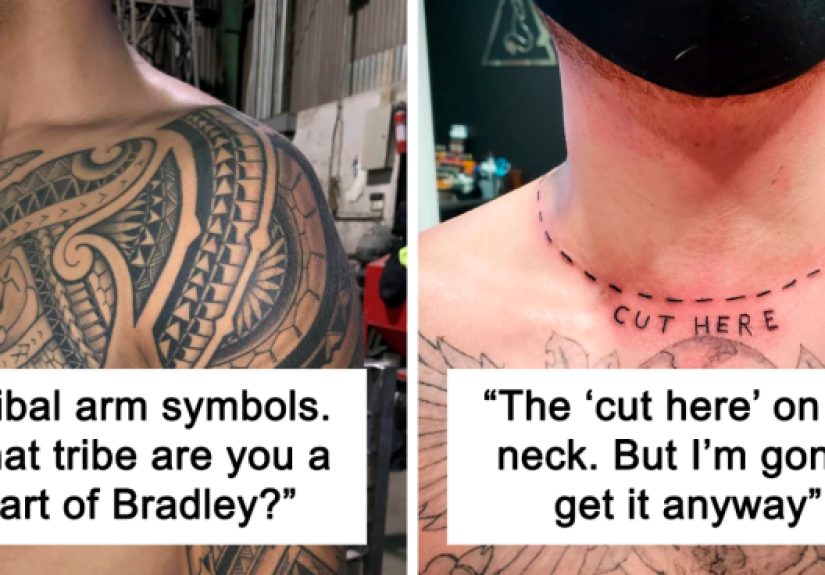
- Tribal armbands copied straight from older trends. Tattoo culture has evolved, and this design still gets singled out as one of the easiest ways to look unintentionally dated.
- Random tiny stars. Cute? Sure. Memorable? Not always. The internet tends to file these under “I wanted a tattoo, any tattoo, immediately.”
Why These Designs Keep Coming Back Anyway
Here is the funny part: most of these tattoos keep showing up because they work. They are readable at a glance, easy to explain, and packed with symbolism people understand instantly. A butterfly means transformation. A compass means direction. Roman numerals preserve a date without screaming it across your skin like a billboard.
There is also the comfort factor. Getting tattooed is a big deal. Many people are not looking to reinvent visual culture during a one-hour appointment on a Saturday afternoon. They want something recognizable, emotionally safe, and easy to live with. That is why classic tattoo designs never really die. The internet may call them basic, but “basic” and “beloved” are often cousins.
Social media amplifies the effect. Once a design photographs well and starts trending, it spreads fast. Tiny hands, collarbones, fingers, and ribs become the same digital showroom. Add celebrity influence, flash sheets, algorithm-friendly aesthetics, and the constant demand for small meaningful tattoos, and suddenly thousands of people are independently making what looks like the exact same choice.
How To Make a Popular Tattoo Idea Feel Original
1. Start With the Meaning, Not the Motif
Instead of saying, “I want a butterfly,” ask what the butterfly represents for you. Change, grief, freedom, motherhood, survival, reinvention? Once the meaning is clear, the design can evolve into something more personal than a standard wing outline.
2. Work With an Artist, Not Just a Screenshot
Some tattoos get dragged online because they were copied too literally. A skilled artist can take a familiar idea and change the composition, scale, detail, texture, line weight, and placement so it feels tailored instead of downloaded.
3. Think Beyond the Obvious Placement
A design that feels predictable on the wrist may feel striking on the shoulder blade, side rib, calf, or behind the ear. Placement changes the whole mood of a tattoo.
4. Combine Symbols in a Way That Actually Belongs to You
It is one thing to get a clock and rose because the internet told you it looks cool. It is another to combine two elements that connect to your family history, a memory, or a specific visual language you love.
5. Respect Context
Some designs are criticized not just because they are common, but because people use them carelessly. If a symbol carries cultural, spiritual, or community-specific meaning, do the homework before turning it into decoration.
What People Often Learn After Getting a “Safe” Tattoo
A lot of tattoo experiences follow the same emotional arc. At first, the person feels relieved. They picked a design that seemed meaningful, elegant, and unlikely to offend future versions of themselves. It felt safer to choose a small word, a little butterfly, Roman numerals, or a minimalist symbol than to commit to some giant surrealist raccoon playing piano on the thigh. Reasonable choice. Very adult. Gold star.
Then comes the second phase: recognition. They start noticing the same tattoo everywhere. On TikTok. On a barista. On a yoga teacher. On a cousin who definitely said she wanted something “super unique.” Suddenly, that once-intimate design begins to feel less like a private symbol and more like a club membership. This can be mildly annoying or genuinely disappointing, especially for people who believed their tattoo idea was deeply personal and rare.
But that is not usually the end of the story. What many people discover over time is that the emotional value of a tattoo does not disappear just because strangers online call it overdone. A memorial date still matters. A faith symbol still matters. A quote that carried someone through a brutal year still matters. Trends affect how a tattoo is perceived, but they do not automatically erase why it was chosen in the first place.
There is also a practical lesson people learn after living with tattoos for a while: execution matters more than trend rankings. A well-placed, beautifully made “common” tattoo will age better than a supposedly original idea that was rushed, badly drawn, or done by someone who treated skin like notebook paper. Many wearers eventually stop worrying about whether the design is too common and start caring more about line quality, aging, sun protection, and whether the tattoo still feels like part of their story.
Another common experience is the urge to evolve the tattoo rather than regret it. People add background elements, expand tiny pieces into larger compositions, or rework minimalist designs into something richer. A basic flower becomes part of a botanical sleeve. A lonely date gains surrounding imagery. A tiny symbol that once felt generic becomes meaningful again when it is integrated into a broader visual narrative.
And yes, some people do outgrow their tattoos. That is real too. They may seek cover-ups, laser removal, or redesigns after realizing they chose a trend rather than a truth. But even that experience teaches something useful: tattoos are less about proving originality to the internet and more about understanding your own threshold for permanence, symbolism, and style. The best outcome is not necessarily having the most unique design on earth. It is having a tattoo you can still live with when trends move on and the comment section finds a new favorite thing to mock.
In other words, the real creativity test is not whether your tattoo has ever appeared on Pinterest. It is whether you made the design yours, chose it thoughtfully, and wore it with enough confidence to survive three strangers online declaring it “done to death.” The internet gets bored quickly. Your skin, fortunately, is not required to keep up.
Final Thoughts
The funniest thing about tattoo discourse online is that it confuses popularity with failure. A design can be common and still be beautiful. It can be trendy and still be sincere. It can even be a little cliché and still mean the world to the person wearing it. The smarter takeaway is not “never get a common tattoo.” It is “do not stop at the first obvious version of the idea.”
If you love one of the designs on this list, that does not mean you lack creativity. It just means you should slow down, personalize it, and work with an artist who can turn a familiar motif into something that feels less like a template and more like a signature. Because in tattooing, originality is rarely about inventing a brand-new symbol. It is about making an old symbol say something only you would say.