Table of Contents >> Show >> Hide
- When the Bleachers Went Quiet, the Robots Took the Field
- Why SoftBank’s Robot Cheerleaders Became a Global Story
- The Technology Behind the Bit
- Did the Robots Actually Help the Baseball Experience?
- From One Viral Moment to a Bigger Robot Spectacle
- The Irony: A Famous Robot, but Not a Dominant One
- What This Says About the Future of Sports Entertainment
- Experiences Around the Moment: What It Felt Like, Looked Like, and Meant
- Conclusion
- SEO Tags
Baseball has always loved its rituals. The seventh-inning stretch. The rally towels. The thunder of a home crowd rising as one when the game tightens up and every pitch starts to feel like a tiny cardiac event. Then 2020 arrived, locked the bleachers, muted the chants, and turned stadium atmosphere into a ghost town with better lighting.
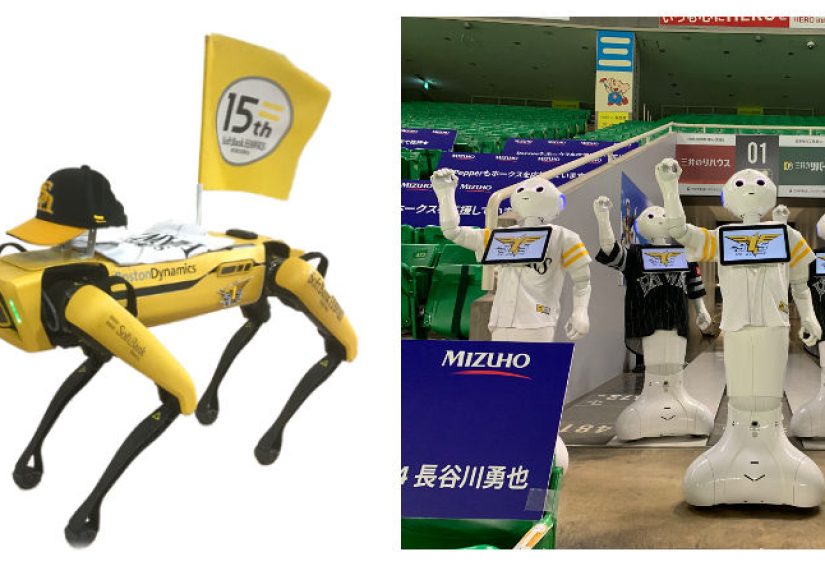
That is when the Fukuoka SoftBank Hawks decided to do something wonderfully strange: if human cheerleaders and roaring fans could not fill the ballpark, robots would. Not metaphorically. Not in some “our analytics team are robots” way. Real robots. SoftBank’s humanoid Pepper units, joined by Boston Dynamics’ dog-like Spot robots, danced and waved from the stands at Fukuoka PayPay Dome, creating one of the most surreal and memorable images in pandemic sports.
The moment was funny, slightly eerie, and undeniably effective. It also became a perfect snapshot of what sports looked like in the COVID era: improvisational, theatrical, and desperate to preserve some version of communal energy when the real crowd could not be there. In other words, the robots were not just a gimmick. They were a high-tech bandage on one of sports’ biggest wounds: silence.
When the Bleachers Went Quiet, the Robots Took the Field
In Japan, professional baseball resumed in 2020 under strict pandemic conditions. Games initially returned without fans, and teams had to figure out how to stage a spectacle when one of the main characters in the dramathe crowdhad vanished. For the Hawks, whose parent company is SoftBank, the answer came straight from the corporate family album.
Pepper, SoftBank’s famously expressive humanoid robot, had already built a public identity as a machine designed to interact with people. It had been marketed as a robot capable of reading basic emotional cues through facial expression and tone of voice. That sounds very ambitious, maybe even a little “we gave a TED Talk to a Roomba,” but Pepper was always more than a mechanical novelty. It was designed to be approachable, social, and stage-friendly.
So when the Hawks needed a stand-in for the usual sea of cheering fans, Pepper made a weird kind of sense. The robots wore team gear, moved in synchronized patterns, and helped perform the sort of choreographed support that normally comes from human sections singing, clapping, and bouncing in rhythm. On July 7, 2020, Spot robots joined the act, adding a four-legged dose of sci-fi flair to an already unforgettable scene.
If you had never seen it before, the image was almost impossible to process in one glance. Was this a baseball game? A robotics expo? A trailer for the friendliest dystopia ever filmed? The answer was yes, probably, and also baseball has always had room for a little absurdity.
Why SoftBank’s Robot Cheerleaders Became a Global Story
A pandemic problem demanded a theatrical solution
Sports are not just competition. They are atmosphere, rhythm, noise, anticipation, and ritual. An empty stadium can preserve the rules of the game, but it strips away the emotional soundtrack. That is what made the SoftBank robot cheerleader story so sticky. It gave the world a visual metaphor for the pandemic sports era: humans absent, technology stepping forward, and tradition being held together with equal parts ingenuity and duct tape.
The robots did not replace fans in any true emotional sense. Nobody honestly believes a plastic humanoid with synchronized arm motions can recreate the glorious chaos of a packed baseball crowd. But that was not the point. The point was to fight the deadness. To break the silence. To signal that the show, however altered, was still alive.
The stunt was brand-smart without feeling random
Some sports promotions feel like someone lost a bet in the marketing department. This one had a tighter logic. The team belonged to SoftBank. SoftBank had a signature robot. The pandemic had emptied the stands. Put those ingredients together and the result was less “out of nowhere” and more “of course they did that.”
It also let the company blur the line between entertainment, branding, and technological showcase. Pepper was no longer just a retail demo or a hospitality gadget. For a brief moment, it became part of live sports culture. That matters because sports are emotional amplifiers. If your product appears there, it does not just get seenit gets felt, remembered, memed, debated, and replayed.
It was both charming and creepy, which is internet gold
Part of the story’s appeal was the split-screen reaction it produced. Some viewers found the robots delightful, inventive, even oddly heartwarming. Others thought the spectacle looked like a dystopian halftime show directed by a very cheerful algorithm. That tension helped the story travel.
Anything that is half adorable and half unsettling has a strong chance of thriving online. Pepper’s rounded design, cartoonish body language, and “let’s all keep smiling” energy made it visually accessible. Spot’s animal-like movement added another layer of uncanny fascination. Together, they created a performance nobody could ignore, even if they were not sure whether to applaud or slowly back away.
The Technology Behind the Bit
Pepper was introduced by SoftBank in 2014 as a social robot aimed at human interaction. It stood a little under four feet tall, carried a tablet on its chest, and was built to engage with people in public-facing settings such as stores, banks, events, and hospitality spaces. The robot’s promise was never brute-force utility. Pepper was supposed to connect, greet, entertain, and make technology feel less cold.
That positioning made sports performance a surprisingly natural use case. Cheerleading is not about moving heavy objects or calculating probabilities in a dark server room. It is about expression, repetition, rhythm, visibility, and presence. Pepper could wave, sway, and perform coordinated motions in a way that made it readable from a distance. It was less “athlete” and more “animated mascot with better firmware.”
Spot, by contrast, brought movement that felt more athletic and modern. The robot dog’s precision and balance gave the performance a slicker visual edge. Together, Pepper and Spot created a hybrid performance style: part pep rally, part robotics demonstration, part accidental commentary on the future of public spectacle.
Did the Robots Actually Help the Baseball Experience?
That depends on what you think “help” means. If the goal was to create the exact same emotional electricity as a packed house, no chance. A robot can dance on cue, but it cannot spontaneously groan at a bad strike call, inhale as a fly ball heads toward the wall, or invent the kind of stadium chant that makes a visiting pitcher want to disappear into the bullpen cart.
But if the goal was to keep the game from feeling visually and emotionally abandoned, then yes, the robots did their job. They filled negative space. They gave broadcasters something memorable to show. They kept the team’s home environment from looking like a rehearsal instead of a real sporting event. Most importantly, they reminded viewers that sports organizations were tryingsometimes awkwardly, sometimes brilliantlyto preserve joy in a very joy-resistant moment.
And that is the hidden genius of the whole stunt. Cheerleaders, mascots, drummers, organists, hype videos, and fan sections all exist to support the emotional architecture of a game. The robots were simply a temporary extension of that architecture. Not a replacement for human presence, but a placeholder for it.
From One Viral Moment to a Bigger Robot Spectacle
The SoftBank robot cheerleader idea did not remain a one-off curiosity. In 2021, a much larger Pepper squad100 robotswas recognized by Guinness World Records as the largest robot cheerleading squad. That development turned the original pandemic-era image into something bigger: a continuing symbol of how sports entertainment and robotics could intersect in live settings.
There is a lesson in that expansion. Once an unusual visual concept lands, organizations often realize it has value beyond the emergency that inspired it. The first version may solve a short-term problem, but the follow-up turns it into a branded identity. The Hawks were not merely surviving a fanless season anymore. They were owning one of the most distinctive stadium visuals in modern baseball.
It also highlighted something sports has always understood: spectacle scales. If 20-ish robots are interesting, 100 robots are a headline. Stadium entertainment has never been shy about going bigger, louder, shinier, or stranger. Robot cheer squads simply brought that instinct into the automation age.
The Irony: A Famous Robot, but Not a Dominant One
There is a twist in the Pepper story, and it makes the baseball chapter even more interesting. For all the buzz around the robot’s launch, Pepper never became the everyday revolution some early hype suggested it might. SoftBank later scaled back its robotics ambitions, and Reuters reported that production of Pepper had been halted in 2021 as the company reassessed the business.
That does not mean Pepper failed to matter. Quite the opposite. Pepper may not have conquered daily life, but it absolutely conquered the photo-op. It found a place in the public imagination because it was visible, expressive, and easy to project meaning onto. That is why the baseball cheerleader moment worked so well. It played to Pepper’s real strength: not replacing people, but provoking a reaction from them.
In that sense, Pepper was always closer to performance art than household necessity. The robot made headlines because it was a character. And sports, of all places, know exactly what to do with a good character.
What This Says About the Future of Sports Entertainment
Robots are not replacing fans
Let’s calm down before somebody writes “Bleacher seats available only for Androids by 2030.” The SoftBank story does not signal the end of human sports culture. If anything, it proves the opposite. The whole reason the robots stood out is that everyone instantly understood what was missing: actual people.
Fans are not just noise generators. They create unpredictability, emotional contagion, collective memory, and home-field psychology. No machine can genuinely replicate that messy, glorious chemistry. The robot cheerleaders succeeded precisely because they were obviously temporary substitutes.
But robots can become part of the show
Where robotics may have a future in sports is not as replacement, but as augmentation. Robots can be mascots, interactive entertainment pieces, sponsor activations, hospitality assistants, wayfinding tools, or halftime attractions. They can turn a game-day environment into something more immersive and more memorable, especially in tech-forward venues eager to stand out.
The SoftBank Hawks stumbled onto a powerful formula: use robotics not to erase humanity, but to frame it. The machines became interesting because the audience understood the human context behind thempandemic restrictions, empty stands, and a longing for normal game-day energy.
Experiences Around the Moment: What It Felt Like, Looked Like, and Meant
One reason the story has lasted is that it was not just informative; it was experiential. You can almost feel the oddness of it even through a screen. Imagine tuning in to a baseball game expecting the usual visual cuescaps bobbing in the crowd, drums, banners, the restless movement of thousands of peopleand instead finding rows of robots swaying in perfect rhythm. The effect is immediate. Your brain says “baseball,” then “hold on,” then “am I watching the future or a very polite prank?”
For television viewers, the robot cheerleaders changed the texture of the broadcast. Empty seats usually read as absence. The robots turned absence into a spectacle. Cameras could cut to motion instead of stillness. Broadcasters had a talking point that was lighter than infection numbers and more memorable than generic crowd-noise audio. In a season filled with logistical explanations and health protocols, the robots gave audiences a visual story they could actually enjoy discussing.
For players, even a manufactured rhythm might have mattered. Athletes are creatures of routine, and stadium energy shapes timing, adrenaline, and momentum. No robot can supply genuine crowd emotion, but synchronized movement and a visible sign of support may still help a venue feel less hollow. A totally silent ballpark can feel like a scrimmage. A strange, dancing robot section at least tells the brain, “Okay, this is still an event.”
For fans who later returned in limited numbers, the robots likely created a bizarre but memorable bridge between shutdown baseball and something closer to normal life. They were symbols of a transition periodpart coping mechanism, part entertainment experiment. Years later, that image still works because it captures a very specific emotional cocktail: anxiety, resilience, creativity, and a dash of “well, this is new.”
There is also something unexpectedly human about the whole episode. People often assume technology stories are cold, but this one was rooted in emotion. Teams wanted atmosphere. Broadcasters wanted energy. Fans wanted connection. SoftBank wanted to keep spirits up while showing off what its robots could do. Underneath the novelty, the purpose was deeply familiar: make the game feel alive.
That is why “SoftBank Robots Pinch Hit For Baseball Cheerleaders” remains more than a quirky headline. It is a story about how sports organizations improvise under pressure. It is about how branding, entertainment, and technology sometimes collide in a way that feels ridiculous at first and insightful a minute later. Mostly, it is about the stubborn refusal of sports to sit quietly in an empty room. If people could not cheer, the robots would wave the flags until people came back. And honestly, for one unforgettable stretch of baseball, that was weirdly perfect.
Conclusion
The SoftBank robot cheerleaders were never a true substitute for human baseball culture, but they were not supposed to be. They were a clever, camera-friendly answer to a uniquely difficult moment, and they became one of the defining images of pandemic-era sports. Pepper and Spot turned quiet stands into a global conversation, showing how technology can support spectacle without replacing the heart of the game. In the end, the stunt worked because it embraced exactly what baseball needed at that moment: energy, humor, and a little theatrical weirdness.