Table of Contents >> Show >> Hide
- What Is the Sword of Darkness?
- Requirements, Scaling, and Upgrade Basics
- How the Sword of Darkness Altars Work
- How to Get the Sword of Darkness (Step-by-Step)
- How to Use the Sword of Darkness Effectively
- Build Ideas: Making the Sword of Darkness Hit Like It Means It
- PvE Tips: Bosses, Mobs, and Not Getting Interrupted Mid-Skill
- PvP Notes: What Changes Against Real Humans?
- Common Mistakes (So You Don’t Recreate Them)
- FAQ
- Player Experiences & Practical “Field Notes” (Extra )
- Conclusion
Elden Ring loves two things: (1) making you earn your loot, and (2) hiding that loot behind a very polite message that basically says,
“Good luck, Tarnished.” The Sword of Darkness is a perfect example. It’s not just sitting in a chest waiting to be adopted.
You have to participatespecifically, by interacting with a mysterious altar system in Shadow of the Erdtree.
This guide breaks down exactly how to get the Sword of Darkness, how the altar rules work (so you don’t accidentally make a
“why can’t I interact with this?” forum post), and how to use the weapon effectively in both PvE and PvP. Expect practical steps, build ideas,
and a few hard-won tips from the “I tested it so you don’t have to” department.
What Is the Sword of Darkness?
The Sword of Darkness is a Straight Sword introduced in the Shadow of the Erdtree DLC. It’s a unique weapon
(Somber upgrades) that deals a mix of physical and holy damage and scales mainly with
Strength, Dexterity, and Faith. In plain English: it’s a fast, versatile blade that can slot into a Faith-leaning melee build
without forcing you into a greatsword lifestyle.
Key Traits (Why People Actually Use It)
- Straight sword moveset (quick slashes, reliable poke, great in tight spaces).
- Faith requirement encourages hybrid builds and synergizes with incantations.
-
Unique skill: “Darkness”an AoE-style skill that deals holy damage and debuffs enemies’ holy negation, helping your follow-up
holy hits land harder. - Shares a “swap system” with the Sword of Light, letting you switch forms at specific altars once unlocked.
Requirements, Scaling, and Upgrade Basics
Before you sprint across the Realm of Shadow like your controller owes you money, make sure you can actually equip the thing. The Sword of Darkness
has a meaningful Faith requirement, so it’s not a “everyone can use it at level 1” situation.
Stat Requirements
- STR: 14
- DEX: 11
- FAI: 24
- INT/ARC: not required
Scaling Snapshot
Early on, you’ll see modest scaling that improves as you upgrade. Because it’s a unique weapon, you’ll be upgrading it with
Somber Smithing Stones up to +10, which tends to make its performance more consistent than “normal” weapons that depend on
affinity choices. The damage profile is especially attractive if you’re already stacking holy buffs or running Faith-based melee.
Upgrade Notes
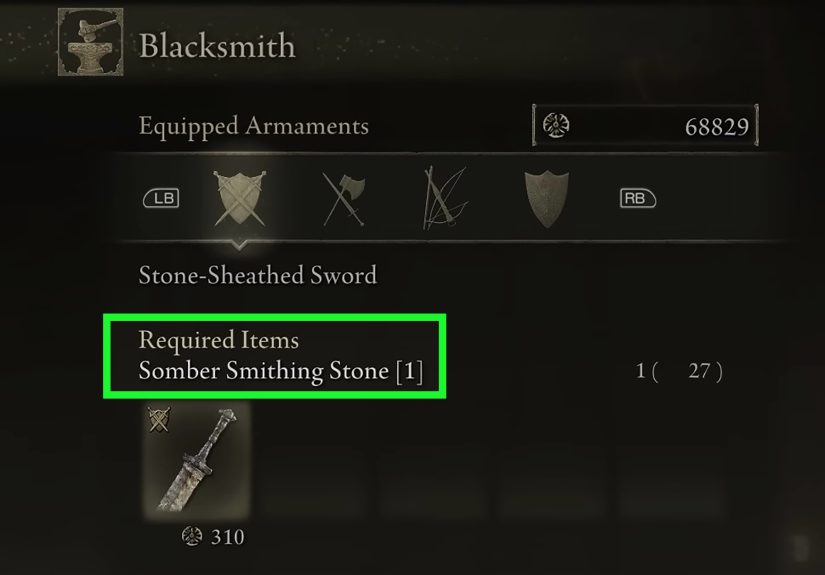
- Unique/Somber weapon: upgrades with Somber Smithing Stones (and a Somber Ancient Dragon Smithing Stone for +10).
- No infusion: you can’t swap its Ash of War or change affinities like standard weapons.
- Plan your smithing path: Somber stones are precious early in the DLCupgrade with intent.
How the Sword of Darkness Altars Work
Here’s the core idea: you don’t “find” the Sword of Darkness directly in most cases. You obtain a special base weapon called the
Stone-Sheathed Sword and then transform it at an altar into either the Sword of Darkness or the Sword of Light.
The Rule That Matters Most
There are three altar locations in the Realm of Shadow. The first altar you interact with gives you the
Stone-Sheathed Sword. After that, the other two altars become “conversion” altarsone for Light and one for Darknessbased on
which altar you used first. Translation: your first choice affects where you have to go next.
The Three Altar Locations
- Fog Rift Catacombs
- Ruins of Unte
- Ancient Ruins of Rauh
If you want a cleaner, less annoying experience, many guides recommend starting at Fog Rift Catacombs so you can more easily
revisit altars later (catacombs are great… until you need to run them again for a quick switch). That said, you can still make it work no matter
which altar you find firstas long as you understand the system.
How to Get the Sword of Darkness (Step-by-Step)
Step 1: Get the Stone-Sheathed Sword
You obtain the Stone-Sheathed Sword at the first altar you reach. If you’re aiming for the smoothest path, go for
Fog Rift Catacombs early.
Fast Route Option: Fog Rift Catacombs (Early-Friendly)
- Head into Fog Rift Catacombs in the Realm of Shadow.
- Progress through the dungeon until you reach a long room with multiple spike traps (the kind that makes you reconsider your life choices).
- Use the trap gimmick to access a side area with an altar. Interact with it to obtain the Stone-Sheathed Sword.
If you already grabbed the Stone-Sheathed Sword at a different altar (Ruins of Unte or Ancient Ruins of Rauh), don’t panic. You’re not locked out.
You just need to convert at the correct remaining altar.
Step 2: Convert It into the Sword of Darkness
Once you have the Stone-Sheathed Sword, you must take it to the appropriate “Darkness” altar. The conversion location depends on where you got the
Stone-Sheathed Sword.
Conversion Logic (Simple Version)
-
If you got Stone-Sheathed Sword in Fog Rift Catacombs:
convert to Sword of Darkness at Ruins of Unte. -
If you got Stone-Sheathed Sword in Ruins of Unte:
convert to Sword of Darkness at Fog Rift Catacombs. -
If you got Stone-Sheathed Sword in Ancient Ruins of Rauh:
convert to Sword of Darkness at Fog Rift Catacombs.
Getting into Ruins of Unte (The “Why Is a Giant Thing Sitting Here?” Part)
If your conversion path sends you to Ruins of Unte, be prepared: the entrance is commonly blocked by a
Furnace Golem. Many players handle this by waking/moving it using a Hefty Furnace Pot thrown into its brazier/head
area, which clears access so you can reach the altar.
Once you reach the altar and interact, the Stone-Sheathed Sword transforms into the Sword of Darkness.
(Congratsyou’ve completed a quest that is 20% combat and 80% “where is the interaction prompt?”)
Can You Switch Between Sword of Light and Sword of Darkness?
Yes. One of the coolest parts of this weapon line is that you can swap between the Sword of Light and Sword of Darkness by
returning to the corresponding altars after the first transformation. However, in most write-ups,
you can’t revert it back to the original Stone-Sheathed form in the same NG cycleso think of it as a two-form “stance” system,
not a three-form collection you can freely juggle forever.
How to Use the Sword of Darkness Effectively
Moveset Tips
Straight swords shine because they’re dependable. The Sword of Darkness inherits that reliability: quick light attacks for pressure, a solid poke
for spacing, and a moveset that feels good one-handed or powerstanced. If you’re used to big weapons, the biggest adjustment is pacingthis sword
rewards controlled aggression rather than “one swing to rule them all.”
Weapon Skill: “Darkness” (When to Press the Button)
The signature skill Darkness hits around you and applies a temporary debuff that reduces the target’s holy damage negation.
That means your follow-up holy hitswhether from the sword itself, incantations, or other holy sourcescan land noticeably harder.
Practical Skill Uses
- Start-of-fight opener: apply the debuff early, then ride the advantage.
- After a stagger/knockdown: safer cast window; you get value without trading your face for damage.
- Group control: useful when multiple enemies are on you and you need breathing room.
- Boss rhythm breaks: use it when a boss has a consistent recovery window (don’t force it mid-combo).
The tradeoff: many players describe it as a slower commitment than a quick slash. If you cast it at the wrong time, you’ll learn a
valuable lesson about humility and respawn screens. Use it like seasoningintentionally, not by dumping the whole shaker.
Build Ideas: Making the Sword of Darkness Hit Like It Means It
1) Strength/Faith “Holy Pressure” Build
This is the most natural fit: meet the Faith requirement, invest in Strength for scaling, and use Faith for buffs and utility. You get strong melee
DPS plus access to incantations that solve problems your sword can’t (ranged pokes, healing, resistances, or situational damage types).
Suggested Stat Direction (Not a Spreadsheet, Just a Compass)
- Faith: keep it at or above 24, then increase if you want stronger incantations and better skill payoff.
- Strength: a primary damage driver once you’re comfortable with your survivability.
- Dexterity: optionalhelpful, but usually secondary unless you’re optimizing swing speed feel and scaling balance.
- Mind: consider a bump if you want frequent use of “Darkness” and buffs.
Buff & Synergy Ideas
- Body/weapon buffs: stack sensible buffs before big encounters (don’t over-buff yourself into forgetting the boss moveset).
- Holy synergy: “Darkness” lowers holy negationfollow it with holy damage sources for best value.
- Defensive utility: Faith gives you options to survive DLC-level aggression without becoming a rolling-only lifestyle.
2) Faith-Forward “Caster With a Real Sword” Build
If you’re primarily an incantation user, the Sword of Darkness works as a fast backup weapon that still benefits from your Faith investment.
The skill can support holy-based spell bursts, and the straight sword moveset is excellent for finishing enemies who survived your castrudely.
3) Dual-Form “Light/Dark Swap” Setup
Once you’ve unlocked the altar swapping, you can treat Light and Darkness like a tactical toggle. If one form’s skill is better for your current
plan (buff vs. debuff, utility vs. pressure), swap before a boss or before heading into an area with enemies that punish your usual approach.
It’s like changing outfits for the weatherexcept the weather is a blade-wielding horror that screams.
PvE Tips: Bosses, Mobs, and Not Getting Interrupted Mid-Skill
How to Avoid “Darkness” Getting You Deleted
- Use terrain: corners and choke points reduce flanks while you cast.
- Force a recovery window: cast after a boss whiffs a big swing or after you break posture.
- Don’t be greedy: one good “Darkness” is better than three attempted casts and a loading screen.
- Save it for value: if the enemy will die in two hits anyway, you don’t need the debuff. Save FP.
Enemies with High Holy Resistance
The Sword of Darkness leans into holy damage. If an enemy laughs at holy damage, you have options:
(1) lean more on physical hits and stance pressure, (2) use incantations or tools that deal a different element,
or (3) swap strategybecause “I insist on my favorite damage type” is how Elden Ring teaches manners.
PvP Notes: What Changes Against Real Humans?
In PvP, straight swords are popular for a reason: speed, reliability, and pressure. The Sword of Darkness keeps that identity, but the skill usage
becomes more matchup-dependent. A competent player won’t politely stand still while you cast. Use “Darkness” when you’ve earned spaceafter a roll
catch sequence, when the opponent respects your range, or as a read when they rush.
PvP Micro-Tips
- Play for spacing: use pokes and fast R1s to test reactions.
- Threaten the skill: even showing you can cast it can change how someone approaches.
- Don’t telegraph: if you only cast after the same move, you’ll get punished for having habits.
Common Mistakes (So You Don’t Recreate Them)
- Mistake: grabbing the Stone-Sheathed Sword late and wondering why altars won’t behave.
Fix: remember the first altar sets the “conversion map.” Track which one you used first. - Mistake: trying to brute-force “Darkness” mid-combo.
Fix: cast after a safe windowstagger, knockdown, or clear recovery. - Mistake: ignoring Faith because “I’m a melee build.”
Fix: the weapon literally asks for Faith. Embrace hybrid value (buffs + utility). - Mistake: burning Somber stones without a plan.
Fix: commit if it’s your main weapon; otherwise, hold upgrades until you’re sure.
FAQ
Is the Sword of Darkness only in Shadow of the Erdtree?
Yesthis weapon is part of the DLC content and tied to the Realm of Shadow altar system.
Do I need the Stone-Sheathed Sword first?
In most practical terms, yesthe Sword of Darkness is obtained by transforming the Stone-Sheathed Sword at the correct altar.
Can I get both Sword of Light and Sword of Darkness?
You can switch between the forms via altars after unlocking them, which effectively lets you access boththough the exact “inventory gymnastics”
depend on how you manage swapping and what you keep equipped/stored.
Player Experiences & Practical “Field Notes” (Extra )
The first time you “earn” the Sword of Darkness, it doesn’t feel like you picked up a weaponit feels like you solved a strange FromSoftware riddle
while being actively harassed by traps, imps, and your own curiosity. And honestly? That’s part of the charm. The Stone-Sheathed Sword is the bait:
you find it, you equip it, you swing it a few times, and you think, “Wait… this is it?” Then you read the description and realize the game is
basically nudging you like, “No, nokeep going. There’s a trick.”
Most players I’ve seen (and, yes, plenty of my own test runs) end up doing the Fog Rift Catacombs route first because it’s the cleanest “get it early”
option. The catacombs themselves are classic Elden Ring: a hallway that looks innocent, a trap that looks illegal, and a hidden path that only makes
sense after you’ve been pancaked once. When you finally reach the altar, you get that little dopamine spikethen immediately realize the real prize
is still behind a conversion system. It’s the gaming equivalent of opening a gift box and finding another, smaller gift box inside.
Once the sword is transformed, the moveset feels instantly comfortable if you like straight swords. You can pressure enemies without committing to
long animations, and you can recover quickly enough to respond to surprise aggression. In the DLC especially, that mattersmany enemies punish slow
attacks with the kind of enthusiasm usually reserved for tax audits. The Sword of Darkness encourages a rhythm where you chip, reposition, and punish,
rather than gambling everything on one heroic swing.
The skill “Darkness” is where the weapon’s personality really shows up. The first few times you use it, you’ll probably cast it at the wrong moment
and eat a hit. That’s normal. The trick is learning to treat it like a setup tool, not a panic button. When you land it at the start of a
fightespecially against chunkier enemiesyou notice your holy damage follow-ups feel more meaningful. It’s like the sword is telling you:
“Congratulations, you’re now playing the long game.” You debuff, then you cash in.
Another common experience: the “Ruins of Unte problem.” If you reach the ruins and see a Furnace Golem blocking your path, the moment can be
confusing because Elden Ring doesn’t always explain whether you should kill something, move something, or perform a ritual involving handcrafted
pottery. The good news is: once you figure out the trick (and you do it once), it becomes one of those memorable “aha” moments. The bad news is:
you’ll never look at a giant, sitting enemy the same way again. Every time you see one, your brain goes, “Do I throw a pot at this? Is this a pot
situation?”
Finally, the most underrated part: the Light/Dark swap concept changes how you think about “one weapon” in Elden Ring. Instead of hunting for a
totally different sword whenever your strategy shifts, you can treat the altar system like a tactical loadout switch. Heading into an area where you
want a debuff setup? Darkness. Need a different utility angle? Swap before you commit. It’s not instant, and it’s not meant to beFromSoftware still
wants you to plan. But once you start using the altars intentionally, the Sword of Darkness stops being “a cool DLC sword” and becomes a tool you
actively build around.
Conclusion
The Sword of Darkness is one of those Elden Ring weapons that feels earned twice: once when you survive the route to the
Stone-Sheathed Sword, and again when you understand the altar conversion system well enough to stop arguing with unresponsive prompts.
Once it’s in your hands, it rewards smart playsteady pressure, good timing, and Faith-driven synergyrather than brute-force swings.
If you like fast melee weapons but want a little “spellblade” flavor without fully committing to casting, this sword is a strong, stylish pick.