Table of Contents >> Show >> Hide
- What political polarization really is (and why your body cares)
- The stress pathway: how polarization becomes a health issue
- Mental health consequences: anxiety, anger, and emotional exhaustion
- Social health: when politics attacks the “protective factors”
- Behavioral spillover: coping habits that quietly damage health
- Public health consequences: when polarization weakens health systems
- Who is most vulnerable to polarization-driven health stress?
- How to protect your health in a polarized world (without “checking out”)
- What communities and leaders can do (because this isn’t only on you)
- Conclusion: polarization can be contagiousso can recovery
- Experiences from real life: what polarization feels like on the body (and in the day)
Political polarization used to be something you could mostly keep on the newslike weather in a different state: interesting, occasionally annoying, but not
personally dehydrating. Now it shows up everywhere: your group chat, your kid’s soccer sidelines, your workplace Slack, and yes, that holiday dinner where the
mashed potatoes somehow become a referendum on civilization.
Here’s the part we don’t talk about enough: polarization isn’t just a social problem or a civic problem. It’s a health problem. And not in a vague
“this is bad vibes” way. In a very specific “your stress hormones, sleep, relationships, and long-term disease risk are getting yanked around like a dog toy”
way.
This article breaks down how political polarization can harm mental health and physical health, why it hits some people harder than others, and what you can do
(without moving to a cabin and befriending squirrelstempting though that may be).
What political polarization really is (and why your body cares)
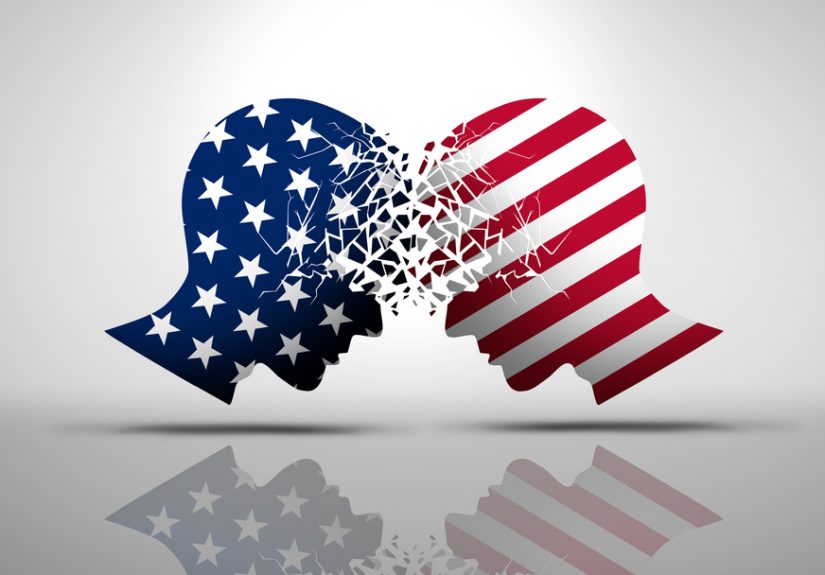
When people say “polarization,” they often mean “we disagree.” Disagreement is normal. Polarization is different: it’s when political identity becomes a
social identity, and the “other side” stops being “people with different opinions” and becomes “people who are dangerous, stupid, or evil.”
Researchers often call this affective polarizationa fancy term for “I don’t just disagree with you, I feel negative feelings about you because of
your team.” That emotional charge matters because your nervous system doesn’t file it under “interesting debate.” It files it under “threat.”
Your brain’s threat circuitry can’t always tell the difference between a real physical danger and a social dangerlike being shamed, excluded, or attacked for
your beliefs. If political life constantly signals “danger,” your body spends more time in fight-or-flight mode. That’s not a great long-term strategy unless
you are, in fact, being chased by a bear.
The stress pathway: how polarization becomes a health issue
Polarization becomes damaging when it turns daily life into a steady drip of stress: conflict, outrage, uncertainty, and social risk. Over time, this can lead
to chronic stressone of the most reliable “silent contributors” to poor health.
1) Chronic stress chemistry: cortisol, adrenaline, and “always on” mode
Chronic stress keeps stress hormones elevated and stress-response systems activated more often than they were designed to be. That can affect blood pressure,
inflammation, metabolism, and immune function. It can also contribute to headaches, stomach problems, muscle tension, and that lovely experience of feeling
tired while also being unable to relax.
In polarized environments, the triggers are everywhere: doomscrolling, hostile conversations, constant “breaking news,” and the pressure to pick a side on
every issue like you’re drafting a fantasy football team for morality.
2) Sleep disruption: the overlooked amplifier
Stress and sleep have a toxic friendship: stress makes sleep worse, and poor sleep makes stress feel louder and more convincing. Political conflict can fuel
rumination (“I can’t believe they said that…”) and late-night media consumption. Short sleep and irregular sleep are associated with worse mood, weaker stress
tolerance, and downstream physical health consequences.
If your nightly routine includes “one last look at the news,” consider that your brain may interpret it as “one last sprint on the treadmill, emotionally.”
You don’t need a national alert at 11:47 p.m. to confirm your nervous system still works.
3) Inflammation and cardiovascular strain
Prolonged psychosocial stress is linked with inflammatory processes and cardiovascular risk pathways. It’s not that political arguments directly cause heart
disease overnight; it’s that persistent stress can push the body toward higher blood pressure, poorer recovery, and unhelpful coping behaviors (more on those
soon). Polarization acts like a stress “multiplier” because it makes people feel socially threatened and constantly on edge.
Mental health consequences: anxiety, anger, and emotional exhaustion
Polarization doesn’t just create different opinions. It creates different emotional climates. A highly polarized climate often produces:
- Chronic anxiety: a sense that the future is unstable or that catastrophe is always one headline away.
- Anger and irritability: outrage becomes the default reaction, and patience becomes a rare mineral.
- Hopelessness and burnout: feeling like nothing changes, everyone is extreme, and you’re stuck in a loop.
- Social vigilance: scanning conversations for “signals” that someone is on the wrong team.
This isn’t just uncomfortable; it can impair concentration, decision-making, and emotional regulation. When the mind is overloaded, the body pays the bill:
tension, fatigue, digestive issues, and increased vulnerability to stress-related symptoms.
There’s also a paradox: many people feel compelled to stay plugged in (“I have to know what’s happening”), but constant exposure to conflict can worsen mood and
increase distress. That’s not a personal failureit’s a nervous system doing what nervous systems do when exposed to repeated stress cues.
Social health: when politics attacks the “protective factors”
One of the strongest predictors of health and longevity isn’t a supplement or a productivity hack. It’s social connection. Supportive relationships buffer
stress, improve coping, and reduce loneliness. Polarization undermines that protective layer.
1) Relationship strain and “shrinking circles”
In a polarized environment, people sometimes avoid, unfriend, or cut off others over politics. Even without dramatic breakups, many people self-censor to avoid
conflict. That can reduce authenticity and closenesstwo things relationships need to stay protective rather than performative.
When politics becomes a litmus test for friendship, communities become more socially segregated. You might feel safer in your bubble, but bubbles can also be
lonely. A smaller support network means fewer outlets for stress, fewer practical supports, and more emotional load carried alone.
2) Loneliness and social isolation as downstream health risks
Loneliness is not the same as being alone; it’s the distressing feeling of not having enough meaningful connection. Social isolation is the objective lack of
social contact. Both are associated with worse health outcomes and higher risk of premature mortality in large research literatures.
Polarization can intensify loneliness by making people feel less safe to talk honestly, less likely to trust neighbors, and more likely to interpret difference
as danger. If your social world becomes a minefield, you stop walking through it.
3) Loss of trust: the community-level health problem
Trust is like the plumbing of society: you don’t think about it until it breaks, and then everything gets expensive. Polarization reduces trust in institutions,
in neighbors, and sometimes even in shared reality. That matters for health because trust influences whether people seek care, follow public health guidance, and
cooperate during crises.
Lower trust also raises stress. When you feel you can’t rely on anyone outside your tribe, your nervous system stays on high alert. Humans are not designed to
treat every disagreement as a security breach.
Behavioral spillover: coping habits that quietly damage health
Not all health consequences are direct. Many happen through coping. When stress increases, people often:
- Sleep less or sleep irregularly
- Exercise less (or exercise angrily, which is… a vibe)
- Eat more ultra-processed “comfort” foods
- Increase screen time and doomscrolling
- Use alcohol or other substances more often
- Withdraw socially to avoid conflict
These behaviors are understandable, but they compound risk over time. Polarization can create an environment where stress is frequent and recovery is scarce.
The result is a health profile that looks like “tired, tense, and stuck,” even if nothing “medical” seems wrong on paper.
Public health consequences: when polarization weakens health systems
Polarization doesn’t only affect individuals. It can also damage the systems that protect health. When people distrust public health agencies, politicize
medical recommendations, or harass health officials, it becomes harder to respond effectively to outbreaks, disasters, or chronic disease prevention.
In recent years, research has documented increased hostility toward public health officials, including beliefs that harassment or threats are justified in certain
contexts. Beyond the obvious moral problem, this can drive burnout, resignations, and staffing shortagesreducing the capacity of public health systems that
everyone depends on, regardless of party.
Polarization also makes it harder to maintain consistent health policy, fund prevention, and coordinate across communities. In a public health emergency,
fragmented trust can become fragmented outcomes.
Who is most vulnerable to polarization-driven health stress?
Polarization can affect anyone, but some people are hit harder:
- People with high exposure to political conflict: heavy news consumption, conflict-heavy workplaces, or politically volatile communities.
- People with smaller support networks: fewer buffers against stress and fewer “safe” relationships to lean on.
- People whose rights or safety feel politicized: when politics feels personal, stress becomes chronic.
- Caregivers, educators, and health workers: often caught between community conflict and real-world needs.
- Teens and young adults: social media accelerates identity conflict and constant comparison, and political hostility can spill into school culture.
The common theme is unrelenting threat plus limited recovery. If your body never gets the “all clear,” it starts operating like danger is normal.
How to protect your health in a polarized world (without “checking out”)
You don’t need to pretend politics doesn’t matter. You need boundaries that keep your body from living in a permanent stress response.
1) Build a “news diet,” not a news binge
Set specific times to check news instead of grazing all day. Choose a couple of reliable sources. Avoid algorithmic feeds when you’re already stressed. If you
feel compelled to refresh, ask: “Am I seeking informationor seeking emotional stimulation?”
2) Protect sleep like it’s a constitutional right
Create a screen cutoff (even 30–60 minutes helps). If political content is revving you up, replace it with something that signals safety: music, a shower, a
calming podcast, stretching, a paper book. Your brain needs cues that the day is over and the tribe is intact.
3) Keep “bridging” relationships alive
You don’t have to debate everyone. But maintaining at least a few cross-cutting relationships can reduce social threat, soften stereotypes, and protect your
sense of shared humanity. The goal isn’t agreement; it’s connection without contempt.
4) Use conflict skills, not conflict instincts
When politics comes up, try:
- Curiosity questions: “What experiences led you to that view?”
- Values language: “It sounds like you really care about safety/fairness/freedom.”
- Boundaries: “I want to stay connected, so I’m not getting into this right now.”
Boundaries aren’t censorship. They’re nervous-system maintenance.
5) Move your body to discharge stress
Stress is physical. You can’t “think” your way out of it if your body is still buzzing. Walking, strength training, stretching, and breathing exercises can
reduce physiological arousal. Bonus: it’s hard to doomscroll while doing jumping jacksthough never underestimate human creativity.
6) Practice “micro-connection”
A short friendly interactiontalking with a neighbor, calling a friend, making eye contact with the baristahelps counteract the social threat narrative that
“everyone is against everyone.” Small connection is still connection.
What communities and leaders can do (because this isn’t only on you)
Individual coping helps, but polarization is also structural. Community-level interventions can protect health:
- Support civic spaces: libraries, parks, volunteer groups, faith communities, and clubs that bring mixed groups together.
- Teach media literacy: especially for teens and older adults who may be targeted by misinformation.
- Reduce harassment and threats: protect public servants, health officials, and educators from intimidation.
- Encourage respectful norms: in schools, workplaces, and online platforms.
- Invest in mental health access: stress-related symptoms don’t vanish because we pretend they’re “just politics.”
Social connection is a public health asset. When polarization erodes it, health deterioratesone strained relationship at a time.
Conclusion: polarization can be contagiousso can recovery
Political polarization harms health through chronic stress, relationship damage, sleep disruption, and the erosion of social trust. It can worsen anxiety,
anger, and emotional exhaustion, and it can weaken public health systems by undermining cooperation and trust. But none of this is inevitable.
Protecting your health doesn’t require apathy. It requires rhythm: informed engagement paired with real recovery. It requires connection that outlasts
headlines. And it requires remembering that your body is not a political argument machineit’s a living system that needs safety, sleep, and supportive people.
The best long-term strategy might be surprisingly unglamorous: fewer outrage snacks, more real meals; less doomscrolling, more walking; fewer “gotcha” moments,
more “tell me how you got there.” Not because disagreement is badbut because your health is too expensive to spend on a constant state of emergency.
Experiences from real life: what polarization feels like on the body (and in the day)
Ask people what polarization does to them, and they rarely start with “It changed my ideology.” They start with their nervous system.
You hear versions of the same story: “I didn’t think I cared that much, but now my stomach drops when I open my phone.” That’s not drama.
That’s a body learning to associate information with threatlike a smoke alarm that goes off every time you toast bread.
One common experience is anticipatory stress. People describe bracing for conflict before it even happens: before family gatherings,
before a neighborhood meeting, before a casual hangout that used to be relaxing. Someone might rehearse “safe topics” the way you might pack an umbrella
because you sense rain. The catch is that the umbrella never fully closes. Even when nothing bad happens, the body stayed tense for hourstight shoulders,
shallow breathing, clenched jaw. You don’t need an argument to pay the stress tax; you just need the expectation of one.
Another frequent theme is social whiplash. People talk about feeling close to someone for yearscoworkers, cousins, neighborsthen watching that
closeness collapse after a single political moment. It might be a comment on social media, a joke at a party, or a heated disagreement about an event.
The emotional reaction is often bigger than the topic itself because the brain translates it into social danger: “Do I still belong here?”
That’s where the health impact begins. Belonging is not a fluffy concept. It’s a biological signal of safety.
Then there’s the modern classic: doomscroll insomnia. People describe going to bed intending to relax, then getting pulled into a feed that
serves outrage like an all-you-can-eat buffet. The body is exhausted, but the mind is keyed upheart rate elevated, thoughts racing, sleep delayed.
The next day is foggy, irritable, and more reactive. That’s the loop: polarization ramps stress, stress ruins sleep, poor sleep increases reactivity,
and increased reactivity makes polarization feel even more unbearable. It’s a treadmill that speeds up while you’re already running.
Some people notice changes in their relationships that look small but accumulate: fewer invitations, shorter phone calls, more careful wording,
less vulnerability. A friend group that used to talk about life now circles around politics like it’s the sun and everything else is a minor planet.
Or the opposite: politics becomes taboo, and everyone pretends they’re finewhile quietly feeling disconnected. In both cases, the protective effect of social
support weakens. People can be surrounded by others and still feel alone, which is often the most draining version of loneliness.
In workplaces and schools, people describe a subtle but real background tension. You may not be fighting, but you’re scanning.
Who is safe to talk to? Who might interpret a neutral comment as a statement? That hyper-awareness is mentally expensive.
Over time, it can look like burnout: less patience, more emotional fatigue, a shorter fuse. People sometimes mislabel it as “I’m just not myself lately,” when
it’s actually their stress system doing overtime because the social environment feels unpredictable.
The hopeful experienceyes, there is oneis that small choices can change how it feels. People often report that the biggest relief comes from
reclaiming connection without surrendering values: deciding to take a walk with a neighbor instead of arguing online, setting phone boundaries,
choosing one trustworthy news check-in, or learning a simple line like, “I care about you too much to do this fight right now.”
These are not grand solutions. They’re nervous-system repairs. And when enough people do them, they become cultural repairs too.
Polarization is loud, but your health is quieterand easier to ignore until it isn’t. The most powerful “experience-based” lesson people share is this:
you can stay informed without staying inflamed. You can care without carrying every headline in your chest. And you can disagree without turning every room
into a battlefieldstarting with the one inside your body.