Table of Contents >> Show >> Hide
- Meet the Chestnut Tree: A Global Cast of Characters
- Ancient Roots: Chestnuts in the Old World
- East of Eden: Chestnuts in Asia
- The Rise of the American Chestnut
- The Blight That Changed the Forest
- Chestnut Trees and Human History: Food, Wood, and Security
- Science Fights Back: Breeding, Hybrids, and High-Tech Hope
- Chestnuts in Modern Life: From Fancy Desserts to Climate Conversations
- What It’s Like to Walk Through Chestnut History (Experience Section)
- Conclusion: A Tough Tree with an Even Tougher Story
For a tree that mostly minds its own business and drops spiky nuts once a year, the
chestnut has had a surprisingly dramatic run through human history. It has fed
soldiers and shepherds, inspired poems and Christmas songs, reshaped landscapes,
and then, in North America, suffered one of the greatest ecological disasters
ever to hit a single tree species. The story of the chestnut tree really does
span the history of the world – from ancient Mediterranean hillsides to modern
biotech labs trying to bring a fallen giant back.
So grab an imaginary paper cone of roasted chestnuts, and let’s time-travel
through the rise, fall, and slow comeback of one of humanity’s oldest leafy
partners.
Meet the Chestnut Tree: A Global Cast of Characters
When we say “chestnut tree,” we’re usually talking about members of the genus
Castanea, a group of deciduous trees in the beech and oak family. Several
major species carry the chestnut banner:
-
European or sweet chestnut (Castanea sativa): Native to
southern Europe and parts of western Asia, long cultivated for its edible nuts
and durable wood. -
American chestnut (Castanea dentata): Once a dominant
tree in the forests of eastern North America and sometimes called the
“redwood of the East.” -
Chinese chestnut (Castanea mollissima) and
Japanese chestnut (Castanea crenata): Asian species
with tasty nuts and, crucially, higher resistance to the devastating chestnut
blight fungus.
All of these trees produce variations on the same theme: glossy, mahogany-colored
nuts wrapped in a seriously unfriendly burr. People across continents figured out
early that if you can get past the botanical barbed wire, you get a sweet, starchy,
filling food that stores well and can be roasted, boiled, or ground into flour.
Ancient Roots: Chestnuts in the Old World
The “Bread Tree” of the Mediterranean
In Europe, the sweet chestnut earned a nickname that tells you everything you
need to know about its importance: the “bread tree.” In mountainous regions of
Italy, France, Greece, and Spain where wheat was hard to grow, chestnuts stepped
in as a staple carbohydrate. Families relied on chestnut flour for porridge,
bread, and simple cakes, especially in lean years when other crops failed.
Archaeological and pollen evidence suggests chestnut cultivation in parts of
the eastern Mediterranean and Anatolia going back many centuries. Later, the
ancient Greeks and Romans helped spread the tree and its culinary reputation.
Roman writers mention chestnut preparations, and Roman soldiers marched with
chestnut-based foods – the original “trail mix,” minus the chocolate.
Medieval Chestnut Civilizations
By medieval times, chestnut groves in some European regions were as crucial as
grain fields. In certain mountain valleys, chestnuts weren’t just a crop; they
were a system of life. Families owned chestnut trees the way others owned
livestock. Land rights, inheritance, and local economies revolved around
chestnut harvests.
Chestnuts were dried, smoked, and stored in attics or special buildings so they
could be milled into flour throughout the winter. Chestnut soup, chestnut
polenta, and chestnut pies kept communities alive during famines and harsh
seasons when wheat and barley yields failed. The chestnut tree was literally a
survival strategy in woody form.
East of Eden: Chestnuts in Asia
While Europe turned chestnuts into “bread,” East Asia created an entire
chestnut cuisine. Chinese, Korean, and Japanese traditions all feature chestnuts
in both savory dishes and sweets. Think braised chicken with chestnuts, sticky
rice and chestnut dumplings, sweet chestnut paste desserts, and candied nuts
sold on winter streets.
In China, chestnut cultivation goes back at least a couple of thousand years,
with old texts mentioning chestnuts as part of diversified orchards alongside
mulberries and other fruit trees. Chinese chestnut trees are typically shorter
and more spreading than their American cousin, but they produce generous crops
of nuts and, importantly, evolved alongside the chestnut blight fungus. That
co-evolution left them with a natural resistance that would become vital to the
chestnut’s story in the modern era.
In Japan, chestnuts became both everyday food and symbolic ingredient. Chestnut
rice is a seasonal favorite, and chestnuts often appear in New Year dishes that
symbolize prosperity and good fortune. The tree is not just a source of calories
but a cultural touchstone woven into holiday meals and family traditions.
The Rise of the American Chestnut
Cross the Atlantic, and the chestnut story picks up in an entirely different way.
Before 1900, the American chestnut ruled huge swaths of the eastern United
States from Maine down to Alabama. In some forests, it’s estimated that
chestnuts made up roughly a quarter of all trees, towering 100 feet or more and
producing enormous crops of nuts that fed people, livestock, and wildlife.
Rural communities relied on chestnut nuts to fatten hogs and supplement their
own diets. Children gathered nuts in the fall, selling sacks of them in town.
Chestnut wood, naturally rot-resistant and fairly easy to work, went into fence
posts, furniture, barns, and even utility poles. Chestnut bark provided tannins
for the leather industry. It was the kind of tree that supported entire local
economies, quietly and reliably, year after year.
People who grew up in chestnut country remembered autumn as a season when the
forest floor turned into a crunchy carpet of burrs and nuts. For wildlife from
deer to bear to squirrels, chestnut mast was a predictable and abundant feast.
For many Appalachian families, it was the closest thing they had to a money tree.
The Blight That Changed the Forest
Then came the plot twist no one saw coming. In the early 1900s, a microscopic
fungus crossed an ocean and rewrote the future of an entire tree species.
The culprit was Cryphonectria parasitica, the chestnut blight fungus,
likely hitchhiking to North America on imported Japanese or Chinese chestnut
nursery stock.
In 1904, foresters at the Bronx Zoo in New York noticed cankers and dying
branches on chestnut trees. Within a few years, the blight spread through the
eastern forests like a slow-motion wildfire. The fungus enters through small
wounds in the bark, then grows underneath it, girdling branches and trunks.
The aboveground tree dies, even though the roots often survive and send up
new sprouts… which then get infected again.
In less than fifty years, billions of American chestnut trees were gone as
canopy giants. The species became what ecologists often call
“functionally extinct” – still present as scraggly sprouts and small trees,
but no longer playing its historic role as a dominant forest species.
The ecological shock was enormous. Wildlife lost a dependable food source.
Timber industries lost a key material. Communities that had built local
economies around chestnuts saw their “bread tree” vanish. Imagine waking up
to find that a quarter of the big trees in every forest were sick and dying –
that gives you a sense of the scale.
Chestnut Trees and Human History: Food, Wood, and Security
Across continents, chestnut trees have quietly underwritten human survival
during tough times. In Europe, chestnut flour helped poor mountain communities
bridge the gap between harvests and survive crop failures. In East Asia,
chestnuts have long been part of diversified farm systems, providing food and
firewood and helping families weather economic ups and downs.
Even in North America, where people never relied on chestnut flour the way
Mediterranean peasants did, chestnuts were a safety net. Nuts fed livestock that
could then feed families. Timber sales from chestnut logs added to household
income. Chestnut groves and forests were a living savings account – you could
harvest nuts every year and still “cash out” with timber decades later.
Beyond economics, chestnut trees shaped culture. They inspired local festivals
and seasonal markets. Chestnuts show up in songs, stories, and family recipes.
You can’t hum “Chestnuts roasting on an open fire…” without conjuring a very
specific winter scene. In some mountain villages, older residents still talk
about “the chestnut era” as a distinct chapter in community history.
Science Fights Back: Breeding, Hybrids, and High-Tech Hope
The chestnut blight didn’t just break hearts; it mobilized scientists. For over
a century, researchers and conservation groups have been trying to find ways to
bring back the American chestnut and preserve chestnut culture worldwide.
One major strategy has been breeding blight-resistant trees.
Since Asian chestnut species co-evolved with the blight fungus, they carry
genetic resistance. Breeders have crossed American chestnut with Chinese
chestnut, then repeatedly crossed the offspring back to American chestnut to
create trees that are mostly American in appearance and growth, but with enough
resistance to survive the fungus.
Another track has involved genetic engineering and biotech.
Researchers have experimented with adding specific genes that help trees
tolerate the blight, as well as exploring the fungi and viruses that weaken
the blight pathogen itself. Some early genetically modified candidates showed
promise, others ran into regulatory and field-performance hurdles, but all of
them contribute pieces to the larger puzzle of restoration.
Recently, restoration has moved beyond labs and test plots into cities and
parks. Hybrid and experimental chestnut saplings are being planted in public
spaces and “rewilded” areas, especially in the eastern U.S. The idea is to
build a distributed, citizen-powered network of trial trees and collect data
on which lines handle real-world conditions best. It’s science, but with a
community garden vibe.
Chestnuts in Modern Life: From Fancy Desserts to Climate Conversations
Even while forests were losing their giants, chestnuts never disappeared from
human diets. European countries still celebrate chestnut festivals every fall,
roasting and selling nuts on street corners. Italian pastry shops turn chestnut
puree into cakes and elegant desserts. French cooks whip up sweetened chestnut
cream and marrons glacés. In East Asia, chestnuts show up in street snacks,
soups, stews, and New Year feasts.
In North America, most of the chestnuts you’ll find in markets today come from
European or Asian trees or from orchards that grow blight-resistant hybrids.
You’re not roasting pure American chestnuts over that holiday fire anymore,
but the culinary experience is similar enough that the tradition lives on.
As the climate conversation heats up (unlike your chestnuts, which should be
roasted gently, not incinerated), trees like chestnut are getting fresh
attention. They grow relatively fast, store carbon, provide food, and fit into
agroforestry systems where farmers grow crops or graze animals under tree
canopies. Some advocates see chestnut-based agriculture as one way to
diversify food systems and make them more resilient.
What It’s Like to Walk Through Chestnut History (Experience Section)
It’s one thing to read about chestnut trees in history books; it’s another to
stand under one and feel that history above your head. Picture this: you’re
walking a narrow path along a hillside in northern Italy. The air smells faintly
of wood smoke and damp leaves. Old stone terraces step up the slope, and on
each terrace stands a sweet chestnut tree with a trunk twisted by centuries of
winters and harvests.
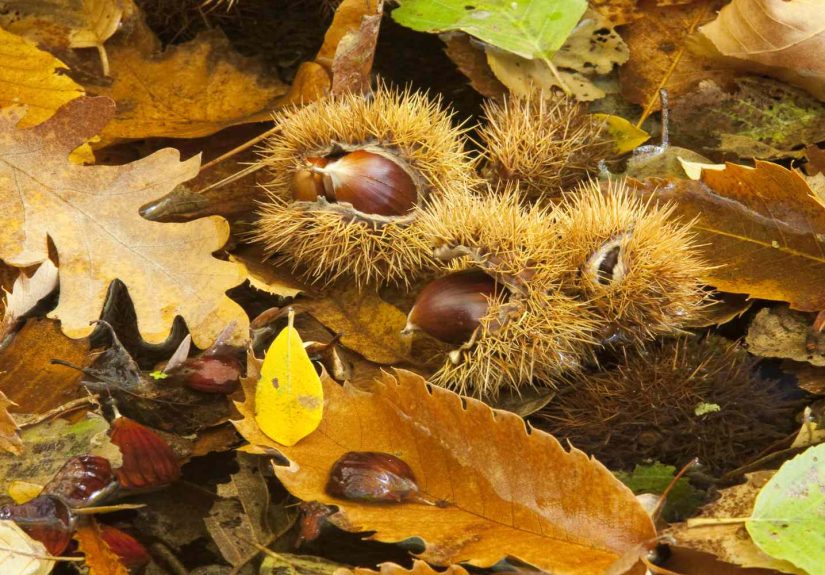
The ground is littered with burrs, some still bristling like sea urchins, others
cracked open to reveal shiny brown nuts. Somewhere in the distance, you hear
the thud of burrs dropping and the chatter of people gathering them. For local
families, this is not just a charming autumn scene; it’s an annual ritual that
connects them to grandparents and great-grandparents who did exactly the same
thing, often out of necessity rather than nostalgia.
Travel across the world in your imagination to the mountains of Appalachia a
century ago, before the blight. The experience would have been different but
equally powerful. Old accounts describe forests where American chestnuts
formed a kind of living cathedral, their tall, straight trunks rising like
columns and their crowns arching high overhead. In autumn, the sound of
falling burrs could be almost continuous – a natural drumroll announcing that
it was time for people and wildlife to feast.
Today, walking those same hills, you see the ghost of that world. Instead of
towering giants, you might find chestnut sprouts only a few inches thick at
the base, shooting up from root systems that have survived for decades, even
after repeated fungal attacks. Some of those sprouts will make it to small
tree size before the blight knocks them back again. It’s like watching a
marathon runner get tripped every mile but still stubbornly crawl forward.
Then there are the modern restoration plantings. Imagine joining a volunteer
group in a city park or conservation area. You’re handed a young chestnut
sapling with a bright plastic tag showing its pedigree: perhaps a hybrid
between American and Chinese chestnuts, bred to combine the height and form
of the American tree with the disease resistance of its Asian cousin.
You kneel in the soil, set the sapling in the ground, and tamp the earth
around it. Someone jokes that you’re basically planting a very slow-motion
time capsule. This tree won’t be a giant in your lifetime, but you’re part of
a project that could change what future hikers see in these forests. Nearby,
a kid asks if these are the trees from the Christmas song. You explain that
they’re cousins of those trees – same chestnut story, new chapter.
If you ever buy roasted chestnuts from a street vendor, especially in a place
with a long chestnut tradition, you’re tasting condensed history. That paper
cone holds traces of ancient Roman recipes, medieval survival strategies,
mountain farmers’ work, and modern horticulture research. Every chestnut is
a tiny time capsule of stories: of families who depended on the harvest, of
forests transformed by disease, and of scientists and volunteers trying to
restore what was lost.
The most striking thing about spending time in chestnut country – whether in
European groves, Asian orchards, or experimental plots in the United States –
is how often people talk about hope. Yes, there is grief for lost forests and
vanished giants. But there’s also pride in old recipes, joy in seasonal
festivals, and a quiet determination to make sure the chestnut story doesn’t
end with the blight.
Standing under a young hybrid chestnut, you can feel that mix of past and
future. The roots are in centuries of human history; the top branches reach
toward a climate-challenged future that desperately needs resilient, productive
trees. If the history of the chestnut tree spans the history of the world,
then planting even one sapling is a tiny way of voting for what you’d like the
next chapter of that history to look like.
Conclusion: A Tough Tree with an Even Tougher Story
From ancient “bread tree” to holiday icon to symbol of ecological loss and
resilience, the chestnut tree has been quietly threading its way through human
history for thousands of years. It has fed armies and shepherds, anchored
mountain economies, shaded farmyards, and filled forests with wildlife and
songbirds.
The chestnut blight catastrophe in North America shows just how intertwined
our fate is with the living world – a single fungus transported by human
trade reshaped entire ecosystems. Yet the chestnut’s story is not finished.
Breeders, geneticists, foresters, and everyday volunteers are working to
restore chestnuts to forests and farms, combining old wisdom with new tools.
The history of the chestnut tree really does mirror the history of the world:
migration and trade, disaster and adaptation, loss and renewal. And just as
the best chestnuts take time to roast, the chestnut’s comeback will take
patience. But if there’s one thing this tree has proved over thousands of
years, it’s that resilience can wear a very stylish crown of leaves.