Table of Contents >> Show >> Hide
- What stainless-steel countertops really are
- The pros of stainless-steel countertops
- The cons of stainless-steel countertops
- How much do stainless-steel countertops cost?
- What drives the price up (or down)
- How to choose the right stainless countertop
- Installation and design ideas that keep it from feeling “industrial”
- Care and maintenance: how to keep stainless looking good
- Is stainless steel right for you?
- Real-World Experiences: What It’s Like Living With Stainless-Steel Countertops (Extra )
- Conclusion
Stainless-steel countertops have a certain “yes, chef” energy. They’re sleek, shiny (or softly brushed), and famously toughso tough that
commercial kitchens basically treat them like the kitchen equivalent of a pickup truck. But bringing restaurant-grade metal into a home kitchen
is a little like adopting a husky: incredibly capable, occasionally loud, and it will leave “prints” everywhere unless you stay on top of it.
If you’re deciding whether stainless steel belongs in your remodel, you’re in the right place. Below, we’ll break down the real-world pros and cons,
what actually drives the price, and how to choose the right thickness, finish, and edge profilewithout turning your kitchen into a cafeteria line.
What stainless-steel countertops really are
Most residential stainless-steel countertops are made as a sheet of stainless steel formed (and sometimes welded) over a wood substructure like plywood
or MDF, then installed on base cabinetry or an island. That wood core helps with stiffness, reduces “drum” noise, and gives installers something stable
to fasten to. Stainless can also be fabricated with integrated backsplashes, wrapped edges, and even integral sinks for a seamless look.
Common stainless grades: 304 vs. 316
Indoors, you’ll most often see Type 304 stainless steel, a widely used grade that balances corrosion resistance, workability, and cost.
Type 316 (often called “marine grade”) adds molybdenum for improved resistance in salty, coastal, or harsher environmentsusually at a higher price.
For outdoor kitchens near the ocean, 316 may be worth considering, but it still needs maintenance because “stainless” means stain-less, not stain-proof.
The pros of stainless-steel countertops
1) Heat resistance that laughs at hot pans
If you want to set down a hot pot without a trivet and without that tiny voice whispering, “This is how countertops die,” stainless is a top-tier choice.
It’s prized in professional kitchens for a reason: it handles high heat and everyday kitchen chaos with minimal drama.
2) Nonporous and hygienic by nature
Stainless steel is nonporous, which means it doesn’t absorb liquids, stains, or food funk the way some materials can. That makes it easier to keep sanitary,
especially around sinks and prep zones. Pair it with an integrated sink or tight seams, and cleanup can be as simple as sweeping crumbs straight into the bowl.
3) Stain and water resistance for messy real life
Red wine? Oil splatter? Tomato sauce doing its best crime-scene impression? Stainless cleans up well and won’t permanently stain the way porous stones can.
Water rings can happen if moisture dries on the surface, but they’re generally temporary and wipe away with routine care.
4) A pro-kitchen look that can still feel “homey”
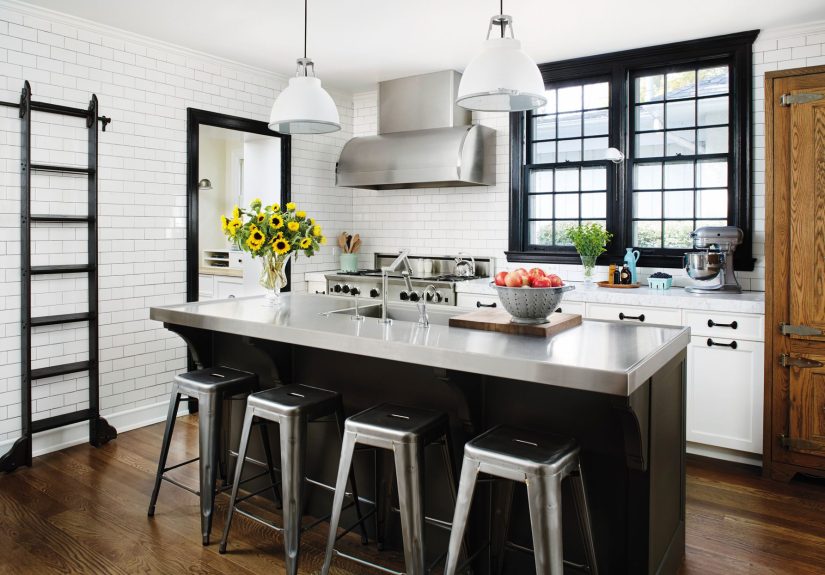
Stainless doesn’t have to look cold. In fact, it often looks best when it’s balanced with warmer materialsthink wood cabinetry, walnut shelving, or even a
cozy tile backsplash. Many designers recommend using stainless strategically (like on an island or around the range) so you get the function without going full
“restaurant supply store chic.”
5) Custom-friendly: integrated sinks, backsplashes, and edge profiles
Stainless can be formed and fabricated into features that are harder (or costlier) with stone. Integrated backsplashes, marine edges (a raised lip that helps
keep water from running off), and welded sink integration are all popular upgrades that make the surface feel purpose-built rather than “sheet metal on cabinets.”
6) Recyclable and long-lived
Stainless steel is recyclable, and many sources note its durability and longevity when properly fabricated and maintained. If you’re playing the long game with
a “buy it once” mindset, stainless can be a strong candidate.
The cons of stainless-steel countertops
1) Scratches and dents are part of the deal
Stainless is tough, but it’s not immune to daily wear. Sliding cookware, dropped utensils, and aggressive scrubbing can create scratches. Thinner stainless
(higher gauge numbers) is more prone to dents and damage. Over time, stainless develops a patinasome homeowners love that lived-in look, others… do not.
2) Fingerprints, smudges, and water spots show up like uninvited guests
If your household includes kids, pets, or one adult who believes “handles are optional,” stainless will keep receipts. Brushed finishes help hide fingerprints,
but you’ll still see smudges and streaks under certain lighting, especially on polished surfaces.
3) It can be noisy (aka: the “clang factor”)
Metal-on-metal contact can get loudpots, pans, and utensils will announce themselves. A solid wood substrate helps reduce the “drum” effect, but stainless is
still a louder surface than stone or wood. If your kitchen is already the main stage for family chaos, stainless won’t exactly whisper.
4) It’s often not a DIY-friendly install
While small stainless projects can be DIY’d by experienced homeowners, full countertops typically require professional fabrication and installation.
Precise templating, clean cutouts, folded edges, and (when needed) welded seams are not where you want to “learn as you go.”
5) Price can be premiumespecially for custom work
Stainless is rarely the cheapest countertop option. Between material costs, fabrication, and specialized labor, it can land in the same general cost zone as
higher-end stonesometimes more when you add integrated sinks, custom edges, or thicker gauges.
How much do stainless-steel countertops cost?
In the U.S. market, installed stainless-steel countertops commonly fall in a broad range of about $70 to $225 per square foot,
with many homeowners landing near the middle depending on customization and thickness. That range includes materials and professional installation.
Typical project totals
- Per square foot installed: often ~$70–$225 (prefab tends to be lower; custom tends to be higher).
- Average kitchen example: around 30 sq. ft. of countertop area can land in the mid-thousands depending on choices.
- Prefabricated sections: may be priced as set units, sometimes including an integrated sink and/or backsplash.
Translation: stainless can be “reasonable” if you use it as an accent (like an island top or baking station), but it becomes a bigger investment when it’s
wall-to-wall and fully custom.
What drives the price up (or down)
Thickness (gauge) and build quality
Gauge is a thickness measurement where lower numbers mean thicker steel. Thicker stainless costs more but dents less easily and feels sturdier.
Many residential installations commonly use 16- or 18-gauge stainless, while heavy-duty options go thicker. The exact thickness varies by standard, but the
direction is consistent: lower gauge = thicker material.
Finish choice
A brushed or satin finish is popular because it hides fingerprints and scratches better than mirror polish. Specialty finishes (antique matte, patterns,
or custom grain directions) can raise fabrication costs.
Edge profiles and “water management” details
Edges matter more than you’d think. A simple square edge is usually the most straightforward. More complex edges (beveled, bullnose, marine edge) add labor.
A raised marine edge can be a smart upgrade near sinks because it helps keep water from rolling off the counter.
Cutouts and integration
Sink and faucet cutouts, cooktop cutouts, and especially integrated sinks increase complexity. Fully welded, integral sinks and backsplashes can look amazing,
but they’re a fabrication upgradenot a freebie.
Seams, long runs, and site conditions
Big spans, tricky corners, out-of-square walls, and multiple sections can require seams and careful alignment. High-quality welding and finishing (so seams
visually disappear as much as possible) is skilled work, and skilled work costs money.
How to choose the right stainless countertop
Pick a gauge you can live with
If you’re rough on surfaces (hello, cast iron), lean thicker. If your budget is tight, you might choose stainless only for the island or the high-heat zone
around the range, then use another countertop material elsewhere.
Choose a finish that matches your lifestyle, not just your Pinterest board
- Brushed/satin: best all-around for hiding fingerprints and blending scratches.
- Mirror polish: dramatic, reflective, and more likely to show smudges and micro-scratches.
- Matte/antique: can disguise wear, but varies by fabricatorask to see real samples.
Don’t ignore the edge profile
If your sink area tends to look like a splash zone after dinner, consider a marine edge. If you want a softer look (and fewer sharp corners),
a rounded edge may fit better. Edge choices impact both aesthetics and how the countertop behaves day-to-day.
Think about grade if you’re going outdoors
For indoor kitchens, 304 stainless is common and usually sufficient. For outdoor kitchensespecially near salt air316 can offer better corrosion resistance,
but it still requires cleaning and care. If you want lower maintenance outside, finishes or coatings designed for outdoor exposure may help.
Installation and design ideas that keep it from feeling “industrial”
Use stainless strategically
One of the most homeowner-friendly approaches is to treat stainless like a functional “power tool” in your kitchen rather than the entire toolbox.
Great places for stainless include:
- Island prep station: easy cleanup, great for baking and cooking projects.
- Range wall / cook zone: heat resistance right where you need it most.
- Coffee bar: water resistance + quick wipe-downs.
- Outdoor kitchen: especially when paired with appropriate grade and maintenance.
Warm it up with surrounding materials
Stainless pops against wood cabinetry, handmade tile, or softer paint colors. If you’re worried your kitchen will feel cold, the fix is usually design balance:
add warmth around the stainless so it reads “intentional and modern,” not “commercial back-of-house.”
Care and maintenance: how to keep stainless looking good
Daily cleaning (simple and effective)
- Wipe with warm water and mild dish soap.
- Use a soft sponge or microfiber cloth.
- Dry after cleaning to reduce water spotting.
- Wipe with the grain to avoid streaking.
What to avoid
Stainless can be damaged by abrasive tools and harsh chemicals. Cleaning pros commonly warn against steel wool, scouring pads, bleach/chlorine products, and
frequent use of acidic cleaners that can dull the surface or compromise protective layers. When in doubt, keep it gentle and test any new cleaner in a small,
inconspicuous area first.
Managing scratches and patina
Light scratches are often part of the stainless “story.” Many homeowners simply embrace the patina as the surface ages. For visible scratch blending,
some approaches involve careful, grain-aligned buffingbut deep dents or significant scratches may require professional restoration, and they may not disappear
completely. The real win is choosing a finish (like brushed) that makes normal wear look intentional rather than accidental.
Is stainless steel right for you?
Stainless-steel countertops are a fantastic fit if you cook often, want heat resistance, and prioritize hygiene and easy wipe-downs. They’re also a smart
choice if you like a modern look and don’t mind a surface that evolves over time.
On the flip side, if fingerprints make you irrationally angry, if you want a surface that stays “perfect” forever, or if your kitchen is the epicenter of
loud activity already, stainless might feel like an expensive invitation to constant polishing. In that case, consider using stainless as an accent surface
instead of going all-in.
Real-World Experiences: What It’s Like Living With Stainless-Steel Countertops (Extra )
Reading specs is helpful, but stainless steel is one of those materials you truly understand only after you’ve lived with it for a while. Homeowners who
switch to stainless often describe a “week one” phase that feels like moving into a fancy hotel kitcheneverything looks crisp, reflective, and high-end.
Then reality happens: you make pasta, set down a hot pan, wipe a smear, and notice the surface is keeping a tiny documentary of your day.
The most common surprise is how much the finish affects your daily mood. A brushed or satin finish tends to feel forgiving. You still see fingerprints, but
they don’t scream for attention the way they do on highly polished metal. In bright daylight or under strong pendant lighting, smudges can be more visible,
which is why many homeowners develop a quick “closing shift” habit: a warm soapy wipe, a rinse wipe, and a dry microfiber pass in the direction of the grain.
That routine takes a minute or two, and it keeps the countertop looking intentionally maintained rather than accidentally chaotic.
Cooking behavior changes in subtle ways, too. People who love stainless mention the freedom of placing hot cookware down without babying the surface. For
bakers, stainless can be great for messy projectsthink kneading dough, tempering chocolate nearby, or doing big holiday cookie marathonsbecause cleanup
is straightforward. The surface doesn’t stain the way porous counters can, so you worry less about turmeric, beet juice, or the infamous red wine splash.
The tradeoff is scratch awareness: most owners still use cutting boards and avoid dragging cast iron like it’s a curling stone.
Noise is real, but it’s not always a deal-breaker. If the countertop is properly supported on a solid substrate, it tends to sound less like a drum and more
like a firm, “professional” surface. Some households love that energetic kitchen soundscape; others add small habitssilicone mats near the coffee station,
a designated “set down zone” for heavy pansto keep things calmer.
The long-term experience is where stainless wins people over. After months, the countertop develops a soft patinatiny micro-scratches that blend into a
consistent, workhorse finish. Owners who expected perfection sometimes struggle with that evolution, but owners who expected function often find it satisfying:
the counter looks used because it is used. In many kitchens, that ends up feeling more honest than a surface that demands constant caution. If you
like a countertop that keeps up with you (and doesn’t require sealing or special babying), stainless can become the most “no big deal” part of your kitchen.
Conclusion
Stainless-steel countertops deliver serious performance: heat resistance, hygiene, stain resistance, and a pro-kitchen vibe that can look surprisingly warm
when paired with the right materials. The downsidesfingerprints, noise, and the inevitability of scratchesare real, but they’re also predictable and
manageable if you choose the right finish and thickness. Cost-wise, stainless typically sits in a premium range, especially for custom fabrication, integrated
sinks, and upgraded edges. If you love to cook and want a countertop that works as hard as you do, stainless is a strong contenderjust make sure you’re
okay with a surface that tells the story of your kitchen in real time.