Table of Contents >> Show >> Hide
- What Shifting Gears Is (and Why It’s a Lightning Rod)
- The Brutal Reviews, Organized by the Things Critics Couldn’t Let Go
- 1) “The Show Thinks Ranting Is a Personality Trait”
- 2) “It’s a Time CapsuleBut Not the Fun Kind”
- 3) “The Studio Audience Is Doing Heavy Lifting… and Needs a Back Brace”
- 4) “It Wants Heartfelt Family Drama… Then Trips Over Its Own Punchlines”
- 5) “It Wastes the Cast Like It’s Speed-Running a Talent Spill”
- 6) “The ‘Boomer Humor’ Label Isn’t About AgeIt’s About the Joke Shape”
- The Meanest Lines Aren’t the PointThe Pattern Is
- To Be Fair: What Some Reviews Said Actually Works
- Why the Backlash Felt Bigger Than the Show
- Should You Watch It? Here’s the Most Honest Answer
- of “Been There” Experiences: When Boomer Humor Hits the Living Room
- Conclusion
There are TV comebacks, and then there are TV comebacks that arrive with a studio audience already laughing before the joke lands.
When Tim Allen returned to broadcast sitcom land with Shifting Gears, the pitch sounded like a classic multicam comfort meal:
a stubborn dad, a stressed-out adult kid, a house suddenly full of feelings, and a workplace that smells faintly of motor oil and unresolved childhood tension.
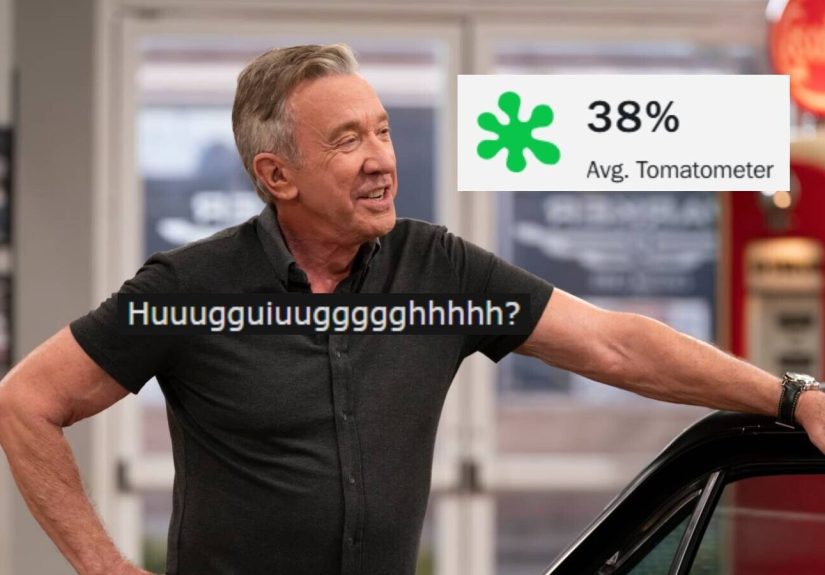
Critics, however, didn’t just nibble and politely push the plate away. Some of the reviews came in like a tow truck with the lights onloud, blunt,
and extremely confident that this particular vehicle should not be allowed back on the freeway.
If you’ve seen the phrase “boomer humor sitcom” floating around, this is the show people are pointing at while making the universal “yikes” face.
This article rounds up the most brutal critiques (and the patterns behind them), explains why the backlash hit so hard, andbecause life is complicated
and sitcoms are weirder than we admitnotes the few parts that even skeptics conceded were working.
What Shifting Gears Is (and Why It’s a Lightning Rod)
Shifting Gears is a multicamera ABC sitcom built around a generational collision: Tim Allen plays Matt, an old-school widower who runs a classic
car restoration shop, and his estranged daughter Riley (played by Kat Dennings) moves back in with her kidsforcing father and daughter to renegotiate
boundaries, grief, and the kind of love that shows up late but insists it still counts.
That setup is practically a sitcom heirloom: “family heals in the same house where the arguments happen.” It’s also primed for a very specific flavor
of comedyone that loves to turn contemporary life into an eye-roll list (“kids these days,” “the internet ruined everything,” “remember when a phone was a phone?”).
In other words: boomer humor, supercharged by culture-war shorthand.
And that’s where the reviews got spicy. Many critics didn’t object to the mere existence of a grumpy dad character.
They objected to how often the show seemed to treat grumpiness like a punchline generator: insert complaint, add laughter, roll credits.
The Brutal Reviews, Organized by the Things Critics Couldn’t Let Go
The harshest write-ups weren’t random drive-by snark. They tended to circle the same recurring issuestone, structure, politics-as-personality,
and jokes that felt like they were assembled from a box labeled “SITCOM PARTS (1996).”
1) “The Show Thinks Ranting Is a Personality Trait”
One of the most consistent criticisms was that Matt isn’t merely crankyhe’s written as a walking monologue about how modern life is going downhill.
Several reviewers described the character’s worldview as less “specific human being” and more “hot-take playlist,” where the rhythm of the scene becomes:
Matt complains, someone reacts, the audience laughs, and we proceed as if that was a joke instead of a weather report from Grumpyville.
The sharpest takes argued that the show confuses volume with comedy. When the loudest thing in a sitcom is the character’s certainty,
you stop laughing and start checking whether your remote has a “mute but keep subtitles” button.
2) “It’s a Time CapsuleBut Not the Fun Kind”
A multicam sitcom can absolutely work in 2025 and beyondplenty of people still want that cozy rhythm: set-up, banter, button, commercial.
But critics repeatedly framed Shifting Gears as a show that doesn’t modernize the form so much as reenact it.
The brutal version of this complaint sounds like: “It’s not retro-charming; it’s just old.” Reviewers pointed to familiar sitcom contrivances,
obvious scene turns, and punchlines that arrive with the subtlety of a laugh-track siren.
If you’ve ever watched a joke coming from three camera angles away, you understand the vibe.
3) “The Studio Audience Is Doing Heavy Lifting… and Needs a Back Brace”
The studio audience (or the show’s use of crowd reaction) became a character in the discoursesometimes the most energetic character in the room.
Critics complained that the laughter often feels disproportionate to the material, as if the show is trying to teach you what funny is through repetition.
When the audience roars at a mild quip, it can make a viewer feel like they missed somethingthen the next roar hits, and you realize the joke
wasn’t hiding; it was just small. At that point, the laughter stops being reassurance and starts feeling like a loud neighbor insisting the party is great.
4) “It Wants Heartfelt Family Drama… Then Trips Over Its Own Punchlines”
Some of the harshest reviews didn’t deny that the show is trying to have a sincere emotional core.
They argued it can’t decide whether it’s a tender story about grief and reconnection or a stand-up-adjacent rant machine.
That tonal wobble matters because “heart” is the thing that can redeem a conventional sitcom.
If the heartfelt moments feel earned, you forgive a lot. If they feel like a quick pit stop before the next complaint about modern society,
the sentiment can read as strategic rather than authentic.
5) “It Wastes the Cast Like It’s Speed-Running a Talent Spill”
Even reviews that weren’t impressed by the show’s writing often conceded that the casting is strong on paper.
Kat Dennings is reliably sharp and charismatic, and the supporting ensemble includes performers with proven comedic timing.
The complaint was not “these people can’t do comedy.” It was “this material isn’t letting them.”
In several write-ups, the frustration sounded almost parentallike critics were scolding the show for buying good ingredients and then microwaving them.
If you’re going to hire actors with real snap, give them scenes that build, escalate, and surprise, not just a rotation of modern-life pet peeves.
6) “The ‘Boomer Humor’ Label Isn’t About AgeIt’s About the Joke Shape”
Here’s the important nuance: calling something “boomer humor” is rarely a precise demographic claim. It’s a shorthand for a comedic pattern:
jokes built from suspicion of change, dismissal of new norms, and nostalgia treated as automatic truth.
Critics didn’t just say the show feels old; they argued it relies on the oldest engine in the culture-war garage:
“The world is ridiculous now, and I’m the only sane one.” That can be funny when it’s self-aware or character-specific.
It gets brutal when it feels like the show expects applause for having the opinion in the first place.
The Meanest Lines Aren’t the PointThe Pattern Is
It’s easy to turn brutal reviews into a dunk contest: who wrote the sharpest insult, who landed the cleanest metaphor.
But the bigger takeaway is that the critiques were remarkably aligned on a few core ideas:
- The writing leans on predictabilityin structure, in punchlines, and in how conflicts resolve.
- The comedy often comes from complaints, which can feel more like commentary than character.
- The show’s “message” sometimes arrives before the joke, making humor feel like a delivery system for a worldview.
- The form is familiar by design, but critics wanted either sharper laughs or deeper humanity to justify the throwback vibe.
When multiple outlets land on the same complaints, it’s not just a matter of taste.
It suggests the show’s creative choices are loud enough that even people who disagree about everything else can agree on what’s happening on screen.
To Be Fair: What Some Reviews Said Actually Works
A funny thing happened amid the roasting: a few critics acknowledged that the show has flashes of real warmth.
Not “life-changing TV” warmth, but “I can see why your aunt binges this while folding laundry” warmth.
The Allen–Dennings Dynamic Can Be Genuinely Engaging
Even skeptical reviews often noted that Allen and Dennings have a believable push-pull: resentment mixed with familiarity,
the kind of conflict where the insults are specific because the history is specific.
When the show lets them play the relationship instead of the talking points, it can feel like a functional sitcom.
The Premise Has Real Stakes (When the Script Remembers)
Estrangement, grief, parenting pressure, and the awkwardness of moving back home aren’t silly problems.
When Shifting Gears slows down long enough to let those themes breathe, it taps into something recognizable:
the idea that family isn’t a “fix,” it’s a long-term repair job with missing parts and a manual written in feelings.
Viewers Showed Up, Even If Critics Groaned
One of the most interesting wrinkles is that critical disdain didn’t automatically equal audience indifference.
Coverage of the show’s performance highlighted strong early viewership and streaming interestanother reminder that “best-reviewed”
and “most-watched” often live in different zip codes.
That gap between critics and viewers is part of why this sitcom became such a cultural ping-pong ball:
it’s not merely a showit’s a debate about what sitcoms are “for,” who TV is trying to please, and whether comfort can look like provocation.
Why the Backlash Felt Bigger Than the Show
If you’re wondering why a fairly conventional family sitcom sparked such intense language, it helps to zoom out.
Broadcast multicams are often treated as cultural symbols: they’re old-school TV in a streaming world, mass-market storytelling in an era of niche algorithms.
When a show like this arrives, people don’t just judge the jokesthey judge what the show seems to represent.
Some industry reporting framed the moment as part of a wider recalibration, where entertainment companies are experimenting with programming
that appeals to audiences who feel ignored by the current cultural mainstream.
In that context, Shifting Gears becomes a kind of case study: a show that can be criticized for being dated
and still succeed by delivering a familiar, worldview-flavored comfort food to the right crowd.
So the brutal reviews weren’t only about punchlines. They were about anxiety:
anxiety that TV is retreating into arguments instead of stories, anxiety that “relatable” is becoming code for “agree with me,”
anxiety that nostalgia is replacing imagination because it’s safer and sells.
Should You Watch It? Here’s the Most Honest Answer
If you love classic multicam sitcoms, like Tim Allen’s TV persona, and enjoy generational ribbing that occasionally swerves into “kids these days”
territory, you may find Shifting Gears perfectly watchableespecially once the rhythm settles and the cast chemistry does the work.
If you’re allergic to canned laughter, tired of culture-war comedy, or hoping for a modern sitcom that surprises you, the critics’ warnings will
probably feel less like snobbery and more like a helpful roadside sign that says: “Bumpy jokes ahead.”
Either way, the discourse has made the show a weird little litmus test. Not for politicsat least not only for politicsbut for what you want from
a sitcom in 2026: comfort, edge, warmth, or just a clean 22 minutes that doesn’t make you argue with your family afterward.
of “Been There” Experiences: When Boomer Humor Hits the Living Room
Here’s the part nobody puts in the official reviews: boomer humor doesn’t just live on TV. It lives in your group chat, your holiday table,
and that one relative who treats a new term like a personal insult. Watching a show like Shifting Gears can feel less like consuming content
and more like sitting through a familiar family dynamicwith commercial breaks.
For some viewers, the experience is oddly soothing. You know the cadence. You know the archetypes. The grumpy dad says what you’re “not supposed” to say.
The younger character rolls their eyes and explains the modern world like it’s a software update nobody asked for. Everyone yells, everyone softens,
and the episode ends with a tiny emotional handshake. It’s the TV equivalent of a well-worn hoodie: not fashionable, not surprising, but it fits the moment.
For other viewers, it’s the oppositean instant tension headache. The jokes can feel like they’re aimed at “people like you,” even when you’re not the target,
because the humor is built from a familiar move: take something new, label it ridiculous, and count on the audience to nod along.
If you’ve ever tried to explain why a social change matters to someone who’s already decided it doesn’t, you’ll recognize the vibe immediately.
The most relatable experience might be the mixed one: laughing at a line because the delivery is good, then pausing because the underlying idea feels meaner
than the punchline. You can enjoy the performances and still wish the writing trusted the audience enough to be specific, not just broadly annoyed.
The show’s best momentslike any family comedyare the ones where the characters feel like people first, and “takes” second.
And then there’s the social viewing experience, which is its own genre. Put this kind of sitcom on with friends in different generations and you’ll get
a live focus group: one person chuckling, one person groaning, one person saying, “That’s literally Uncle Dave,” and someone else replying,
“Exactlythat’s why it’s exhausting.” In a weird way, that’s why the show has become bigger than itself. It’s not just a sitcom; it’s a mirror people
either laugh at or argue with. Sometimes both in the same scene.
Conclusion
The most brutal reviews of Tim Allen’s boomer humor sitcom aren’t merely mean for sportthey’re pointing to a real creative fault line:
the tension between comfort TV and commentary TV, between multicam nostalgia and modern comedic expectations.
Shifting Gears is, depending on your taste, either a familiar engine that still starts on the first turn… or a loud ride that mistakes grumbling for jokes.
The fairest verdict might be this: the show is a strong test of what you personally consider “funny” in 2026.
If your ideal sitcom is warm, traditional, and built around a charismatic crank, you’ll find moments that work.
If you want sharper writing and fewer recycled rants, you’ll understand why critics came in with the gloves off.