Table of Contents >> Show >> Hide
- Why an electric blanket can lower your heating bill
- The 44%-off electric blanket shoppers are using to stay warm for less
- What to look for in a cost-saving electric blanket
- How to use an electric blanket to reduce heating costs (without doing anything weird)
- Electric blanket safety: the rules that keep “cozy” from becoming “chaos”
- Buying tips: how to spot a “real deal” (not just a loud discount)
- Maintenance that protects your blanket (and your savings)
- Real-life experiences: what it’s like to use a heated throw to cut heating costs (extra 500+ words)
- Conclusion: cozy, controlled warmth that can pay off all winter
Winter has a talent for making your home feel like a walk-in freezer… with a monthly subscription fee. One of the simplest ways to fight back isn’t cranking the thermostat until your furnace starts writing its memoirs. It’s warming youright where you sit or sleepso you can keep the whole-house heat a little lower without living in a puffer jacket.
That’s why electric blankets (especially throw-size heated blankets) have become a cold-weather favorite. And when a popular model drops 44% in price, it’s basically a cozy coupon with a power cord.
Why an electric blanket can lower your heating bill
Home heating is expensive because it warms everything: the air, the walls, the hallway nobody uses, and that one room you keep “meaning to organize.” A heated throw flips the script. It delivers warmth directly to your body, which can make a slightly cooler room feel perfectly comfortable.
Pair that with the most underrated money-saving move of all: turning the thermostat down when you’re asleep or not actively using every room. If you can stay comfortable under a heated blanket, you may be able to set the thermostat a few degrees lower at night or while working on the couchwithout starting a family debate called “Who touched the thermostat?”
The quick math: “warm person” vs. “warm entire house”
Electric blankets vary by size and heat setting, but many use far less power than space heatersand dramatically less than heating your whole home extra degrees just for comfort in one spot.
Example estimate (check your blanket’s tag for its wattage):
- If a throw runs around 100 watts on a moderate setting, using it for 8 hours is about 0.8 kWh.
- If your electricity costs around $0.18 per kWh, that’s roughly $0.14 per night (about 14 cents).
- A typical 1,500-watt space heater for the same 8 hours is about 12 kWhroughly $2.17 at that same rate.
Those numbers won’t match every home (rates and usage vary), but the pattern is consistent: targeted warmth is often cheaper than heating more space than you’re actually living in.
The 44%-off electric blanket shoppers are using to stay warm for less
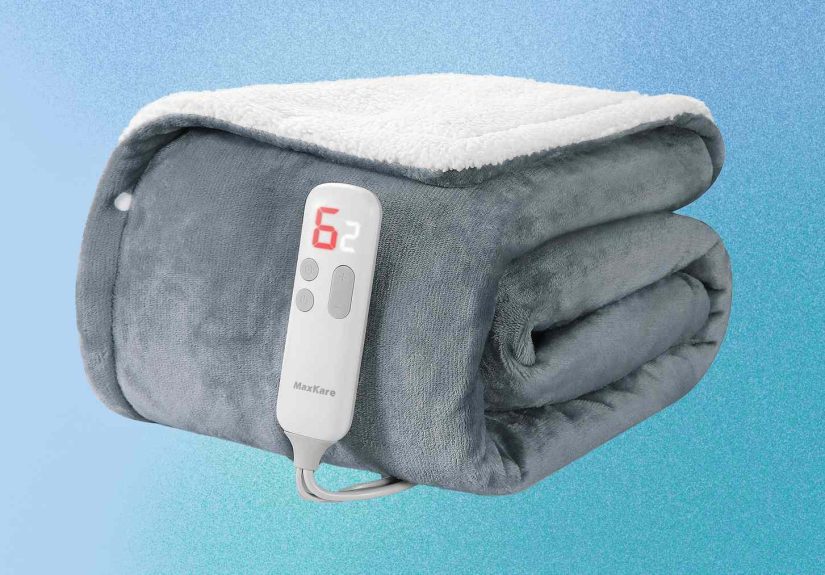
A deal that got a lot of attention features a Maxkare Electric Throw Blanket marked down 44% at Walmartdropping from $68 to $38 at the time it was highlighted. It’s a throw-size blanket (listed as 50 x 60 inches) designed for couch lounging, work-from-home desk duty, or pre-warming your bed before you climb in.
Here’s why shoppers liked it as a “save on heat” helper:
- Timer + auto shut-off: It includes a timer that can turn off automatically (so you’re not running it longer than needed).
- Multiple heat levels: More settings make it easier to use “just enough” warmth rather than blasting it like a mini sauna.
- Soft, cozy fabric: A plush feel matters because the blanket should be comfortable even when the heat isn’t on full power.
- Washability: A removable controller and machine-washable design help with real-life maintenance.
- Snap buttons: The snaps can help keep it draped around your shoulders while you move aroundlike a civilized cape.
Shoppers specifically mentioned using a heated throw to feel comfortable while keeping the thermostat lowerexactly the behavior change that can reduce heating costs over a season.
What to look for in a cost-saving electric blanket
If your goal is “cozy plus lower bills,” the best heated blanket isn’t necessarily the hottest one. It’s the one you can use safely, predictably, and only as long as needed.
1) Safety certifications and built-in protections
Look for products tested by recognized safety organizations and designed with modern protections such as overheat protection and automatic shut-off. This matters even more if you’re shopping online, where product pages can be… optimistic.
2) Auto shut-off and a timer you’ll actually use
A timer is a quiet bill-lowering hero. Many people only need heat to fall asleep or to stay comfortable during a short work session on the couch. Set the blanket to shut off after 1–3 hours (or whatever fits your routine) instead of running it all night by accident.
3) Heat settings that let you “sip,” not “chug,” electricity
More heat levels can help you fine-tune comfort. If you’re always toggling between “too cold” and “I’m a roasted marshmallow,” you’ll be tempted to run higher heat than necessary. A wider range of settings makes it easier to find “just right.”
4) Fabric, thickness, and how it fits your life
Softness isn’t a luxuryit’s part of the strategy. A plush blanket retains warmth better and can feel comfortable even on a lower setting. Consider whether you want:
- A throw (best for couch and desk use)
- A twin/full/queen/king blanket (best for bed use, often with dual controls on larger sizes)
- A preheat feature (nice for getting into a warm bed without leaving it on all night)
5) Care instructions you can follow on a busy week
Most heated blankets require you to remove the controller and wash gently, then lay flat to dry (not tumble-dry). If that sounds like too much, pick one with clear instructions and a fabric that holds up over timebecause replacing a damaged blanket is the opposite of saving money.
How to use an electric blanket to reduce heating costs (without doing anything weird)
If you want real savings, the blanket needs to change your heating behaviorjust a little.
Step 1: Lower the thermostat in “low-need” hours
A common energy-saving approach is setting the thermostat lower when you’re asleep or out. Many households can save money by setting back the thermostat for part of the day (especially overnight), and a heated blanket can make that setback feel comfortable instead of miserable.
Step 2: Heat the bed before you get in, then let the blanket do less work
Try turning the blanket on 15–30 minutes before bedtime, then lowering the setting once you’re in bed. If you tend to overheat while sleeping, preheating can be the sweet spot: cozy sheets, less runtime.
Step 3: Make “warm zones,” not “warm everything”
If you work from home or spend evenings in one main room, treat that area as your comfort zone:
- Drape the heated throw over your lap and legs (where cold sneaks in first).
- Use a timer so it runs only during your highest-need window.
- Close doors to unused rooms to reduce heat loss and drafty airflow.
Step 4: Don’t forget the low-tech helpers
The blanket is most effective when combined with simple habits: wear warm layers, block drafts, and keep curtains closed at night. Think of it like a team: the thermostat sets the baseline, and the heated throw handles the “extra comfort” moment-by-moment.
Electric blanket safety: the rules that keep “cozy” from becoming “chaos”
Modern heated blankets are generally safer than older versions, but safe use still matters. The biggest problems tend to come from damage, age, or improper use.
Use-it-safely checklist
- Inspect it regularly: Look for worn spots, frayed cords, scorch marks, or areas that seem damaged.
- Don’t fold it while it’s on: Creases can trap heat and stress internal wiring.
- Don’t pile stuff on top: Heavy blankets, pillows, pets, booksanything that traps heat can raise risk.
- Don’t tuck it under the mattress or sit on it: Avoid pinching or compressing the wiring.
- Skip extension cords: Plug directly into a wall outlet whenever possible.
- Replace old or damaged blankets: If you can’t remember when you bought it, it’s time to check the labeland be honest with yourself.
Who should be extra cautious
If you have reduced sensation (for example, from neuropathy), poor circulation, or a condition that affects how well you feel heat, talk with a clinician about safe use. Some medical guidance suggests using a heated blanket to warm the bed first and then turning it off before sleeping, especially for people at higher risk of burns.
Buying tips: how to spot a “real deal” (not just a loud discount)
A 44% markdown is appealing, but value isn’t only priceit’s what you get for the money and how long it lasts.
- Confirm the basics: Auto shut-off, multiple heat levels, and clear care instructions.
- Check size and cord reach: A throw is great for the couch, but don’t expect it to cover a full bed like a proper blanket size.
- Read reviews like a detective: Look for consistent notes on even heating, easy controls, and durability after washing.
- Watch return policies: A heated blanket is personal comfort gear. You should be able to return it if it’s not right.
Maintenance that protects your blanket (and your savings)
Heated blankets are part textile, part electrical deviceso treat them like both.
- Follow the manual for washing: Usually gentle cycle, controller removed, and air/flat drying.
- Store it smart: Unplug, detach the controller if possible, and roll or fold loosely to avoid sharp creases.
- Don’t ignore “weird heat”: Hot spots, cold spots, or flickering controls are your cue to stop using it and troubleshoot or replace.
Real-life experiences: what it’s like to use a heated throw to cut heating costs (extra 500+ words)
Since “saving money” can sound a little abstract (and a little like someone telling you to enjoy lukewarm coffee), here are some real-world, everyday experiences that match how people actually use a heated throw to stay comfortable while turning the thermostat down.
The Thermostat Truce
In a lot of homes, winter comfort negotiations go like this: one person wants tropical resort temps, the other wants “crisp mountain air,” and the thermostat is caught in the middle like a referee. A heated throw can be a surprisingly peaceful compromise. Instead of raising the whole-house temperature for one chilly person, the blanket becomes the personal “warm button.” The room stays reasonable, the cold-natured person gets cozy, and nobody has to argue about why the heat bill looks like it includes a small yacht payment.
The Work-From-Home Warm Zone
If you’ve ever tried typing with frozen fingers, you know it’s not a productivity hackit’s a villain origin story. Many people keep a heated throw at the desk and use it on a moderate setting for the first hour or two of the morning, especially when the house is still warming up. The difference is psychological as much as physical: you stop thinking, “I should turn the heat up,” and start thinking, “I’m already warm.” Add a timer, and it becomes a set-it-and-forget-it routinewarmth during the coldest part of your day, no accidental all-day runtime.
The Couch-to-Kitchen Cape
Throw-size heated blankets are popular because they’re portable. People will drape them over shoulders while they read, watch TV, or do the nightly “just one more episode” promise. The fun part? A model with snap buttons can feel like a wearable wrap, which means you can stand up, refill water, and return without leaving your warmth behind like a forgotten scarf. It sounds small, but it’s the kind of comfort that keeps you from nudging the thermostat up “just a little” every time you get up.
Preheated Bed, Lower Setting, Better Sleep
One of the most common “I get it now” moments is the first time you climb into a bed that’s already warm. People often use a heated blanket to preheat the bed for 15–30 minutes, then reduce the setting or rely on an automatic shut-off. The bed feels luxurious, but the trick is that it may help you keep the thermostat lower overnight. Instead of heating all the air in the bedroom to a higher temp, you’re heating the one place that truly matters: your sheets. For many households, this routine feels like an upgrade in comfort while still supporting lower overall heating use.
The “I Actually Wash This Thing” Reality
A heated throw lives where life happenscouches, snack nights, pets, and the occasional mysterious coffee incident. People who stick with heated blankets long-term tend to like models with removable controls and clear wash instructions, because it’s easier to keep the blanket clean and usable season after season. That matters for savings, too: if a blanket becomes annoying to maintain, it ends up in a closet, and you’re back to cranking the heat and wondering why winter always wins.
The theme across all these experiences is simple: the heated blanket isn’t “magic.” The savings come from using it to stay comfortable while you keep your thermostat a bit lowerespecially at night and during sedentary, cozy-at-home hours.
Conclusion: cozy, controlled warmth that can pay off all winter
A 44%-off electric blanket deal is nice. But the bigger win is what it enables: staying warm in the moments you actually feel cold, without heating your entire home to match your toes’ emotional needs.
If you choose a blanket with modern safety features, use a timer, and pair it with smarter thermostat habits, you can make winter comfort cheaperand honestly, a lot more pleasant.