Table of Contents >> Show >> Hide
- Who Won TIME’s 2020 Person of the Year?
- What “Person of the Year” Actually Means (and Why People Misread It Every Single Year)
- Why TIME Chose Biden and Harris in 2020
- The 2020 Shortlist: Four Finalists That Basically Summed Up the Year
- The Cover, the Broadcast, and the Big-Moment Packaging
- How to Read the Pick Without Turning It Into a Fan Club (or a Rage Fest)
- What This Selection Says About 2020 in One Sentence
- A Quick Timeline of the “Just Announced” Moment
- FAQ: The Questions People Ask Every Year (Right on Schedule)
- So… Was This the “Right” Choice?
- Experiences From the Announcement: What People Remember About “That” 2020 Reveal
- Conclusion
(Cue the drumroll, the confetti, and at least one group chat argument.)
Every December, one headline reliably appears like a seasonal latte: TIME’s Person of the Year.
It’s a title that can sound like an award, gets treated like a trophy, and somehow still surprises people who
know exactly how it works. In 2020an “are we sure this is real life?” yearTIME made its call:
Joe Biden and Kamala Harris were named TIME’s 2020 Person of the Year.
If your first reaction is “Wait… is that the same as ‘best person’?” you’re not alone. And if your second
reaction is “No, seriously, how do they pick?”good. Let’s break down what was announced, why it mattered,
and what the shortlist revealed about a year that felt like three decades wearing a trench coat.
Who Won TIME’s 2020 Person of the Year?
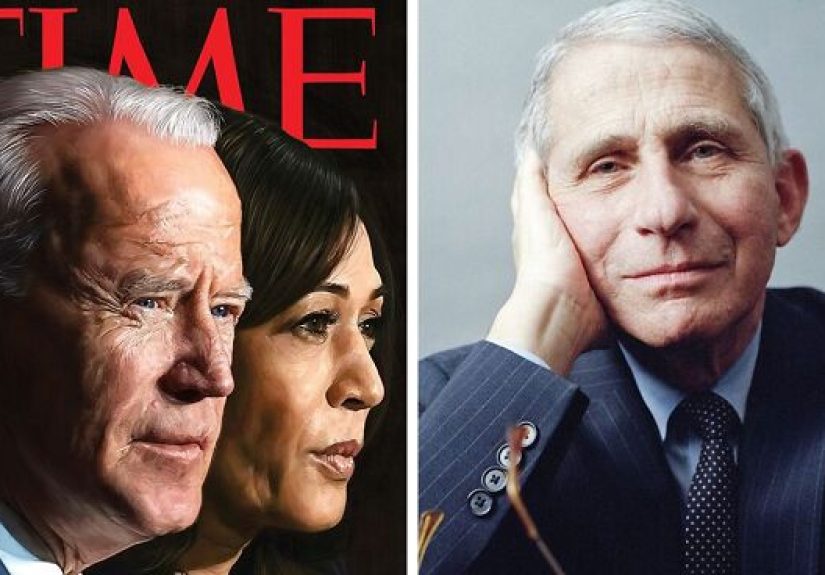
TIME named President-elect Joe Biden and Vice President-elect Kamala Harris as the 2020 Person of the Year.
They were chosen as a joint selection, reflecting the scale of the moment and the historic nature of the election.
The pick wasn’t only about one night in November. It was about influenceon the news, on public life, and on
the direction of the countryduring a year shaped by overlapping crises: a global pandemic, a stressed economy,
a national reckoning on racial justice, and a presidential election that became a cultural pressure test.
What “Person of the Year” Actually Means (and Why People Misread It Every Single Year)
TIME’s “Person of the Year” is not a “nicest human alive” badge, and it’s definitely not a participation ribbon.
It’s a recognition for the person, group, idea, or force that most influenced the year’s eventsfor better
or worse. That last part matters. A lot.
In other words: the title is about impact, not approval. That’s why the list of past choices includes activists,
scientists, presidents, whistleblowers, movements, and occasionally choices that make people yell, “How could they?!”
(Answer: influence. The answer is always influence.)
TIME has been making this selection since 1927, and the editors traditionally keep the final pick tight-lipped
until announcement day. The suspense is part of the brandand part of the yearly debate cycle that powers social media
like jet fuel powers, well, jets.
Why TIME Chose Biden and Harris in 2020
TIME’s case for the Biden-Harris ticket centered on a big idea: the 2020 election was a turning point story.
Not simply because it ended an incumbent presidency, but because it reflected massive participation, intense polarization,
and a hungeracross many communitiesfor a different tone of leadership.
1) A historic win and a historic “first”
Kamala Harris’s role carried historic firsts that resonated far beyond campaign messaging. Her election as vice president
marked a breakthrough in representation that many voters experienced as personalespecially women, Black Americans,
and South Asian Americans who saw a new kind of possibility on a national stage.
2) A coalition built in a year of emergencies
2020 forced politics to compete with reality in high definition. COVID-19 changed how Americans worked, learned, traveled,
and grieved. The summer’s racial justice protests changed how many communities talked about policing, inequality, and power.
The election became the loudest single moment where those pressures converged.
3) An “unlikely partnership” that became the main event
Biden and Harris didn’t begin as political twins. They were opponents during the Democratic primary and brought different
backgrounds, generations, and styles to the ticket. In a year defined by Zoom life and distance everything, that partnership
became part of the narrative: unity, team leadership, and the promise (or at least the pitch) of calmer governance.
The 2020 Shortlist: Four Finalists That Basically Summed Up the Year
TIME’s shortlist for 2020 included four finalists, each representing a major chapter of the year:
- Joe Biden
- Donald Trump
- Frontline health care workers and Dr. Anthony Fauci
- The movement for racial justice
Frontline health care workers and Dr. Anthony Fauci
This finalist choice wasn’t subtle: 2020 was the year the world learned new vocabularyPPE, flatten the curve,
community spreadand then learned it again because the first lesson did not stick everywhere. Frontline clinicians
lived the reality of overflowing hospitals, staffing shortages, and hard decisions, while public health officials
became both essential messengers and lightning rods.
Including health care workers on the shortlist acknowledged a truth many families felt: the year’s biggest story
wasn’t political theaterit was a virus that changed daily life, and the people who had to show up anyway.
The movement for racial justice
In 2020, the movement for racial justice surged into the center of American life, with protests across cities and towns
and renewed conversations about policy, accountability, and systemic inequality. For many Americans, this was not an abstract
“news topic.” It was a visible, emotional, sometimes uncomfortable, often urgent national moment that influenced workplaces,
schools, sports, and politics.
TIME’s inclusion of the movement reflected its broad cultural impact: it shaped how institutions spoke, how communities organized,
and how millions re-examined what “normal” had been allowed to mean.
Donald Trump
Trump’s presence on the shortlist was a reminder that influence doesn’t require winning. In 2020, Trump remained a dominant force
in American media, political alignment, pandemic messaging debates, and the election itself. Whether people supported him,
opposed him, or just wanted one quiet news cycle, his impact was undeniable.
Joe Biden
Biden was the straightforward “election influence” finalist: the challenger who won, the incoming president, and the face
of a political shift. But the eventual selection of Biden with Harris signaled that TIME saw the story as larger than
a single figure. The ticket itselfand what it represented to different Americanswas the point.
The Cover, the Broadcast, and the Big-Moment Packaging
TIME didn’t treat this like a quiet website update. The Person of the Year announcement was part of a larger presentation,
including a televised special. That move matters because it shows how the title has evolved: it’s still journalism,
but it’s also a major media event with a modern audience spread across TV, streaming, and social platforms.
The 2020 coverage also leaned into the visual storytelling of the issue. TIME commissioned artwork and photography
to reflect the year’s rangepolitics, public health, activism, and culturebecause the story of 2020 couldn’t be told
with one image or one mood.
How to Read the Pick Without Turning It Into a Fan Club (or a Rage Fest)
Here’s the healthiest way to interpret the announcement: TIME’s Person of the Year is a mirror, not a medal.
It reflects what shaped the yearwhat moved people, changed conversations, redirected institutions, or altered everyday life.
That’s also why the title can feel “controversial” even when it’s predictable. In 2020, nearly every major storyline
carried real stakes: lives lost to COVID-19, livelihoods interrupted, protests and confrontations, and a political climate
that made even basic facts feel negotiable.
So when TIME picked Biden and Harris, it wasn’t simply a commentary on personality. It was a commentary on what the election
represented in a year when Americans argued about everything from masks to mail-in ballots to what “normal” should be next.
What This Selection Says About 2020 in One Sentence
If you had to summarize the 2020 Person of the Year choice in one clean thought, it might be this:
2020 was a year where leadership, science, justice, and democracy collided in public viewand the election became the loudest signal of where the country wanted to go next.
TIME’s selection of Biden and Harris was a bet that the election resultand the story Americans told about itwas the defining influence
that shaped the end of the year and the expectations for the next one.
A Quick Timeline of the “Just Announced” Moment
- Early December 2020: TIME reveals the shortlist of finalists.
- Mid-December 2020: TIME announces its Person of the Year in a major media rollout.
- Ongoing: Public debate immediately begins (because of course it does).
The timing is part of the tradition: the announcement lands after the year’s biggest storylines have unfolded,
but while the emotions are still fresh. It’s the “year in review” moment that comes with a single, headline-ready nameor in this case, two.
FAQ: The Questions People Ask Every Year (Right on Schedule)
Is there a public vote?
TIME often runs reader polls and online conversations around Person of the Year, but the final selection is made by editors.
The public discussion influences the cultural moment; the editorial decision determines the cover.
Can a group win?
Yes. TIME has selected groups and movements before, and the 2020 shortlist included both a group of frontline health care workers
and a broad movement for racial justice. Some years are too complex for a single faceand 2020 was practically a documentary series.
Is it political?
Sometimes, because politics can be the largest amplifier of influence. But the selection is ultimately about who or what drove the year’s story.
In 2020, politics, public health, and social movements were tightly intertwined, so any “influence” pick was going to carry political weight.
So… Was This the “Right” Choice?
“Right” depends on what you think 2020 was about. If you believe the defining story was the pandemic itself, you might lean toward
frontline health care workers. If you believe the defining story was a national reckoning on race and justice, you might lean toward the movement.
If you believe the defining story was the political storm and its consequences, you might lean toward Trump or Biden.
TIME’s final answerBiden and Harrissuggests the editors saw the election as the year’s most powerful influence point: the event that condensed
the year’s anxieties, hopes, divisions, and demands into one outcome with global attention.
The shortlist itself is the giveaway: even TIME’s “runner-ups” weren’t small stories. They were pillars of 2020.
The selection is less a declaration of “best” and more a statement of “most defining.”
Experiences From the Announcement: What People Remember About “That” 2020 Reveal
For a lot of people, the moment TIME’s 2020 Person of the Year was announced didn’t feel like a random media traditionit felt like
a punctuation mark at the end of a year that refused to use periods. Some watched the reveal the way you watch a season finale:
half expecting a plot twist, half just hoping the next season would be less stressful. Others didn’t watch at all but still experienced it
through the modern grapevinenotifications, headlines, memes, and one friend who treats breaking news like a sport.
The reactions often depended on what 2020 felt like personally. If you were a health care worker (or had one in the family),
the shortlist alone could hit hard. Seeing “frontline health care workers” recognized reminded people of the weeks where applause,
donated meals, and handmade signs were small attempts to express gratitude in a situation too big for words. For many, the announcement day
brought back vivid memories: masked faces, postponed plans, and the mental math of riskIs it safe to visit? Can we do this outside?
What about the grandparents?
For people who were deeply tuned into the election, the announcement stirred a different kind of memory: the tension of waiting,
the marathon of results coverage, and the feeling that politics had become not just news but atmosphere. Some described the Biden-Harris selection
as a symbol of relieflike unclenching your jaw without realizing you’d been clenching it for months. Others saw it as proof that the year’s biggest
influence was still political conflict, not resolution. Either way, the pick invited people to replay the “what just happened?” montage of late 2020.
There was also a quieter, more personal experience many shared: seeing Kamala Harris included in the selection landed differently depending on who you were.
For some women and girls, it was one of those moments that made history feel less like a textbook chapter and more like a living headline.
Even people who didn’t follow politics closely talked about representation in plain language“That’s a big deal”because it was a big deal.
The experience wasn’t only about agreement or disagreement; it was about witnessing a shift that would be referenced for years.
And then there’s the universal experience: the debate. Person of the Year announcements reliably produce three types of conversations.
First, the “It should’ve been…” argument, complete with evidence, passion, and at least one all-caps message. Second, the “Do you even know what Person
of the Year means?” explanation from the friend who plays fact-checker for fun. Third, the “Can we all just take a nap?” response, which might be the most
accurate reflection of 2020’s collective mood.
In the end, the announcement became less about a single cover and more about the shared experience of looking back on 2020 and trying to name what defined it.
Whether people agreed with the choice or not, many experienced the reveal as a moment to take inventory: what they lost, what they learned, what they feared,
and what they hoped would finally change. If a magazine cover can do anything useful, it’s thismake millions of people pause long enough to ask,
“What kind of year was that… and what kind of year comes next?”