Table of Contents >> Show >> Hide
- Why Bottle Weaning Matters More Than People Think
- When Should You Wean Your Baby Off the Bottle?
- How To Wean Your Baby Off the Bottle: A Step-by-Step Plan
- Should You Go Cold Turkey?
- What Kind of Cup Is Best for Bottle Weaning?
- What Should Go in the Cup?
- Common Bottle-Weaning Mistakes To Avoid
- When To Call the Pediatrician
- What Bottle Weaning Looks Like in Real Life: Common Parent Experiences
- Final Thoughts
If your baby treats the bottle like a tiny plastic best friend, welcome to the club. Bottle weaning is one of those parenting milestones that sounds simple on paper and turns into a full-on emotional negotiation in real life. One minute you are proudly offering a cup like a civilized adult. The next minute your toddler is glaring at you as if you replaced dinner with betrayal.
The good news is that learning how to wean your baby off the bottle does not need to be dramatic, rushed, or miserable. With the right timing, a little patience, and a plan that fits your child’s personality, the transition from bottle to cup can be smoother than most parents fear. The goal is not perfection by Tuesday. The goal is steady progress toward healthier drinking habits, better oral development, and fewer bedtime bottle battles.
In this guide, you will learn when to stop bottle feeding, why the timing matters, what kind of cup to use, what to put in it, and how to make the switch without turning your kitchen into a tiny protest rally. We will also cover common mistakes, bedtime bottle strategies, and what bottle weaning often looks like in real homes.
Why Bottle Weaning Matters More Than People Think
For babies, bottles are convenient, comforting, and familiar. For parents, they are also wonderfully predictable. But once a child gets older, prolonged bottle use can become less helpful and more of a habit that overstays its welcome.
1. It can affect dental health
One of the biggest reasons pediatricians and dentists recommend stopping the bottle around the end of the first year is tooth health. Frequent sipping, especially at bedtime or while walking around, keeps sugars from milk or juice on the teeth longer. That can raise the risk of cavities, including the dreaded “baby bottle tooth decay.” In other words, teeth and all-night milk marinating are not a dream team.
2. It can interfere with healthy eating habits
Older babies and toddlers who drink too much from bottles may fill up on milk and eat less solid food. That matters because, after the first birthday, more calories and nutrients should come from meals and snacks, not from sipping all day long. Milk becomes a beverage, not the star of the show.
3. It can make bedtime harder in the long run
Lots of babies link bottles with falling asleep. Understandable. Cozy arms, warm milk, drifting off like a tiny CEO after a long day of rolling around on the floor. But when the bottle becomes the main sleep cue, it can be harder for a child to settle without it later.
4. It helps build oral-motor and feeding skills
Drinking from a cup is a developmental skill. Open cups and straw cups ask babies to use their lips, tongue, jaw, and coordination in new ways. That is one reason many pediatric experts encourage cup practice well before the first birthday. Bottle weaning is not just about taking something away. It is about helping a child learn the next skill.
When Should You Wean Your Baby Off the Bottle?
The sweet spot is usually to introduce a cup around 6 months and complete the transition from bottle to cup sometime between 12 and 18 months. Many pediatric sources encourage aiming for the first birthday or shortly after. That does not mean your child must wake up on day 366 and instantly toss the bottle into the sunset. It means you should be actively working toward the switch during that window.
A practical timeline
- Around 6 months: Start offering a small amount of water in a cup during meals so your baby can practice.
- 6 to 9 months: Let your baby explore the cup, hold it, mouth it, spill it, and generally act like a tiny food scientist.
- 9 to 12 months: Begin offering breast milk or formula in a cup once your baby has some cup skills.
- 12 to 18 months: Gradually replace bottle feedings with cup feedings until the bottle is gone.
Signs your baby may be ready
Some babies make it obvious. Others act as though you have proposed a deeply offensive life change. In general, signs of readiness include:
- Sitting well and eating solid foods
- Showing interest in what is on your table
- Wanting to hold the bottle or feed independently
- Being curious about cups, straws, or whatever you are drinking
- Shorter or more distracted bottle feeds
If your child was born prematurely, has trouble swallowing, has growth concerns, or has a medical condition affecting feeding, ask your pediatrician for a more personalized bottle weaning plan.
How To Wean Your Baby Off the Bottle: A Step-by-Step Plan
There is no single magic trick here, despite what the internet sometimes promises at 2 a.m. The best approach is the one you can do consistently. Most families do well with a gradual transition. Some toddlers do better with a clean break once they already know how to use a cup. Here is the gradual method most parents find manageable.
Step 1: Start with cup practice at meals
Offer a small open cup, straw cup, or training cup with a little water during one meal each day. Expect mess. Assume gravity will be involved. The point is practice, not hydration heroics.
Step 2: Offer the cup before the bottle
Once your baby is comfortable handling a cup, begin offering a little breast milk or formula in the cup before a bottle feeding. This helps your child connect cups with the good stuff, not just plain water and parental ambition.
Step 3: Replace one daytime bottle first
The easiest bottle to drop is usually a midday bottle, not the bedtime bottle. Daytime feeds are less tied to sleep and comfort. Replace one daytime bottle with a cup, meal, or snack. Stay with that change for several days before dropping another bottle.
Step 4: Move bottles to mealtimes only
If your child is still taking several bottles a day, limit them to meals rather than allowing constant sipping between meals. This reduces grazing, protects teeth, and helps your child get used to the idea that drinks happen at the table.
Step 5: Tackle the bedtime bottle last
Yes, this one is usually the boss level. Many babies use the bedtime bottle as a comfort item, not just a feeding. Instead of offering the bottle in bed, move milk earlier in the routine. For example:
- Dinner
- Bath
- Cup of milk or final feed
- Brush teeth
- Books, cuddles, song, bed
This change matters because putting a child to sleep with a bottle increases cavity risk and can make bottle weaning much harder.
Step 6: Be consistent once you commit
Consistency is everything. If you remove the bottle on Monday, bring it back on Tuesday during a meltdown, and hide it again on Wednesday, your child will learn one thing very quickly: persistence pays. Pick a plan and stick with it long enough for your child to adjust.
Step 7: Replace comfort, not just the container
Sometimes a child does not really miss the milk. They miss the ritual. So if you remove the bottle, add something else comforting in its place: extra cuddles, a short song, a favorite blanket, one more story, or a few quiet minutes together. Bottle weaning goes much better when the emotional job of the bottle gets replaced too.
Should You Go Cold Turkey?
Sometimes, yes. If your toddler already drinks well from a cup and the bottle is hanging around mostly out of habit, going cold turkey can work. Parents often use this strategy after 15 months when a gradual approach has dragged on longer than a movie franchise.
The rule with cold turkey is simple: do not go back and forth. Remove the bottles, offer drinks in cups regularly, and expect a few loud opinions. Many children adapt faster than their parents expect. Others stage a dramatic performance worthy of a major award. Either way, consistency is still the secret sauce.
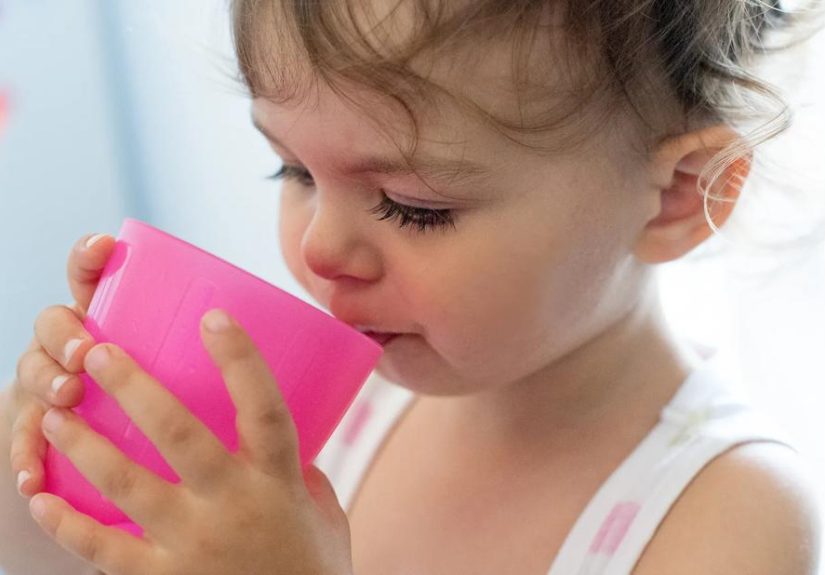
What Kind of Cup Is Best for Bottle Weaning?
You have options, and no, you do not need to buy seventeen of them.
Open cup
Excellent for skill building. Great for learning. Also great for spilling, which is not a design flaw, just part of the process.
Straw cup
Often a favorite because it is easier for many babies to learn than an open cup and helps develop mature drinking skills.
Sippy cup
Useful as a short-term training tool for some children, but not something to rely on forever. Think of it as a bridge, not a permanent address.
If possible, choose a lightweight cup with handles or an easy grip, and use the same few cups consistently so your baby recognizes them.
What Should Go in the Cup?
This part matters.
- Before age 1: Breast milk or formula remains the main drink. Small sips of water with meals can be fine once solids begin.
- Do not switch to cow’s milk before age 1 unless your child’s clinician tells you otherwise.
- After age 1: Many children can transition to whole milk and water, depending on their overall diet and pediatric guidance.
- Skip juice for infants under 1. For toddlers, keep juice limited and serve it in a cup with meals, not in a bottle and not at bedtime.
A good rule of thumb: if the drink contains sugar and your child can carry it around for hours, your dentist is already frowning.
Common Bottle-Weaning Mistakes To Avoid
Using the bottle as an all-purpose fixer
Tired? Bottle. Bored? Bottle. Sad? Bottle. Mad because your sock feels rude? Bottle. If the bottle becomes the answer to every feeling, it gets harder to remove. Try pausing to ask whether your child is actually hungry or simply wants comfort, attention, or a routine.
Waiting too long
The later bottle weaning starts, the more attached many toddlers become. It is usually easier to teach a baby a new skill than to persuade a strong-willed 2-year-old to give up a beloved habit.
Offering bottles in bed
This is one of the biggest troublemakers. A bedtime bottle can raise the risk of cavities and lock the bottle into the sleep routine.
Letting kids roam with milk or juice all day
Walking around with a bottle or sippy cup full of milk or juice keeps teeth bathed in sugars and can reduce appetite for solid food.
Trying to replace meals with drinks
Once your child gets older, drinks should support meals, not replace them. If a toddler only wants milk, that can crowd out iron-rich and nutrient-dense foods.
When To Call the Pediatrician
Check in with your child’s healthcare provider if:
- Your child refuses all cups and liquids for a long stretch
- You notice poor weight gain or fewer wet diapers
- Your child has trouble chewing, swallowing, or handling textures
- You suspect pain, reflux, oral issues, or a feeding disorder
- Your child has developmental differences and needs a tailored plan
Also remember that bottle weaning and breastfeeding weaning are not exactly the same thing. A child can stop using bottles while still receiving breast milk in other ways or continuing to nurse, depending on family goals and pediatric advice.
What Bottle Weaning Looks Like in Real Life: Common Parent Experiences
Here is the part many guides skip: bottle weaning is rarely a straight line. In real life, it often looks more like two steps forward, one step back, one random spill, and a snack request that arrives out of nowhere.
One common experience is the “daytime victory, nighttime mutiny” pattern. A baby may happily take water from a straw cup at lunch, clap for themselves, and look like they are heading for cup greatness. Then bedtime arrives, and suddenly the bottle is not just a bottle. It is comfort, routine, nostalgia, and apparently the foundation of civilization. This does not mean your plan is failing. It usually means your child has learned the mechanical skill of cup drinking, but still needs time to detach from the emotional role of the bottle.
Another common experience is the “my baby drinks less from the cup, so I panic” stage. That is normal too. Cups are different. The flow is different. The pace is different. The novelty is different. Many babies take in less liquid at first simply because they are learning. That is why gradual bottle weaning often works well. You are giving your child time to build skill and confidence instead of expecting Olympic-level cup performance on day one.
Parents also often notice that grandparents, babysitters, and daycare providers all have opinions. Some are helpful. Some are spectacularly unhelpful. Bottle weaning tends to go much smoother when all caregivers follow the same routine. If one adult offers a cup while another quietly brings back the bottle “just this once,” your child will notice immediately. Toddlers may not understand tax policy, but they absolutely understand inconsistency.
Many families find that the easiest breakthrough comes from changing the routine, not arguing with the child. For example, moving milk earlier in the evening, brushing teeth right after, and then switching to books and cuddles can work better than trying to pry a bottle away in the dark. Sometimes a new cup helps too, especially if the child gets to choose it. A cup with handles, a favorite color, or a silly straw can suddenly feel much more interesting than the old bottle. Tiny humans love a dramatic rebrand.
There is also the emotional side for parents, which deserves more respect than it gets. Bottle weaning can feel surprisingly sentimental. That bottle may represent babyhood, quiet feedings, middle-of-the-night snuggles, and a version of your child that is already changing too fast. So if you feel a little weird about the transition, that is normal. You are not just ending a habit. You are noticing your child grow up in real time, which is beautiful and slightly rude.
The most helpful mindset is this: progress matters more than perfection. If your child gave up two bottles this month and now drinks confidently from a straw cup at meals, that is real progress. If bedtime is still messy, that is not failure. That is just the final boss being dramatic. Keep going, stay consistent, and remember that most children get there with time.
Final Thoughts
When and how to wean your baby off the bottle comes down to three big ideas: start cup practice early, aim to move away from bottles around the first birthday, and stay consistent once you begin. The process may be noisy, messy, and mildly theatrical, but it is absolutely doable. Keep the mood calm, protect the bedtime routine, serve drinks wisely, and celebrate small wins. One day, the bottle that once felt non-negotiable will be just another retired baby item living quietly in a drawer somewhere.