Table of Contents >> Show >> Hide
- Yes, Tattoo Preservation After Death Is Real
- How Tattoo Preservation After Death Usually Works
- Why Some People Love The Idea
- Why Other People Absolutely Hate The Idea
- The Legal And Ethical Questions Are Real
- What This Trend Says About Modern Grief
- Is Tattoo Preservation After Death Right For Everyone?
- Experiences Related To Tattoo Preservation After Death
- Conclusion
Death has always inspired people to ask the same question in wildly different outfits: how do we keep the people we love close after they are gone? Some families choose urns. Some choose jewelry made from ashes. Some make photo walls so elaborate they could qualify as small museums. And now, in one of the most unusual turns in modern memorial culture, some people are choosing tattoo preservation after death.
Yes, this is real. In the United States, there is a business built around preserving a deceased person’s tattooed skin and returning it to loved ones as framed memorial art. That sentence may sound like it escaped from a gothic documentary, but the truth is more human than horrifying. For some families, tattoos are not just body art. They are autobiography in ink. They are recovery stories, love stories, military stories, music stories, grief stories, and sometimes the only scrapbook a person ever bothered to make.
So when those tattoos survive the person in a framed form, the result is not merely shocking. It can feel deeply intimate, oddly comforting, and surprisingly logical in a culture that increasingly wants memorials to look less like tradition for tradition’s sake and more like the actual person being remembered.
Yes, Tattoo Preservation After Death Is Real
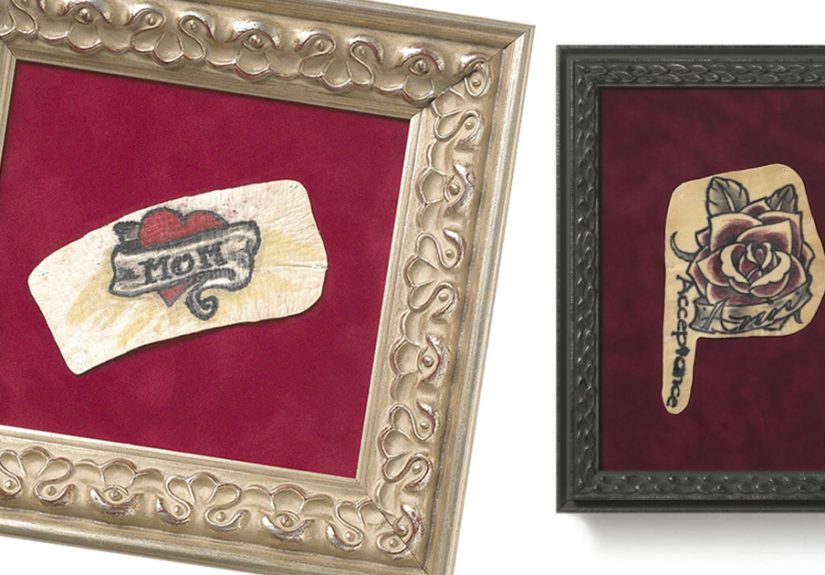
The headline sounds like internet bait, but the core idea is legitimate: after death, a selected tattoo can be professionally preserved and framed for surviving family members. In public reporting, the best-known company associated with this practice is Save My Ink Forever, based in Ohio. Families who use the service do not receive a replica, a photo print, or a painted reproduction. They receive the preserved tattoo itself, presented as a memorial keepsake.
That detail is exactly why the topic keeps going viral. People expect a novelty story and find something else: a real conversation about mourning, identity, consent, and what the body means after death. In a world where many people spend years choosing meaningful tattoos, the idea of letting that art vanish forever suddenly feels less obvious than it once did.
Why Tattoos Matter So Much To Families
A tattoo is one of the few possessions a person cannot accidentally leave in a drawer. It travels with them through jobs, breakups, road trips, rehab, parenthood, middle age, and questionable haircut phases. It is wearable memory. That helps explain why some families see tattoo preservation not as something macabre, but as something honest.
Think about it this way: if someone’s tattoos marked the birth of a child, the loss of a parent, a favorite football team, a military unit, a religious turning point, or a hard-earned recovery, then preserving one of those designs can feel more personal than preserving a generic object from the house. A watch is nice. A guitar is meaningful. But a tattoo is literally part of the person’s story.
That emotional logic fits neatly into a much larger shift in American death care. More families now want highly personalized memorials rather than one-size-fits-all services. They want music playlists, favorite colors, sports jerseys, custom venues, and tributes that reflect the individual instead of a standardized script. Tattoo preservation sits inside that trend, even if it occupies the boldest corner of the room.
How Tattoo Preservation After Death Usually Works
At a high level, the process is handled through funeral professionals and a preservation company, not through a family’s DIY craft cabinet. That is an important distinction. This is not an art project for a weekend. It is a specialized memorial service that depends on timing, funeral-home cooperation, and legal compliance.
While exact procedures vary, the basic path usually looks like this:
- A person expresses the wish in advance, or the legal decision-maker requests it after death.
- The family works with a funeral home or crematory and the preservation service.
- A specific tattoo is selected, often because it carries special meaning for the family.
- The preserved piece is processed and later returned in a frame designed for long-term display.
The finished piece generally comes back looking more like archival artwork than anything from a horror set. That matters because public imagination tends to run straight to the dramatic version. In reality, families who receive these memorials often describe them in the language of art, memory, and comfort rather than shock.
Another practical note: planning matters. Like many end-of-life decisions, this is easier when the person discussed it beforehand. A tattoo may be physically permanent, but the legal authority over what happens after death usually rests with the proper next of kin or whoever has the legal right to control final arrangements. In other words, if this is your dream memorial, do not assume your family will magically guess it. Tell them. Write it down. Put it next to your will, not between old takeout menus.
Why Some People Love The Idea
The strongest argument for tattoo preservation is simple: it can feel more like the person than other memorial options. Families often say photos are wonderful, but tattoos carry texture, personality, and a kind of physical closeness that ordinary keepsakes cannot replicate.
That emotional pull helps explain why several widely shared stories about tattoo preservation have struck such a nerve. In one reported case, a widow preserved her late husband’s Steelers tattoo after their son chose the design that meant the most to him. The family described the finished piece not as a gimmick, but as a comfort object that made him feel present in a way a picture could not. That kind of reaction may sound unusual to outsiders, but grief is rarely organized around outsider comfort.
There is also something undeniably modern about the idea. We live in an era when people personalize everything: playlists, wedding vows, sneakers, dog collars, coffee orders, phone cases, and yes, funerals. It makes sense that memorial choices have become more customized too. For heavily tattooed people, preserving a tattoo can feel more authentic than defaulting to traditions that never really matched their life in the first place.
Some families may even find the idea gentler than it sounds. A tattoo is already designed to outlast trends, moods, and common sense. Preserving it after death simply extends that logic. The tattoo spent years saying, “This mattered to me.” The memorial version says, “It still does.”
Why Other People Absolutely Hate The Idea
Not everyone is moved by tattoo preservation. Some people find it disturbing, irreverent, or emotionally overwhelming. Others feel that human remains should never be displayed, even in a memorial context. And plenty of people land in the middle: they understand why a grieving family might choose it, but they would personally prefer a less intense keepsake. Fair enough. The whole point of memorialization is that it is personal.
The negative reactions usually come from three places. First, there is the instinctive discomfort many people feel when the body is discussed openly after death. Second, there is a cultural divide about what counts as respectful. Third, there is the fact that grief makes outsiders weirdly opinionated. Give the internet one unusual mourning ritual and half the comments will act like they were appointed deputy sheriffs of proper sadness.
But discomfort alone does not make a practice meaningless or unethical. It just means people bring different beliefs to death, the body, religion, family, and remembrance. For one person, a framed tattoo may feel unsettling. For another, it may feel like the most sincere memorial in the house.
The Legal And Ethical Questions Are Real
This is the part where the conversation moves from “Wow, that is unusual” to “Okay, what are the rules?” Because whenever human remains, funeral law, and family wishes overlap, things get serious fast.
Funeral law experts have raised questions about whether tattoo preservation fits neatly within state laws governing human remains and who may authorize post-death procedures. That means legality can depend on where the death occurs, who has legal authority, and how the funeral home handles the request. Translation: this is not the kind of thing to leave vague and hope everyone improvises beautifully.
There are also ethical questions about consent. The strongest cases are the ones in which the deceased clearly expressed the wish in advance and the family is carrying it out. That removes a lot of uncertainty. Without prior consent, the situation can become much murkier, especially if relatives disagree about what the person would have wanted.
Consumer rights matter too. Funeral services in the United States are governed in part by the Federal Trade Commission’s Funeral Rule, which is designed to help consumers compare options and pay only for the services they choose. That does not mean the FTC has a special tattoo chapter hidden in a secret filing cabinet, but it does reinforce the idea that families should ask questions, understand costs, and know exactly what they are authorizing.
Questions Families Should Ask Before Choosing It
- Did the deceased clearly want this?
- Who legally controls final arrangements?
- Will the funeral home participate?
- How does the choice affect burial or cremation timing?
- What are the total costs and turnaround time?
- Are there state-specific legal limitations?
If a family cannot answer those questions, it is not time to proceed. It is time to pause and get clarity.
What This Trend Says About Modern Grief
Tattoo preservation is not just a quirky funeral option. It reflects a broader change in how Americans think about death. The old model of grief often emphasized restraint, standard rituals, and a polite emotional distance. The newer model is more expressive, more customized, and more willing to admit that people do not all mourn in the same key.
That shift appears everywhere: celebration-of-life events, memorial jewelry, digital tribute pages, ashes turned into records or diamonds, and memorial tattoos worn by surviving loved ones. Researchers and funeral professionals have been documenting this move toward highly personal remembrance for years. In that context, preserving a tattoo is unusual, yes, but not random. It belongs to a larger culture of saying, “I do not want generic closure. I want something that feels like them.”
There is also a practical side to this trend. More people are talking openly about death planning now than they once did. Families are becoming more aware that final wishes do not only cover burial or cremation. They can also cover the emotional details: what music should play, who should speak, what should be displayed, and what kind of memorial feels true to the person’s life.
So perhaps the strangest part of tattoo preservation is not that it exists. Perhaps the strangest part is that it makes perfect sense in 2026.
Is Tattoo Preservation After Death Right For Everyone?
Absolutely not. And that is the point. It is not supposed to be universal. It is supposed to be meaningful. For some families, the right memorial is a folded flag, a favorite jacket, a playlist, a handmade urn, or a backyard gathering with ribs and bad dancing. For others, a preserved tattoo may feel like the most complete representation of the person they lost.
The better question is not whether everyone should want this. The better question is whether people should be allowed to define remembrance in a way that reflects their values, their body, and their story. In many cases, the answer is yes, provided the process is legal, consent is clear, and the family understands what they are choosing.
And if the idea sounds bizarre, remember this: nearly every memorial custom looks unusual from the outside. Some people keep ashes on the mantle. Some wear a loved one’s fingerprint around their neck. Some sit beside a gravesite every Sunday with coffee and updates about the grandchildren. Humans are sentimental creatures with better wardrobes than we deserve. We make meaning however we can.
Experiences Related To Tattoo Preservation After Death
What makes this topic linger in people’s minds is not the novelty. It is the lived experience wrapped around it. Families who choose tattoo preservation are rarely chasing shock value. They are usually navigating the exhausting, surreal territory of fresh grief, where ordinary objects suddenly feel too ordinary. A photo can be beautiful, but it stays flat. A voice mail is precious, but it lasts only a few seconds. A framed tattoo, for some people, feels closer to the person’s physical presence and personality than either of those things.
That is why stories tied to this practice tend to be emotional rather than sensational. One family may choose a tattoo that marks military service. Another may choose a design connected to fatherhood, sobriety, faith, or a favorite sports team. The preserved piece becomes more than art on a wall. It becomes a conversation starter, a grief object, a family story, and sometimes a bridge for children who are trying to understand what loss means. Instead of saying, “Dad used to love this,” they can say, “This was part of him, and here is why it mattered.”
There is also a strange comfort in the specificity of it. Grief often feels huge and abstract. A tattoo is not abstract. It is a specific dragon, a specific date, a specific name, a specific emblem, a specific joke. That precision can help mourners focus on memory in a way that feels grounding. It turns a tidal wave of loss into one tangible, visible thing they can hold onto.
Public reaction adds another layer to the experience. People who share these memorials online often get both support and criticism. Some viewers call the practice beautiful, brave, and deeply personal. Others recoil instantly. Families then find themselves defending not only their grief, but their style of grief. That can be exhausting. Still, many who have chosen tattoo preservation say the comfort outweighs the judgment. Once the memorial is home, internet opinions start to look very small compared with the daily reality of missing someone.
There is even a practical lesson buried in these experiences: planning matters. Many families discover tattoo preservation only because the person mentioned it before death or because loved ones had already talked openly about final wishes. That conversation can spare survivors a great deal of confusion later. It also reminds us that end-of-life planning is not cold or morbid. It is often an act of generosity. It tells loved ones, “Here is what I want. Here is what would comfort me. Here is how you can honor me without guessing.”
In the end, the experience of tattoo preservation after death is less about preserving skin and more about preserving identity. The families drawn to it are usually trying to hold onto character, humor, style, stubbornness, love, and memory. They are saying that this person was not generic in life, so their memorial should not be generic in death. That may not be everyone’s choice, but it is a very human one.
Conclusion
So, can your tattooed skin really be preserved and framed for your loved ones after you die? Yes, it can. But the more interesting truth is why anyone would want that in the first place. Tattoo preservation after death sits at the crossroads of body art, family memory, funeral personalization, and modern grief. It is not for everybody, and it raises real legal and ethical questions. Yet for the people who choose it, the appeal is easy to understand: a tattoo may be one of the most honest records of who a person was.
In that sense, the framed memorial is not trying to be shocking. It is trying to be faithful. Faithful to the body, faithful to the story, and faithful to the idea that remembrance should look like the person being remembered. And in an age that values personal legacy more than polished tradition, that may be the most lasting part of all.