Table of Contents >> Show >> Hide
- Quick Table of Contents
- What “Semi-Legendary” Really Means (No, It’s Not an Insult)
- 10) Van Lang (Vietnam)
- 9) The Legendary Piasts (Poland)
- 8) Persia’s Mythic Dynasties (Iran and the Persianate world)
- 7) Gojoseon (Korea)
- 6) Pagan and Tagaung (Myanmar)
- 5) The Xia Dynasty (China)
- 4) Dynasty Zero (Egypt)
- 3) The Kirat Kings (Nepal)
- 2) Magna Hungaria (Hungary’s “homecoming” memory)
- 1) Trojan Founders of Europe (Medieval Britain and beyond)
- The Big Pattern: Why These Kingdoms Refuse to Disappear
- Experiences: How You Can “Meet” These Semi-Legendary Kingdoms Today (Without a Time Machine)
- Conclusion
Every nation has a “once upon a time.” Sometimes that story is backed by archaeology, sometimes by a medieval chronicler with the historical accuracy of a fortune cookie,
and sometimes by a mixture of bothbecause humans love a good origin story almost as much as we love arguing about it.
In this article, we’re exploring ten semi-legendary kingdoms and founding traditions that modern national groups still referencethrough holidays, school lessons,
monuments, family lore, and the occasional “Actually…” in online comment sections. These aren’t fairy-tale realms with zero real-world fingerprints.
They’re the hazy borderlands where myth, memory, propaganda, and early history all share the same crowded apartment.
What “Semi-Legendary” Really Means (No, It’s Not an Insult)
“Semi-legendary” doesn’t mean “fake.” It usually means one of three things:
- We have later written traditions that claim a very ancient origin, but the earliest records were compiled long after the supposed events.
- We have archaeology that proves complex societies existedbut connecting them to named kings and dynasties is still debated.
- We have political memory: stories retold because they answer a powerful question“Who are we, and where did we come from?”
Think of these kingdoms as history wearing slightly foggy glasses. You can still recognize the shape, but the details blur when you lean in too close.
10) Van Lang (Vietnam)
The legend in a nutshell
Vietnamese tradition places the first Vietnamese state in a legendary realm called Van Lang, associated with the Hùng Kings.
In the classic telling, a line of Hùng rulers governs an early kingdom centered in what is now northern Vietnamdeep in the “before the records” era.
What historians do with that story
Modern scholarship tends to treat Van Lang as a cultural memory rather than a fully documented state with a neat timeline.
The core ideaearly societies forming around river deltas, wet-rice agriculture, and bronze technologyfits the broader arc of Southeast Asian prehistory.
But pinning a precise start date and an unbroken list of kings is where legend confidently outruns evidence.
Why it still matters today
Van Lang functions as a national “first chapter”: a symbolic starting line for Vietnamese identity. Whether you approach it as history, mythology, or something in-between,
it’s a shared reference pointthe kind of origin story that keeps showing up because it’s doing cultural work, not just reciting facts.
9) The Legendary Piasts (Poland)
The legend in a nutshell
Poland’s first ruling family, the Piast dynasty, comes with a founding tale that reads like medieval moral theater:
a cruel ruler (often named Popiel) meets a nasty end, and a humble, hardworking figure named Piast (a plowman/wheelwright depending on the version)
becomes the ancestor of a new line of rulers. It’s a story with an obvious message: “Don’t be a corrupt aristocrathistory has consequences.”
What historians do with that story
The Piasts are historically real as a ruling dynasty, but the earliest “origin episode” lives in chronicles written centuries after the supposed events.
That doesn’t make it useless; it makes it revealing. The legend explains how medieval Poland wanted to imagine legitimate rule:
virtue, hospitality, and communal approval triumphing over decadent leadership.
Why it still matters today
Origin legends like this become cultural shorthand. They’re repeated because they’re sticky: vivid villains, symbolic justice, and a relatable hero who didn’t start out in a palace.
In modern identity terms, it’s also a classic “we rose from the people” narrativeone that nations everywhere love because it sounds like a democracy auditioning for a crown.
8) Persia’s Mythic Dynasties (Iran and the Persianate world)
The legend in a nutshell
Persian tradition preserves ancient lineages of rulersoften grouped into mythic dynasties such as the Pishdadian and Kayanian kings
popularized through the Shahnama (Book of Kings), a monumental epic that mixes creation stories, heroic cycles, and remembered history.
If national epics had streaming platforms, the Shahnama would have multiple seasons, spin-offs, and a fandom intense enough to power a small city.
What historians do with that story
Scholars generally treat these dynasties as mythic frameworks rather than verifiable royal lists. Yet the Shahnama preserves cultural values and political ideals:
legitimate kingship, cosmic order, betrayal, endurance, and the social meaning of Iran’s past.
It’s not a census recordit’s a civilization narrating itself.
Why it still matters today
In modern Iranian identity (and across Persianate cultures), mythic kings are cultural touchstones.
They show up in literature, visual art, names, and national memory. Even when everyone agrees “this part is legendary,” the emotional truth remains powerful:
“We have deep roots, a long story, and heroes who still feel like ours.”
7) Gojoseon (Korea)
The legend in a nutshell
Korean tradition credits the founding of the earliest Korean kingdom, Gojoseon, to the legendary figure Dangun.
The myth famously includes a transformation tale involving a bear (and, depending on the version you grew up with, a tiger who did not have the patience for the wellness retreat requirements).
What historians do with that story
Gojoseon is treated as an early Korean state in ancient history, but the Dangun narrative belongs to a mythic origin layer.
As with many founding myths, its purpose is not to provide footnotesit’s to explain legitimacy, sacred origins, and national continuity.
Why it still matters today
Founding figures like Dangun remain culturally resonant because they define “firstness.”
They help anchor identity in time, especially for modern nations with long histories, shifting borders, and complicated political narratives.
Whether you treat the myth literally or symbolically, it continues to shape how people imagine the beginning of “us.”
6) Pagan and Tagaung (Myanmar)
The legend in a nutshell
Myanmar’s historical memory includes stories of early centers like Tagaungoften presented in chronicles as an ancient royal seatand later, the historically powerful
Pagan (Bagan) Kingdom, famous for its breathtaking temple city along the Irrawaddy River.
Think of it as a two-part origin package: “Here’s the deep legendary root, and here’s the place you can still see rising out of the landscape like history turned into architecture.”
What historians do with that story
Bagan is strongly historical, tied to state formation and the spread of Theravada Buddhism in the region. Tagaung sits closer to the semi-legendary end:
it appears in traditional narratives as a venerable origin point, but the farther back the chronicles reach, the more we rely on tradition rather than independent documentation.
Why it still matters today
Places like Bagan serve as visible proof that “we were here, building, governing, and dreaming in stone” long before modern borders.
Legendary capitals like Tagaung extend that story even deeper, giving communities a sense that their identity began not merely in history,
but in the sacred preface to history.
5) The Xia Dynasty (China)
The legend in a nutshell
Traditional Chinese history places the Xia dynasty as the first dynastyan era of early kings and foundational governance, preceding the better-attested Shang.
In the oldest stories, the Xia become the opening act in a long dynastic narrative about order, virtue, decline, and replacement.
What historians do with that story
Here’s the twist: many historians debate whether the Xia existed as described in later texts.
Archaeology demonstrates early complex societies in the relevant time window, and sites like Erlitou are often discussed in connection with early state formation.
But matching archaeological cultures to named dynasties from later records is trickyespecially when political ideology and moral lessons are baked into the ancient narrative.
Why it still matters today
The Xia are culturally central because they represent “the beginning of the beginning.” Even when approached cautiously, the Xia story still serves as a framework
for understanding the rise of dynastic rule and the idea that legitimacy depends on more than powerit depends on virtue, mandate, and social order.
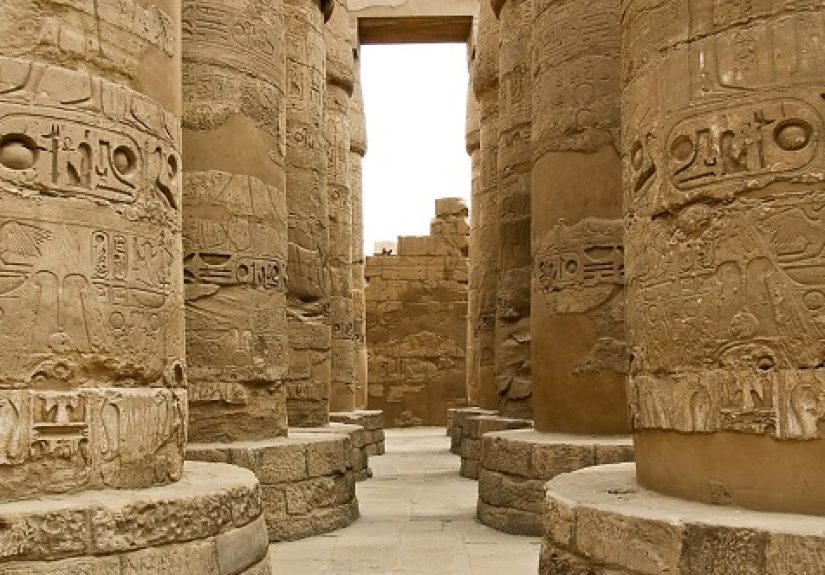
4) Dynasty Zero (Egypt)
The legend in a nutshell
Before Egypt’s official dynasties, there’s a shadowy prelude often labeled Dynasty 0a transitional period when regional rulers consolidate power,
symbols of kingship sharpen, and the unification of Upper and Lower Egypt comes into view.
It’s history’s version of the pilot episode: the characters are there, the plot is forming, and the budget is suddenly getting bigger.
What historians do with that story
Unlike some purely mythic traditions, early Egypt gives us iconic objectslike the Narmer Palettethat show royal imagery connected with rule over
different parts of the Nile Valley. Scholars debate details (as scholars do, because it’s their cardio), but the broad arc is clear:
by around the dawn of dynastic Egypt, a powerful kingship emerges with recognizable symbols and state ideology.
Why it still matters today
Egypt’s origin story is globally famous, but it’s also locally meaningful: it frames the emergence of one of the world’s earliest territorial states.
“Dynasty Zero” sits at the tantalizing edge where archaeology speaks loudly, even if it doesn’t always give us every name and date we wish it would.
3) The Kirat Kings (Nepal)
The legend in a nutshell
Nepal’s early narratives include the Kirat (Kirata) kings, often described as ancient rulers linked to Kirati peoples and the deep past of the Himalayan region.
In many retellings, this is an era of foundational governancesometimes presented as a long sequence that predates later, better-documented dynasties.
What historians do with that story
The Kirat layer of Nepal’s past blends tradition and early history. The region’s geography and cultural crossroadsbetween South Asia, Tibet, and inner Asian trade networks
make it historically plausible that distinct polities existed early on. But as with many ancient royal lists, precise details can be hard to independently verify.
Why it still matters today
For modern identity, Kirat traditions highlight the depth and diversity of Nepal’s historical roots.
They also remind us that national histories are rarely one straight line; they’re braided from multiple communities and memories.
2) Magna Hungaria (Hungary’s “homecoming” memory)
The legend in a nutshell
Medieval sources describe Magna Hungaria as a region far to the east where “Hungarians” (or related peoples) were said to liveoften associated with areas near the Volga.
One striking episode involves a medieval Dominican friar (often identified as Julian) reportedly encountering a group who spoke a language related to Hungarian,
reinforcing the idea of an eastern homeland in collective memory.
What historians do with that story
Hungarian origins are a serious scholarly topic involving linguistics, archaeology, migration histories, and steppe politics.
Medieval reports can preserve real information, but they also compress and simplify complex movements over centuries.
Still, the Magna Hungaria idea remains fascinating because it’s a memory of identity as travel: “We came from somewhere, and we can pointat least roughlytoward it.”
Why it still matters today
Origin homelands carry emotional weight. They’re not just geography; they’re belonging, antiquity, and a narrative of survival.
Even when modern research refines or challenges the medieval picture, the story continues because it connects language, kinship, and history into one compelling arc.
1) Trojan Founders of Europe (Medieval Britain and beyond)
The legend in a nutshell
Medieval Europe loved a classy origin story, and nothing says “classy” like claiming you descend from Troy.
One famous version traces Britain’s legendary origins to Brutus of Troy, popularized in medieval chronicles (especially those associated with
Geoffrey of Monmouth). Other European peoples likewise adopted Trojan connections, becauselet’s be honestnobody wants their origin story to start with “some villages,”
when it could start with “epic ruins and heroic exile.”
What historians do with that story
This is widely treated as literary mythmaking, not a literal migration record.
But it reveals the medieval logic of legitimacy: if Rome was prestigious and Rome traced itself to Trojan roots, then claiming Trojan ancestry was like getting an ancient
“verified” badge for your kingdom.
Why it still matters today
Even as modern historians discard the Trojan genealogy as factual history, the stories remain culturally influentialshaping medieval identity, literature, and how later periods imagined “national beginnings.”
It’s the reminder that history isn’t only what happened; it’s also what people needed to believe about what happened.
The Big Pattern: Why These Kingdoms Refuse to Disappear
Across continents, these semi-legendary kingdoms share a common job description:
- They create continuity when records are scarce.
- They legitimize authority by linking rule to virtue, destiny, or sacred origin.
- They unify identity by giving diverse communities a shared “first page.”
- They simplify complexity into a story humans can remember and repeat.
And yes, they can be misusedflattening diversity, turning symbolism into rigid claims, or fueling modern arguments.
But at their best, they also preserve cultural memory and invite curiosity: What’s real here? What’s metaphor? And what does this story say about the people who kept telling it?
Experiences: How You Can “Meet” These Semi-Legendary Kingdoms Today (Without a Time Machine)
You don’t have to swear fealty to a mythical founder or start wearing a ceremonial crown to experience these kingdoms as living ideas. In fact, the best “access points”
often look surprisingly modern: a museum gallery, a temple complex at sunrise, a festival, a poem in translation, or a conversation where someone says,
“My grandparents told me…” and suddenly you’re standing in the doorway between myth and history.
If you’re drawn to Van Lang, the experience is often about cultural memory. You’ll notice how origin stories survive through ritual and commemoration:
family altars, ancestral worship customs, and the way legendary founders show up in local identity. The “feel” of Van Lang isn’t a single ruin you can point atit’s the
continuity of a story carried forward in communities that treat the distant past as part of the present.
With the Legendary Piasts, the experience can be delightfully narrative. Origin legends are meant to be retold, and Poland’s stories have the kind of vivid imagery
that sticks: the humble household, the moral reversal, the fall of a corrupt ruler. Reading medieval chronicles or modern retellings is like watching a nation workshop its identity
in real timedeciding what counts as “good rule” and who deserves to inherit the future.
For Persia’s mythic dynasties, the experience is often artistic. The Shahnama isn’t just a text; it’s a cultural universepainted, recited, and reinterpreted for centuries.
Spend time with illustrated manuscript pages (even digitally) and you’ll feel how myth becomes visual memory. The heroes and kings might be legendary, but the emotion is real:
love, loyalty, betrayal, and the insistence that a people’s story is worth preserving in beauty.
The Gojoseon/Dangun tradition is a reminder that myths are also mapsshowing a society where it believes authority comes from, and what kind of relationship it imagines
between heaven, earth, and human community. You can “experience” this not only in historical reading, but also in how modern culture references founding myths:
the way origin stories frame identity, unity, and endurance.
If you want a full-body experiencewhere history stops being an abstract timeline and becomes a place you can standthen Bagan is hard to beat.
Thousands of structures across a broad plain make state history feel physical. You don’t have to know every king’s name to understand the message the landscape delivers:
“This was an organized society with resources, belief systems, labor, and vision.” And when you pair Bagan’s historical weight with older legendary references like Tagaung,
you see how nations often stack memory layers: one part visible stone, one part remembered beginning.
The Xia dynasty experience is the thrill of scholarly suspense. It’s the moment you realize history isn’t a completed bookit’s an ongoing investigation.
You can read about Erlitou and feel the intellectual tension: archaeological evidence on one side, traditional chronicles on the other, and modern interpretation in the middle trying
to match them responsibly. If you enjoy “myth or reality?” questions, Xia is basically a lifelong hobby disguised as a dynasty.
Dynasty Zero gives you the museum-and-symbol experience. Objects like the Narmer Palette aren’t just artifacts; they’re political storytelling in stone.
When you look at early royal imagery, you’re watching a state invent its visual languagecrowns, domination scenes, divine authorityso that power becomes legible even to people
who never meet the king.
Finally, the Trojan founder myths are best experienced as literary archaeology: tracing how medieval Europe built legitimacy by borrowing prestige from older empires.
Reading these stories today can be oddly comforting. They show that humans have always craved a grand originpreferably with dramatic exile, heroic survival, and a conveniently noble bloodline.
And if you catch yourself smiling at that, congratulations: you’ve just had the most authentic possible experience of a semi-legendary kingdomrecognizing that it was never only about facts,
but about meaning.