Table of Contents >> Show >> Hide
- Way #1: It’s Not a One-Time FlukeIt’s a Pattern
- Way #2: Your Erection Quality Is Changing in Noticeable, Specific Ways
- Way #3: Other Health Clues Are Showing Up Alongside the Erection Issues
- Common Mix-Ups: Problems That Look Like ED (But Aren’t Exactly)
- What to Do Next If You Think You Might Have ED
- Real-World Experiences: What People Notice First (And What Helps)
- 1) “It started as ‘sometimes’… then it became a confidence problem.”
- 2) “I realized morning erections were disappearingand I ignored it.”
- 3) “Everything worked alone, but not with my partnerand I felt guilty.”
- 4) “A medication change flipped a switch.”
- 5) “Once I talked about it, it got easierimmediately.”
- Conclusion
Quick note before we get into it: this article is educationalnot a medical diagnosis. But it can help you figure out whether you’re dealing with occasional “off nights” (normal) or a pattern that’s worth discussing with a healthcare professional (also normal, and very commonjust less fun to Google at 2 a.m.).
Let’s be real: erections are a confidence-sensitive, sleep-dependent, stress-allergic, blood-flow-powered group project between your brain, nerves, hormones, blood vessels, and muscles. When the project goes sideways, it doesn’t automatically mean something is “wrong” with you as a person. It may simply mean your body is asking for attentionsometimes emotional attention, sometimes medical attention, and sometimes both.
So how can you tell whether you might have erectile dysfunction (ED)? Here are three practical, evidence-based ways to size up what’s happeningwithout turning your bedroom into a laboratory.
Way #1: It’s Not a One-Time FlukeIt’s a Pattern
The biggest “tell” for erectile dysfunction isn’t a single disappointing moment. It’s repeated difficulty getting or keeping an erection firm enough for sexespecially when it happens consistently over time.
Think in trends, not isolated incidents
Most people with a penis will experience occasional erection problems. That can happen after a rough week, too little sleep, too much alcohol, a fight with a partner, a new medication, or even a really intense day of “doomscrolling.” None of that automatically equals ED.
ED becomes more likely when you notice a pattern like:
- You often can’t get an erection when you want one
- You can get one, but it’s not firm enough for penetration or satisfying sex
- You lose the erection before or shortly after starting
- The issue has been going on for several weeks to months, not just a couple of “bad nights”
A simple tracking trick (no spreadsheets required)
If you’re not sure whether it’s “often” or “sometimes,” try a low-effort check-in for 2–4 weeks:
- When sex or intimacy comes up, do you usually feel confident you’ll be able to get and keep an erection?
- How often do you avoid intimacy because you’re worried about performance?
- Does the problem show up across different situations (different times of day, different levels of stress, different types of stimulation)?
If the answer looks less like “rare fluke” and more like “recurring theme,” that points toward ED (or at least something worth evaluating).
Way #2: Your Erection Quality Is Changing in Noticeable, Specific Ways
ED isn’t only “I can’t get an erection.” It often shows up as changes in rigidity, staying power, or reliability. If you want a clearer self-check, focus on what’s actually happening in the moment instead of labeling it as “failure.” (Your body responds better to curiosity than to insultsshocking, I know.)
The “firm enough for sex” reality test
Ask yourself:
- Rigidity: Is the erection firm enough for penetration?
- Maintenance: Can you keep it long enough for the kind of sex you want?
- Consistency: Does it work reliably, or is it unpredictable?
- Recovery: Has it become much harder to get another erection after orgasm than it used to be?
A change in any one of these doesn’t automatically mean ED. But when multiple items shiftespecially repeatedlyit’s a strong signal.
Compare “solo,” “sleep,” and “partner” erections (the context clues matter)
One useful way to understand what might be driving the problem is to notice where erections are easier or harder to get:
- You get erections during masturbation but struggle with a partner: performance anxiety, relationship stress, distraction, or depression may be playing a big role. Physical causes can still exist, but the pattern can hint at a strong psychological component.
- You rarely wake up with morning erections anymore: this can sometimes suggest a physical contributor (like blood-flow or nerve-related issues). It’s not a perfect test, but it’s a meaningful clue to bring up with a clinician.
- You struggle in every setting (solo, partner, morning): that increases the odds of an underlying physical factor, or a combination of physical + psychological contributors.
Importantly, this isn’t about “blame.” ED is often multi-factorial. Stress can worsen blood-flow problems; blood-flow problems can worsen stress. Your body loves a feedback loopjust not the fun kind.
Way #3: Other Health Clues Are Showing Up Alongside the Erection Issues
Erections depend heavily on healthy blood vessels and nerves. That’s why ED can sometimes be an early sign that something elselike cardiovascular risk factors or diabetesis affecting circulation or nerve function.
Common health connections that can travel with ED
If ED is showing up, it may be more likely (not guaranteed) when you also have:
- Diabetes or signs of blood sugar issues (because high blood sugar can affect nerves and blood vessels)
- High blood pressure, high cholesterol, or known vascular disease
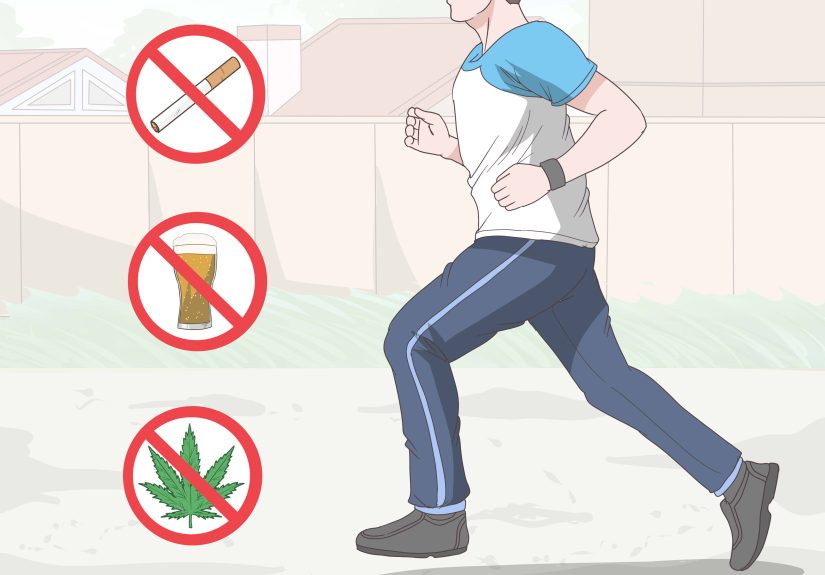
- Smoking history (blood vessels do not love smoke)
- Obesity or low physical activity
- Depression or anxiety (which can affect desire, arousal, and focus)
- Sleep problems (especially untreated sleep apnea)
Medication and substance “usual suspects”
Another clue that your situation could be ED (and that it might be fixable) is timing: if erection problems started after a change in routine, it’s worth noting whether you:
- Started a new prescription (some medications can affect sexual function)
- Increased alcohol use, cannabis, or other substances
- Experienced a major stressor (work upheaval, grief, relationship conflict)
Don’t stop or change any medication on your ownjust collect the info. Clinicians love timelines almost as much as your body loves drama.
When ED can be a “check engine” light
Sometimes ED is mainly about sexual performance. Sometimes it’s also a signal to check cardiovascular health, metabolic health, and mental health. That’s not meant to scare youit’s meant to give you power. If something else is contributing, identifying it can improve both your sex life and your overall health.
Common Mix-Ups: Problems That Look Like ED (But Aren’t Exactly)
Before you decide you have ED, it helps to separate it from a few nearby issues:
Low sex drive vs. ED
If your main issue is not wanting sex (low libido), that’s not the same as ED. Libido can dip from stress, depression, relationship issues, hormonal changes, medication side effects, or plain exhaustion. You can have low desire with normal erectionsor strong desire with ED. Human bodies are very committed to complexity.
Premature ejaculation vs. ED
Finishing earlier than you’d like can feel like an erection problem, but it’s different. Sometimes people lose an erection after orgasm and interpret it as ED, when it’s actually normal post-orgasm physiology or an ejaculation timing issue.
Pain, curvature, or physical changes
If erections are painful, significantly curved, or accompanied by lumps or plaques, that may point to a different condition that still deserves medical attention. ED can coexist with these problems, but it’s not the same diagnosis.
What to Do Next If You Think You Might Have ED
If your self-check points toward ED, you have two goals:
- Confirm what’s happening (and how often)
- Figure out what’s contributing (physical, psychological, or both)
When it’s time to talk to a healthcare professional
Consider scheduling a visit if:
- The problem is consistent and has lasted more than a few months
- It’s causing stress, avoidance, relationship strain, or lower self-esteem
- You have risk factors like diabetes, high blood pressure, high cholesterol, or smoking history
- You notice other symptoms (fatigue, depressed mood, chest pain with exertion, numbness, or urinary symptoms)
What a typical evaluation looks like (so it’s less intimidating)
Many people avoid care because they imagine an awkward exam plus a pop quiz on their sex life. The reality is usually more straightforward: clinicians commonly start with a medical history (including sexual and mental health history), a physical exam, and basic lab tests as needed. Depending on your situation, additional tests may be used to clarify causessuch as checking nighttime erections or using ultrasound to assess blood flow.
Practical steps you can start today (while you line up answers)
- Reduce pressure: aim for intimacy that isn’t erection-dependent (touch, oral sex, mutual masturbation, closeness). That lowers anxiety and often improves erections indirectly.
- Protect sleep: poor sleep and high stress are notorious erection-thieves.
- Move your body: regular activity supports circulation and vascular healthboth relevant to erections.
- Talk early with your partner: secrecy tends to create “meaning,” and that meaning is usually inaccurate and unhelpful.
ED is common, treatable, and nothing to be ashamed of. You’re not “broken.” You’re humanwith a nervous system that occasionally files formal complaints.
Real-World Experiences: What People Notice First (And What Helps)
The experiences below are composite examples drawn from common patterns clinicians and patients discussshared to make the topic feel less isolating, not to replace individualized medical advice.
1) “It started as ‘sometimes’… then it became a confidence problem.”
One of the most common stories goes like this: a person has a couple of off nightsmaybe after a stressful work stretch or a few drinksthen starts watching their body like a suspicious security guard. The next time intimacy happens, they’re mentally running commentary: “Is it happening yet? Am I firm enough? What if I lose it?” That mental soundtrack is basically the opposite of arousal. It becomes a loop: anxiety causes erection trouble, erection trouble causes anxiety, and suddenly the original trigger (stress, alcohol, fatigue) isn’t even the main issue anymore.
What helps in this scenario is often reducing performance pressure and rebuilding confidence. That can mean slower intimacy, focusing on sensations over outcomes, and openly talking with a partner so the moment doesn’t feel like a silent exam you didn’t study for.
2) “I realized morning erections were disappearingand I ignored it.”
Another pattern: someone notices they rarely wake up with morning erections anymore. They brush it off as aging, stress, or “just being tired.” Meanwhile, erections during sex become less reliable too. Eventually, they mention it during a routine visitoften for something completely unrelatedand the conversation leads to checking blood pressure, blood sugar, cholesterol, sleep quality, and medications.
People are sometimes surprised to learn that ED can overlap with cardiovascular risk factors. The “helpful” part of this story is that addressing those factors can improve more than sex: energy, stamina, mood, and long-term health often benefit too. The erection issues were the body’s way of asking for a check-inannoying, but potentially protective.
3) “Everything worked alone, but not with my partnerand I felt guilty.”
This experience is emotionally heavy and very common: erections happen during masturbation, but with a partner they fade or never fully show up. Many people misinterpret this as proof they’re not attracted to their partner or that the relationship is doomed. In reality, performance anxiety, pressure to “do a good job,” distraction, depression, resentment, or unresolved conflict can all interfere with arousal. Sometimes it’s also a mismatch in pace: one partner wants things to move fast, the other needs more time to feel relaxed and turned on.
What helps is reframing the meaning: the issue isn’t necessarily “my partner isn’t attractive” or “I’m failing.” It’s often “my nervous system isn’t relaxed enough to let this happen.” Honest conversations, therapy (individual or couples), and sometimes medical evaluation can all be part of the solutionbecause this can still coexist with physical contributors.
4) “A medication change flipped a switch.”
Some people can point to a clear before-and-after: a new antidepressant, blood pressure medication, or other prescription coincides with erection problems. Others notice it after increasing alcohol or cannabis use to manage stress. In these situations, the turning point is often realizing it isn’t a character flawit’s a variable that can be adjusted with professional help. Clinicians can sometimes change doses, swap medications, or offer strategies to reduce sexual side effects without compromising the original reason for treatment.
5) “Once I talked about it, it got easierimmediately.”
Finally, there’s a surprisingly common “plot twist”: the moment someone says out loud, “Hey, I’ve been struggling with erections,” the intensity drops. The partner stops guessing, the person stops hiding, and intimacy becomes collaborative instead of performative. That doesn’t magically fix every casebut it often improves the emotional environment, which is a big part of sexual function. When the bedroom stops feeling like a courtroom, your body is more likely to cooperate.
Bottom line: ED is a health issue, not a masculinity score. The most reliable “tell” is a persistent patternespecially when it changes your behavior, confidence, or relationship. If you recognize yourself in any of these experiences, you’re not alone, and you have options.
Conclusion
If you’re trying to figure out whether you have erectile dysfunction, focus on three things: pattern (how often it happens), quality (firmness and staying power), and context (solo/morning vs. partner erections and any health clues). If the problem is consistent and sticking around for monthsor if it’s affecting your confidence and relationshipsit’s worth talking with a healthcare professional. ED is common, it’s treatable, and it can sometimes be an early signal to check overall health. Either way, you deserve clear answers and a plan that works.