Table of Contents >> Show >> Hide
- Before You Move a Single Sofa: The Layout Rules That Save You From Regret
- 48 Living Room Layout Ideas That Make the Most of Your Space
- Small-Space Layouts That Feel Bigger
- Classic “Works in Almost Any Room” Arrangements
- TV-Focused Layouts That Still Feel Social
- Fireplace and Dual-Focal-Point Layouts
- Awkward Rooms, Narrow Rooms, and “Who Built This?” Floor Plans
- Open-Concept and Multi-Zone Layouts
- Real-Life Experiences: What It Feels Like to Actually Live With These Layouts (500+ Words)
- Conclusion
Your living room has one job: make real life look intentional. That means it needs to handle movie nights, awkward small talk,
spilled snacks, surprise guests, and the mysterious way socks migrate under sofas like they’re building a tiny underground society.
The good news? You don’t need more square footageyou need a smarter layout.
Below are 48 practical living room layout ideas that help you use every inch without making the room feel like a furniture showroom
(or a maze designed by a mischievous interior designer). We’ll start with quick rules that make almost any layout work, then jump into
ideas you can mix-and-match for your spacebig, small, square, narrow, open-concept, or “why is there a doorway there?!”
Before You Move a Single Sofa: The Layout Rules That Save You From Regret
Start with your “boss” focal point
Every living room needs a clear “main character.” It might be a fireplace, a TV, a picture window, or even a bold piece of art.
Pick one, then arrange seating to acknowledge itlike your furniture is politely facing the speaker in a meeting.
Design traffic flow first, then decorate
Imagine someone carrying a full mug of coffee through your room. If your layout forces them to sidestep around table corners,
you’re basically setting up a slow-motion tragedy. Keep walking paths clear and obvious, especially between doorways.
Stop pushing everything against the walls
“Wall-hugging furniture” often makes a room feel disconnected. Pull key pieces inward to create a seating zone. Even a few inches
can help the room feel more designed and less like you’re waiting for inspection.
Build a conversation zone (even if you love your TV)
The best living rooms let people talk without yelling. Aim for seating that faces toward each other (or at least angles in),
with a table within reach for drinks. If your room is large, make two zones rather than one giant “shout-across-the-canyon” setup.
Use a rug like a “layout frame”
A rug is basically painter’s tape you can walk on. It defines the seating area, anchors the furniture, and makes everything look like it belongs together.
When possible, let at least the front legs of major seating sit on the rug.
Give your coffee table (and your shins) some space
Leave enough room to move comfortably between the sofa and the coffee table. Too tight and you’ll bruise your knees. Too far and you’ll
feel like you need a snack drone delivery service.
48 Living Room Layout Ideas That Make the Most of Your Space
Small-Space Layouts That Feel Bigger
- The “Float the Sofa” move: Pull the sofa a few inches off the wall and place a slim console behind it. Instant breathing room and bonus surface space.
- Loveseat + two chairs: Use a loveseat instead of a full sofa, then add two chairs opposite. Same seating flexibility, less bulk.
- Chair-and-a-half hero: Swap one armchair for a chair-and-a-half in a cornercomfy, compact, and secretly everyone’s favorite seat.
- Round coffee table for tight paths: A round table keeps corners from blocking walkways and makes a small room feel smoother to navigate.
- Ottoman instead of coffee table: Use a large upholstered ottoman with a tray. Softer edges, extra seating, and fewer “ow!” moments.
- No coffee table, all side tables: In ultra-tight rooms, skip the center table and use small side tables so circulation stays open.
- Wall-mounted media + floating furniture: Mount the TV and use a slimmer console (or none). That visual lightness matters in small spaces.
- Corner sectional done right: Choose an L-shaped sectional that tucks into a corner, then keep the rest of the furniture airy (one chair max).
- One sofa + two poufs: Poufs can slide under a console or into a corner when not neededperfect for “extra guests, minimal clutter” living.
- Two chairs and a tiny table: If you don’t watch TV much, create a mini conversation set-up instead of forcing a sofa into the room.
- Window-facing reading nook: Place one chair + lamp + small table near a window. It creates a “second zone” without needing extra square footage.
- Compact sectional + swivel chair: Swivel chairs pull double dutyturn toward conversation, turn toward TV, turn toward snacks.
Classic “Works in Almost Any Room” Arrangements
- Sofa + two chairs angled in: A classic: sofa faces focal point; chairs sit side-by-side at a slight angle. Balanced, social, and designer-approved.
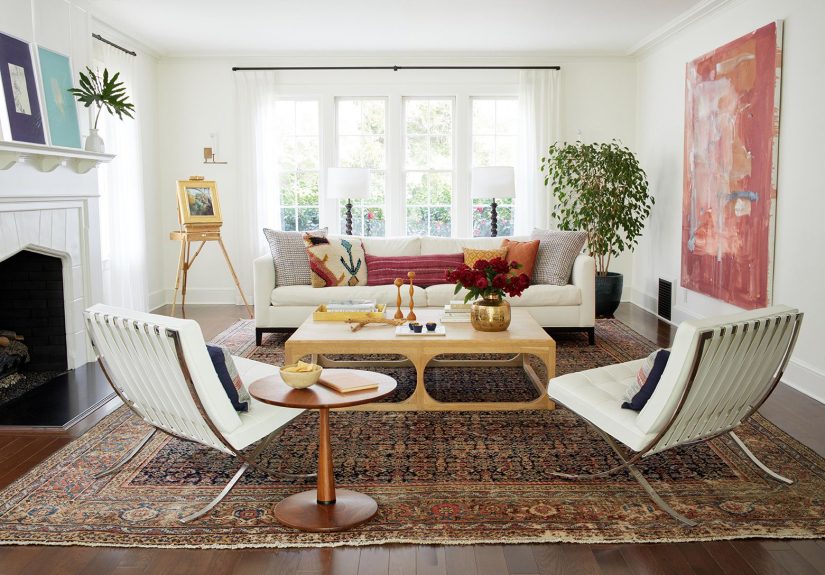
- Two sofas facing each other: Ideal for conversation in longer roomsanchor with a rug and a sturdy coffee table in the center.
- Sofa + loveseat in an L: Use the L to define the seating zone; add one accent chair only if you still have clear walkways.
- U-shape for hosting: Sofa plus two chairs (or a loveseat) creates a U. Great for games, drinks, and actually seeing your guests’ faces.
- Symmetry with a twist: Match the two main chairs, but vary side tables or lamps. It feels polished, not “catalog copy-paste.”
- Asymmetry that still feels calm: Use one chair, one bench, or one poufjust keep visual weight balanced (don’t stack all the heavy pieces on one side).
- Daybed as the “second sofa”: A daybed adds lounge seating without the bulk of another full couchespecially good in airy, casual spaces.
- Bench opposite the sofa: A slim bench can act like seating and a pathway-friendly dividerespecially in narrow rooms.
- Conversation circle: Place seating so people can turn and talk easily. If the room is TV-first, angle chairs so faces still connect.
- Sectional + one statement chair: Let the sectional handle the crowd; the chair adds style and a flexible seat that can move as needed.
TV-Focused Layouts That Still Feel Social
- Straight-on sofa + two chairs at 90 degrees: Keep the sofa facing the TV; place chairs perpendicular for conversation that doesn’t feel like a stadium.
- Diagonal TV corner layout: Put the TV in a corner and angle the sofa. This can solve glare and awkward wall breaks in small rooms.
- Swivel-chair “TV cheat code”: Add one swivel chair near the sofa cornerviewing flexibility without rearranging everything.
- Floating sectional facing TV: In open-plan spaces, float the sectional so the back defines the room boundary, then keep a clear path behind it.
- Media wall + two-zone living: Place TV seating on one side; create a reading or game table zone on the other. One room, two purposes.
- Low-profile seating for sightlines: Use a lower sofa and armless chairs if the room has windows or open views you don’t want to block.
- TV + console behind sofa: If the TV must live on the opposite wall, add a console behind the sofa for lighting, chargers, and decorfunction without clutter.
- Projector-friendly layout: Skip a permanent TV focal point. Aim seating toward a blank wall and keep furniture easy to shift for movie night.
Fireplace and Dual-Focal-Point Layouts
- Fireplace as the star: Face the main sofa toward the fireplace. Add two chairs flanking the hearth for a cozy, balanced “gather here” signal.
- U-shape around the fireplace: Sofa plus chairs creates a U that feels intimateespecially good in larger rooms that need “coziness help.”
- Fireplace on a side wall: Float the sofa perpendicular to the fireplace, then angle chairs toward the hearth so the room doesn’t feel split.
- Fireplace + TV compromise: If you have both, angle seating so it acknowledges both zones. Add a swivel chair for the person who refuses to choose sides.
- Two focal points, two seating zones: In big rooms, stop forcing one layout to do everything. Create a fireplace conversation area plus a separate TV lounge.
- Window focal point layout: If the view is the best feature, face seating toward it. Put the TV on a side wall or use a low console so the view stays dominant.
Awkward Rooms, Narrow Rooms, and “Who Built This?” Floor Plans
- Narrow room: sofa long-wall, chairs short-wall: Keep the sofa on the longest wall; use two compact chairs opposite to avoid blocking the walkway.
- Pass-through room: “walkway moat” planning: Identify the main path first, then build your seating zone to one side so traffic doesn’t cut through it.
- Multiple doorways: float the furniture island: Create a central seating “island” on a rug, leaving clear routes between doors around the perimeter.
- Off-center focal point: Don’t fight it. Center the seating area on the rug, then visually balance the off-center focal point with art or lighting on the opposite side.
- Corner fireplace workaround: Angle the sofa slightly toward the corner fireplace, then place a chair opposite to complete the conversation shape.
- Bay window solution: Place a settee or two chairs in the bay. It uses the niche and frees the center of the room for the main seating group.
- Open stairs nearby: Keep tall furniture away from stair sightlines. Use lower pieces and a rug to define the living area without visual clutter.
- Radiator or vent wall: Avoid blocking airflow. Float seating slightly off that wall, and use a narrow console or open-leg furniture nearby.
Open-Concept and Multi-Zone Layouts
- Sectional as room divider: Place the back of the sectional toward the dining/kitchen area to define the living zone without walls.
- Back-to-back zones: Use a sofa to separate two spaces (living behind, desk or reading nook in front). A console table makes it feel finished.
- Great-room “two rugs” method: Use two rugs to create two seating groupingsone for TV, one for conversation. It prevents “giant empty room syndrome.”
- Work-from-home corner: Add a desk behind the sofa or along a side wall, then visually separate it with a shelf, lamp, or small area rug.
Real-Life Experiences: What It Feels Like to Actually Live With These Layouts (500+ Words)
Here’s the funny part about living room layouts: on day one, you’re convinced you’re designing a calm, elevated space where you sip tea,
read books, and casually host sophisticated gatherings. On day three, you’re eating chips over the coffee table while someone asks,
“Why is the couch so far away from the TV?” And that’s exactly why the best layout isn’t just prettyit’s resilient.
One of the most common “aha” moments happens when people stop pushing furniture against the walls. At first, floating a sofa feels illegal,
like you’re breaking a rule your parents handed down in 1997. But once the sofa moves inward and a rug anchors the seating area,
the room suddenly looks intentional. The space behind the sofa becomes useful (a walkway, a spot for a slim console, a home for a plant that
finally gets sunlight), and the conversation zone feels cozier without adding a single extra pillow.
Another real-world lesson: traffic flow is the silent dealbreaker. You can have the perfect sofa, the perfect rug, and the perfect coffee table
but if people have to squeeze between furniture to cross the room, the layout will always feel “off.” In day-to-day life, you’ll notice it most
when carrying laundry, vacuuming, or trying not to spill a drink when someone walks by. The layouts that win long-term are the ones with clear,
generous paths that don’t cut through the center of the seating area. That’s when the room feels easy instead of cramped.
TV rooms teach a different kind of wisdom: you can absolutely prioritize viewing without turning the living room into a waiting room.
The trick is adding angles. A sofa directly facing the screen is finegreat, evenbut when you angle the chairs at 90 degrees (or add a swivel chair),
the room becomes social again. People can talk without twisting like pretzels, and the space doesn’t look like it’s permanently set up for a sports bar.
Bonus: swivel chairs are the diplomatic solution for homes where one person wants “conversation vibes” and the other wants “movie theater energy.”
Small living rooms bring their own surprising win: less furniture often feels like more comfort. When you stop forcing in extra chairs “just in case,”
the room breathes. A single comfy chair, a pouf that can move, or an ottoman that doubles as a table can outperform a crowded set of bulky pieces.
People also tend to discover that the best small-room upgrade isn’t always a smaller sofait’s the right shape. A compact sectional tucked into a corner
can feel more efficient than a sofa plus random chairs, especially when you keep everything visually light with open legs and a simple rug.
And then there’s the “awkward room” experiencenarrow spaces, too many doors, fireplaces in corners, and that one wall that’s basically all windows.
These rooms teach you to stop aiming for perfect symmetry and start aiming for balance. A layout that works might be slightly off-center. Your rug might
define the seating zone more than your walls do. Your sofa might face the fireplace while the TV sits politely on a side wall. When you lean into what the
room wants (instead of what a catalog photo says it should be), the space starts cooperating.
If you take only one practical takeaway: test layouts before you commit. Use painter’s tape to outline furniture sizes, live with the arrangement for a few days,
and notice what annoys you. Are you stepping around the coffee table constantly? Do you have nowhere to set a drink? Does the path to the hallway cut through
your main seating area? The best living rooms aren’t the ones that look perfect for a photothey’re the ones that feel good at 7:43 p.m. on a Tuesday when
everyone’s tired, hungry, and trying to fit on the couch at the same time.
Conclusion
A great living room layout isn’t about having more spaceit’s about using your space with intention. Start with the focal point, protect your traffic flow,
anchor the seating area with a rug, and choose an arrangement that matches how you actually live (not how you imagine you live when you’re feeling ambitious).
Try a few of the layouts above, adjust by inches, and remember: the “best” setup is the one that makes your life easierand your room more inviting.