Table of Contents >> Show >> Hide
- What SawStop Actually Is (Beyond the Brand Name)
- How the “Flesh-Sensing” Safety System Works (The Friendly Version)
- Why This Became a National Issue: Injuries, Costs, and Reality
- The Price Question: Safety for Everyone, or Safety for Whoever Can Pay?
- Where the “Patent Troll” Label Comes From
- The Regulation Saga: When Safety Meets the Federal Register
- So… Bastion of Safety?
- Or Patent Troll?
- The Middle Ground: What a “Good Outcome” Could Look Like
- Conclusion: SawStop Is Both the Hero and the Argument
- Shop Stories and Real-World Experiences (An Extra )
If you’ve ever watched a table saw blade spin up, you already know the vibe: it’s equal parts “wow, precision!” and
“wow, my fingers would like to stay employed.” Enter SawStopfamous for a safety system that can turn a life-changing
accident into a story you tell at parties (the kind where people stop chewing mid-bite).
But SawStop isn’t just a safety product. It’s a business strategy, a pile of patents, a lightning rod for industry drama,
and a recurring argument starter in workshops, job sites, and comment sections. Some folks see SawStop as the bastion of
modern tool safety. Others see something closer to a “patent gatekeeper” that litigates first and licenses later.
So which is it? A genuine safety breakthrough that the market was too stubborn to adoptor a patent fortress that shaped
the entire table saw conversation for decades? Like most real controversies, the honest answer is: a little of both,
depending on where you stand, what you can afford, and how much you trust the marriage of regulation and intellectual property.
What SawStop Actually Is (Beyond the Brand Name)
SawStop is best known for its “active injury mitigation” approach: a table saw safety system designed to reduce the severity
of blade-contact injuries. Instead of merely trying to prevent contact with guards and riving knives (important tools, but not
magic), SawStop tries to limit damage after contact occursbecause humans are famously good at making mistakes quickly.
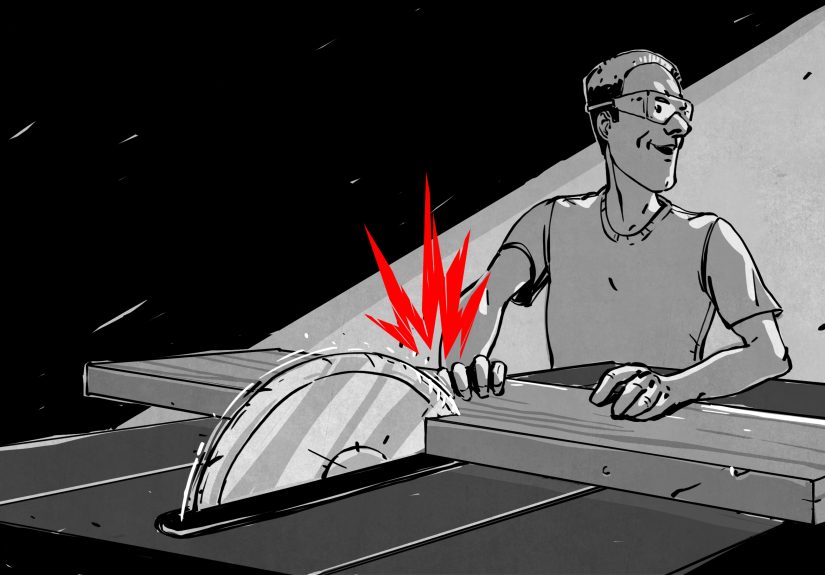
The headline idea is simple: if skin touches the blade, the saw detects it and triggers a rapid brake-and-retract event.
That’s why SawStop has become shorthand for “the saw that saves fingers.”
How the “Flesh-Sensing” Safety System Works (The Friendly Version)
SawStop’s system continuously monitors an electrical signal on the blade. Human skin is conductive enough to change that signal
in a way the system can recognize. When the saw senses that change, it fires a brake mechanismtypically an aluminum brake that
stops the blade extremely fast and drops it below the table surface.
The tradeoff is that when the system activates, the brake cartridge generally needs replacement, and the blade can be damaged.
People sometimes describe this as “the most expensive hot dog you’ll never eat,” referencing the classic demo where a hot dog
stands in for a finger. (It’s a joke… until you price a premium blade.)
Important nuance: no safety system is a substitute for training, attention, and safe shop culture. A technology that can reduce
harm doesn’t grant anyone immortalityespecially if someone treats it like a permission slip to get reckless.
Why This Became a National Issue: Injuries, Costs, and Reality
Table saw injuries aren’t rare flukes; they’re a persistent public safety problem. Studies and safety discussions have long
cited tens of thousands of emergency-room-treated injuries each year, with a meaningful portion involving amputations.
Beyond the human cost, the economic cost (medical care, lost work, long-term disability) is enormous.
That’s the backdrop for why regulators kept circling table saws for years. If a technology exists that can materially reduce
severe injuries, why shouldn’t it be standardlike seatbelts, airbags, or ground-fault protection? The counterargument is just
as predictable: power tools are a competitive market, and mandating a specific class of technology could drive prices up,
shrink consumer choice, and push smaller manufacturers out.
The Price Question: Safety for Everyone, or Safety for Whoever Can Pay?
Here’s where the debate stops being theoretical. SawStop saws tend to cost more than comparable non-AIM saws. For a hobbyist
who uses a saw occasionally, that price difference can feel like paying for an insurance policy you hope to never redeem.
For a professional shop, the cost can look different: fewer catastrophic injuries can mean fewer lost days, fewer workers’
comp claims, and fewer nightmares for everyone involved.
Critics argue that safety shouldn’t be a luxury feature. Supporters respond that innovation costs money and that the market
already includes different safety tiers (guards, better dust collection, better braking systems, better fences, better everything).
Also, AIM systems introduce practical considerations. Material conditions (like moisture, certain composites, or conductive debris)
can complicate detection systems, and owners may need to manage the possibility of false activations. Supporters call this a
manageable tradeoff; skeptics call it a costly hassle. Both can be right, depending on what and how you cut.
Where the “Patent Troll” Label Comes From
“Patent troll” is one of those phrases people love because it’s emotionally satisfying and legally sloppy. Traditionally, it’s used
for entities that mainly enforce patents rather than build products. SawStop actually does build products. That alone makes the
label controversial.
So why does the accusation stick? Because the SawStop story includes aggressive patent enforcement, high-stakes licensing disputes,
and the fear that regulation could effectively lock in one company’s approachor at least give one firm a major advantage.
Licensing: The Fight Over “Fair”
One of the longest-running industry flashpoints is licensing terms. Manufacturers and trade groups have argued that SawStop’s
patent portfolio and licensing demands could create a bottleneckespecially if a safety rule required AIM performance that only a
small number of designs could meet. In public discussions about rulemaking, an often-cited figure is an 8% royalty concept tied to
wholesale price in certain scenariosenough to make manufacturers flinch and accountants reach for stress balls.
From SawStop’s perspective, licensing reflects the value of a genuinely lifesaving invention. From critics’ perspective, licensing can
look like a tollbooth placed on the road to “baseline safety.”
Lawsuits and the “Gatekeeper” Fear
The SawStop-versus-Bosch fight over the REAXX table saw became a major public example of how patents shape the market. Bosch introduced
a competing injury mitigation concept that also aimed to reduce harm by rapidly moving the blade away. SawStop pursued infringement
claims, and the result helped keep Bosch’s REAXX saw from remaining broadly available in the U.S. market.
More recently, SawStop’s patent disputes expanded into other alleged competitors. When a company that’s supposed to represent “an alternative”
gets sued, critics point to it as evidence that the patent moat isn’t just defensiveit’s strategic.
The Regulation Saga: When Safety Meets the Federal Register
The table saw safety rulemaking effort didn’t happen overnight. It stretched across years, proposals, supplements, comment periods,
and enough paperwork to flatten a small forest (ironic, given the industry). The core idea was a performance-oriented standard:
when something resembling a finger contacts a spinning blade at a set approach rate, the saw should limit the resulting injury severity.
Supporters saw a clear path to fewer amputations. Opponents saw a market distortionespecially if compliance costs doubled prices for
entry-level saws or pushed some brands out of the category.
The Plot Twist: Patent Promises and Public Messaging
In 2024, SawStop’s owner (Tooltechnic Systems) publicly committed to dedicating at least one key U.S. patent to the public upon the effective
date of a rule requiring such technology. Supporters framed this as removing a major barrier to competitionproof that patents were not meant
to block safety adoption. Critics argued it was clever optics: helpful, but incomplete, because a single patent dedication doesn’t necessarily
neutralize an entire portfolio.
Then Came the Withdrawal
In 2025, the regulatory effort took a dramatic turn: the U.S. Consumer Product Safety Commission announced it was withdrawing the table saw
blade-contact rulemaking among other pending actions, arguing that the agency would refocus priorities and avoid rules it viewed as costly or
anti-competitive. A subsequent Federal Register notice documented the withdrawal.
Around the same period, competition-focused commentary (including remarks tied to the FTC) argued that a mandate could harm competition if it
effectively required technology controlled by one company or its patent web. That doesn’t settle the safety debatebut it explains why the
“bastion vs. troll” argument refuses to die: the outcome affects both fingers and markets.
So… Bastion of Safety?
The “bastion” argument is strong, and it’s not just marketing. A system that can significantly reduce the severity of blade contact is a real
safety leap. It can protect experienced professionals on a bad day and beginners on a worse one. In schools and training environmentswhere
students may have limited experience and developing coordinationrisk reduction can feel especially important.
And let’s be honest: the “just be careful” school of safety is adorable in the same way “just don’t get in a car accident” is adorable.
Humans make errors. Tools should anticipate that.
Or Patent Troll?
The “troll” argument is less about whether SawStop’s invention is good and more about how it’s been used. Critics point to:
- Market control via patents: if competing AIM systems face litigation risk, innovation slows or gets pricier.
- Regulatory leverage: if a rule effectively mandates the performance only one firm can deliver affordably, it can reshape the market.
- Legal posture: aggressive enforcement reads as protectionism to some and legitimate IP defense to others.
A fair criticism can exist without denying the value of the safety system. You can believe the technology saves fingers and also believe the
licensing and litigation strategy has, at times, prioritized dominance.
The Middle Ground: What a “Good Outcome” Could Look Like
If you strip away team jerseys and internet heat, most reasonable people want the same end state:
fewer catastrophic injuries without turning table saw ownership into an elite hobby.
Paths that don’t require picking a villain
- Performance standards that encourage multiple solutions: not “use this brand’s method,” but “meet this injury-mitigation performance.”
- Licensing that’s transparent and broadly workable: terms that don’t crush smaller manufacturers or force price explosions.
- Insurance and workplace incentives: reward safer equipment choices without making them mandatory for every casual user.
- Better safety culture: technology plus training plus responsible supervisionespecially in schools and shared shops.
The hardest part is that safety and competition can pull in opposite directions. Regulators have to weigh injury reduction against
market impacts. Inventors want to protect breakthroughs. Competitors want space to innovate. Consumers want affordability and protection.
Welcome to the most American three-way tug-of-war imaginable.
Conclusion: SawStop Is Both the Hero and the Argument
SawStop earned its reputation for safety by offering something genuinely different: a system that doesn’t just try to prevent mistakes,
but tries to limit the damage when they happen. That’s a big deal.
At the same time, SawStop’s story can’t be separated from patents, lawsuits, and regulatory debates that shaped what competitors could sell
and what the government could plausibly require. If you’re frustrated by the cost of safer saws, the scarcity of alternative AIM products,
or the way litigation can chill innovation, you’re not imagining things.
The most accurate summary is uncomfortable because it refuses to be a clean meme: SawStop can be a bastion of safety and a company that
vigorously defends a patent position in ways that feel monopolistic to critics. Whether you call that “responsible IP protection” or “trolling”
depends on what you think the social contract is for life-saving inventions.
But here’s one thing both sides usually agree on (after they finish yelling): fewer amputations is a good goal. The fight is over how to get there
and who gets to profit along the way.
Shop Stories and Real-World Experiences (An Extra )
The SawStop debate feels abstract until you hear it in the wildusually in the exact moment someone is deciding whether to spend the extra money.
I’ve seen the conversation unfold in three classic settings: the serious professional shop, the hobbyist garage, and the community makerspace.
Each one has its own logic, and each one produces its own version of the “bastion vs. troll” argument.
In the professional shop, the tone is often calm and painfully practical. People talk in the language of downtime, insurance, staffing, and “what happens
if someone gets hurt on Tuesday at 3:00 PM.” In that world, safety tech isn’t a philosophical stanceit’s risk management with sawdust in its hair.
Someone will inevitably say something like, “One incident pays for the upgrade,” and everyone nods, because they’re not picturing the price tag;
they’re picturing the paperwork and the phone calls.
In the hobbyist garage, the conversation is more emotionaland honestly, more entertaining. Some folks are all-in on the peace of mind. Others bristle at
the idea that safety requires a premium brand. You’ll hear things like, “I’ve been careful for 20 years,” followed by someone else replying,
“And I’ve been lucky for 20 years.” That’s when the patent conversation sneaks in, because it explains why a feature that feels like it should be everywhere
is still treated like a luxury upgrade.
Makerspaces add a third flavor: shared responsibility. When a lot of people use the same equipmentsome experienced, some brand-newthe idea of reducing
worst-case outcomes becomes more compelling. It’s not just about one person’s habits; it’s about variability. A tool that helps catch a catastrophic mistake
can feel like a kindness to the whole community. But makerspaces also feel the price pressure more intensely. Budgets are real. Donations are finite.
And when you’re trying to equip a shop for many users, spending more on one machine can mean buying fewer machines overall.
The most telling moments are the ones that have nothing to do with internet arguments: a quiet pause when someone mentions a friend who lost part of a finger,
or the way people lean in when they see the safety system demonstrated. The room changes. Jokes stop. Even the skeptics tend to respect what the technology does,
because it’s hard to argue with a system designed to turn a catastrophe into a near-miss.
And yet, the patent and regulation debate always returnsbecause it’s not really about whether safety is good. It’s about whether safety should be
locked behind a single company’s terms, whether the market should be forced by regulation, and whether innovation thrives when one approach dominates.
That tension is why this topic keeps popping up in “Ask Hackaday” style conversations: hackers, builders, and engineers tend to admire clever engineering
while also getting suspicious when clever engineering becomes a tollbooth.
If there’s a lesson from all these real-world conversations, it’s that people aren’t choosing between “safety” and “greed.” They’re choosing between
competing values that all matter: protecting hands, keeping tools affordable, rewarding invention, and keeping the market open enough for the next great idea
to survive long enough to help someone.