Table of Contents >> Show >> Hide
- Before You Shop: Quick Plan & Budget Guide
- How to Choose (Without Second-Guessing Tomorrow)
- 60 Backsplash Ideas (Numbered so you can bookmark your favorites)
- 1. Classic White Subway Tile
- 2. Color-Dipped Subway Tile
- 3. Vertical-Stacked Subway
- 4. Herringbone Subway
- 5. Chevron Stripes
- 6. Brick-Pattern with Contrasting Grout
- 7. Micro Subway Mosaic
- 8. Large-Format Porcelain Panels (Slab-Look)
- 9. Full-Height Stone Slab Continuation
- 10. Marble Herringbone Mosaic
- 11. Honed Marble Subway
- 12. Quartz (Engineered Stone) Slab
- 13. Quartzite Slab
- 14. Soapstone with Slim Ledge
- 15. Granite Remnant Mosaic
- 16. Glass Tile Mosaic
- 17. Back-Painted Glass Sheet
- 18. Mirrored Glass Accents
- 19. Square “Zellige-Look” Ceramic
- 20. Authentic Zellige
- 21. Fluted Tile
- 22. Terrazzo-Look Porcelain
- 23. Penny Rounds
- 24. Small Hexagon (“Honeycomb”)
- 25. Large Hexagon
- 26. Fish-Scale (Mermaid) Tile
- 27. Basketweave Ceramic
- 28. Arabesque
- 29. “Kit-Kat” Finger Tile
- 30. Mixed-Material Mosaic (Stone + Glass + Metal)
- 31. Stainless-Steel Sheet Behind the Range
- 32. Brushed Aluminum Mini-Bricks
- 33. Aged Copper or Brass Panels
- 34. Pressed-Tin Panels
- 35. Real Brick Veneer
- 36. Painted Brick
- 37. Whitewashed Brick
- 38. Microcement (Concrete Skim Coat)
- 39. Concrete-Look Porcelain
- 40. “Shiplap-Look” Porcelain Planks
- 41. Sealed Wood Boards (Selective Zones)
- 42. Butcher-Block Backsplash Ledge
- 43. Beadboard (PVC) Backsplash
- 44. Peel-and-Stick Vinyl Tiles
- 45. “Smart Tiles” Gel Backsplash
- 46. Real Tile Installed with Adhesive Mats
- 47. Vinyl Wallpaper + Clear Acrylic Shield
- 48. Chalkboard Paint Panel
- 49. Stainless Pegboard System
- 50. Tile-to-Ceiling Around Open Shelves
- 51. Integrated Picture-Ledge in Tile
- 52. “Window Backsplash” (Pass-Through Glass)
- 53. Minimal 4–6″ Upstand
- 54. Two-Tone Zones
- 55. Feature Panel Behind the Hood
- 56. Patterned Cement Tile
- 57. Tiled Niche Strip
- 58. Delft or Hand-Painted Collage
- 59. Diagonal (On-Point) Layout
- 60. Budget “No-Tile” Hybrid
- Installation Notes You’ll Thank Yourself For
- Cleaning & Care (Keep It Pretty Without Babying It)
- Trend Radar: What’s Hot for 2025–2026
- Budget Smarts (Where to Save vs. Splurge)
- Low-Maintenance Pairings
- Conclusion
- Real-World Experiences & Tips ( of Field Wisdom)
Short version: Your backsplash can be a quiet sidekick or the star of your kitchen. Whether you’re going luxe with stone slabs, classic with subway tile, or renter-friendly with peel-and-stick, there’s a smart, stylish option at nearly every price point. Below you’ll find 60 jargon-free ideas, a quick buyer’s guide, pro tips on installation and cleaning, and a 500-word experience section packed with real-world lessons.
Before You Shop: Quick Plan & Budget Guide
- Decide coverage: 4–6″ upstand for minimalists, counter-to-cabinet for classics, or full height to the ceiling for drama.
- Price cues: Classic ceramic subway tile can start around about $2 per sq. ft. for material (patterns and glazing raise costs).
- Installation cost: Typical pro labor can run roughly ~$10 per sq. ft., varying by material/complexity.
- Glass sheets vs. glass tile: Back-painted glass sheets generally cost more installed than glass tile.
- Renter-friendly: Peel-and-stick is the easiest DIY route and often the most affordable for quick makeovers.
How to Choose (Without Second-Guessing Tomorrow)
Match the mood: Traditional kitchens love marble, subway, and beadboard; modern spaces shine with slabs, fluted tile, and metal. Still unsure? Browse big galleries to see patterns in your own “likes”you’ll spot your style quickly.
60 Backsplash Ideas (Numbered so you can bookmark your favorites)
1. Classic White Subway Tile
Timeless, inexpensive, and endlessly remixable with grout color and layout.
2. Color-Dipped Subway Tile
Try pale sage, denim blue, or soft blush for a subtle statement.
3. Vertical-Stacked Subway
Turns a classic on its head; makes low ceilings feel taller.
4. Herringbone Subway
Instant movement and texture without changing materials.
5. Chevron Stripes
Bold and graphicexcellent behind simple, slab-front cabinets.
6. Brick-Pattern with Contrasting Grout
Light tile + dark grout = crisp, low-maintenance definition.
7. Micro Subway Mosaic
Petite rectangles read refined in small kitchens.
8. Large-Format Porcelain Panels (Slab-Look)
Few seams, modern vibe, and easier cleaning than many small tiles.
9. Full-Height Stone Slab Continuation
Run your counter material up the wall for a seamless, high-end look now trending into 2026.
10. Marble Herringbone Mosaic
Classic luxury with lively patternseal regularly to reduce staining.
11. Honed Marble Subway
Less glare than polished; soft, chalky elegancemind acidity and etching.
12. Quartz (Engineered Stone) Slab
Consistent veining, lower upkeep than many natural stones, and no grout lines to scrub.
13. Quartzite Slab
Natural veining with better hardness than marblestill seal as recommended.
14. Soapstone with Slim Ledge
Velvety texture and a handy ledge for spices; darkens over time.
15. Granite Remnant Mosaic
Budget hack: ask fabricators for off-cuts to create a custom mosaic.
16. Glass Tile Mosaic
Luminous, reflective, and wipe-clean; great for low-light kitchens.
17. Back-Painted Glass Sheet
Ultra-sleek and super easy to clean; typically pricier to install than glass tile.
18. Mirrored Glass Accents
Small mirrored insets bounce lightuse sparingly to avoid fingerprints overload.
19. Square “Zellige-Look” Ceramic
Wabi-sabi texture with artisan vibes (real zellige = handmade variation).
20. Authentic Zellige
Gorgeous glaze variation; plan for slightly irregular edges that add charm.
21. Fluted Tile
Grooved surface adds sculptural shadow play; a big 2025 moment.
22. Terrazzo-Look Porcelain
Speckled fun without the terrazzo price or maintenance.
23. Penny Rounds
Playful dots that curve around corners beautifully.
24. Small Hexagon (“Honeycomb”)
Classic geometry that’s friendly to traditional or modern kitchens.
25. Large Hexagon
Fewer grout lines, bigger patternworks well in tall spaces.
26. Fish-Scale (Mermaid) Tile
Organic curves soften boxy cabinetry.
27. Basketweave Ceramic
Old-world pattern that reads luxe with contrasting inserts.
28. Arabesque
Moroccan flourish that pairs nicely with warm brass hardware.
29. “Kit-Kat” Finger Tile
Skinny stacksvertical for height, horizontal for calm modern lines.
30. Mixed-Material Mosaic (Stone + Glass + Metal)
Layer sheen and texture for extra dimension.
31. Stainless-Steel Sheet Behind the Range
Heat- and splash-friendly, wipes clean fastespecially smart at the cooktop.
32. Brushed Aluminum Mini-Bricks
Industrial sparkle with fewer fingerprints than polished steel.
33. Aged Copper or Brass Panels
Let a natural patina develop for warmth and character.
34. Pressed-Tin Panels
Vintage charm; seal clear-coated panels to ease cleaning.
35. Real Brick Veneer
Authentic texture for farmhouse or loft styles; brick veneer is a cost-savvy alternative to solid brick.
36. Painted Brick
Uniform color, lots of textureuse scrubbable paint near splatter zones.
37. Whitewashed Brick
Softens the red; still shows the kiln-fired character.
38. Microcement (Concrete Skim Coat)
Seamless, matte, modernseal well in high-splash areas.
39. Concrete-Look Porcelain
The industrial look without porous-concrete upkeep.
40. “Shiplap-Look” Porcelain Planks
Wood vibe with tile durabilitynice in cottage or coastal kitchens.
41. Sealed Wood Boards (Selective Zones)
Cozy and tactilekeep away from the range; use sparingly with a good sealer.
42. Butcher-Block Backsplash Ledge
Warm accent under a run of open shelves; oil and maintain regularly.
43. Beadboard (PVC) Backsplash
Classic cottage look; PVC versions resist moisture better than MDF.
44. Peel-and-Stick Vinyl Tiles
Weekend makeover hero and wallet-friendly.
45. “Smart Tiles” Gel Backsplash
Renter-approved, removable panels for a tiled look without mortar.
46. Real Tile Installed with Adhesive Mats
Faster and cleaner than mortar, but note durability trade-offs on some mosaics.
47. Vinyl Wallpaper + Clear Acrylic Shield
Patterned punch with an easy-wipe barrier in splash zones.
48. Chalkboard Paint Panel
Menu wall meets backsplashuse a magnetic primer for notes and spice tins.
49. Stainless Pegboard System
Backsplash that stores your utensilschef’s-kitchen energy.
50. Tile-to-Ceiling Around Open Shelves
Expands the room visually and creates a shop-window backdrop.
51. Integrated Picture-Ledge in Tile
Rest art, oil bottles, or a trailing pothosfunctional and pretty.
52. “Window Backsplash” (Pass-Through Glass)
Steals light from outdoors while still shielding the wall.
53. Minimal 4–6″ Upstand
Clean and contemporarypair with scrubbable paint above.
54. Two-Tone Zones
Use a durable material at the range and something textured elsewhere.
55. Feature Panel Behind the Hood
Concentrate spend where eyes land; keep the rest simple.
56. Patterned Cement Tile
Statement wall with artisan flair; seal to prevent staining.
57. Tiled Niche Strip
A decorative “runner” of patterned tile framed by field tile.
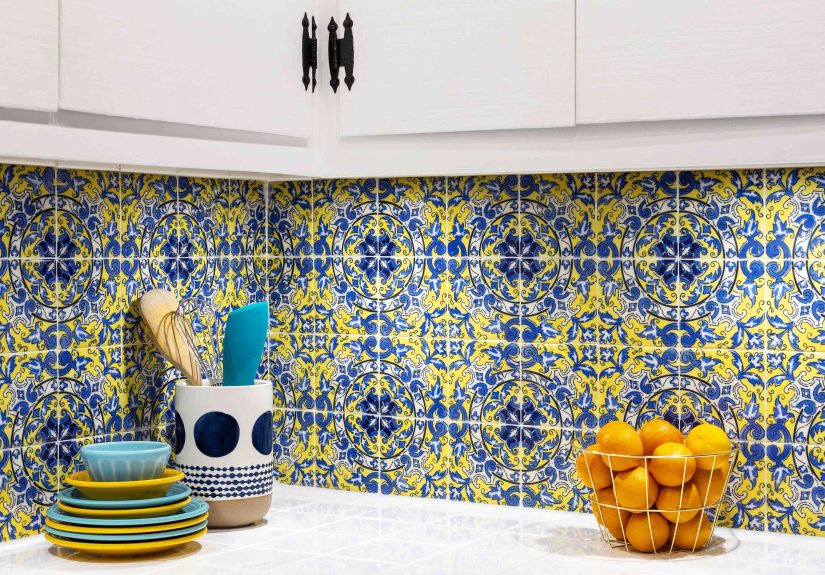
58. Delft or Hand-Painted Collage
Artful story in tilemodern designers are remixing Delft with playful layouts.
59. Diagonal (On-Point) Layout
Old-school trick to widen narrow galley kitchens.
60. Budget “No-Tile” Hybrid
High-sheen, washable paint everywhere + metal or glass panel just at the rangea savvy save-to-splurge combo.
Installation Notes You’ll Thank Yourself For
- Electrical outlets: Cut tile so the faceplate sits cleanly; avoid covering screws.
- Adhesive mats: Great for speed, but pros caution about long-term hold on heavy tiles or mesh mosaics.
Cleaning & Care (Keep It Pretty Without Babying It)
Run the range hood during and after cooking, wipe splatters daily with mild soap, then use a degreaser or gentle DIY paste weekly for buildupespecially near the cooktop. Natural stone and grout are porous, so follow sealing schedules to reduce stains.
If you prefer ready-tested products for grout, consult expert-tested roundups to pick a cleaner that actually works.
Trend Radar: What’s Hot for 2025–2026
- Fluted tile: Texture is in; those linear grooves add 3-D interest with simple cabinetry.
- Counter-to-ceiling slabs: Designers are pushing continuous stone or stone-look slabs up the wallseamless and low-grout.
Budget Smarts (Where to Save vs. Splurge)
- Save: Classic ceramic field tile (from low single-digits per sq. ft. for material) and simple layouts.
- Splurge: Full slabs, intricate mosaics, and specialty glass sheets (often higher than glass tile to install).
- Labor awareness: Complex patterns (herringbone/chevron), many outlet cuts, and niche insets raise install time and cost. Typical labor baselines around ~$10/sq. ft. escalate with difficulty.
- Brick on a budget: Consider brick veneer or porcelain “brick” instead of solid brick to trim costs.
Low-Maintenance Pairings
If your cooking style is “sauce happens,” prioritize smooth surfaces and fewer grout linesthink large-format porcelain, quartz or porcelain slabs, metal at the range, or back-painted glass in non-impact zones. They’re simpler to wipe and don’t collect grime in tiny joints.
Conclusion
Backsplashes are where practicality meets personality. Use the 60 ideas above to lock your style, then sanity-check maintenance and budget. When in doubt, keep the field tile simple and let layout, grout, or a single feature panel carry the drama. Your future self (the one cleaning after taco night) will be grateful.
sapo: From classic subway tile to trending fluted ceramics and full-height stone slabs, this guide delivers 60 kitchen backsplash ideas for every style and wallet. Learn smart ways to save and where to splurge, compare materials, estimate costs, and pick maintenance-friendly options. You’ll also get pro-level installation notes, cleaning routines that actually work, and a bonus section of real-world experiences to help you avoid common pitfalls and love your kitchen longer.
Real-World Experiences & Tips ( of Field Wisdom)
1) “Fewer grout lines” really does matter. Homeowners who cook daily report that small mosaics look amazing on day one but require more elbow grease later, especially near the range. Larger tiles, slab-look porcelain, or a metal or glass panel behind the cooktop can cut cleaning time by half because there are fewer crevices for oil to park itself. Pair that with a religious hood-on habit and quick nightly wipe-downs to avoid weekend deep-cleans.
2) Sample boards lietest real pieces in real light. That soft “greige” tile can turn beige under warm LEDs and gray under daylight. Tape up at least 4–6 actual pieces (or a cut of slab) and live with them for a few days. Watch morning and evening shifts, and compare next to your counter. Many returns and regrets start with lighting surprises.
3) Grout color is a design tool, not an afterthought. Light tile + light grout blends into a calm field; light tile + dark grout outlines every joint (great for subway grid drama). Medium-tone grouts are forgiving with everyday splashes. Whatever you choose, seal the grout on schedule and keep a small tube of color-matched caulk for corners and the counter seam; it’s the fastest way to keep things looking freshly installed.
4) Think about “impact zones.” If you crave hand-made, crackle-glaze tile (gorgeous!) but worry about cleanup, use it on non-splash walls and put a wipe-easy surface at the rangestainless sheet, back-painted glass, or a continuation of your counter material. That hybrid approach keeps the art and tames the maintenance.
5) Pattern fatigue is real. High-pattern cement tiles and bold mosaics thrill on install day. Six months in, some folks wish they’d used them as a framed “feature panel” and kept surrounding areas quieter. If you’re a commitment-phobe, do a feature strip behind the hood and use budget field tile everywhere elseyou’ll spend less and keep options open.
6) DIY vs. pro: pick your battles. Confident DIYers often do straight lays and simple outlets just fine, but herringbone, tight mitered corners, and niche insets can balloon time (and tile waste). Also note that adhesive mats are tidy and fast for small jobs, but for heavy stone or mesh-backed mosaics in steamy kitchens, many pros still prefer mortar. Budget carefully: even baseline labor can add up across a full wall, and complexity increases cost.
7) Trend with intent. Fluted tile and slab backsplashes are riding high; they also read “premium” without bling. If resale is on the horizon, choose textures and veins that nod to the trend without boxing future buyers into a very specific color story.
8) Maintenance gear you’ll actually use. Keep a microfiber stack and a spray bottle of mild dish-soap solution under the sink for daily wipes, plus a degreaser or baking-soda paste plan for the weekly reset. For grout, pick a cleaner with test-backed performance rather than whatever’s on saleyour arms will notice the difference.
9) Don’t forget the outlets and switch plates. Swapping to color-matched or screwless plates instantly elevates the finished look. Lay out your tile with plate locations in mind so cuts land neatly and screws remain accessible.
10) The happiest remodels protect the cooking routine. If you’re living through the work, stage a temporary cooking zone and plan a two-day menu that doesn’t throw oil everywheresheet-pan dinners, air-fryer nights, and covered simmer dishes. Your sanity (and new grout) will thank you.
Bottom line: choose the look you love, then engineer it for real life with smart materials, a realistic install plan, and a cleaning routine that takes minutesnot hours.