Table of Contents >> Show >> Hide
- Why Make Dried Fruit at Home?
- What You Need to Make Dried Fruit Without a Dehydrator
- Step-by-Step: How to Make Dried Fruit in the Oven
- Best Practices for Different Fruits
- How to Make Fruit Leather Without a Dehydrator
- Conditioning and Storing Dried Fruit (Don’t Skip This)
- Troubleshooting Common Dried Fruit Problems
- Real Kitchen Experience Notes (Extra )
- Conclusion
If you have an oven, a sheet pan, and a little patience, congratulationsyou are already in the dried-fruit business. No fancy dehydrator required, no pioneer bonnet necessary. Making dried fruit at home is one of the easiest ways to preserve fruit, reduce waste, and create snacks that taste way better than the dusty mystery raisins hiding in the back of your pantry.
And yes, you can absolutely do it without a dehydrator. The trick is not “blast it and hope.” The trick is gentle heat + airflow + time. Once you understand that formula, you can make apple rings, banana chips, dried strawberries, citrus slices, mango strips, and even fruit leather in a regular kitchen oven.
This guide walks you through the process step by step, with practical tips, common mistakes to avoid, and real-world experience notes at the end so your first batch doesn’t turn into fruit jerky on the edges and fruit soup in the middle.
Why Make Dried Fruit at Home?
Homemade dried fruit is one of those rare kitchen projects that is both useful and oddly satisfying. You start with fresh fruit that might be a day away from “Oops, too late,” and a few hours later you’ve got a chewy, naturally sweet snack you can store for months.
Top benefits of drying fruit at home
- Save money: Fresh fruit in season is usually cheaper than packaged dried fruit.
- Reduce food waste: Soft apples, extra bananas, or a mountain of ripe peaches can be preserved instead of tossed.
- Control ingredients: No added preservatives, no mystery oils, and no sugar unless you want it.
- Custom flavors: Add cinnamon, citrus zest, or a little honey if you like.
- Portable snacks: Great for lunchboxes, road trips, hiking, and “I need a snack but not another cookie” moments.
Drying fruit is also a beginner-friendly food preservation method. You don’t need canning jars, pressure equipment, or a science degree. You just need to keep temperatures low and monitor texture.
What You Need to Make Dried Fruit Without a Dehydrator
Basic tools
- Oven (ideally one that can run low)
- Sheet pans or baking trays
- Cooling racks (very helpful for airflow)
- Parchment paper (especially for sticky fruits)
- Sharp knife or mandoline slicer
- Mixing bowls
- Oven thermometer (highly recommended)
- A small fan (optional, but helpful if your oven door is propped open)
Best fruits for beginners
- Apples: Easy, forgiving, and classic
- Bananas: Sweet and simple, but slice evenly
- Strawberries: Delicious, but juicyplan for longer drying
- Mango: Great texture when dried in strips
- Pears: Similar to apples, excellent flavor
- Peaches or nectarines: Amazing when fully ripe
- Citrus slices: More decorative and chewy than snackable, but beautiful
Choose fruit that is ripe and flavorful. Drying concentrates sweetness, but it also concentrates disappointment. If the fruit tastes bland fresh, it will taste bland and expensive after six hours in your oven.
Step-by-Step: How to Make Dried Fruit in the Oven
Step 1: Wash, peel (if needed), and slice evenly
Wash fruit well and remove bruised spots. Peel if you want (apples and pears are optional; peaches are personal preference). Slice fruit evenly so pieces dry at the same rate. Uneven slices are the main reason one piece becomes perfect while the next one becomes a fruit fossil.
Good beginner thickness:
- Apples/pears: about 1/8 to 1/4 inch
- Bananas: about 1/4 inch coins
- Strawberries: halve or slice depending on size
- Mango/peach: thin strips or slices
Step 2: Pretreat to reduce browning
Pretreating helps preserve color and quality, especially for apples, pears, peaches, and similar fruits. It is not always mandatory, but it makes a noticeable difference.
Common pretreatment options include:
- Ascorbic acid (vitamin C) dip: Very effective for preventing browning.
- Lemon juice solution: Easy and common at home.
- Fruit juice dip: Orange, pineapple, or grape juice can help, but they may change flavor and color.
- Honey dip: Adds sweetness and a glossy finish (popular for apples).
If you want a simple home method, a lemon-water dip works well. Soak slices briefly, then drain well. The key word is drain. Wet fruit takes longer to dry, and long drying times can lead to uneven texture.
Step 3: Arrange fruit in a single layer
Place fruit on parchment-lined trays or on cooling racks set over sheet pans. Keep pieces in a single layer with space between them. Overlapping slices steam instead of dry, and that’s how you end up making fruit yoga mats.
If you are drying very juicy fruit (like strawberries or peaches), parchment helps contain drips. If you are drying apples or pears, a rack setup improves airflow and usually dries more evenly.
Step 4: Set the oven low and create airflow
This is the most important part. For drying fruit, you want a low oven temperaturegenerally around 140°F to 150°F. If your oven runs hotter, you risk cooking the outside before the inside dries.
Many home ovens do not go that low, so here is the practical workaround:
- Use the lowest setting available (often 170°F or “Warm”)
- Use an oven thermometer to check the actual temperature
- Prop the oven door open slightly (about 2 to 6 inches)
- Place a fan nearby to improve air circulation, if needed
That airflow matters. Without it, moisture stays trapped in the oven and your fruit takes forever to dry. Also, don’t crank up the heat to “speed things up.” That can cause case hardeningthe outside dries too fast and forms a tough shell while the inside stays moist.
Safety note: If the oven door is propped open, keep kids and pets away, and don’t leave the oven running when no one is home.
Step 5: Dry slowly and rotate as needed
Drying time depends on the fruit, thickness, oven temperature, humidity, and how much moisture is in the fruit. Translation: your apples might take 4 hours one day and 7 hours the next.
General oven drying ranges (rough guides):
- Apple or pear slices: 4–8 hours
- Bananas: 6–10 hours
- Strawberries: 6–12 hours
- Mango or peaches: 6–12 hours
- Fruit leather: 4–8+ hours depending on thickness
Check periodically and rotate trays if your oven has hot spots. Flip pieces if needed, especially thicker slices.
Step 6: Test for doneness
Most dried fruit should be leathery and pliable, not wet, sticky, or squishy. It should not release moisture when pressed. Some fruits (like apple slices) can be slightly crisp at the edges and chewy in the center. Others (like mango) stay bendy.
Here’s a simple test:
- Cool a piece for a minute (warm fruit feels softer)
- Tear or bend it
- If you see wet pockets or it feels tacky-wet, keep drying
- If it is dry, flexible, and not sticky, it is ready
Fruit leather is done when the center is dry to the touch and doesn’t leave an indentation. It should peel up cleanly once cooled.
Best Practices for Different Fruits
Apples (the beginner favorite)
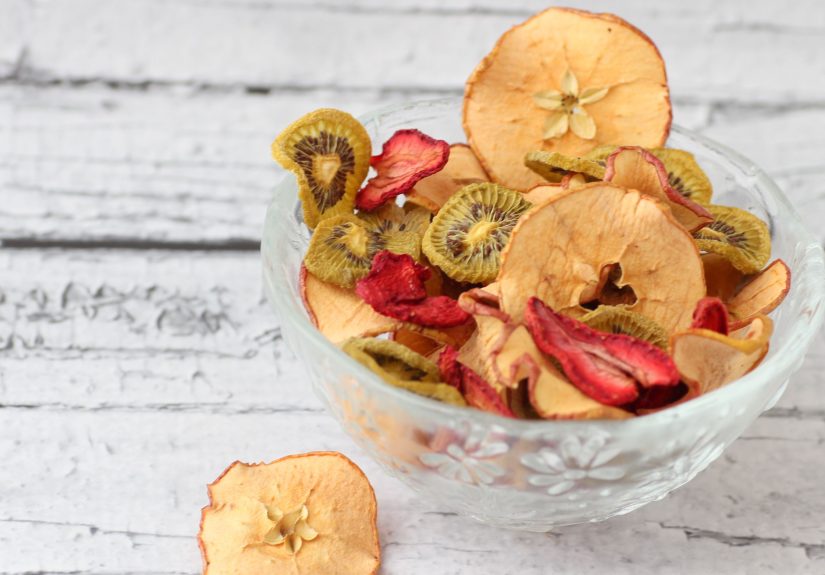
Apples are the training wheels of homemade dried fruitin the best way. They slice cleanly, dry evenly, and taste great plain or with cinnamon. For classic dried apple rings, core first, slice evenly, dip in a browning-prevention solution, and dry until pliable.
If you want a sweeter “snack aisle” vibe, use a quick honey dip. If you want a tart, clean flavor, stick with lemon or ascorbic acid.
Bananas (sweet and sticky)
Bananas dry beautifully, but they stick if you skip parchment. Slice them evenly, keep the heat low, and don’t overcrowd the tray. They become chewier as they cool. For a candy-like flavor, use very ripe bananas. For a cleaner, less sweet result, use just-ripe bananas.
Strawberries (worth the wait)
Strawberries are watery, so they take longer than people expect. Slice them consistently and give them space. They shrink a lot, so start with more than you think you need. A whole tray can become “one snack bowl and a proud smile.”
Peaches, nectarines, and pears
These are excellent for oven drying and respond well to pretreatment. Slice them evenly and expect a softer, more tender chew than apples. Riper fruit gives better flavor, but overly soft fruit can be harder to slice neatly.
Figs and special cases
Some fruits, like figs, have thicker skins and dense interiors. If drying whole figs, extension guidance often recommends briefly “checking” them (a quick hot-water dip until skins split) so moisture can escape more easily. If you’re new to figs, cutting them in half is simpler and more reliable.
How to Make Fruit Leather Without a Dehydrator
Fruit leather is the overachiever of dried fruit. It uses overripe fruit, tastes amazing, and feels like a kitchen magic trick.
Quick fruit leather method (oven version)
- Blend fruit into a smooth puree (strain seeds if desired).
- Sweeten lightly only if needed.
- Line a sheet pan or baking tray with parchment.
- Spread puree evenly, about 1/8 inch thick.
- Dry at low heat (around 140°F if possible; low oven setting works with care).
- Check the center for donenessit should be dry, not wet.
- Cool, peel, cut into strips, and roll.
Fruit leather dries from the edges toward the center, so don’t panic if the middle looks behind schedule. It usually is. That’s normal.
Conditioning and Storing Dried Fruit (Don’t Skip This)
Once your fruit is dry, let it cool completely before storing. Packing warm fruit traps moisture and can cause condensation, which is a fast track to mold.
Conditioning dried fruit
Conditioning helps equalize moisture across pieces, because no batch dries perfectly evenly (especially in a home oven). To condition:
- Loosely pack cooled dried fruit into clean glass jars or food-safe containers.
- Fill containers only partway (about two-thirds to three-quarters full).
- Seal or cover as directed for your method.
- Shake or stir daily for about a week (some guides suggest up to 7–10 days).
- If you see condensation, return the fruit to the oven for more drying.
This step dramatically reduces the risk of spoilage and is especially important for thicker fruit pieces.
Storage tips
- Store in airtight containers (glass jars, freezer containers, or freezer bags)
- Keep in a cool, dry, dark place
- Label with the fruit type and date
- Use smaller containers so you don’t keep re-opening a big batch
Homemade dried fruit lasts longest when stored cool. In general, dried fruit keeps much better at cooler temperatures than in a warm pantry. Check stored fruit regularly, especially during the first few weeks.
Troubleshooting Common Dried Fruit Problems
“It’s dry on the outside but wet inside.”
That’s usually case hardening. Lower the temperature, increase airflow, and dry longer next time.
“My fruit turned brown.”
That can happen naturally from oxidation. Use a pretreatment dip (ascorbic acid or lemon juice) and avoid excessively high heat.
“It molded in the jar.”
The fruit was either under-dried, packed warm, or stored where it absorbed moisture. Discard moldy fruit. For future batches, condition properly and store airtight.
“It tastes weirdly cooked.”
Your oven was likely too hot. Use an oven thermometer and prop the door open for better airflow and lower effective heat.
“One tray dried, the other didn’t.”
That’s a classic home-oven hot spot. Rotate trays top-to-bottom and front-to-back during drying.
Real Kitchen Experience Notes (Extra )
Here’s the part nobody tells you when you start drying fruit without a dehydrator: the process is simple, but the personality of your oven matters more than the recipe. Two people can slice identical apples, use the same temperature setting, and get different results just because one oven runs hot and the other one lies about the temperature like it’s trying to protect your feelings.
A very common first experience is drying apples and thinking, “This is taking forever.” That feeling is normal. Ovens are slower than dehydrators, especially regular ovens without built-in fans. The good news is that the extra time is not a problem if your heat is low. It just means this is a weekend project, not a 20-minute snack hack.
One of the biggest improvements people notice after the first batch is slice consistency. The first time, many home cooks cut fruit “about the same,” which usually means some slices are paper-thin and some are thick enough to qualify as tiny fruit steaks. The second time, they use a mandoline or slow down with a sharp knife, and suddenly the batch dries more evenly and looks far more professional.
Another common lesson: don’t mix too many fruits on one tray, at least not in the beginning. Apples, strawberries, and bananas all dry at different speeds. If they share a tray, you’ll be removing some pieces early while others still need hours. It can be done, but it feels like running a tiny air-traffic-control tower in your kitchen. Single-fruit batches are easier until you learn your oven.
Sticky fruit is another surprise. Bananas and mangoes can cling to pans like they signed a lease. Parchment paper helps a lot. Cooling also helps. Fruit that seems stuck while warm often releases more easily once it cools for a few minutes.
Humidity in your home also changes the outcome. On dry days, fruit dries faster and stores better. On humid days, the same fruit may feel slightly tacky even when done. That is where conditioning becomes incredibly useful. A short conditioning period in jars helps you catch moisture problems early, before your hard work turns into a science experiment.
Many people also discover that homemade dried fruit is more flavorful than store-bought because it tastes like the fruit you started with. Dried strawberries taste intensely strawberry. Dried peaches taste like summer got concentrated into a slice. But that also means quality matters. If the fresh fruit is bland, the dried version won’t magically become amazing.
The final “experience-based” tip is to label everything. After a few batches, jars of dried apples, pears, and pale peaches can look similar. Add the fruit name and date. Future-you will be grateful and slightly impressed with past-you’s organization.
Once you get the process down, drying fruit becomes one of the easiest kitchen habits to repeat. It is practical, low-waste, and surprisingly relaxing. Slice, arrange, wait, check, and enjoy. It’s not flashy, but it worksand your snack drawer will never be boring again.
Conclusion
Making dried fruit without a dehydrator is completely doable with a standard oven and a little patience. The key is low heat, good airflow, and proper drying timeplus a quick pretreatment for fruits that brown easily. Once you learn how to test for doneness and condition the fruit before storage, you can make reliable, delicious dried snacks at home whenever fruit is in season (or when your banana pile gets suspiciously ripe overnight).
Start with apples or pears, use an oven thermometer, and keep the slices even. After one or two batches, you’ll know exactly how your oven behavesand that’s when homemade dried fruit goes from “project” to “routine.”