Table of Contents >> Show >> Hide
- First, Let’s Define “Vaccine-Hesitant” Without Starting a Food Fight
- Why “More Facts!” Sometimes Makes People Dig In
- The Move That Works More Than You Think: Start With a Confident Recommendation
- The Five-Part Conversation Flow (Podcast-Friendly and Human-Sounding)
- How to Handle Common Myths Without Accidentally Advertising Them
- “Okay, But Are Vaccines Actually Monitored?” YesRelentlessly
- Risk Talk That Doesn’t Sound Like a Robot Reading Fine Print
- When the Hesitation Is Personal: Special Situations That Deserve a Real Clinician
- Podcast Segment Ideas: Make Vaccine Confidence Sound Like Real Life
- Conclusion: A Milligram Can Be Enough to Start
- Experiences From the “A Milligram of Understanding” World (Realistic, Relatable, and Common)
If vaccine conversations were pills, most of us would try to swallow them wholefast, no water, and while making a face.
But “vaccine-hesitant” doesn’t mean “anti-science villain twirling a mustache.” More often, it means:
“I’m not sure, I’m overwhelmed, and I don’t want to get tricked.”
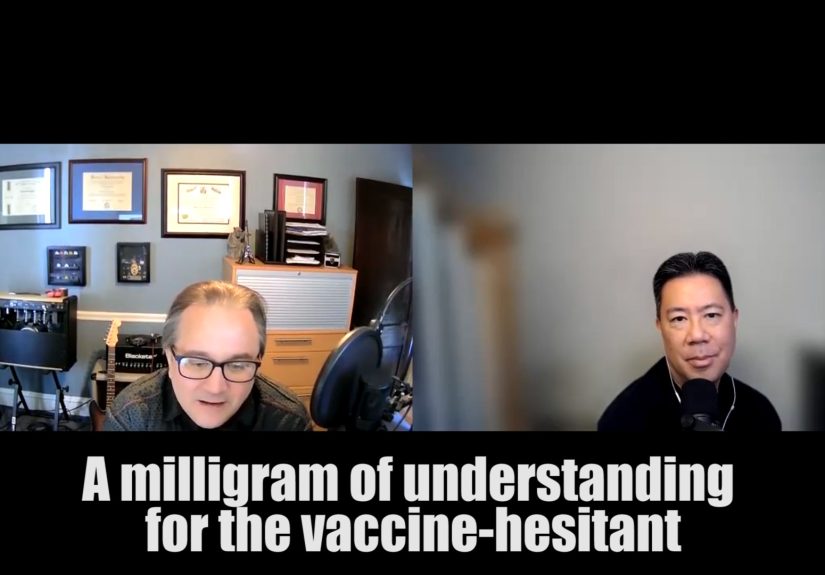
This podcast-style article is your tiny, practical dosea milligram of understandingfor anyone who wants to talk about vaccines
without turning Thanksgiving into a live reenactment of an internet comment section.
We’ll cover what vaccine hesitancy really is, why it happens, and how to respond with empathy and accuracyno scolding, no script-reading,
and definitely no “just trust me, bro.”
First, Let’s Define “Vaccine-Hesitant” Without Starting a Food Fight
Vaccine hesitancy sits on a spectrum. Some people are firmly opposed, but many are in the wide middle:
curious, cautious, and trying to do the right thing with imperfect information.
They may be comfortable with some vaccines but uneasy about others, or supportive in theory but nervous in practice.
A key point: hesitancy is often less about “not believing in medicine” and more about trust, uncertainty, and timing.
The “wait and see” mindset is commonespecially when someone feels like the messaging changed too fast,
the headlines sounded scary, or the social media algorithms served them a buffet of worst-case stories.
Common reasons people hesitate
- Safety worries: side effects, long-term concerns, allergies, ingredients.
- Information overload: too many claims, too many hot takes, not enough clarity.
- Low trust: in institutions, pharma, government, or “experts” who seem inconsistent.
- Personal history: prior bad healthcare experiences, discrimination, or feeling dismissed.
- Practical barriers: time off work, access, cost concerns, childcare, transportation.
Translation: if you want to help, start by assuming the other person is trying to protect themselves or their family.
That mindset shift changes your tone immediatelyand tone is half the battle.
Why “More Facts!” Sometimes Makes People Dig In
Here’s the frustrating part: facts matter, but facts alone often don’t move someone who’s anxious, suspicious, or overwhelmed.
When people feel threatened or judged, the brain goes into defense mode.
In defense mode, your beautifully sourced explanation can sound like a sales pitcheven when it isn’t.
There’s also the misinformation problem: many myths are designed to be “sticky.”
They come wrapped in emotion, identity, and simple storytelling. Meanwhile, the truth is sometimes… a PDF.
(And not even a fun PDF with pictures.)
The “malleable middle” matters
A lot of people aren’t fully convinced of mythsthey’re just unsure.
If your goal is persuasion, your best audience is the person saying, “I don’t know.”
Your mission isn’t to win an argument; it’s to lower the temperature enough for learning to happen.
The Move That Works More Than You Think: Start With a Confident Recommendation
Many clinicians find that how you open the vaccine conversation matters. A confident, matter-of-fact start
can be more effective than presenting vaccination as a complicated debate from the first sentence.
Two openings, two different outcomes
-
Participatory opener: “What do you want to do about vaccines today?”
(Sounds polite… but can unintentionally imply vaccines are optional like choosing paint colors.) -
Presumptive opener: “Today we’ll do the recommended vaccinesthen we’ll talk through any questions you have.”
(Signals that vaccination is the normal, expected health stepwhile still inviting concerns.)
This isn’t about steamrolling people. It’s about clarity and confidence. When a trusted professional gives a strong, calm recommendation,
it can reduce the mental load for someone who’s already stressed.
The Five-Part Conversation Flow (Podcast-Friendly and Human-Sounding)
Imagine this as the “episode structure” for a respectful vaccine conversation. It works for parents, patients, friends,
and anyone who wants to keep the relationship intact while talking about health.
-
Start with empathy and credibility
“I get why this feels like a big decision. You’re trying to keep your family safe.” -
Ask what’s driving the hesitation
“What’s your biggest worryside effects, ingredients, timing, something you heard?” -
Address the specific concern (briefly)
Don’t do a 40-minute lecture. Answer the actual question they asked. -
Pivot to disease risk and real-world context
“Here’s what the illness can do, and why we recommend protection.” -
Make a clear recommendation and next step
“Based on your situation, I recommend getting vaccinated. What would help you feel comfortable moving forward?”
If you run a podcast, this flow maps perfectly onto segments: “The worry,” “The truth,” “The stakes,” and “The plan.”
People don’t just want datathey want a path.
How to Handle Common Myths Without Accidentally Advertising Them
A classic mistake is repeating a myth so much that it becomes more memorable than the correction.
Keep your response short, calm, and anchored in what’s true.
Example: “Do mRNA vaccines change your DNA?”
A helpful response sounds like this:
“NomRNA doesn’t change DNA. It gives instructions that your cells use briefly, then it breaks down.
It doesn’t enter the part of the cell where DNA is stored.”
Example: “I heard vaccines cause infertility.”
Try:
“That claim has been studied and hasn’t held up. If pregnancy or fertility is a concern for you,
let’s talk about the data we do haveand your personal health situationso you can make a confident choice.”
Example: “What about ingredients?”
Try:
“It’s fair to ask. Vaccines contain active components and other ingredients that help with stability and effectiveness.
If you’re worried about a specific ingredient or allergy, we can look at that directly rather than guessing.”
Notice the pattern: you validate the question, answer it, and keep the door open for personalized guidance.
You’re not trying to dunk on them. You’re trying to help.
“Okay, But Are Vaccines Actually Monitored?” YesRelentlessly
One reason vaccine safety is taken so seriously is that vaccines are given to large numbers of generally healthy people.
That sets a high bar. In the U.S., vaccines go through clinical trials and regulatory review before approval/authorization,
and safety monitoring continues after they’re in use.
In plain English, safety oversight includes:
- Pre-approval trials: designed to measure safety and effectiveness.
- Ongoing monitoring: multiple systems track and investigate potential adverse events.
- Independent guidance: expert committees review evidence and update recommendations.
A quick but important nuance: passive reporting systems can capture signals quickly, but reports don’t automatically mean
“the vaccine caused it.” They’re an early warning radar, not a courtroom verdict.
The bigger process is about investigating patterns, comparing rates, and confirming what’s real.
Risk Talk That Doesn’t Sound Like a Robot Reading Fine Print
People deserve honest risk discussions. But risk talk works best when it’s clear and proportional.
Instead of “The risk is low,” try translating that into something meaningful:
- Compare like with like: “The chance of serious harm from the disease is higher than the chance of serious harm from the vaccine.”
-
Explain the tradeoff: “Vaccines can cause side effects because your immune system is learning. That’s expected.
The goal is to avoid the much riskier ‘training course’the actual infection.” -
Be specific about what you know and don’t know: “Here’s what the evidence shows. Here’s what we’re still studying.
Here’s what we do if someone has a rare reaction.”
If your listener (or relative) is worried about side effects, you can say:
“Most side effects are short-livedlike soreness, fatigue, or feverand they’re signs your immune system is responding.
Severe reactions are rare, and clinics are trained to recognize and treat them.”
When the Hesitation Is Personal: Special Situations That Deserve a Real Clinician
Not all hesitancy is about misinformation. Sometimes it’s about a legitimate medical question:
pregnancy, immunocompromising conditions, prior allergic reactions, heart issues, or complex medication schedules.
These aren’t “Google it” situations.
A respectful approach is:
“This is a great question for your clinician because it depends on your history. Let’s write down the exact concern
so you get a clear answer tailored to you.”
This article is educational, not personal medical advice. If you have a health condition or specific risk factors,
the best next step is a conversation with a qualified healthcare professional who can weigh benefits and risks for you.
Podcast Segment Ideas: Make Vaccine Confidence Sound Like Real Life
If you’re producing “A Milligram of Understanding,” here are episode-friendly segments that keep the tone human,
not preachy:
Segment 1: “The Question Behind the Question”
Ask: “What are you worried might happen?” Many people aren’t afraid of vaccinesthey’re afraid of being ignored,
pressured, or embarrassed for asking.
Segment 2: “Myth vs. Mechanism”
Don’t repeat a rumor ten times. Explain the mechanism oncehow the immune system learns, how vaccines are monitored,
and what “rare” means in everyday language.
Segment 3: “Trust Is a Health Tool”
Talk about trust like it’s part of the treatment plan. People can handle uncertainty when they feel respected.
Segment 4: “The Next Small Step”
Give options that aren’t all-or-nothing: scheduling a Q&A visit, reading a plain-language resource, asking about ingredients,
or discussing timing. Small steps beat dramatic showdowns.
Conclusion: A Milligram Can Be Enough to Start
Vaccine hesitancy isn’t a character flawit’s a signal. It can mean fear, confusion, distrust, or a past experience that still hurts.
The fastest way to lose someone is to shame them. The best way to help is to combine empathy with clarity:
ask what they’re concerned about, answer directly, and offer a confident, caring recommendation.
If this topic feels heavy, remember the “milligram” idea: you don’t have to fix everything in one conversation.
You’re aiming for progressless fear, more clarity, and a relationship strong enough to hold honest questions.
Experiences From the “A Milligram of Understanding” World (Realistic, Relatable, and Common)
The stories below are based on common, widely reported experiences people describe in clinics, families, and community conversations.
They’re not about perfect argumentsthey’re about tiny turning points.
1) The Parent Who Didn’t Want to Feel “Dumb”
A mom shows up with a printout from the internet and an apology already loaded: “This might be stupid…”
The clinician doesn’t roll their eyes. They say, “You’re not stupid. You’re careful.”
That one sentence lowers the temperature. The mom points to one linejust oneand asks about it.
They talk through the specific worry, not the whole internet. She leaves saying, “I can do this,” and schedules the shot.
2) The “Wait and See” Neighbor
A neighbor isn’t yelling about conspiracies. They’re quiet. They say, “I just want to wait.”
Instead of arguing, a friend asks, “What would make you feel ready?”
The answer is simple: “If my doctor said it’s safe for my situation.”
The friend doesn’t try to play doctor. They help the neighbor write down questions for an appointment.
A week later, the neighbor says, “I got answers that made sense.”
3) The Ingredient Spiral
Someone starts listing scary-sounding chemical names like they’re reading a spell book.
The response that helps isn’t a counter-spell; it’s a calm redirect:
“Which ingredient are you most worried about, and why?”
Suddenly, it’s not a hundred fearsit’s one. They look up what it does, what amounts are used, and what allergies matter.
The person doesn’t feel dismissed. They feel guided.
4) The Dad Who Heard “DNA Changes”
A dad says, “I heard it changes your DNA,” but his tone is more worried than hostile.
Instead of mocking him, someone explains it like a quick voice note:
“DNA stays in the nucleus. mRNA doesn’t go there. It’s more like a temporary instruction that gets tossed.”
The dad pauses and says, “So it’s not permanent.”
That’s the milligram: one clear concept that replaces a scary rumor.
5) The Person With a Bad Healthcare Memory
A patient refuses vaccines, but later admits, “I didn’t feel listened to last time I was sick.”
The conversation changes from “vaccines” to “trust.”
The clinician apologizes for the system’s failures without being defensive and says,
“You deserve to be heard. Let’s take this one step at a time.”
The patient doesn’t agree immediately. But they come backbecause respect is sticky in a good way.
6) The Sibling Group Chat Disaster (and Repair)
One sibling drops a dramatic headline. Another responds with a meme. Chaos.
Later, one sibling privately messages: “I’m sorry I got intense. I’m scared.”
The reply isn’t “I told you so.” It’s: “Thank you for saying that. Want to talk about what part scares you most?”
The next day, the chat is calmer. Nobody “wins,” but the family starts communicating like humans again.
7) The Clinic That Changed One Sentence
A clinic trained staff to open with: “Today we’ll do the recommended vaccines,” and then ask,
“What questions do you have?” instead of “Do you want vaccines?”
The result wasn’t magical persuasionjust fewer confrontations and more productive questions.
People felt less like they had to debate and more like they could understand.
Sometimes, one sentence is the whole milligram.
The lesson from these experiences is consistent: vaccine confidence grows when people feel respected, not cornered.
A milligram of understandingtiny, steady, patientcan change the direction of a conversation.